SPQRCE Framework: A Practical Guide to Modern Operations Management
SPQRCE is a structured operations framework that helps teams review performance across Safety, People, Quality, Responsiveness, Cost, and Environment in a balanced way.
Contents
- What is the SPQRCE framework?
- Sample of an SPQRCE board
- An overview of SPQRCE: How does it work?
- Quick guide: SPQRCE vs. ESQDCP
- What are SPQRCE shopfloor metrics?
- SPQRCE in Lean Daily Management
- What is a SPQRCE board?
- Challenges and limitations in traditional paper-based SPQRCE
- What is a Digital SPQRCE Board?
- Benefits of digital SPQRCE boards
- Which industries can make use of digital SPQRCE boards?
- Why SPQRCE is a powerful visual management framework
- How SPQRCE improves operational performance
- SPQRCE management: How to implement SPQRCE effectively
- How to track and customise SPQRCE metrics using a digital system
- Tier-based use of SPQRCE
- Digital SPQRCE boards customised for your needs by LTS Data Point
- Case study: How SPQRCE drives real results in different sectors
Last updated on : September 30, 2026
What is the SPQRCE framework?
The SPQRCE framework is a structured operational review model used to assess performance across Safety, People, Quality, Responsiveness, Cost, and Environment. It assists operations teams to take a balanced view of performance, spot priority issues, and make better day-to-day decisions without depending on siloed metrics. Responsiveness, in particular, depends heavily on how well production planning has set realistic targets in the first place - SPQRCE surfaces the gap when execution drifts from that plan.
SPQRCE is commonly used in daily and weekly operations reviews to bring clarity, focus, and consistency to how teams monitor performance and respond to operational challenges.
Sample of an SPQRCE board
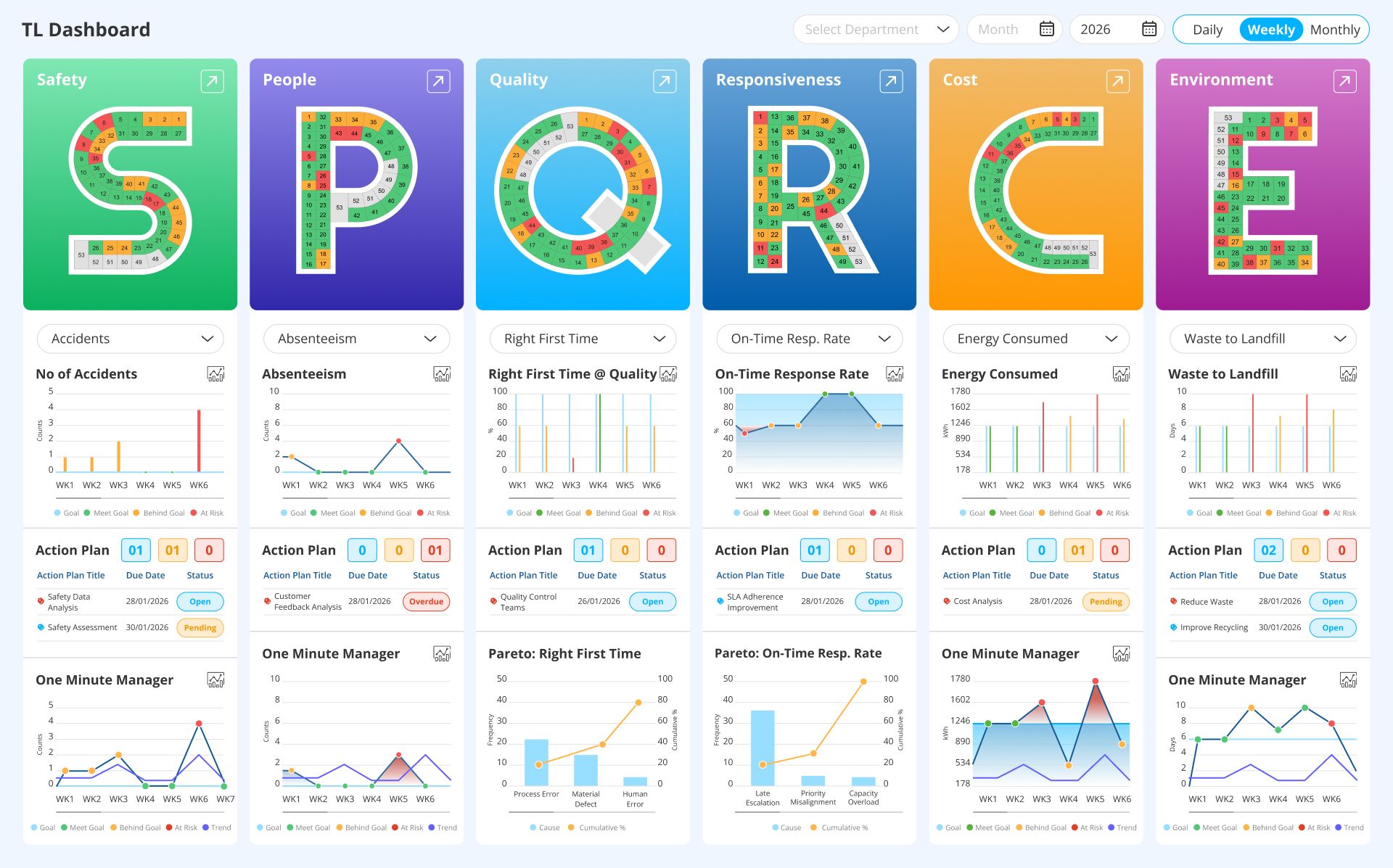
An overview of SPQRCE: How does it work?
The SPQRCE framework works by structuring operational reviews around six core dimensions – Safety, People, Quality, Responsiveness, Cost, and Environment. Instead of evaluating metrics in isolation, teams analyse these areas together to get a balanced view of performance.
Used in daily or weekly reviews, SPQRCE helps teams detect risks, focus on problems, and act with better context – lowering reactive decision-making and enhancing operational focus.
See SPQRCE in action with real operational data with LTS Data Point
Quick guide: SPQRCE vs. ESQDCP
What are SPQRCE shopfloor metrics?
SPQRCE shopfloor metrics offer quick view of operational performance across the six key dimensions. These metrics are observed daily or weekly to assist teams spot problems, prioritise actions, and maintain consistent performance.
Below are commonly tracked examples for each SPQRCE pillar:
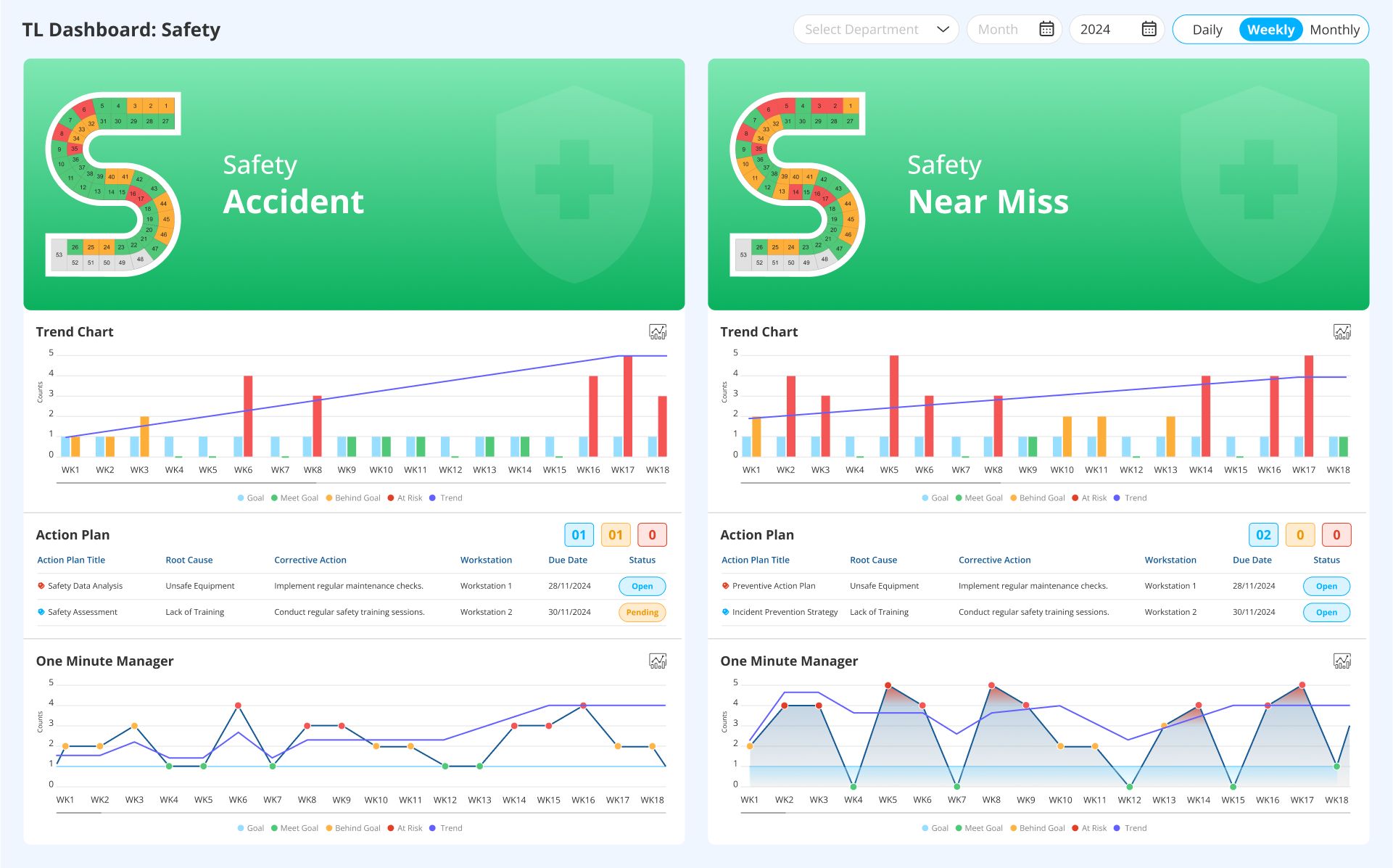
Safety
- Number of safety incidents
- Near-miss reports
- Lost time injury frequency (LTIF)
- Safety audit compliance (%)
- PPE compliance rate
- Fire drill completion
- Machine guarding checks
- Emergency response drill time
- Safety training completion (%)
- Hazard observation reports
People

- Operator availability (%)
- Absenteeism rate
- Overtime hours
- Skill certification completion (%)
- Training hours per employee
- Employee turnover rate
- Team engagement survey score
- Cross-training coverage (%)
- Workload balance per shift
- Suggestions or ideas submitted
Quality
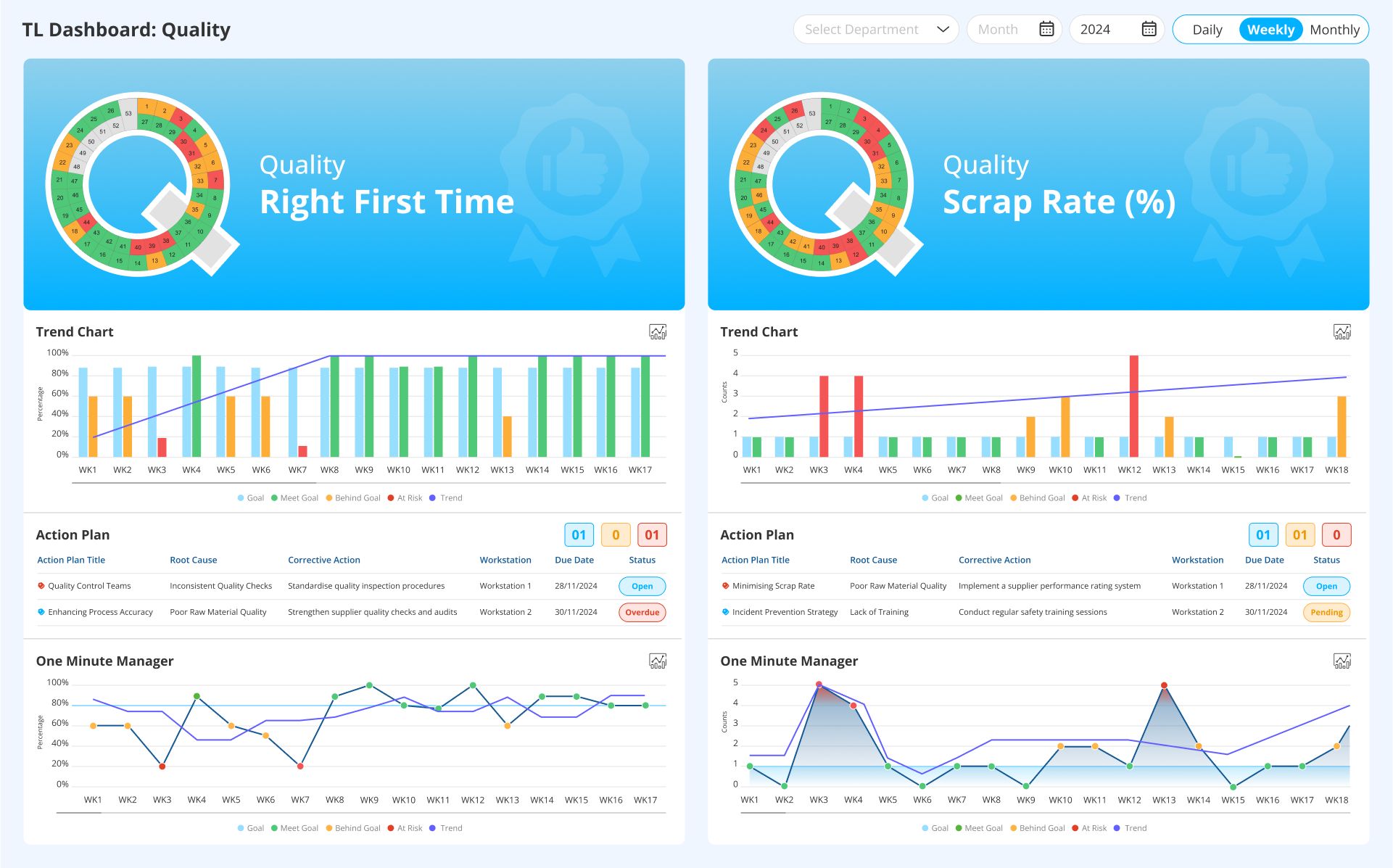
- First pass yield (%)
- Rework rate (%)
- Scrap or waste volume
- Customer complaint count
- Defects per million opportunities (DPMO)
- Inspection compliance rate
- Audit finding closure time
- Process deviation frequency
- Corrective action completion (%)
- Product non-conformance reports
Responsiveness

- On-time order completion (%)
- Average lead time per batch
- Schedule adherence (%)
- Changeover time
- Backlog volume
- Customer order response time
- Emergency order handling time
- Downtime response time
- Issue resolution time
- Production flexibility score
Cost
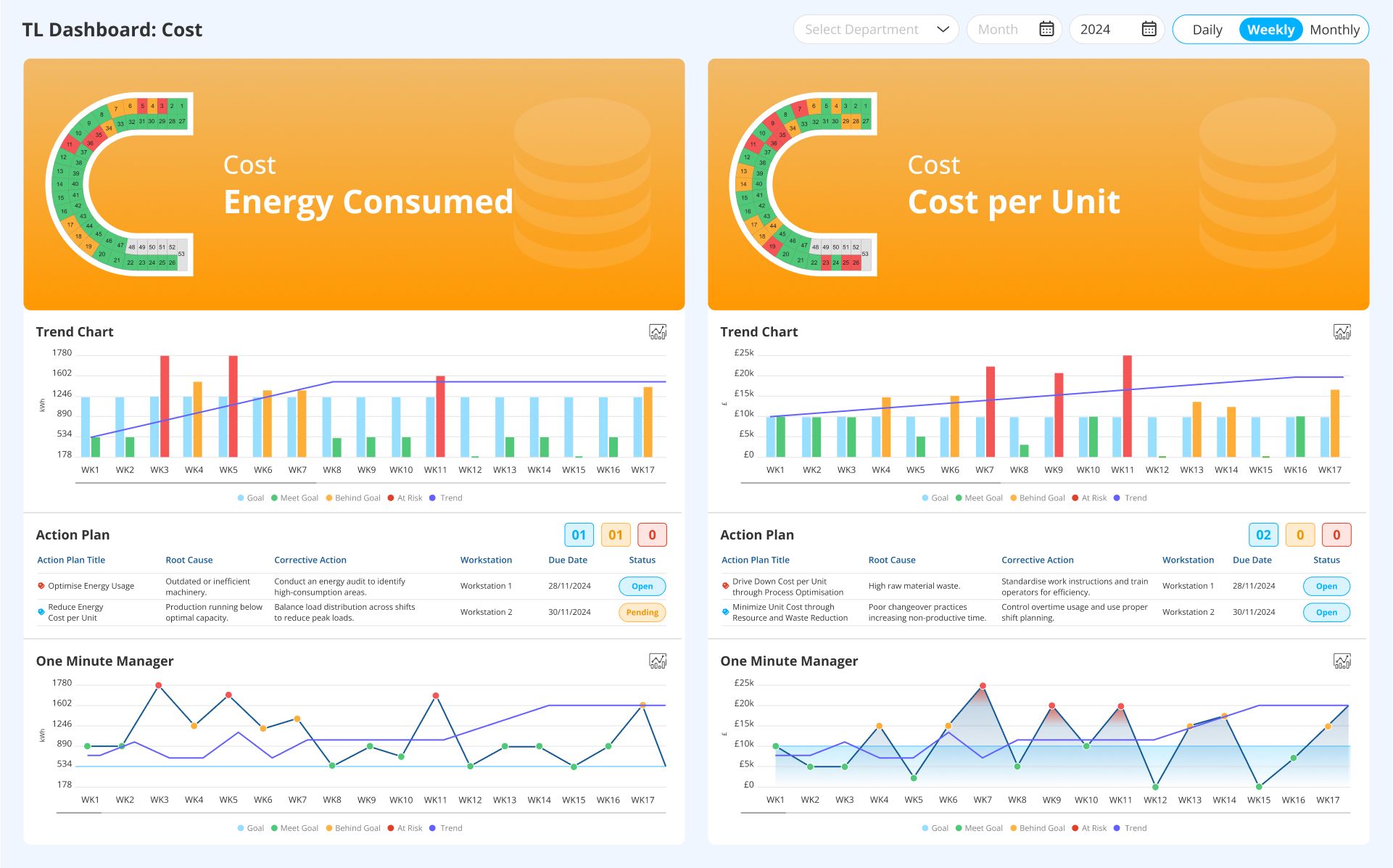
- Cost per unit produced
- Material waste cost
- Energy cost per unit
- Labour cost per shift
- Maintenance cost per machine
- Overtime cost
- Rework cost
- Inventory holding cost
- Scrap cost
- Cost of quality (% of revenue)

- Energy consumption per unit
- Water usage per unit
- Waste generated per shift
- Recycling rate (%)
- Emission levels
- Hazardous material handling compliance
- Environmental audit compliance (%)
- Carbon footprint per unit
- Spillage incidents
- Environment training completion (%)
Discuss your SPQRCE challenges with LTS Data Point expert
SPQRCE in Lean Daily Management
In Lean Daily Management (LDM), the SPQRCE framework gives a structured lens review functions every day. By tracking SPQRCE metrics across Safety, People, Quality, Responsiveness, Cost, and Environment, teams get a complete view of performance on the shopfloor.
Daily management using SPQRCE makes sure issues are spotted early, priorities are clear, and actions are taken quickly – moving teams from reactive problem-solving to focused, decision-driven execution. The People pillar in particular depends on solid shift-level visibility - a dedicated shift management tool ensures overtime, coverage, and workload balance are tracked with the same rigor as the other five dimensions.
Using SPQRCE for daily operational reviews aids leaders link metrics to real outcomes, maintain accountability, and continuously enhance performance across all six dimensions.
What is a SPQRCE board?
A SPQRCE board is a visual management tool used in daily or weekly operational evaluations to monitor performance across these six pillars. It gives teams with a single, live view of the shopfloor performance, underlines priority issues, and helps lead action and decision-making in Lean Daily Management.
Challenges and limitations in traditional paper-based SPQRCE
While SPQRCE boards are effective for seeing operational performance, depending on manual or paper-based SPQRCE tracking can build bottlenecks and lower the accuracy and timeliness of documents.
Challenges of paper-based SPQRCE
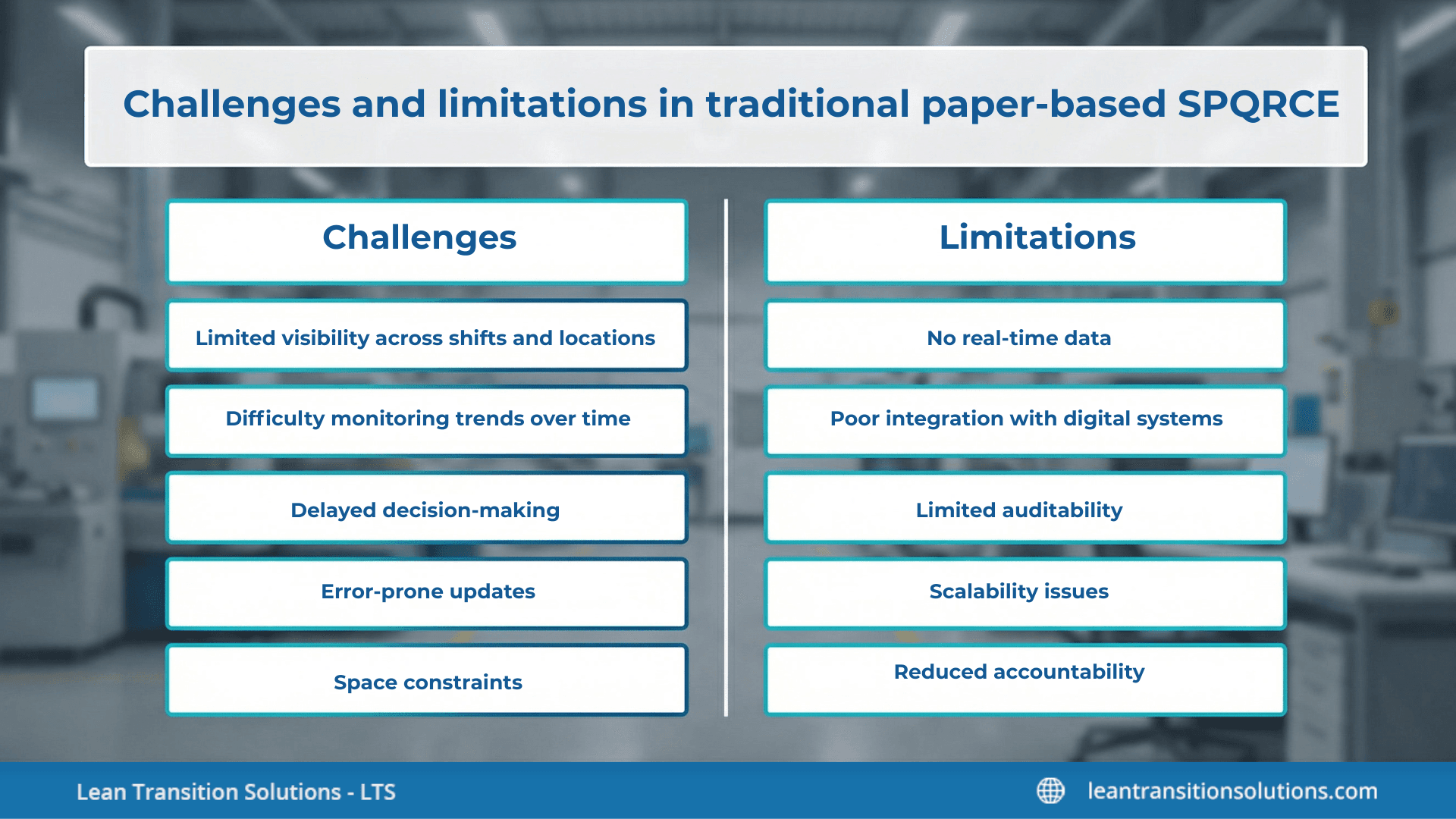
- Limited visibility across shifts and locations: Paper boards can’t easily be shared with teams in multiple areas or plants.
- Difficulty monitoring trends over time: Historical SPQRCE metrics are difficult to maintain and assess.
- Delayed decision-making: Teams must manually update information, which slows the review of SPQRCE dimensions during Lean Daily Management.
- Error-prone updates: Handwritten entries increase the risk of mistakes in SPQRCE operational reviews.
- Space constraints: Large amounts of data or multiple metrics can overcrowd physical boards.
Limitations of paper-based SPQRCE
- No real-time data: Manual boards don’t mirror live updates from production lines.
- Poor integration with digital systems: Hard to link with reporting tools or digital SPQRCE dashboards.
- Limited auditability: Monitoring corrective actions or developments over time is challenging.
- Scalability issues: Difficult to use across multiple lines, shifts, or sites.
- Reduced accountability: Actions and follow-ups can be easily missed without automated alerts.
Explore how LTS Data Point helps digitise SPQRCE management
What is a Digital SPQRCE Board?
A digital SPQRCE board is an electronic visual management tool that keeps an eye on SPQRCE metrics – Safety, People, Quality, Responsiveness, Cost, and Environment – in real time. It is used during daily operational reviews and Lean Daily Management to provide teams instant visibility into performance, spotlight priority issues, and link data directly to actions.
Unlike traditional paper boards, a digital SPQRCE board enables teams to share performance across locations, track trends over time, and integrate with other operational systems or dashboards for a digital SPQRCE operational review.
Benefits of digital SPQRCE boards
Digital SPQRCE boards offer a modern alternative to paper-based monitoring, assisting teams enhance visibility, decision-making, and operational efficiency. By observing SPQRCE metrics in live, teams can focus on actions quickly and maintain consistent performance across all six pillars.
Key benefits of digital SPQRCE boards include:
- Real-time visibility
- Automated KPI tracking
- Trend analysis
- Improved accountability
- Scalability
- Integration with digital dashboards
- Enhanced Lean Daily Management
Which industries can make use of digital SPQRCE boards?
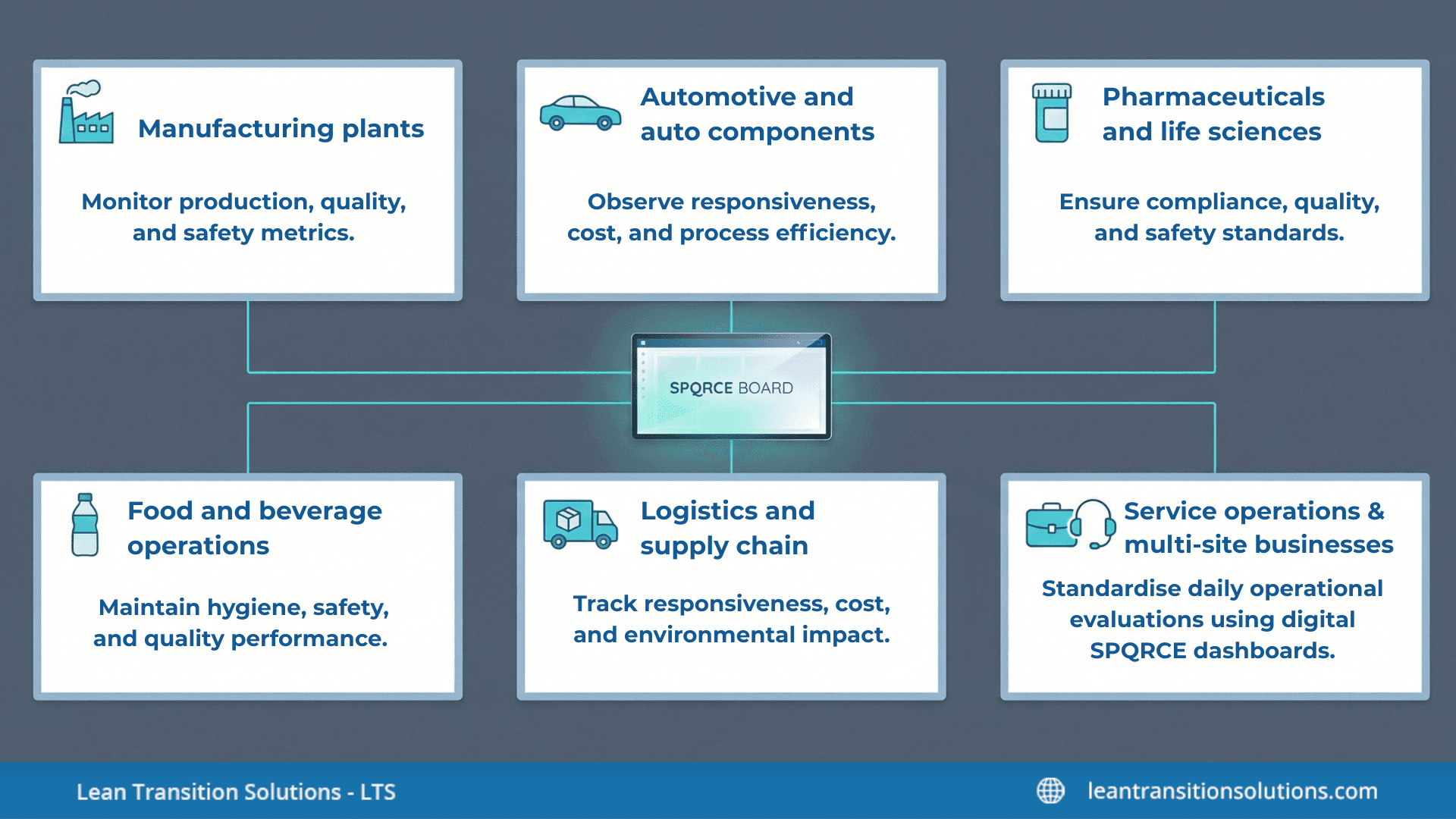
Digital SPQRCE boards can be used by an organisation looking to upgrade operational visibility, decision-making, and performance management. They are particularly useful for teams that conduct daily operational evaluations and want to track SPQRCE in real time.
Common industries include:
- Manufacturing plants: Monitor production, quality, and safety metrics.
- Automotive and auto components: Observe responsiveness, cost, and process efficiency.
- Pharmaceuticals and life sciences: Ensure compliance, quality, and safety standards.
- Food and beverage operations: Maintain hygiene, safety, and quality performance.
- Logistics and supply chain: Track responsiveness, cost, and environmental impact.
- Service operations and multi-site businesses: Standardise daily operational evaluations using digital SPQRCE dashboards.
Get expert advice from LTS Data Point on SPQRCE metrics and reviews
Why SPQRCE is a powerful visual management framework
The SPQRCE framework is a powerful visual management tool that aids teams monitor and evaluate SQRCE metrics in an organised and practical way. By blending LDM principles with a visual board, companies can prioritise actions, detect deviations, and make data-driven decisions across the shopfloor.
Key features of SPQRCE as a visual management framework
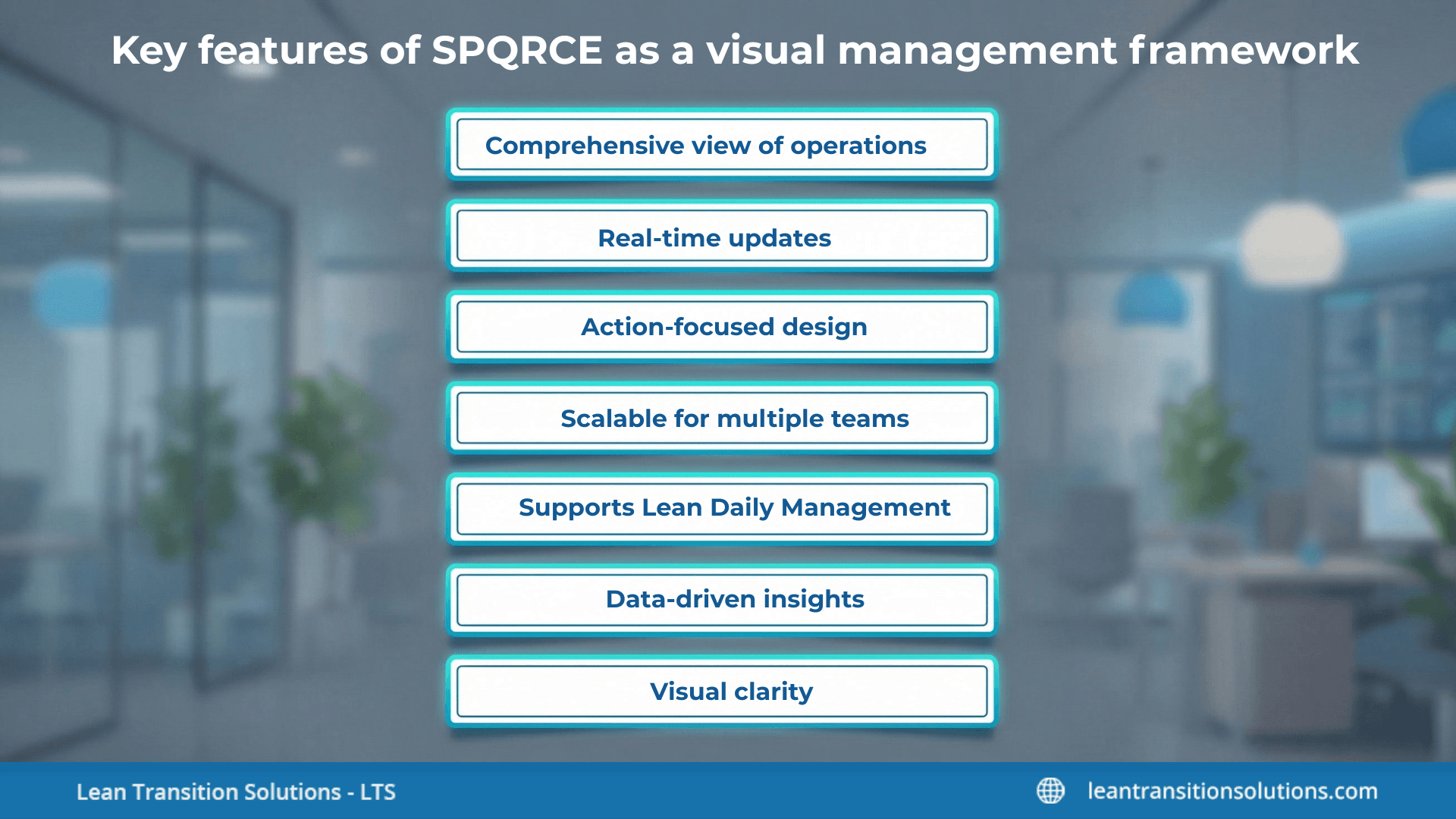
- Comprehensive view of operations: Covers all six pillars of SPQRCE metrics in a single dashboard or board.
- Real-time updates: Assists digital SPQRCE dashboards for instant visibility across locations.
- Action-focused design: Underlines priority issues for immediate follow-up during daily operational reviews.
- Scalable for multiple teams: Can be implemented across shifts, lines, or sites without losing clarity.
- Supports Lean Daily Management: Integrates seamlessly into structured review routines and huddles.
- Data-driven insights: Enables teams to assess trends, spot patterns, and monitor improvement over time.
- Visual clarity: Makes complex operational data easy to comprehend at a glance.
How SPQRCE improves operational performance
- Creates a balanced performance view: The SPQRCE framework aids teams assess SPQRCE metrics across safety, people, quality, responsiveness, cost, and environment – preventing over-focus on a single KPI.
- Improves decision-making in daily reviews: By organising daily operational evaluations, SPQRCE makes sure decisions are made with full operational context rather than assumptions.
- Surfaces issues early: Regular monitoring of SPQRCE shopfloor metrics enables teams to detect risks and deviations before they escalate.
- Reduces reactive firefighting: SPQRCE supports LDM by shifting focus from crisis response to planned, prioritised action.
- Strengthens accountability: Clear visibility of issues and actions on a SPQRCE board enhances ownership and follow-through.
- Aligns teams across shifts and locations: Digital SPQRCE dashboards allow consistent performance reviews across multiple teams and sites.
- Upgrades responsiveness to change: Observing responsiveness metrics aids operations adapt quickly to demand shifts, disruptions, or constraints.
- Supports continuous improvement: Trend analysis from SPQRCE metrics allows teams to spot improvement opportunities and monitor progress over time.
SPQRCE management: How to implement SPQRCE effectively
Implementing the SPQRCE framework effectively needs more than listing metrics – it requires consistency, discipline, and integration into daily operational reviews. The goal of SPQRCE management is to convert visibility into action and improve operational performance over time.
Key steps to implement SPQRCE effectively
Define relevant SPQRCE metrics
Identify clear, practical SPQRCE shopfloor metrics for safety, people, quality, responsiveness, cost, and environment that mirror real operational risks and priorities.
Standardise the SPQRCE board structure
Use a consistent SPQRCE board layout across teams and shifts to make sure clarity and comparability during reviews.
Embed SPQRCE into Lean Daily Management
Review SPQRCE metrics as part of structured daily huddles or weekly huddles, not as a standalone reporting exercise.
Focus on priorities, not all metrics
Use the SPQRCE framework to spotlight exceptions, risks, and deviations that demand action – avoiding information overload.
Assign actions and ownership
Every problem detected during SPQRCE operational reviews should translate into clear action with an owner and due date.
Monitor trends, not just status
Track old performance to understand patterns and support continuous improvement using digital SPQRCE dashboards where possible.
Review and refine regularly
Periodically reassess SPQRCE metrics to verify they remain aligned with business goals and operational realities.
Explore digital SPQRCE boards built around your operations with LTS Data Point
How to track and customise SPQRCE metrics using a digital system
- Centralise all SPQRCE metrics in one view: A digital system brings SPQRCE metrics into a single digital SPQRCE board for easy visibility.
- Customise metrics by team or process: Teams can modify SPQRCE shopfloor metrics based on shift, line, or function while maintaining a common SPQRCE framework structure.
- Set thresholds and alerts: Digital tools allow teams to define limits for SPQRCE metrics, helping problems surface early during daily operational reviews.
- Track trends over time: Unlike paper boards, digital SPQRCE dashboards store historical information, making it easier to examine patterns and performance improvements.
- Enable live updates: Real-time data entry and system integrations keep SPQRCE boards current, supporting faster decision-making in Lean Daily Management.
- Link metrics to actions: Digital systems bind deviations in SPQRCE metrics directly to corrective and preventive actions (CAPA), owners, and due dates.
- Scale across teams and locations: A digital SPQRCE operational review setup ensures consistency across multiple shifts, plants, or sites.
- Improve accessibility and collaboration: Teams and leaders can access digital SPQRCE boards remotely, enhancing collaboration and review effectiveness.
Tier-based use of SPQRCE
The SPQRCE framework can be applied across different management tiers to make sure consistent visibility and alignment from shopfloor to leadership. Using SPQRCE metrics in a tier-based structure assists industries escalate issues effectively, maintain context, and support Lean Daily Management at every level.
Tier 1 – Shopfloor or team level
Teams use a SPQRCE board to evaluate SPQRCE shopfloor metrics during daily huddles. The focus is on spotting immediate problems, assigning actions, and maintaining safe, stable operations.
Tier 2 – Area or department level
Supervisors review aggregated SPQRCE metrics from multiple teams or lines. This tier focuses on cross-team coordination, resource balancing, and eliminating constraints underlined in daily operational reviews.
Tier 3 – Site or plant level
Plant leadership evaluates site-wide SPQRCE operational reviews to analyse overall performance trends, focus on improvement initiatives, and make sure alignment across departments.
Tier 4 – Business or enterprise level
Senior leaders use consolidated digital SPQRCE dashboards to track performance across locations, compare sites, and guide strategic decisions.
By applying SPQRCE in a tier-based manner, industries build a clear escalation path, preserve operational context, and reinforce accountability across all levels.
Speak to an LTS Data Point expert about tier-based SPQRCE execution
Digital SPQRCE boards customised for your needs by LTS Data Point
While the SPQRCE framework defines what teams review, execution depends on how those reviews run. LTS Data Point allows organisations to configure digital SPQRCE boards that indicate their operational priorities, review cadence, and team structure – without forcing a rigid framework or predefined methodology.
By digitising SPQRCE metrics and operational reviews, teams gain better visibility, consistency, and control across LDM routines and daily operational reviews.
How LTS Data Point strengthens SPQRCE execution
- Configurable metric structures: Teams can chart their existing SPQRCE metrics – across safety, people, quality, responsiveness, cost, and environment – into a flexible digital board structure.
- Standardised yet adaptable boards: Create consistent SPQRCE boards across teams and sites while enabling local customisation where needed.
- Live visibility and monitoring: Digital boards offer up-to-date views of SPQRCE shopfloor metrics, supporting faster, better-informed decisions.
- Action and accountability tracking: Issues detected during SPQRCE operational reviews can be connected to actions, owners, and follow-ups.
- Trend and performance analysis: Historical data helps teams analyse trends and support continuous improvement using digital SPQRCE dashboards.
- Scalable across tiers and locations: Allows tier-based reviews – from shopfloor to leadership – while sustaining operational context.
Case study: How SPQRCE drives real results in different sectors
Let's look at real life examples of industries using LTS Data Point SPQRCE boards to transform their operations.
Pharmaceuticals
A pharmaceutical manufacturing site struggled with fragmented operational reviews. Safety, quality, and compliance metrics were observed separately, while responsiveness and cost issues were discussed reactively. Paper-based boards made it difficult to maintain audit trails, monitor trends, or gain visibility across shifts, leading to delayed decisions and repeated deviations during daily operational reviews.
The team adopted the SPQRCE framework to organise their reviews and used LTS Data Point to digitise their SPQRCE boards. By monitoring SPQRCE metrics – including safety incidents, quality deviations, responsiveness to schedule changes, cost losses, and environmental compliance – in a single digital view, leaders gained real-time visibility and stronger control. This upgraded accountability, faster issue resolution, and more consistent Lean Daily Management across shifts.
Food and beverage
A food and beverage manufacturer faced frequent firefighting due to demand variability, quality rework, and high waste levels. Although teams monitored KPIs, the lack of a unified framework meant trade-offs between speed, quality, and cost were often missed. Manual tracking of SPQRCE shopfloor metrics made it hard to detect repeating problems or focus on improvement actions.
By applying the SPQRCE framework and executing it through digital SPQRCE dashboards in LTS Data Point, the industry brought structure to its daily reviews. Teams observed responsiveness, quality losses, cost impacts, and environmental metrics together, allowing quicker decisions and clearer priorities. The digital SPQRCE operational review helped minimise waste, upgrade schedule adherence, and maintain consistent performance across multiple production lines.

Abel Jiménez, Lean Consultant
Abel is a Lean Consultant with over 30 years of expertise in operational analysis, process improvement, and organisational change across Mexican industries. Currently serving as Director of Insurance Promotions at CESCEMEX, he helps organisations leverage technology and lean practices to improve efficiency and manage change with continuity.