Top 12 Airline KPIs That Measure Service Quality, Reliability, and Passenger Experience

Last updated on : February 17, 2026
Airline KPIs are used across the aviation industry to calculate how well airlines deliver reliable, safe, and consistent service to passengers. Unlike manufacturing metrics, aviation KPIs focus on service quality, operational reliability, safety, and passenger experience across the entire flight journey. From airline service KPIs that track customer satisfaction to flight network performance indicators that influence on-time arrivals, the right key performance indicators (KPIs) for the airline industry help teams understand where service delivery is strong and where improvement is required.
See how LTS Data Point helps airline teams align service KPIs with strategic goals
Understanding airline KPIs and aviation service performance
Airline KPIs are aviation KPIs used to analyse how effectively airlines deliver safe, reliable, and consistent service across passenger operations. Unlike cost- or capacity-focused measures, the key performance indicators for the airline industry primarily indicates service quality, reliability, and passenger experience. While some organisations also track aerospace manufacturing KPIs for production and engineering processes, the focus here is on service-oriented metrics that directly impact passengers.
Common airline industry KPIs used in service performance include:
- Service reliability indicators such as on-time performance and cancellation rates
- Passenger experience metrics covering satisfaction, complaints, and loyalty
- Safety and compliance measures that monitor incidents and regulatory adherence
- Flight network performance indicators examining route reliability and hub efficiency
These aviation KPI examples show how KPIs are used in the airline industry assist teams track service outcomes, spot gaps, and prioritise improvements without depending on manufacturing-style metrics.
Top 12 airline KPIs to elevate service and passenger experience
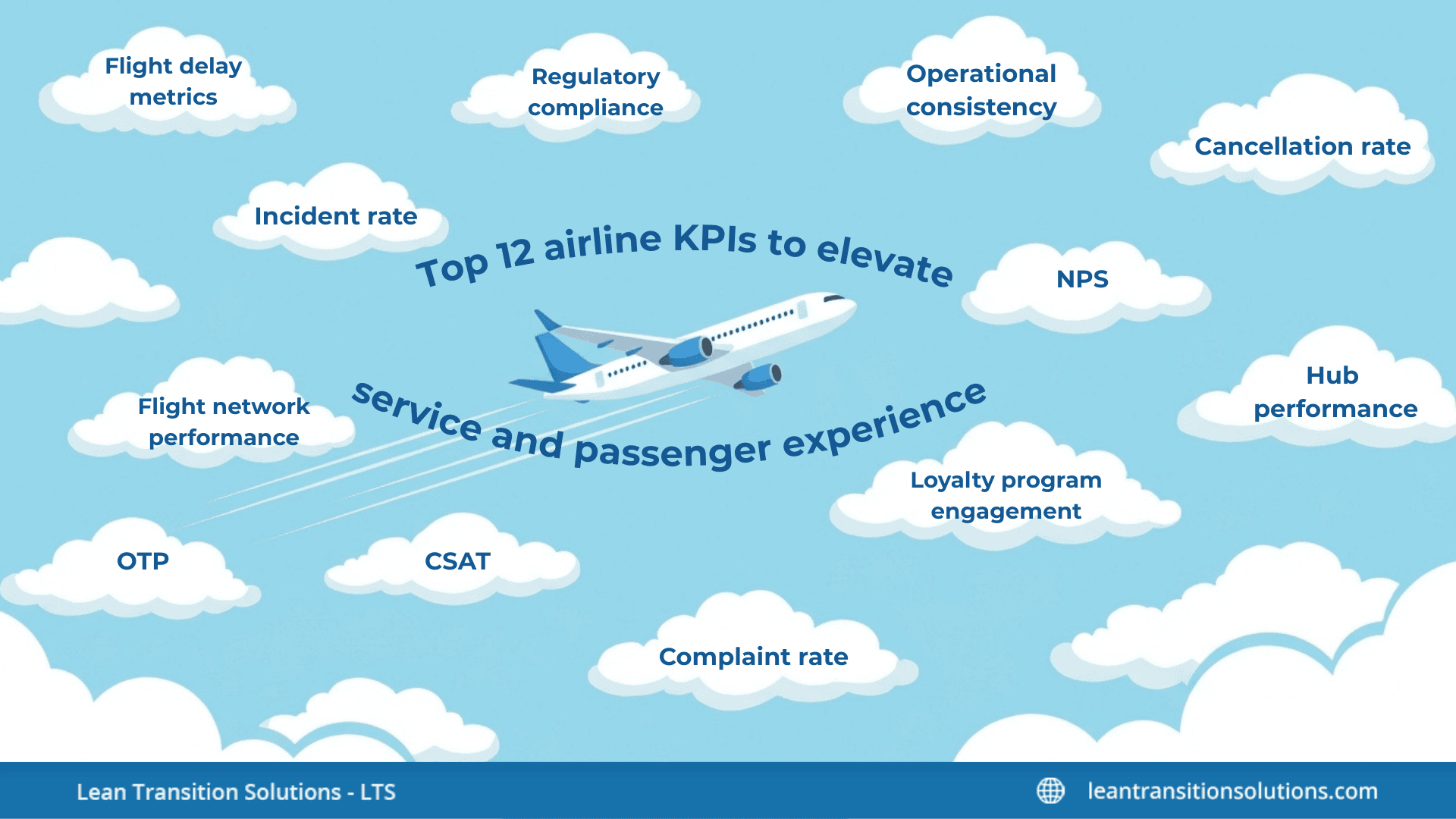
Airlines depend on airline KPIs and aviation KPI examples to monitor how well they deliver safe, reliable, and consistent service. Service-focused KPIs for airlines go beyond operational costs to calculate passenger experience, service reliability, safety, and network performance. Below are the top 12 metrics that shape airline service performance and passenger experience.
Customer satisfaction score
- Why it matters: Measures overall passenger satisfaction and identifies areas for service improvement.
- How to calculate: CSAT = (Number of satisfied passengers / Total respondents) x 100
Net promoter score
- Why it matters: Gauges loyalty and likelihood of passengers recommending the airline.
- How to calculate: NPS = % Promoters - % Detractors based on survey responses
Complaint rate
- Why it matters: Underlines recurring service issues and informs operational fixes.
- How to calculate: Complaint rate = (Number of complaints / Total passengers) x 100
Loyalty program engagement
- Why it matters: Indicates repeat customer retention and service satisfaction.
- How to calculate: Loyalty program engagement = (Number of active loyalty members / Total passengers) x 100
On-time performance
- Why it matters: Measures operational reliability, critical for passenger trust.
- How to calculate: OTP = (Number of on-time flights / Time scheduled flights) x 100
Flight delay metrics
- Why it matters: Tracks frequency and duration of delays to optimise scheduling.
- How to calculate: Flight delay metrics = Average delay per flight (minutes) or % of delayed flights
Get guidance on aligning airline KPIs with service performance with LTS Data Point
Cancellation rate
- Why it matters: Mirrors service reliability and operational consistency.
- How to calculate: Cancellation rate = (Number of cancelled flights / Total scheduled flights) x 100
Operational consistency
- Why it matters: Monitors adherence to planned schedules across flights.
- How to calculate: Operational consistency = % of flights executed according to schedule
Incident rate
- Why it matters: Tracks safety-related events, ensuring compliance and passenger confidence.
- How to calculate: Incident rate = (Number of safety incidents / Total flights or passengers) x 100
Regulatory compliance
- Why it matters: Verifies adherence to aviation safety standards and reduces risk.
- How to calculate: Regulatory compliance = % of audits or inspections passed without non-compliance.
Flight network performance
- Why it matters: Computes reliability of the route network affecting passenger connections.
- How to calculate: Flight network performance = % of routes operating on time and as scheduled
Hub performance
- Why it matters: Evaluates efficiency of airport hubs in managing transfers and operations.
- How to calculate: Hub performance = Average turnaround time per flight at the hub or % of on-time departures
Note: For airlines managing fleet maintenance, aerospace manufacturing KPIs may offer additional insight into operational efficiency without impacting passenger-facing KPIs.
Experience top airline KPIs on dashboards and balanced scorecards with LTS Data Point
Common mistakes to avoid when tracking airline KPIs (and how to correct them)
Monitoring airline KPIs only adds value when the metrics mirror real service outcomes and guide action. Many airlines gather aviation KPIs but struggle to turn them into improvements because of how the KPIs are defined, interpreted, or used.
Focusing on too many KPIs without clear purpose
Mistake: Tracking dozens of airline industry KPIs without connecting them to service goals creates noise and weak decision-making.
How to correct:
- Prioritise a focused set of KPIs for airlines aligned to passenger experience, reliability, and safety.
- Group metrics by service themes – experience, reliability, safety, flight network
Treating operational metrics as manufacturing KPIs
Mistake: Using cost, utilisation, or productivity-style metrics without service context shifts focus away from passengers.
How to correct:
- Reframe airline operational KPIs around service outcomes (e.g., on-time performance as a passenger promise).
- Separate airline service KPIs from aerospace manufacturing KPIs used for production or engineering analysis.
Measuring passenger experience in isolation
Mistake: Monitoring passenger experience KPIs without connecting them to reliability or network performance limits insight.
How to correct:
- Merge passenger experience KPIs with airline service KPIs such as delays, cancellations, and complaints.
- Assess how service disruptions affect satisfaction and loyalty.
Ignoring the impact of the flight network
Mistake: Overlooking how routes, hubs, and connections influence service delivery.
How to correct:
- Include flight network performance KPIs and route performance KPIs in service reviews.
- Observe network reliability metrics to understand connection success and delays.
Tracking safety only for compliance, not service quality
Mistake: Viewing safety KPIs purely as regulatory requirements rather than part of passenger trust.
How to correct:
- Position airline safety KPIs and aviation safety performance indicators as service assurance metrics.
- Use incident rate KPIs to proactively spot risks affecting reliability and confidence.
Failing to act on KPI insights
Mistake: Collecting aviation KPI data without closing the loop through action and review.
How to correct:
- Allocate ownership for each airline KPIs.
- Review trends regularly and bind KPIs to corrective actions and service improvements.
See how LTS Data Point transform airline KPI tracking – from passenger experience to operational reliability
Using airline KPIs to align strategy and service outcomes with LTS Data Point
For airline leadership teams, KPIs only create value when they link daily service performance with long-term strategic goals. Airline strategic KPIs help executives translate objectives such as reliability, safety, and passenger experience into quantifiable outcomes, while guaranteeing teams focus on what matters most across the industry.
Rather than reviewing disconnected metrics, many airlines structure airline management KPIs using an airline balanced scorecard approach. This allows leaders to see service performance across key dimensions – customer experience without treating service delivery as a cost or production exercise. When designed well, these scorecards help prioritise initiatives, balance trade-offs, and maintain accountability at every level.
Turning airline KPIs into leadership insight
The challenge is not collecting documents but making it usable for making decisions. Executives need airline dashboard KPIs that:
- Present service performance clearly and consistently
- Connect operational outcomes to strategic priorities
- Enable fast detection of risks and improvement areas
- Support cross-functional reviews without conflicting numbers
This is where airline business KPIs become a leadership tool rather than a reporting exercise – supporting strategic planning, reviews, and corrective action instead of static performance tracking.
Where LTS Data Point fits
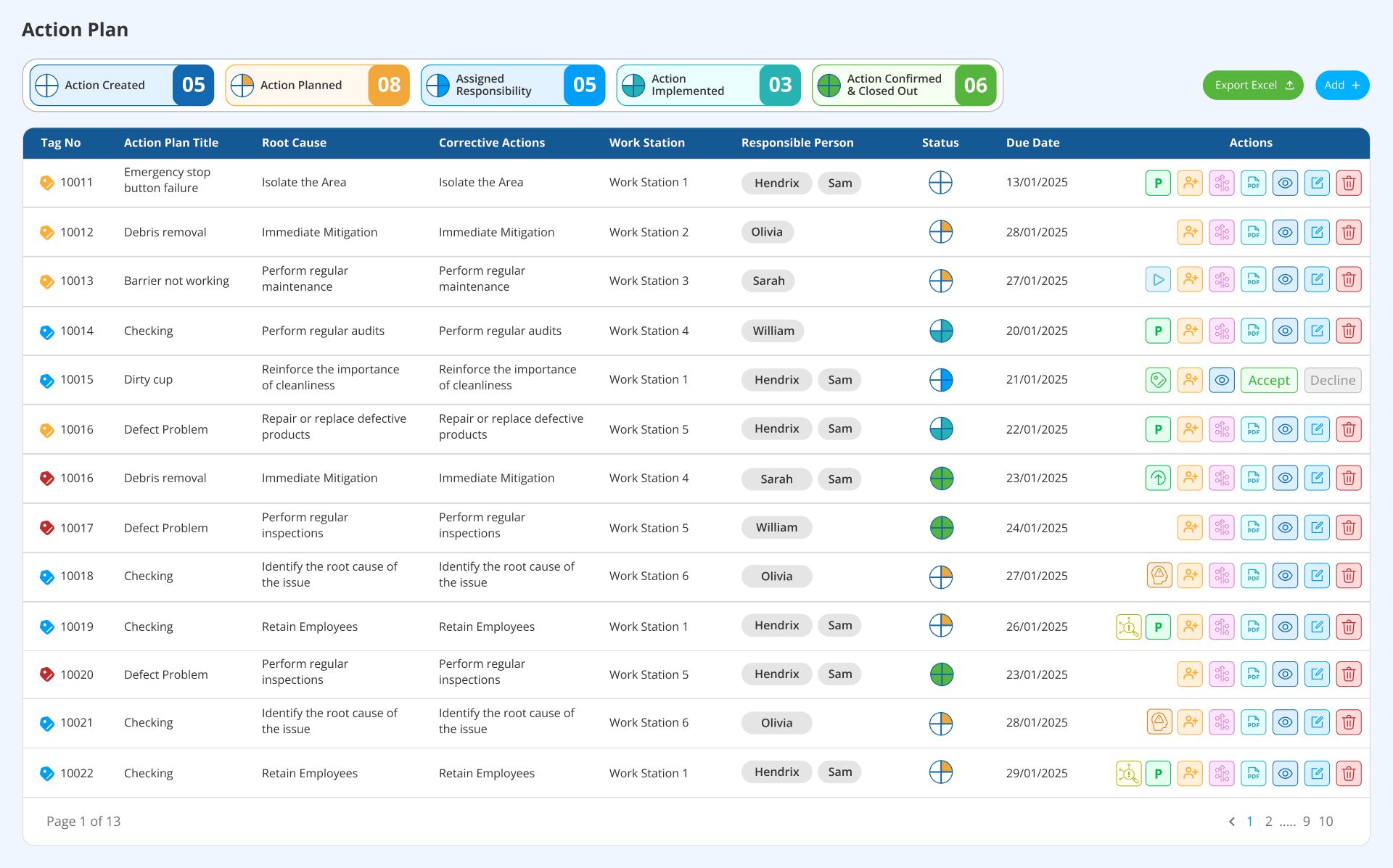
LTS Data Point is designed to assist KPI alignment and performance execution by bringing service-focused airline KPIs into a single, structured view.
It is typically used when airline leaders want to:
- Align airline strategic KPIs with operational and service outcomes
- Track performance through a consistent airline balanced scorecard structure
- Enable visibility of airline management KPIs across teams and functions
- Use airline dashboard KPIs to support reviews, governance, and decision-making
By connecting service performance data to strategic objectives, LTS Data Point helps leadership teams move from KPI reporting to performance-led execution – without introducing manufacturing-style metrics or assumptions.
Airline KPIs play a critical role in helping airlines understand how well they deliver safe, reliable, and consistent service to passengers. By focusing on service quality, reliability, safety, and flight network performance, the right KPIs provide clarity across the passenger journey while supporting informed decision-making at leadership level. When aligned through dashboards and balanced scorecards, airline KPIs move beyond reporting to become practical tools for improving service outcomes and sustaining passenger trust.
Connect with LTS Data Point experts – transform your airline KPI tracking into practical service insights
FAQs
1. What is the difference between airline KPIs and aviation KPIs?
Airline KPIs are metrics specific to an individual airline, while aviation KPIs include broader industry-standard measures used for benchmarking and regulatory compliance.
2. How often should airlines review their KPIs?
Airlines typically review service, reliability, and safety KPIs monthly or quarterly, while operational and network KPIs may require weekly monitoring to act on issues quickly.
3. Can KPIs predict passenger satisfaction trends?
Yes. Metrics like CSAT, NPS, complaint rate, and loyalty program engagement provide early insights into trends in passenger satisfaction.
4. Are financial KPIs relevant for service-focused airline KPIs?
Yes. But only when tied to service outcomes, such as revenue per flight, cost per available seat, or cost impact of delays and cancellations.
5. How do flight network KPIs affect passenger experience?
Route reliability, hub efficiency, and connection success influence on-time arrivals, smooth transfers, and overall satisfaction, making network KPIs critical to service delivery.
6. What role does leadership play in airline KPI tracking?
Leaders use airline strategic KPIs and dashboards to align teams, monitor service outcomes, and prioritise initiatives for consistent passenger experience.
7. Can airlines benchmark KPIs against competitors?
Yes. Standardised aviation safety performance indicators, on-time performance, and route reliability can be compared industry-wide to identify gaps and best practices.
8. How do airlines link safety KPIs to service quality?
Safety KPIs like incident rate and compliance audits ensure passengers trust the airline, making safety an integral part of the overall service experience.

Abel Jiménez, Lean Consultant
Abel is a Lean Consultant with over 30 years of expertise in operational analysis, process improvement, and organisational change across Mexican industries. Currently serving as Director of Insurance Promotions at CESCEMEX, he helps organisations leverage technology and lean practices to improve efficiency and manage change with continuity.