Effortless Strategic Planning for driving growth
Transform strategies into action with a unified platform for planning, monitoring, and executing goals effectively.
Empower your organisation with data-driven strategic planning
Visualise your strategic goals, key initiatives, responsible teams, and expected outcomes within a single X-Matrix framework. This ensures clear communication and a shared understanding of organisational priorities.
- Integrated goal tracking
- Clear role assignments
- Comprehensive strategy visualisation
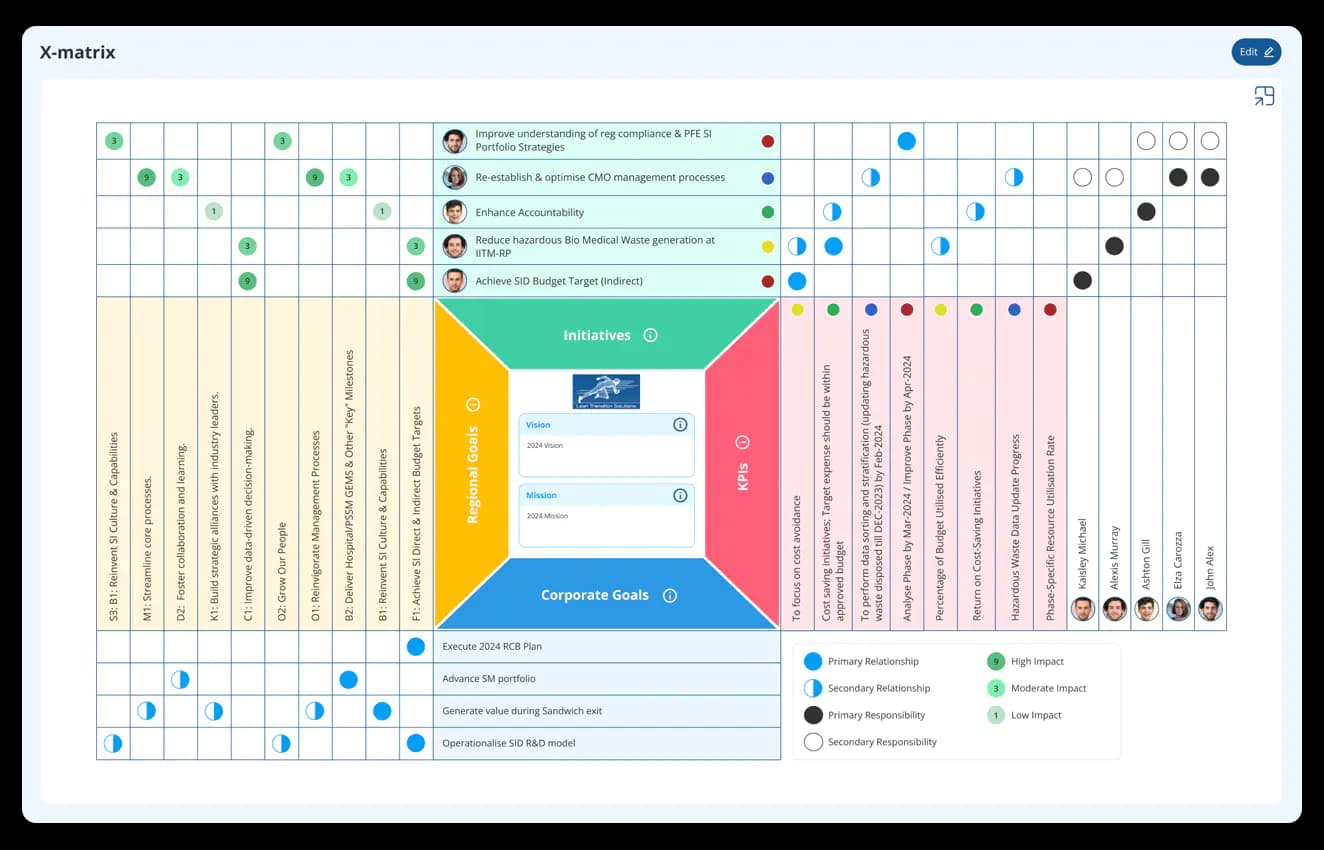

Make data-driven decisions by integrating techniques such as SWOT and Gap Analysis into your strategic planning process. Identify strengths, weaknesses, opportunities, and threats, and bridge capability gaps effectively.
- SWOT analysis integration
- Gap identification tools
- Decision support systems
Transform your strategy with Data Point’s data-driven insights and real-time tracking!
Transform high-level strategic goals into actionable tasks and initiatives that drive results.
- Convert strategic priorities into specific tasks
- Define task milestones
- Cross-functional visibility
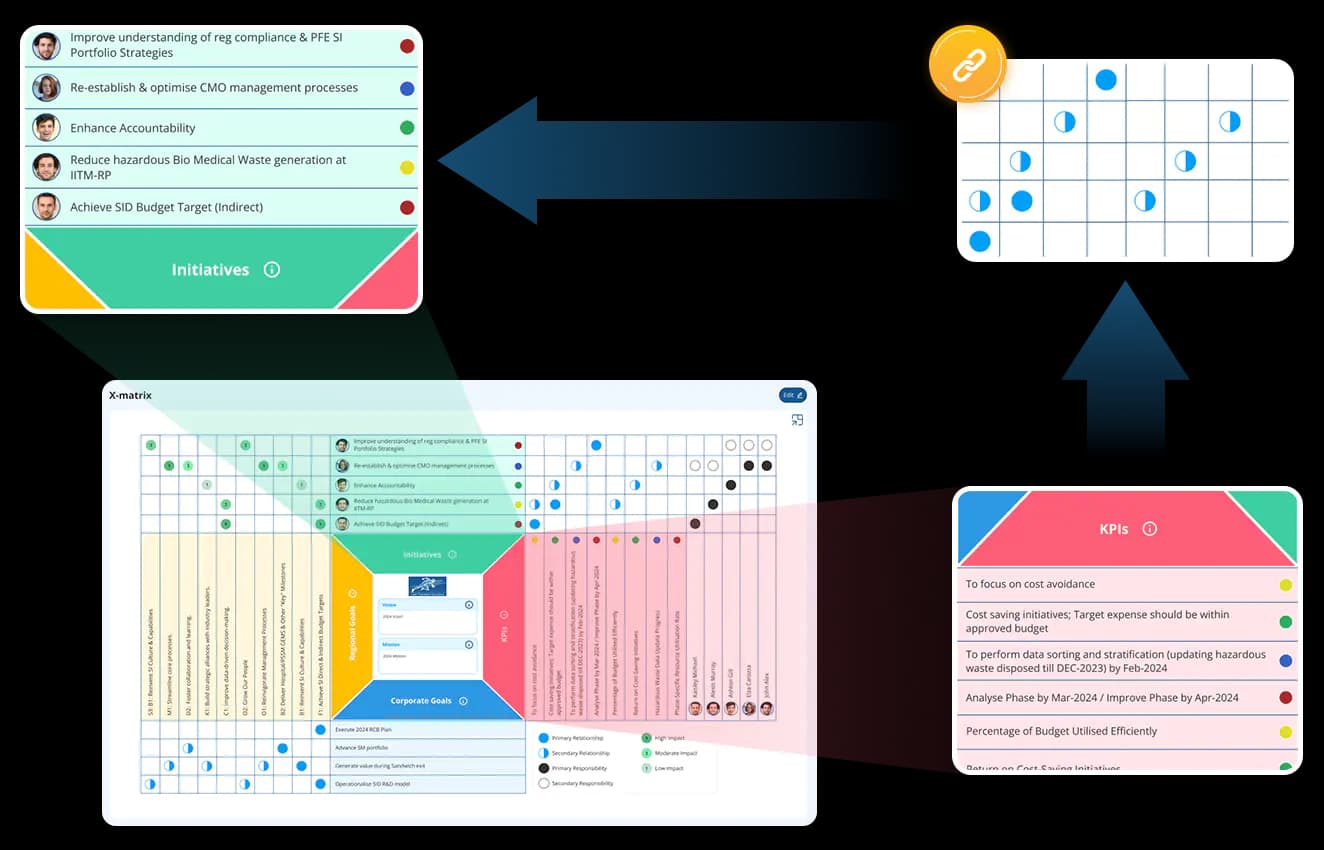
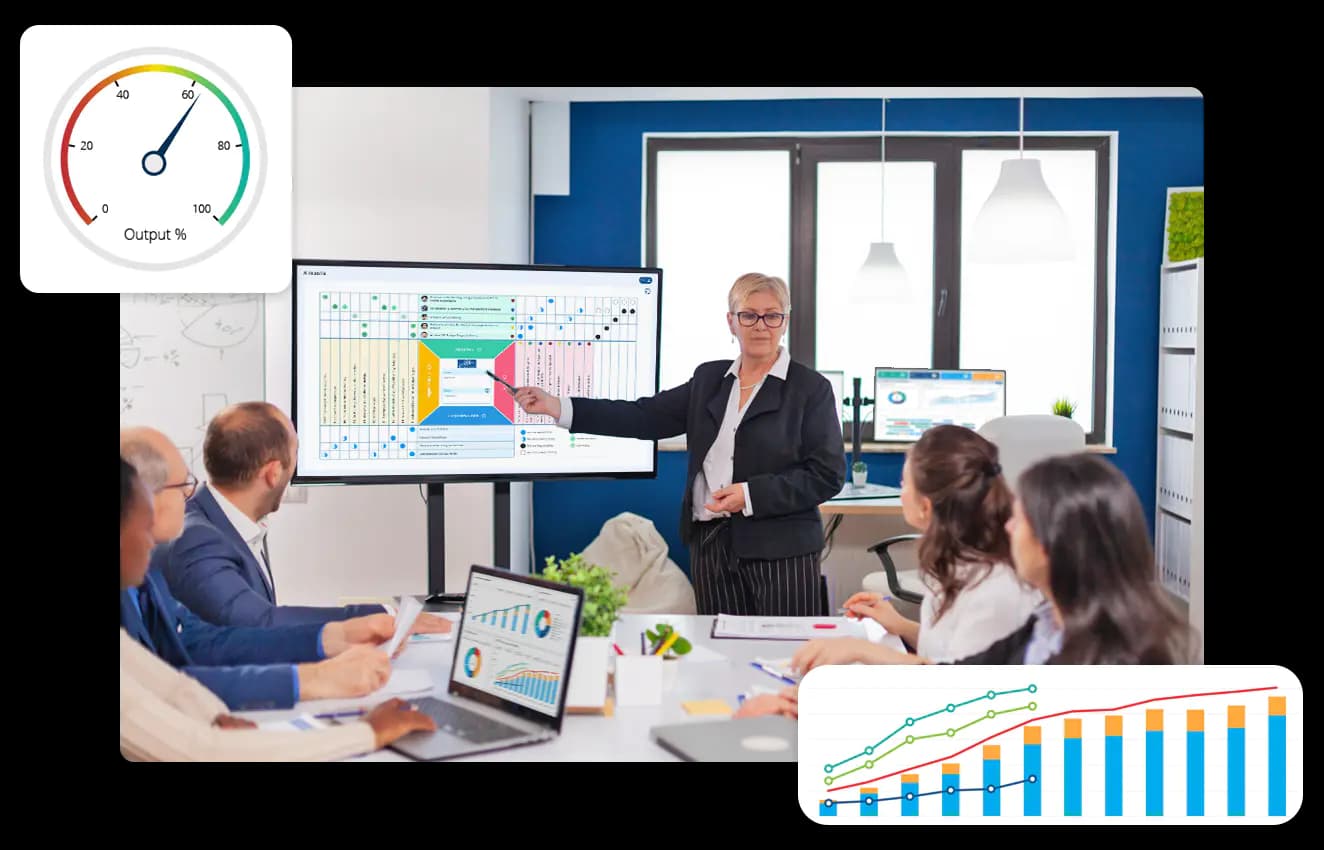
Develop clear, measurable strategic objectives that align with your business’s goals. Uses proven frameworks like SMART goals and OKRs to track performance and ensure accountability.
- SMART goal integration
- Customisable OKRs
- Measurable business targets
Data Point helps you make strategy maps to clearly display your organisational goals and objectives in an easy-to-understand visual format.
- Interactive maps
- Visual representation of goals
- Align key business areas (financial, customer, internal processes)
- Link KPIs to strategy
- Multi-user access
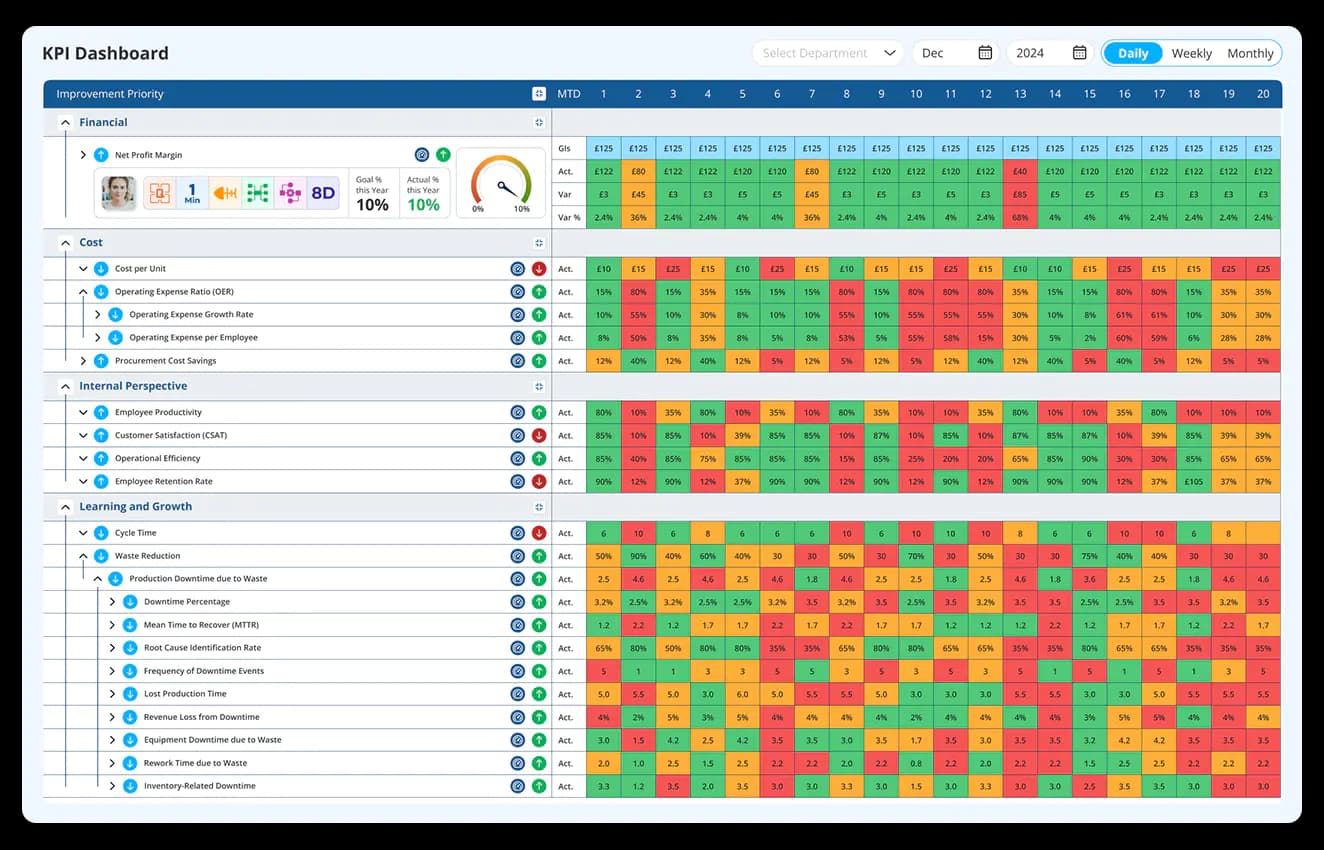
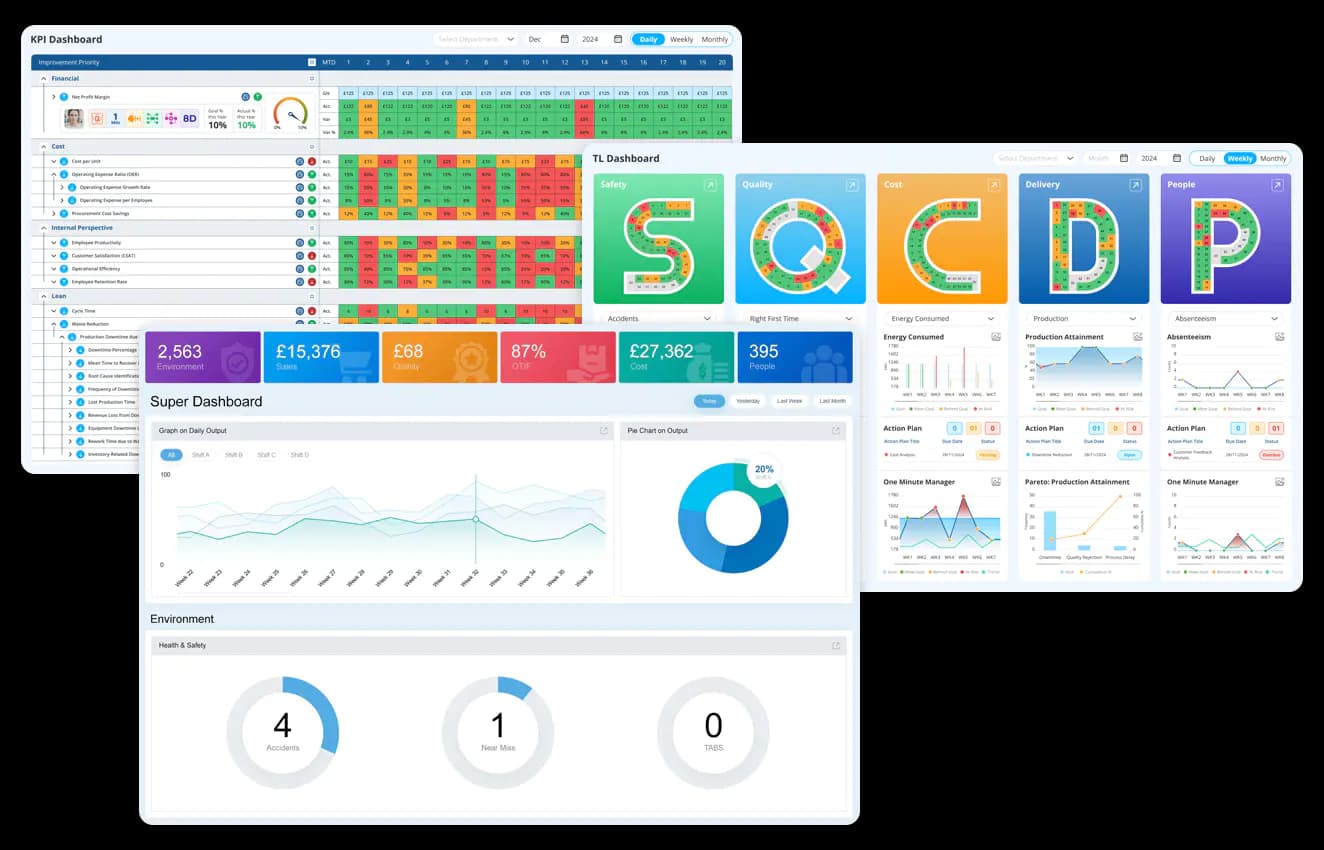
Data points empower your team with customisable dashboards to your specific strategic planning needs, displaying key metrics that align with your organisation’s goals and objectives.
- Daily huddle boards
- Daily performance dashboards
- Work-in-Progress (WIP) dashboards
- OEE dashboards
- Super dashboards
- Scorecard dashboards
- KPI dashboards
- Team Leader dashboard
Align goals, track progress, and drive growth with Data Point’s interactive dashboards!
Mitigate potential challenges and uncertainties during the strategic planning process by leveraging advanced risk management features of Data Point.
- Identify vulnerabilities in objectives
- Reduce uncertainty in execution
- Prevent delays in implementation
- Model alternative strategies
- Highlight areas needing attention

Data Point integrates with your MES/ERP systems and ensures data flows smoothly across your organisation, making it easier to monitor, adjust, and execute the plan effectively.
- Automatic data syncing
- Eliminate manual data entry and discrepancies
- Ensure high data integrity for better decision-making
- Link tactical decisions to long-term strategy
Turn your strategic vision into reality with Data Point
Choice of industry leaders and Fortune 500 companies


















How can Balanced Scorecard support effective Strategic Planning?
Data Point enhances strategic planning by transforming high-level goals into actionable and measurable outcomes.

Advanced goal-setting frameworks
Ensure goals are measurable, specific and aligned with the organisation's purpose.

Data integration
Act as a centralised platform for seamless analysis and decision-making

Comprehensive performance management
Track performance in real-time for further improvements
Build your clear, results-driven strategic planning framework today!
Get Started with Data Point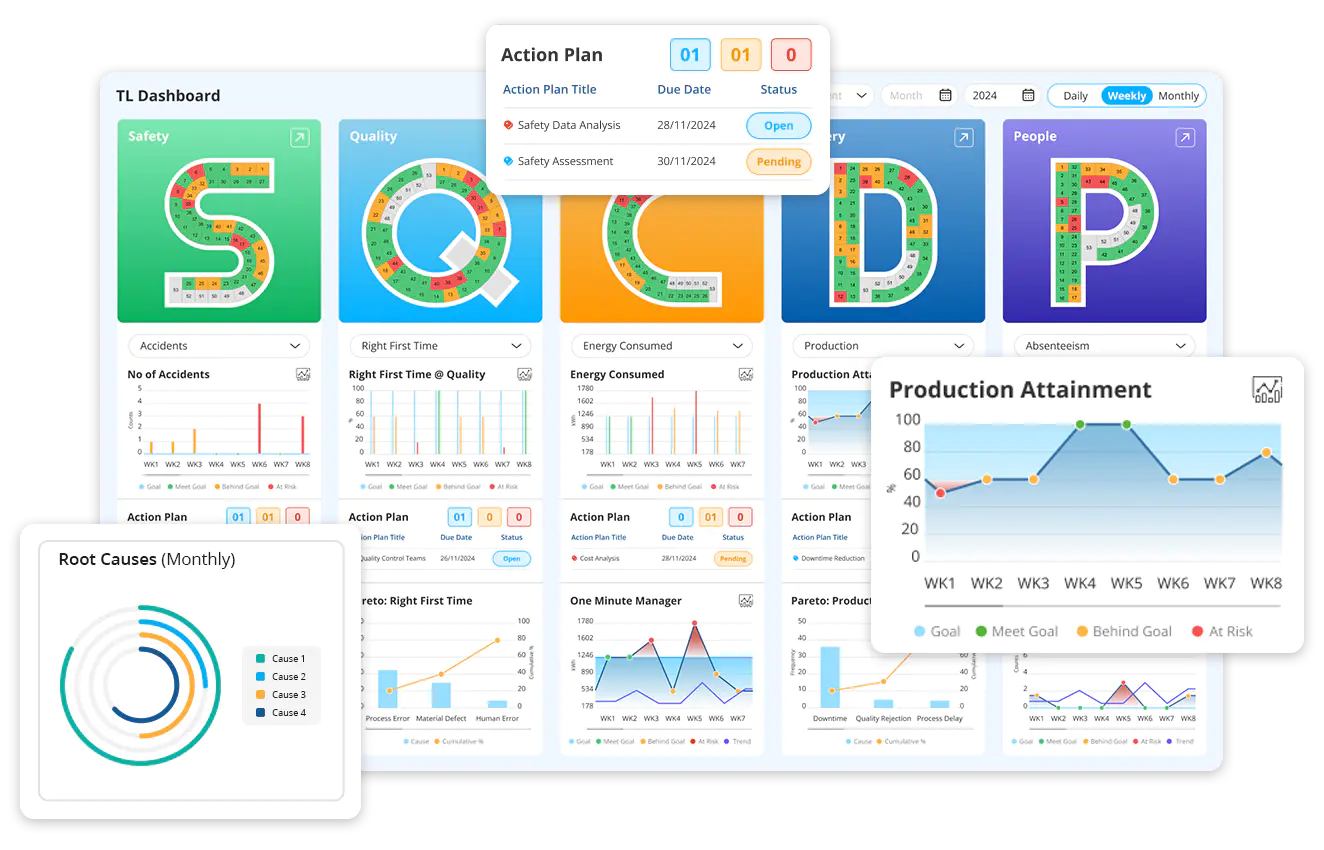
Strategic Planning Software: The Complete Guide to Business Strategy Development and Execution
Learn how strategic planning software helps organisations build actionable strategies, align goals, manage risks, analyse SWOT, track execution, and drive long-term business growth.
How does integrating SWOT and Gap Analysis into strategic planning change the quality of the resulting plan?
Most SWOT exercises happen once, in a workshop, and produce a static document that gets referenced at the next annual planning cycle and rarely before. The analysis is disconnected from the actual strategic objectives it is meant to inform, which means strengths and weaknesses identified in the workshop often do not translate into anything the plan addresses.
Integrating SWOT and Gap Analysis directly into the planning process, rather than treating it as a separate preliminary exercise, means the identified strengths, weaknesses, opportunities, and threats feed directly into the objectives being set. A capability gap identified in the analysis becomes a tracked initiative rather than a bullet point in a workshop summary that nobody revisits. This is what turns a diagnostic exercise into something that shapes the plan, rather than something that precedes it and gets forgotten.
How do SMART goals and OKRs work together within the same strategic planning framework, and why use both?
SMART goals and OKRs solve slightly different problems. SMART criteria, specific, measurable, achievable, relevant, and time-bound, ensure an individual goal is well-formed and genuinely trackable rather than vague or aspirational. OKRs, objectives and key results, structure how goals cascade and connect across an organisation, linking an ambitious objective to the specific, measurable results that would confirm it has been achieved.
Using both means each individual objective is well-defined at the goal level while also being structured to cascade meaningfully across teams. A goal that fails the SMART test is unlikely to produce a useful OKR, since a vague objective cannot generate specific key results. Supporting both frameworks within the same platform allows organisations to use the structure that fits their planning culture, or combine both, without forcing a single rigid methodology onto every type of goal.
How does modelling alternative strategies support decision-making before a plan is finalised?
Committing to a single strategic path without having seriously considered alternatives means the organisation only discovers the weaknesses of that chosen path after resources have already been committed to it. By the time an alternative approach starts to look more attractive, switching costs are already high.
The ability to model alternative strategies before finalising the plan gives leadership a way to compare approaches against the same risk and resource assumptions before choosing one. This is particularly valuable when a strategic decision involves genuine uncertainty, such as entering a new market or reallocating significant capital, where the cost of choosing the wrong path is high enough to justify the additional planning effort of seriously evaluating more than one option.
How does linking tactical decisions to long-term strategy prevent short-term actions from working against strategic goals?
Day-to-day operational decisions are often made with immediate, local priorities in mind, without a clear line of sight to whether that decision supports or undermines the longer-term strategic direction. A cost-cutting decision made at department level to hit a quarterly target can directly conflict with a long-term investment the strategic plan is counting on.
Linking tactical decisions to long-term strategy within the same system means that connection is visible before a decision is made, not discovered afterward when the conflict has already caused damage. This is where KPI action plans become the operational mechanism for that link, since each mechanism for that link, since each corrective or improvement action taken in response to a KPI deviation can be traced back to the strategic objective it either supports or, if left unchecked, undermines.
How does breaking strategic goals down into specific tasks avoid the gap between ambition and execution?
A high-level strategic goal, stated on its own, tells a team what the organisation wants to achieve. It does not tell anyone what to do on Monday morning. This is where most strategic plans lose momentum: the goal is agreed at leadership level, but the translation into specific, owned, scheduled tasks either happen inconsistently across departments or does not happen at all.
Converting strategic priorities into specific tasks with defined milestones closes that gap. Each part of the strategy has a corresponding action with an owner and a timeline, and cross-functional visibility means teams working on interdependent pieces of the same strategic goal can see how their task connects to what another team is doing. For operations where those tasks translate into shopfloor execution, that same breakdown discipline is what production planning depends on to turn a schedule into something teams can work against.
How does risk management within strategic planning differ from risk management applied to individual projects?
Project-level risk management typically looks at what could delay or derail a single initiative. Strategic-level risk management needs to look at something broader: which objectives across the entire plan are most vulnerable, how risks in one part of the strategy might affect another, and whether the overall plan has blind spots that individual project reviews would not surface.
Identifying vulnerabilities in objectives at the strategic level, rather than only at the project level, means risk is assessed against the plan. Modelling alternative strategies gives leadership a way to stress-test the plan before committing to it, rather than discovering a critical vulnerability only after execution has begun. This is a materially different exercise from a project risk register, because it is asking whether the strategy itself is resilient, not just whether any single initiative within it is likely to run late.
How does highlighting areas needing attention differ from a general risk register in supporting ongoing strategic execution?
A risk register is typically a static list, reviewed periodically, that identifies what could go wrong. It does not necessarily tell a leadership team what is currently going wrong or drifting off track as the strategy is being executed in real time.
Highlighting areas needing attention as an active, ongoing feature of strategic planning means the plan surfaces its own weak points continuously rather than only at the scheduled risk review. This shifts risk management from a periodic compliance exercise into something that actively supports the day-to-day decisions leadership needs to make about where to intervene while the strategy is still being executed, not after a quarter has already gone by.
How does real-time data integration from MES and ERP systems keep a strategic plan grounded in current operational reality?
A strategic plan built on assumptions about operational capacity, cost structures, or production capability that were accurate when the plan was written can become disconnected from reality within months if those assumptions are never checked against what is happening on the ground.
Automatic data syncing from MES and ERP systems means the strategic plan is informed by current operational data rather than the assumptions that were true at the planning stage. Eliminating manual data entry and the discrepancies that come with it ensures the data feeding strategic decisions has high integrity. This is what allows the tactical link mentioned earlier to function. A tactical decision can only be checked against long-term strategy in real time if the strategic plan itself is working from current data rather than a snapshot from the last planning cycle.
Hear it from our customers

MARC ROBINSON
Director, Global Operational Excellence

“By providing a central location to input, analyse and share our KPIs, 'Data Point' enables site management to more easily focus on the entire business as a team. Its ability to allow automated data entry and trend analysis gives us more time for improvement rather than just reporting numbers. Combined with a disciplined approach within our SQDC meeting process, I believe 'Data Point' will help us continually focus on key issues and drive business excellence in all areas.”
Start your Strategic Planning journey with Data Point
Fill out the form to get started and turn your strategic vision into measurable results!
