Manufacturing Project Management Software That Turns Projects into Measurable Performance Gains
Last updated on : February 13, 2026
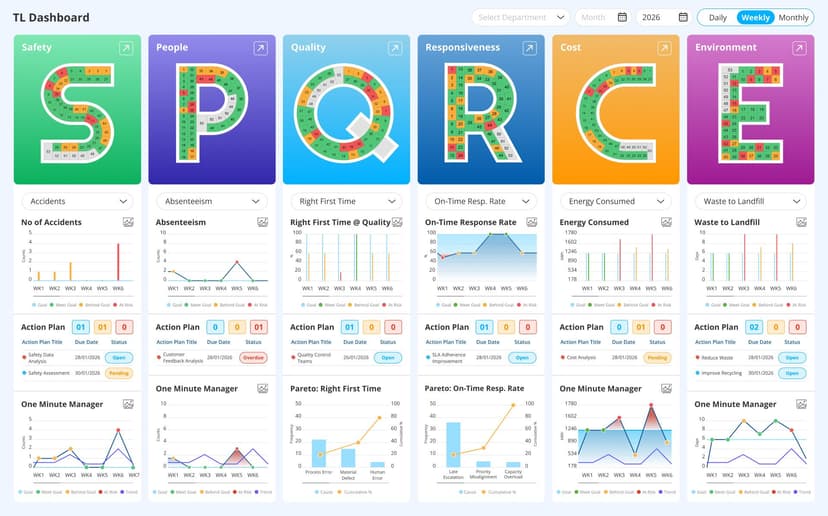
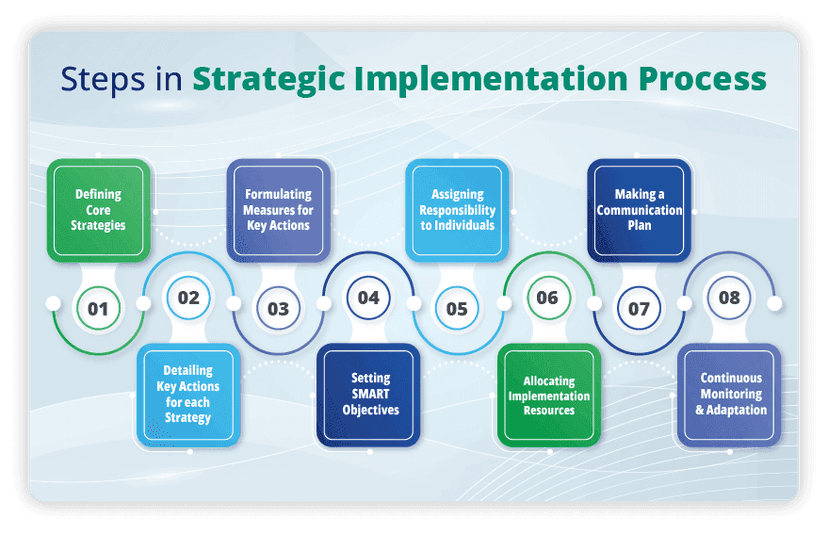
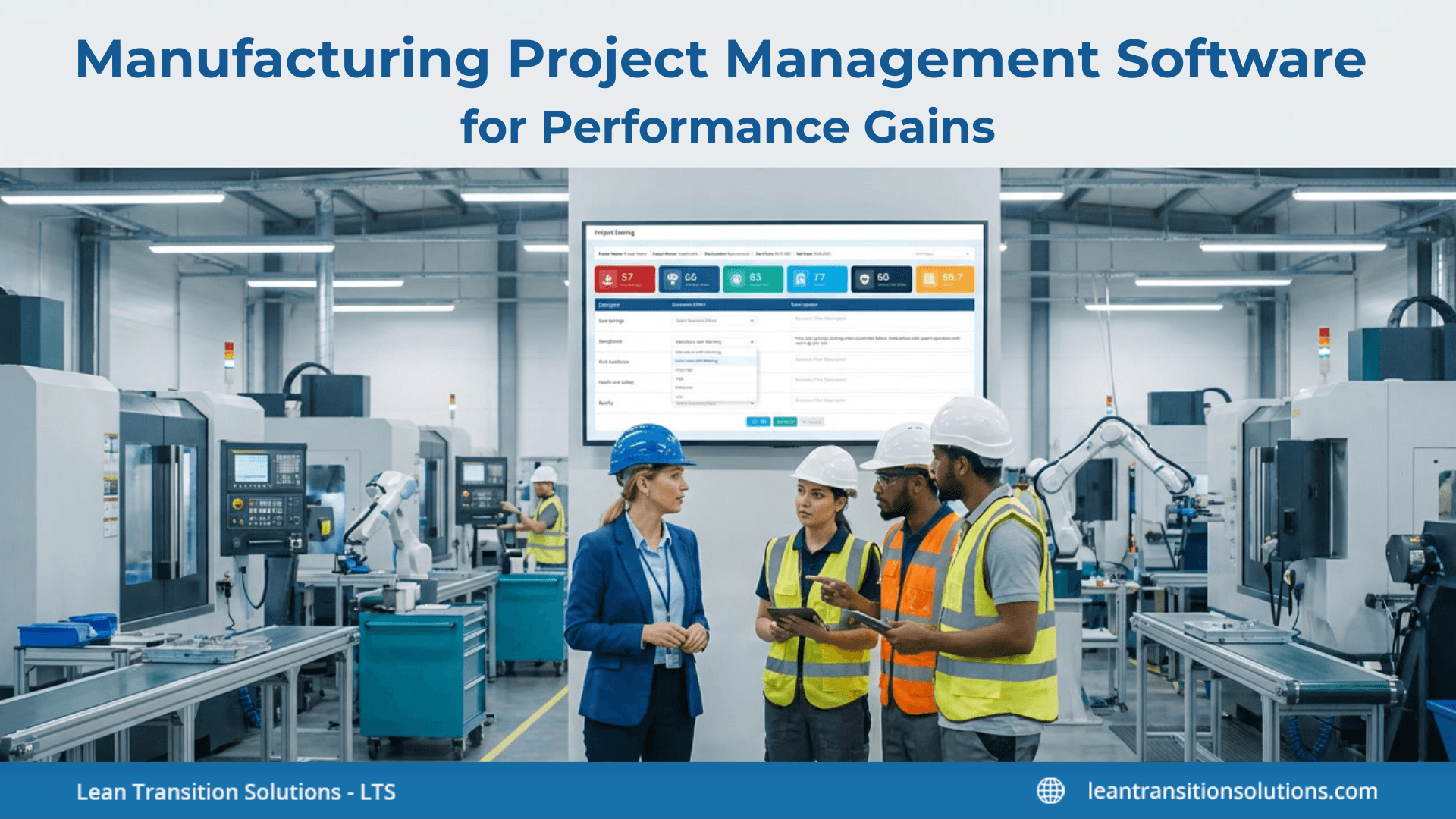
Manufacturing project management software shouldn’t just tell you what’s due — it should show whether your projects are actually making things better. In busy manufacturing environments, teams often juggle multiple initiatives with limited visibility into how they affect day-to-day performance. Manufacturing project management software like LTS Data Point brings projects and operational data together, helping teams spot issues early, stay aligned, and turn everyday execution into real, measurable performance gains. In this blog, we’ll explore why manufacturing project management software must go beyond task tracking, challenges of manufacturing project management software in real-world operations, how the software impacts operational performance, turning manufacturing projects into measurable performance gains with live visibility, manufacturing projects that benefit most from performance-led tracking and how to choose the right software, and why LTS Data Point is the best choice.
See how LTS Data Point turns manufacturing projects into measurable performance gains
Why manufacturing project management software must go beyond task tracking
In manufacturing, project management isn’t just about ticking boxes or meeting deadlines – it's about making sure every project drive real operational results. Generic product management tools often fall short because they attend to tasks rather than the performance impact of those tasks. Teams can get busy, but without visibility into projects influence KPIs, delays and inefficiencies often sneak up unnoticed.
Key challenges of traditional tools include:
- Multiple parallel initiatives: Teams juggle several projects at once, making it hard to monitor what actually moves the needle.
- Limited shopfloor visibility: Once projects leave planning, progress becomes murky, and critical issues surface too late.
- No link to performance impact: Completing tasks doesn’t automatically translate to quantifiable gains in throughput, quality, or delivery.
- Reactive problem-solving: Without live insights, delays and bottlenecks are only spotted after they affect operations.
By addressing these gaps, manufacturing project management software can shift from being a simple task tracker to a tool that actively drives measurable performance gains.
Manufacturing project management software challenges in real-world operations
Manufacturing project management software are rarely straightforward. Teams face constant changes in priorities, complex dependencies across departments, and the pressure of keeping production running smoothly. Relying on disconnected systems or manual processes often makes it hard to see the full picture and act before problems impact delivery.
Key challenges of manufacturing project management software include:
- Cross-functional dependencies: Coordinating maintenance, production, and quality teams demands tools that go beyond simple manufacturing work order software or basic production planning software.
- Shifting priorities and firefighting: Manufacturing schedules change frequently, making manufacturing scheduling software and production scheduling software vital for keeping initiatives on track.
- Manual updates and delayed reporting: Without integrated manufacturing management software or MES systems, observing progress in real time becomes time consuming and error prone.
- Difficulty keeping leadership and execution teams aligned: Teams using contrasting manufacturing software solutions often struggle to verify that everyone sees the same project status and performance insights.
Understanding these challenges spotlights why standard project tracking isn’t enough – manufacturing teams require software that links execution, performance, and operational insights to keep projects on course.
Talk to an LTS Data Point expert about performance-led project execution
How manufacturing project management software impacts operational performance
Completing tasks is only part of the story – in manufacturing, the real measure of success is how project affects throughput, quality, delivery, and cost. Many teams focus on ticking boxes, but without connecting initiatives to performance metrics, it’s impossible to know whether projects are truly driving results.
Main ways operational performance is impacted:
- Projects as drivers of performance: Every initiative, from manufacturing work order software updates to factory management system projects, should contribute to computable improvements in efficiency and quality.
- Beyond task completion: Simply marking a project complete doesn’t guarantee enhanced throughput or reduced downtime – metrics like OEE, delivery reliability, and quality rates matter.
- Live visibility: Teams benefit from integrated manufacturing management software and MES systems that offer real-time tracking of progress versus performance targets.
- Early warning signals: Performance-linked software underlines issues before they escalate, allowing teams to intervene proactively rather than waiting for post-mortems.
- Continuous improvement: By observing projects alongside key performance indicators (KPIs), manufacturers can focus on corrective actions, optimise schedules, and ensure every project contributes to operational gains.
When performance becomes the core lens through which projects are evaluated, software evolves from simple scheduling tool to strategic driver of computable results.
Turning manufacturing projects into measurable performance gains with live visibility
In modern manufacturing, projects are not valuable just because they’re planned or completed – they deliver real impact only when execution is visible, measurable, and connected to operational performance. Teams require clarity on ownership, milestones, and progress, as well as practical insights to intervene early when slippage happens. Integrated manufacturing scheduling software, production scheduling software, and MES systems make it possible to monitor projects across the factory floor, securing every initiative contributes to throughput, quality, and delivery goals.
Key benefits of performance-focused, real-time project visibility include:

- Clear ownership and accountability: Everyone knows which projects affect production, quality, and delivery metrics.
- Tracking progress against expected impact: Projects are calculated not just completion, but by performance improvements in efficiency, OEE, and delivery reliability.
- Early identification of slippage: Live tracking highlights bottlenecks and delays before they escalate, enabling proactive corrective action.
- Prioritisation based on data: Teams can concentrate resources on initiatives with the highest operational impact.
- Single source of truth: Integrated manufacturing management software or manufacturing ERP software minimises confusion and makes sure consistency between leadership and execution teams.
- Reduced reliance on status meetings and spreadsheets: Automated tracking and live dashboards cut down manual reporting, freeing teams to attend to value-added tasks.
- Faster, more confident decisions: Leaders gain practical insights quickly, enhancing planning and scheduling across manufacture enterprise systems.
- Alignment across teams: Operations, production, and leadership remain in sync, with all stakeholders seeing the same project and performance data.
- Supports continuous improvement: Tying up projects to quantifiable results helps refine processes, optimise scheduling, and enhance operational outcomes over time.
By consolidating performance tracking with real-time visibility, manufacturing teams can transform projects from isolated tasks into strategic drivers of computable gains – verifying every initiative contributes to stronger operations, better delivery, and higher efficiency.
See how LTS Data Point connects projects with real operational outcomes
Manufacturing projects that benefit most from performance-led tracking and how to choose the right software
Not all projects are built equal, but in manufacturing, certain initiatives have an outsized impact when observed with performance in mind. From production planning and work order execution to scheduling and shopfloor optimisation. Performance-led tracking guarantees teams prioritise what really drives throughput, quality, and delivery.
When choosing manufacturing project management software, it’s important to consider solutions that integrate with manufacturing scheduling software, production scheduling software, MES systems, manufacturing software, and manufacturing ERP software to offer live insights and practical data.
Key projects that benefit most include:
- Production planning and scheduling initiatives: Using production planning software and manufacturing scheduling software to align resources, lower downtime, and enhance delivery timelines.
- Work order and factory operations tracking: Leveraging manufacturing work order software and factory management system projects to make sure tasks are executed efficiently and connected to KPIs.
- Continuous improvement programs: Tracking performance using OEE software and manufacturing software solutions to detect bottlenecks, refine processes, and improve throughput.
- Enterprise-wide initiatives: Large-scale initiatives executed across manufacture enterprise systems benefit from unified monitoring process to link projects, KPIs, and outcomes.
- Small business manufacturing projects: Even smaller teams using manufacturing software can gain computable improvements by connecting daily execution with performance insights.
Manufacturing project management software for performance-led execution with LTS Data Point
LTS Data Point is designed for manufacturing teams that require more than task tracking. It takes an enterprise-grade approach to project management by linking execution with operational performance, helping teams manage multiple initiatives while remaining focused on outcomes that matter on the shopfloor and at leadership level.
What sets LTS Data Point apart:
- Enterprise-grade execution focus: Created to assist complex manufacturing environments where multiple projects, dependencies, and priorities run in parallel.
- Performance visibility as core principle: Projects are viewed in the context of operational KPIs, helping teams understand not just progress, but real performance impact.
- Structured tracking and review: Teams can consistently monitor initiatives, review execution health, and spot risks early – before problems affect delivery or efficiency.
- Outcome-driven decision-making: By concentrating on results rather than activity alone, teams attend to the initiatives that deliver measurable operational gains.
- Alignment across teams and leadership: A shared view of projects and performance helps execution teams and decision-makers stay aligned without depending on manual updates or frequent status meetings.
For more details on why LTS Data Point is the best choice, check out our latest blog: Which Manufacturing KPI Tool Is The Best? Full Comparison Inside
Steps to implement LTS Data Point manufacturing project management software
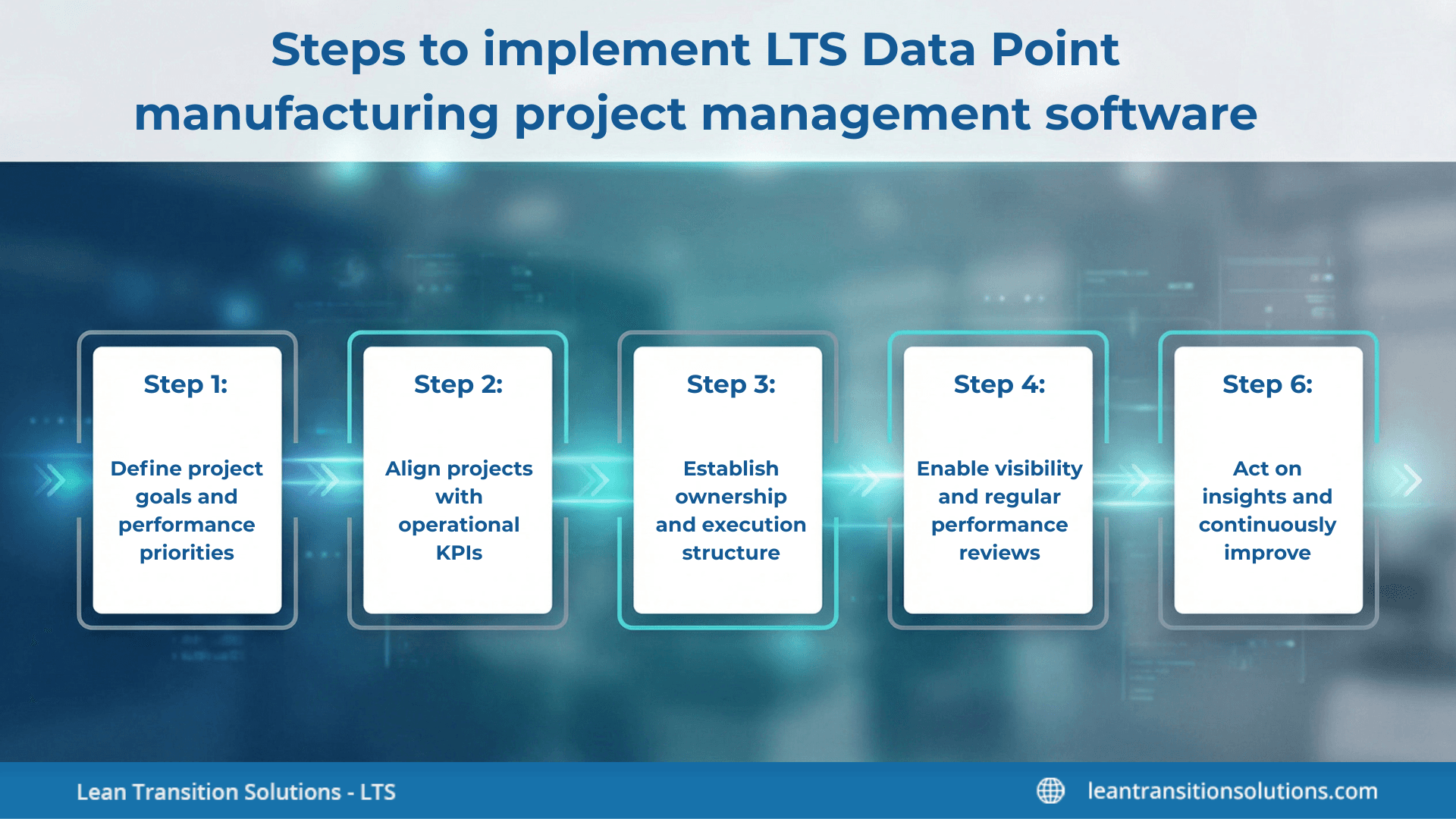
Implementing LTS Data Point is designed to be practical and structured, helping manufacturing teams move from planning to performance-led execution without disruption. The focus is on clarity, alignment, and computable outcomes from day one.
Define project goals and performance priorities
Begin by identifying the manufacturing projects that matter most and the operational outcomes they are expected to improve, such as delivery reliability, efficiency, or quality.
Align projects with operational KPIs
Connect each project to clear performance indicators so progress can be assessed in the context of real operational impact, not just task completion.
Establish ownership and execution structure
Assign clear ownership, milestones, and review rhythms to make sure accountability across production, maintenance, and quality teams.
Enable visibility and regular performance reviews
Use consistent tracking and review cycles to track execution health, detect risks early, and keep teams aligned around shared view of progress.
Act on insights and continuously improve
Use execution and performance insights to attend to corrective actions, refine project plans, and strengthen future initiatives.
Manufacturing projects deliver real value only when they enhance how operations perform, not just when tasks are completed on time. By shifting the focus from activity to outcomes, manufacturing teams gain clearer visibility, better alignment, and earlier control over execution. With its performance-led approach, LTS Data Point helps industries manage projects with purpose – turning everyday execution into quantifiable, sustainable performance gains across manufacturing operations.
Get expert guidance on improving project execution using LTS Data Point
FAQs
1. How is manufacturing project management different from standard project management?
Manufacturing project management must account for production constraints, cross-functional dependencies, and real-time operational impact, making it more execution- and performance-focused than generic project management.
2. Can manufacturing project management software scale across multiple plants or sites?
Yes, enterprise-grade manufacturing project management software is designed to support multiple teams, locations, and initiatives while maintaining consistency and visibility.
3. How quickly can manufacturing teams see performance improvements from better project tracking?
Teams often see early improvements once projects are reviewed against performance indicators rather than only timelines, allowing faster identification of risks and priorities.
4. Who typically uses manufacturing project management software on the shopfloor?
It is commonly used by production managers, maintenance leaders, quality teams, and operations leadership to track execution and performance impact.
5. Does manufacturing project management software replace ERP or MES systems?
No, it complements existing manufacturing systems by focusing on project execution and performance visibility rather than transactional or machine-level control.
6. What types of manufacturing organisations benefit most from performance-led project management?
Organisations running multiple improvement initiatives, expansion projects, or operational transformation programmes benefit most from linking projects directly to performance outcomes.
7. How does performance-focused project management support continuous improvement?
By tracking initiatives against operational results, teams can learn what works, refine execution approaches, and prioritise future projects more effectively.
8. What should leadership look for when reviewing manufacturing project performance?
Beyond completion status, leadership should focus on execution health, risk signals, and how projects influence operational KPIs over time.