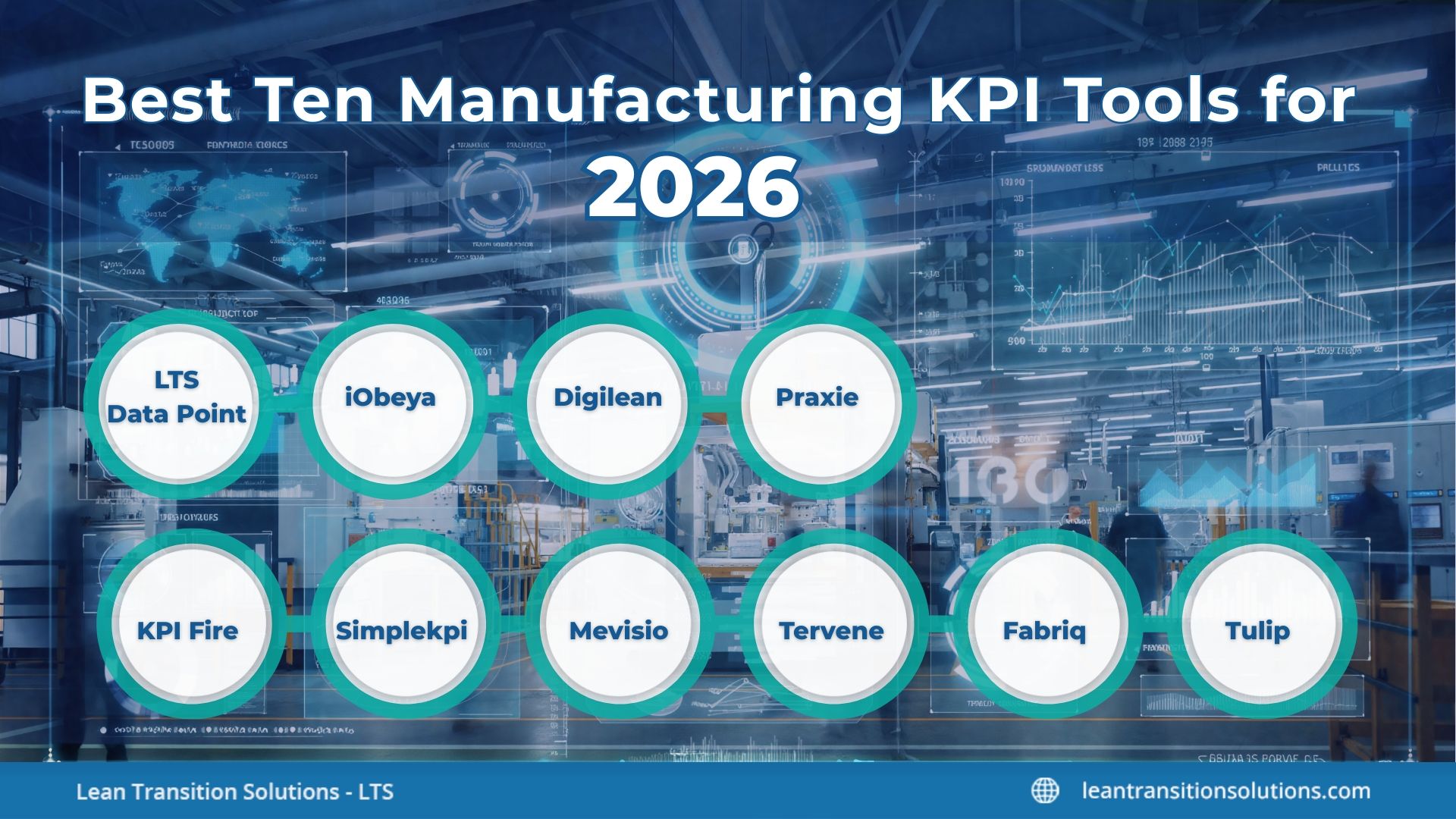
Which Manufacturing KPI Tool Is Best for 2026? Full Comparison Inside
Last updated on : December 23, 2025
Manufacturers lose an average of 17 to 22 percent of productivity each year simply because KPI data is scattered, delayed, or hidden in spreadsheets. It sounds wild, yet most teams still make decisions with numbers that are hours old or manually updated.
So the real question for 2026 is simple.
If your factory runs on real-time operations, why doesn’t your KPI monitoring system do the same?
with dozens of platforms promising dashboards, OEE tracking, visual boards, and digital routines, choosing the right manufacturing KPI monitoring system is harder than ever.
This comparison helps you cut through noise. You’ll see what each tool actually does, where it fits, and which platform works best depending on your maturity level, size, and operational goals.
Why should you be worried about your manufacturing KPI tracking?
The answer is simple. Imagine you're the captain of a ship. Would you set sail Manufacturing KPI tool without checking the compass or knowing the weather? Absolutely not! KPIs, or Key Performance Indicators, are like that compass that lead your shopfloor with direction. Imagine managing a production floor without knowing:
- How machines are performing
- Why downtime occurs
- Where quality defects originate
- Whether output meets demand
Without them, improvement becomes guesswork.
Challenges in manual KPI tracking
Manual reporting, spreadsheets, and relying on outdated systems to track KPIs can be error-prone and tedious. These results are slow decision-making, miscommunication, missed opportunities, and lack of profitability.
How Manufacturing KPI Software solves these challenges?
An efficient digital manufacturing KPI tool can provide a digital solution to your trouble in managing the essential KPIs. It automates data collection, analyses and provides real-time reporting of key metrics. It empowers the manufacturers to create data-driven decisions. This enables the manufacturers to reduce costs, optimise production and enhance product quality. Learn more about How manufacturing KPI software drives efficiency and profitability?
Why a comparison of manufacturing KPI tools matters now?
Manufacturers and operations-driven organisations are under intense pressure to improve performance faster than ever before. The world has shifted:
- Talent shortages mean fewer experts managing more processes
- Operational losses are rising as downtime and quality failures cost millions
- Boardrooms demand real-time visibility, not monthly reports
- Lean excellence can no longer run on Excel sheets, whiteboards, and siloed tools
- AI and automation are becoming expected components of operational strategy
Choosing the wrong KPI or improvement platform now doesn’t just waste money — it locks teams into inefficiencies, fragmented data, manual reporting, and disconnected improvements.
That is why this comparison exists:
not to sell software, but to help you understand which platform fits your maturity, goals, and operational model.
The market is not one category — And that’s the real confusion
Most buyers search for terms like KPI software, Balanced Scorecard tools, Visual management boards, OEE dashboards, or Lean execution platforms for their shopfloor, but they don’t realise these belong to different categories.
Let’s segment the landscape correctly:
Types of manufacturing KPI tools- categorisation
CATEGORY A – All-in-one modular platform
System that integrates KPI alignment, Balanced Scorecard execution, Lean boards, OEE insights, and SQCDP or other metrics dashboards in one environment for efficient performance management and operational excellence
CATEGORY B - Balanced Scorecard & KPI Alignment Platforms
Designed for organisations needing structured strategic execution and cascading goals.
- Praxie
- KPI Fire
- SimpleKPI
CATEGORY C – Lean, CI & Visual Management Platforms
Focus on shopfloor visibility, problem-solving, digital boards, and improvement cycles.
- Mevisio
- DigiLean
- iObeya
- Tervene
- Fabriq
CATEGORY D – Connected Frontline Operations
Modern operations platforms enabling dynamic workflows, apps, and frontline digitisation.
- Tulip
Criteria for selecting the best manufacturing KPI software
Each product has been assessed across six mandatory enterprise-buying dimensions:
Who are the leading manufacturing KPI tool providers?
1. LTS DATA POINT
Category: Integrated Strategy, KPI, Lean, and Frontline Execution Platform
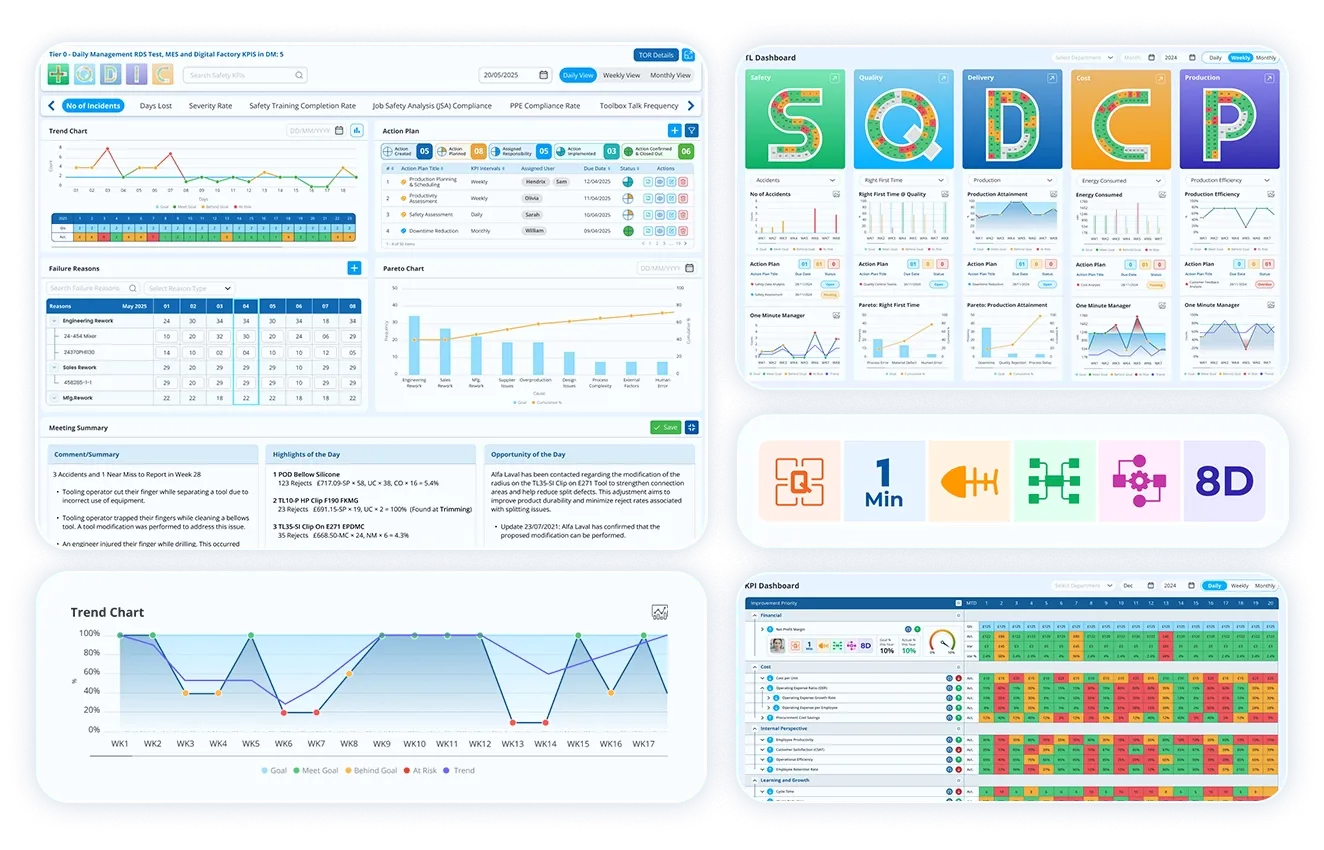
LTS Data Point is a cloud based modular, integrated software that measure and act on KPIs without multiple systems, logins, or data silos. It brings KPI alignment, Lean Daily Management (LDM), Balanced Scorecard thinking with its advanced variety of built in or tailored systems like operational boards, problem-solving lean tools, process confirmation, and Gemba routines into a single digital architecture. Data point provides the best shop floor KPI dashboards through predictive analysis, real-time data visualisations, and multi-system integration that empower daily tier meetings with live visual boards. It suits many industries and works especially well as a manufacturing KPI tool.
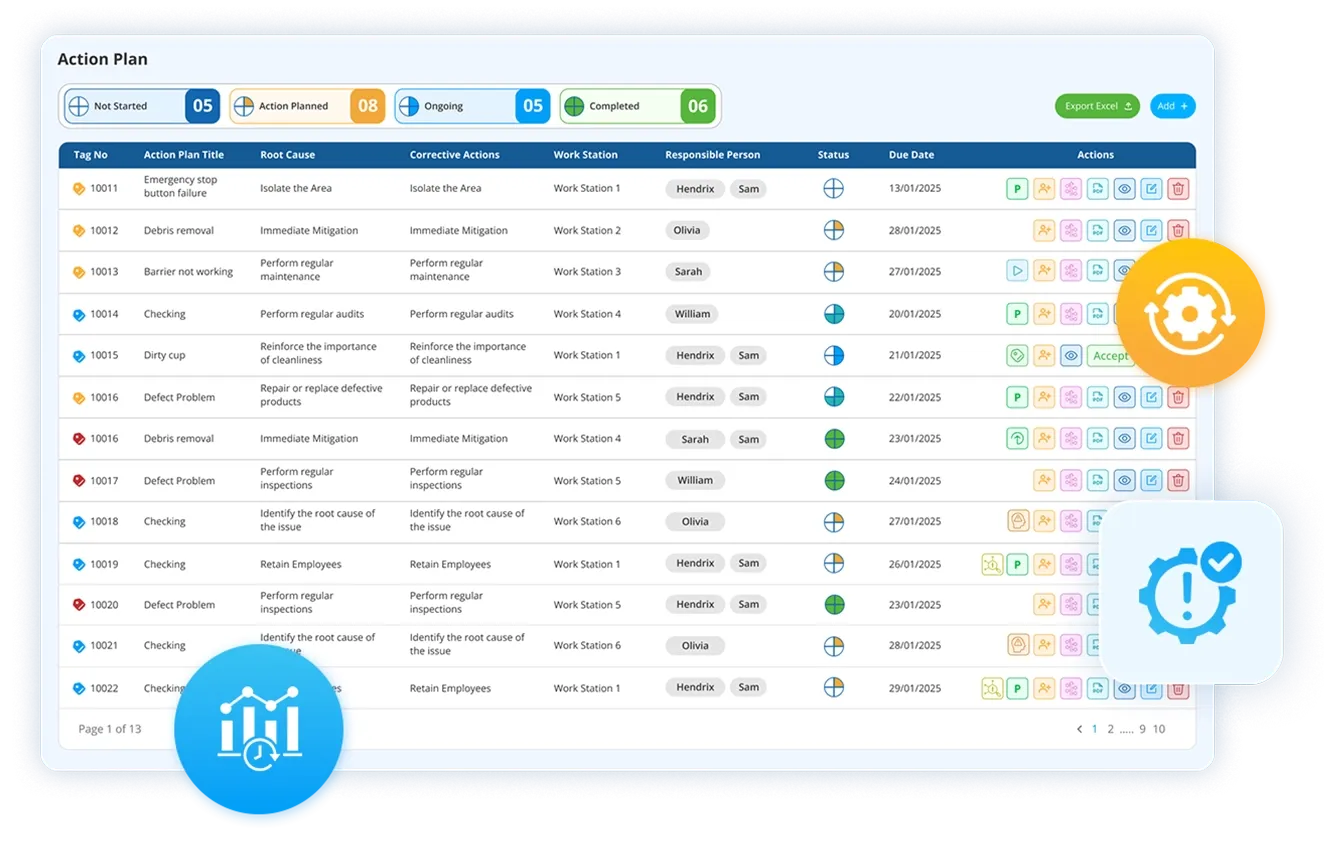
Unlike platforms that focus only on dashboards or Lean boards, Data Point enables organisations to:
- Cascade corporate objectives down to departmental KPIs with digital Hoshin Karni X matrix and other strategic tools.
- Track SQCDP, OEE, lagging/leading indicators together and supports Gemba walks with Gemba boards.
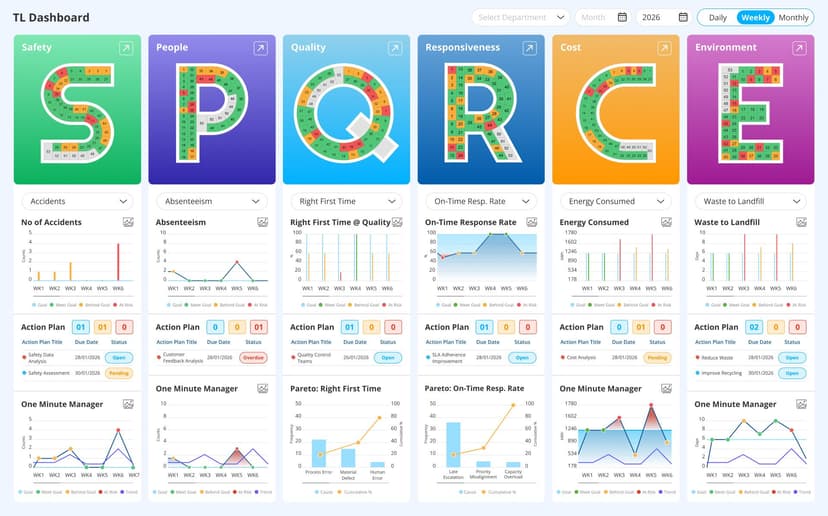
- Provide custom huddle boards with trend graphs, pareto analysis, quad charts and action plans for easy analysis
- Link every KPI to owners, deadlines, and corrective actions.
- Visualise and monitor KPIs dynamically with Bowling Charts and Scorecard.
- Verify if actions taken are producing results with action plan framework, pareto analysis, trend graphs and quad charts in single dashboard view.
- Connect strategic goals with daily accountability routines
- Replace fragmented tools: Scorecards + Digital Boards + CI trackers
- Supports Leader Standard Work that outlines the daily, weekly, and monthly tasks
- Seamless integration with MES/ERP/EXCEL/ BI tools
- Highly scalable with add- on modules that strengthen strategy execution, planning, downtime control, lean problem solving and people development.
Here are the Lean tools integrated into Data Point.
- One minute manager
- Fishbone diagram (Ishikawa diagram)
- 8D analysis
- Mind map
- Quad chart
- Process Flow and VSM
- Corrective and preventive actions (CAPA)
- A3 problem solving
Other advanced features that enable seamless KPI management
- Takt Time Tracking
- Digital Value stream mapping
- Corporate governance board
- Production Planning Module
- Short Interval Control Board
- Continuous Improvement Charter
- Shift Management
Core value:
It does not present KPI numbers alone. It connects why the numbers matter, who owns the outcome, and what actions must happen to improve them.
Drive Manufacturing Success with Data Point
Get Started to Measure Key Metrics and Make Data-Driven Decisions Faster!2. IOBEYA
Category: Obeya Visual Governance Rooms
iObeya focuses on decision rooms for leadership and teams. It promotes alignment through structured visual collaboration. It offers platforms for lean manufacturing, lean project management, and agile at scale. It integrates KPIs into digital war rooms, making it easy to link operational metrics to broader strategic goals. Virtual Obeya rooms, which is the data visualisation tool provided by iObeya, enable strategic alignment and collaboration.
Strengths
- Excellent for agile governance
- Good for cross-functional reviews
Core features
- Digitise shop floor management system
- Visualises quality metrics (e.g., PPM) in real time.
- Cost-saving ideation boards for employee input.
- Integrates safety checklists into daily workflows.
- Optimise remote & hybrid planning
- Interconnected agile team rooms
Limitations
- KPIs are displayed but not architected
- Lacks ownership layers and cause-effect chains
Scenario
Great for leadership cadence but requires another KPI system to provide performance intelligence.
3. DIGILEAN
Category: Lean Digitisation Platform DigiLean as the manufacturing KPI tool digitises Lean boards and introduces CI workflows. It works well when the goal is to replace physical boards without rethinking processes. It helps connect KPIs to strategic goals via visual management. It helps with team collaboration concentrated on lean methodologies. It works seamlessly across modules and enables collaboration across locations.
Strengths
- Lean templates ready to deploy
- Kanban and improvement visuals
Core features
- Interactive boards with templates for different purposes like Kanban, daily management (SQCDP), and weekly schedules.
- Provides tiered reporting and live updates for real-time insights.
- Supports daily performance meetings with live updates, interactive boards, with action follow up.
- Includes integrated modules for managing improvement suggestions, action lists, and problem-solving.
- Facilitates collaboration across different locations
Limitations
- No balanced scorecard support
- Relies on external systems for KPI depth
Best For
Organisations at the start of digital Lean deployment.
4. PRAXIE
Category: Balanced Scorecard and KPI Toolkit
Praxie offers Manufacturing data visualisation, digital templates for strategic planning, Balanced Scorecard tracking, and transformation roadmaps through manufacturing data visualisation. It is an AI Powered business process operations software platform to analyse, diagnose, suggest, automate & monitor your processes. It is template-driven, which suits organisations without mature internal frameworks. It provides digital tools to assist with Lean Six Sigma and quality process improvements.
Where it fits
- Organisations starting a strategy office
- Teams needing quick templates for OKRs, SWOT, or scorecards
Core features
- Utilise artificial intelligence to automate and enhance business processes.
- Provide AI powered SQDC huddle board app
- Craft tailored solutions for organisational needs
- Integrate with existing MES, ERP, and QMS systems
- Offer high-level views and reports for board members and senior leadership.
- Batch & Job Control with complete traceability
- Power AI supported Gemba walk insights
Limitations
- does not go beyond the strategy layer into operational execution
- Lean and CI maturity cannot be digitally sustained
Example Scenario
Good for a consulting-led transformation where templates change frequently, not for plants needing real-time boardroom-to-shopfloor alignment.
5. KPI FIRE
Category: Lean Strategy Deployment Tool
KPI Fire is a continues improvement software specialises in transforming operations by aligning strategy and tracking KPIs with Digital Hoshin Kanri, goal alignment, and portfolio management. It focuses on structured projects, A3 thinking, and KPI roll-ups.
Strengths
- Structured strategy deployment through Hoshin Kanri / X-Matrix, Balanced Scorecard, or cascading-goals frameworks
- Project & Portfolio Management with Lean / Six Sigma / CI Method Support
Core features
- Enterprise-Friendly Governance that supports integration, access control, review cadence & auditability
- Ensure every project or initiative links back to strategic objectives, improving clarity and alignment.
- Engaging frontline workers and encouraging continuous improvement.
- Tracks cost savings or benefits resulting from improvement projects
- Supports role-based access control, integrates with third-party tools via APIs
Limitations
- Operational boards are limited in customisation
- Visualisation depth is lower than Lean board platforms
Best For
Organisations with CI teams who run structured improvement portfolios and want digital Hoshin without broader operational management.
6. SIMPLEKPI
Category: Lightweight KPI Dashboard
SimpleKPI is easy to adopt, requires minimal setup, and fits organisations wanting central KPI views. It provides KPI dashboard that takes complex data and turns it into accessible and understandable visuals.
Strengths
- Intuitive manufacturing dashboards
- Fast KPI setup
Core features
- Custom KPI Creation, Templates & KPI Library
- Supports a variety of visualisations — charts, graphs, tables, widgets and league-tables
- Consolidate production data, quality records and cost sheets by quick data import and integration
- KPI tracking over time with targets and thresholds
- Track not only production metrics, but also maintenance, quality, cost, labour, delivery and other cross-functional indicators
Limitations
- No strategic linkage between KPIs
- No Lean routines
- Cannot handle multi-layered KPI hierarchies
Best For
Small service organisations tracking performance without transformation frameworks.
7. MEVISIO
Category: Custom Digital Boards
Mevisio supplies a platform for digital visual management boards that helps the teams to track KPIs and collaborate effectively. It replaces whiteboards with digital equivalents. Organisations can design layouts that mirror their physical boards. The customisable dashboards provided by Mevisio integrate various data sources and aid the teams to align various KPIs with strategic goals.
Strengths
- Strong board design flexibility
- Excellent fit for visual management cultures
Core features
- Identify patterns and trends in complex data sets, which can lead to better business decisions
- Customisable PDCA, A3, Six sigma boards and 5S templates.
- Identify problems and execute Lean manufacturing processes
- Risk board identify and visualise risks and opportunities
- Daily shop floor management board update status, quality and safety
- Connects ERP, MES, and legacy systems.
- Aligns daily tasks with long-term strategic goals.
Limitations
- Metrics often updated manually or externally
- Improvement routines depend on integrations
Use Scenario
A plant with mature Lean boards migrating from magnets and sticky notes into a digital environment.
8. TERVENE
Category: Daily Management and Leadership Routines
Tervene is a digital platform that helps manufacturers and industrial operators standardise, track, and optimise daily operational routines, Lean practices, and continuous improvement workflows. It centralises audits, inspections, Gemba walks, and issue management into a structured, traceable system, enabling teams to maintain process discipline, operational consistency, and measurable performance improvements across shifts and sites.
Strengths
- Supports safety, quality, and audit workflows
- Creates accountability loops
Core features
- Leader Standard Work & routine tracking for supervisors and managers.
- Mobile-enabled Gemba walks, audits, and 5S inspections.
- Action and improvement tracking with follow-ups and workflows.
- Tiered communication and shift handover management.
- Operational visibility dashboards for audits and issue resolution.
- Continuous improvement support with structured problem-solving cycles.
Limitations
- Performance KPIs still live elsewhere
- No alignment of actions to strategy
Best For
Sites needing operational discipline without strategic scorecards.
9. FABRIQ
Category: Improvement and Collaboration
Fabriq helps teams collaborate on improvement actions, incidents, and projects. It provides digital visual management for the shop floor by providing tools for shop-floor digital transformation, standardises routines and lean practices, empowers operators and team leaders.
Strengths
- Improvement library
- Action boards
Core features
- Digital tier meeting boards that connect frontline teams to leadership in real time.
- Escalation workflows that ensure every issue has an owner and a resolution deadline.
- Standardised audits, Gemba walks, and checklists with digital evidence capture.
- Centralised corrective-action and non-conformity tracking that prevents follow-up gaps.
- Real-time KPI visibility that highlights performance deviations across shifts and sites.
- Multi-site governance that deploys and monitors best practices consistently everywhere.
Limitations
- Lacks scorecard logic
- Does not unify enterprise KPIs
Best For
Teams focused purely on improvement execution.
10. TULIP
Category: Connected Frontline Operations
Tulip is an AI integrated operational excellence platform that allows teams to build apps for frontline workflows without code. It shines in digitising checklists, SOPs, and operator interactions. It lets manufacturers build apps to digitise work instructions, machine monitoring, OEE dashboards and operator workflows without traditional software development.
Strengths
- Excellent integrations
- Flexible app builder
Core features
- No-code app builder for operator workflows.
- Edge IO device + OPC UA support for machine data capture for real-time monitoring and OEE calculation.
- Templates and dashboards to calculate and display OEE/OPE, equipment status.
- Connector ecosystem and extensibility
- Connector ecosystem and extensibility
- Rapid prototyping to enterprise rollout path to reducing implementation risk.
Limitations
- Platform is optimised for frontline automation, not full strategic scorecarding
- No complete Lean governance structure
Scenario
Best suited where frontline digitisation matters more than enterprise KPI alignment.
Manufacturing KPI tool comparison summary: Where each tool stops
Scoring Matrix
Observation:
Every tool excels in one domain. Only Data Point excels across the entire lifecycle of performance management, from strategy down to the last metric on the shop floor.
Pricing signals (Without numbers)
Takeaway:
Entry-pricing may look attractive elsewhere, but full operational coverage requires multiple tools — increasing TCO. That is exactly the cost trap Data Point avoids.
Which software fits for your manufacturing operations?
Choose:
- Tulip → If frontline apps are your priority
- KPI Fire → If you have mature CI governance
- Mevisio / DigiLean / iObeya → If visualisation is your biggest gap
- Praxie / SimpleKPI → If strategy is not yet structured
- Fabriq / Tervene → If CI routines matter more than KPIs
- Data Point → If you want everything connected, measurable and driven by strategy
Final verdict: LTS Data Point- the best manufacturing KPI tool for 2026
Every tool solves one or two layers of the operational stack. Only Data Point Manufacturing KPI system spans the full thread from strategy to action.
But the conclusion is not: Buy Data Point.
The real conclusion is: The right tool depends on your maturity, governance culture, and operational needs.
If you want to unify strategy, KPIs, Lean methods, scorecards, Gemba thinking, and shop floor execution – implement Data Point for your better manufacturing performance management.
Other tools solve parts of the problem. Data Point solves the entire performance model. Want to experience it instead of reading about it?
See Data Point in action inside your own processes
FAQs
1. What should a manufacturing KPI tool include beyond dashboards?
A strong KPI tool should also support real-time updates, automated data collection, root-cause visibility, escalation workflows, and alignment between daily operations and long-term objectives. Dashboards alone are not enough.
2. How do manufacturing KPI tools typically integrate with existing systems?
Most modern platforms connect through APIs, connectors, or middleware. They integrate with ERP, MES, CMMS, and quality systems to sync production data automatically without manual entry.
3. Do I need technical skills to set up a KPI platform?
No. Most tools use low-code or no-code configuration. A good system allows non-technical teams to create dashboards, boards, and KPI views without developer support.
4. How does Data Point handle onboarding for new manufacturing teams?
Data Point provides guided onboarding, template libraries, and live support sessions. Teams can digitise their existing boards and KPI flows within days, not months.
5. Are KPI tools suitable for small manufacturing units?
Yes. Small factories often see the quickest improvement because KPI visibility exposes bottlenecks that were previously hidden in spreadsheets or whiteboards.
6. What security standards should I expect from a KPI platform?
Look for encryption in transit and at rest, role-based access controls, audit logs, and compliance with standards like ISO 27001 or SOC 2. Data Point follows enterprise-grade security practices.
7. Can these tools support cross-site or multi-plant visibility?
Many platforms support this, but not all. Data Point, Tervene, Fabriq, and KPI Fire offer multi-site consolidation. Some simpler tools like SimpleKPI may be more limited.
8. How long does it take to see improvements after implementing a KPI tool?
Most manufacturers see visible improvements within 30–60 days, mainly due to quicker problem detection, reduced reporting time, and standardised routines.
9. Is AI included in modern manufacturing KPI tools?
Some tools now include predictive alerts, anomaly detection, or automated insights. Data Point uses AI for pattern spotting and highlights generation, helping teams interpret KPI movement faster.
10. What kind of support does Data Point offer after deployment?
Data Point provides continuous support, account check-ins, new feature rollout guidance, and optional training for supervisors, CI leaders, and operators.

Geandra Queiroz, Operations Management Consultant
Geandra is an Operations Management Consultant at Lean Transition Solutions, specialising in Lean philosophy, Lean Six Sigma, and strategic planning across manufacturing and healthcare. She is currently completing her PhD in Industrial Engineering at the Federal University of São Carlos, researching the integration of Operations Strategy, Lean, and Green Manufacturing.