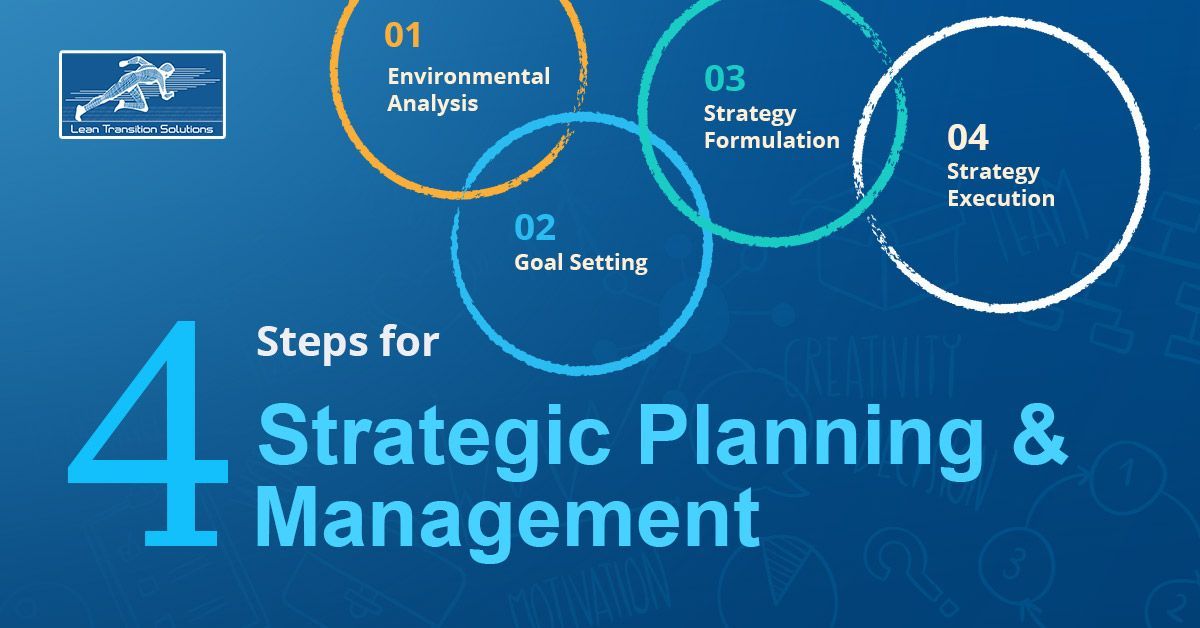
4 Steps for Strategic Planning and Management
Last updated on : June 20, 2023
In today's dynamic and competitive business landscape, organisations need a clear direction and a well-defined roadmap to achieve their goals. Strategic planning plays a crucial role here. Strategic planning helps set long-term objectives, formulate strategies, and implement actions to achieve a company's vision and mission. Strategic planning has numerous benefits for businesses of all sizes and industries. Businesses can use strategic planning to align their goals, resources, and actions for greater success.
What is Strategic Planning?
Strategic planning is a systematic and disciplined approach organisations undertake to define their long-term goals, set a clear direction, allocate resources effectively, and make informed decisions to achieve those goals. By embracing strategic planning, businesses can proactively adapt to changing market conditions, foster a culture of accountability, and position themselves for long-term success.
What elements are included in Strategic Planning and Management?
- Vision: The overarching and aspirational statement that outlines the future desired state of the organisation.
- Mission: The purpose or reason for the organisation's existence, highlighting its core values and primary activities.
- Goals and Objectives: Specific, Measurable, Achievable, Relevant, and Time-Bound (SMART) goals support the organisation's mission and vision. These goals guide the strategic planning process and provide a basis for evaluating performance.
- Environmental Analysis: It involves a comprehensive assessment of the external and internal factors that impact the organisation. This includes analysing the market, competition, technological advancements, regulatory environment, organisational strengths, weaknesses, resources, and capabilities.
- Strategic Alternatives: Identifying and evaluating strategic options that align with the organisation's goals and capabilities. It involves considering differentiation, cost leadership, diversification, mergers and acquisitions, or other strategic approaches.
- Strategy Selection: Choosing the most suitable strategy or combination of strategies that best align with the organisation's goals and objectives, considering feasibility, risk, and resource availability.
- Strategy Map: A strategy map is a visual representation that outlines the key elements of a strategy or plan. It provides a clear and concise overview of the goals, objectives, resources, and actions required to achieve a desired outcome. It helps stakeholders understand the big picture, identify priorities, and make informed decisions to align their efforts towards a common purpose.
- Feedback and Learning: Incorporating feedback from performance evaluation to learn from successes and failures, adapt strategies as needed, and continuously improve the strategic planning and management process.
Plan, execute, and manage your strategy—all in one place for smarter decision-making
What are the different steps included in Strategic Planning and Management?
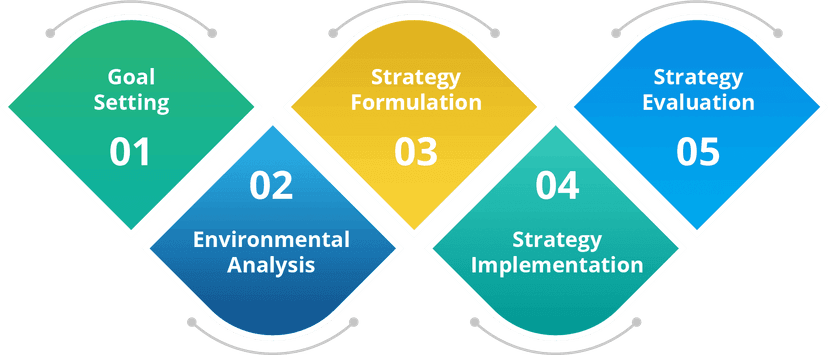
The strategic planning and management process typically involves several steps that provide a structured framework for organisations to develop, implement, and manage their strategic plans effectively. It's important to note that strategic planning is an iterative process, and organisations should continuously revisit and refine their strategies to remain agile and responsive to the evolving business landscape.
STEP 1: Environmental Analysis
- Conduct a SWOT analysis (Strengths, Weaknesses, Opportunities, Threats) to identify internal strengths and weaknesses and external opportunities and threats.
- Also, assess the external business environment, including market trends, industry dynamics, customer preferences, and competitive landscape, to have a clear-cut view of current external scenarios.
STEP 2: Goal Setting
- Define the organisation's vision statement, which outlines its desired future state and overall purpose.
- Craft a mission statement that clarifies the organisation's reason for existence, values, and primary activities.
- Establish strategic goals that align with the organisation's vision and mission.
- Ensure that goals are Specific, Measurable, Attainable, Relevant, and Time-bound (SMART).
STEP 3: Strategy Formulation
- Identify and evaluate strategic options and alternatives based on the environmental analysis and goal alignment.
- Select the most appropriate strategies to achieve the defined goals and objectives.
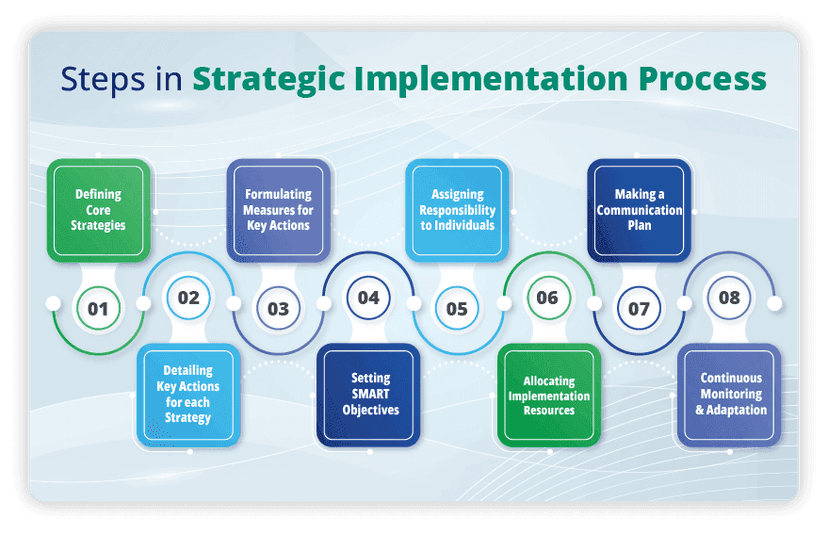
- Develop an action plan that outlines the steps, resources, and timelines required for strategy execution.
STEP 4: Strategy Execution
- Implement the selected strategies by executing the action plans developed in the previous step.
- Communicate the organisation's strategic objectives and action plans to ensure alignment and commitment.
- Monitor progress, track Key Performance Indicators (KPIs), and make adjustments as necessary to stay on track. A Balanced Scorecard is an effective tool to measure performance and identify areas of improvement. Make sure to review results regularly and use them to make informed strategic decisions.
What next after Strategic Execution?
After strategic execution, the final step of strategic planning is Performance Evaluation and Review, often considered the fifth step of strategic planning. This phase involves assessing the outcomes and effectiveness of the implemented strategies and determining their alignment with the desired objectives. Performance evaluation includes analysing Key Performance Indicators (KPIs), financial metrics, market share, customer satisfaction, and other relevant factors to gauge the success of the strategies. Based on this evaluation, adjustments and updates to the strategic plan are frequently made to adapt to market changes and emerging trends. This iterative process ensures that the organisation remains agile and responsive to the dynamic business environment, enabling continuous improvement and enhanced performance.
Close the loop on your strategy by turning performance data into actionable insights
Why is Strategic Planning important?
- Provides a roadmap: Offers a clear direction and guides decision-making.
- Aligns resources: Ensures effective allocation of resources to achieve goals.
- Maximises competitive advantage: Helps organisations stay ahead of the competition.
- Adapts to change: Enables businesses to anticipate and respond to market changes.
- Fosters a shared purpose: Aligns employees towards common goals and objectives.
- Enhances organisational performance: Improves communication, teamwork, and efficiency.
- Mitigates risks: Identifies potential threats and allows for proactive risk management.
- Capitalises on opportunities: Helps organisations identify new growth opportunities for long-term success in a dynamic environment.
- Promotes accountability: Establishes KPIs and fosters a culture of measurement and improvement.
What are the different types of Strategic Planning for organisational growth?
Organisations can employ several types of strategic planning based on their specific needs and goals. Organisations may also tailor their strategic planning approach to align with their industry, size, and specific objectives. These different types of strategic planning can be used individually or in combination, depending on the organisation's needs and the complexity of the business environment.
- Corporate-Level Strategic Planning: Corporate-Level Strategic Planning defines the overall direction and goals of the entire organisation. It involves making decisions regarding the organisation's portfolio of businesses, resource allocation, and the overall scope of operations.
- Business-Level Strategic Planning: Business-level strategic planning develops strategies for individual business units or organisational divisions. It involves determining competitive positioning, identifying target markets, and developing strategies to gain a competitive advantage in specific industries or markets.
- Functional-Level Strategic Planning: Functional-level strategic planning focuses on developing strategies for specific functional areas within an organisation, such as marketing, finance, operations, or human resources. It aligns the activities of each function with the overall organisational strategy to maximise efficiency and effectiveness.
- Operational-Level Strategic Planning: Operational-level strategic planning concerns an organisation's day-to-day activities and processes. It involves setting objectives, defining action plans, and allocating resources at the operational level to support the overall strategic goals.
- Long-Term Strategic Planning: Long-term strategic planning involves setting goals and developing strategies for a significant period into the future, typically spanning five to ten years or more. It requires a forward-looking approach to anticipate trends, changes, and potential disruptions in the business environment.
- Short-Term Strategic Planning: Short-term strategic planning focuses on setting goals and developing strategies for the immediate future, usually within one to three years. It involves addressing immediate challenges, capitalising on current opportunities, and aligning resources for short-term success.
- Growth-Oriented Strategic Planning: Growth-oriented Strategic Planning centres around strategies and initiatives to expand the organisation's market share, enter new markets, or launch new products and services. It focuses on driving revenue growth and increasing market presence.
- Turnaround Strategic Planning: Turnaround Strategic Planning is used when an organisation faces significant challenges or is in a crisis. It involves developing strategies to restructure operations, improve financial performance, and revitalise the organisation to restore profitability and sustainability.
Tools and Techniques for Strategic Planning and Management
There are several tools and frameworks that organisations can utilise to support the strategic planning and management process. These tools provide structure, analysis, and decision-making and strategy development insights. The choice of tools and frameworks depends on factors such as the industry, organisational size, strategic objectives, and available resources.
- SWOT Analysis: SWOT (Strengths, Weaknesses, Opportunities, and Threats) analysis helps organisations identify and evaluate their internal strengths and weaknesses, as well as external opportunities and threats. It provides a comprehensive assessment of the organisation's current position and informs the development of strategies.
- Balanced Scorecard: The Balanced Scorecard is a performance measurement framework that considers multiple perspectives, including Financial, Customer, Internal processes, and Learning and growth (FCIL). It helps organisations align their strategic objectives with Key Performance Indicators (KPIs) to monitor progress and ensure balanced performance across various dimensions.
- OKR (Objectives and Key Results): OKR is a goal-setting framework that defines clear objectives and measurable key results to drive alignment and focus within an organisation. It encourages transparency, accountability, and agile execution.
- Gap Analysis: Gap analysis compares the organisation's current state with its desired future state. It identifies gaps or discrepancies and informs the development of action plans to bridge them.
- PESTEL Analysis: PESTLE (Political, Economic, Social, Technological, Environmental, and Legal) analysis examines the external macro-environmental factors that can impact an organisation. It helps identify key trends, challenges, and opportunities, allowing organisations to adapt their strategies accordingly.
- Five Forces Analysis: Developed by Michael Porter, the Five Forces framework analyses the competitive dynamics within an industry. It assesses the bargaining power of suppliers, buyers, the threat of new entrants, the threat of substitutes, and the intensity of competition. This analysis guides strategic decisions related to market positioning and competitive advantage.
- Ansoff Matrix: The Ansoff Matrix provides a framework for organisations to consider their growth strategies. It categorises strategies into four options: market penetration, market development, product development, and diversification. The matrix helps organisations evaluate and select the most suitable growth strategy.
- McKinsey 7-S Framework: The McKinsey 7-S Framework assesses seven interrelated elements of an organisation: strategy, structure, systems, skills, style, staff, and shared values. It helps identify areas of alignment or misalignment and guides the development of strategies that consider the holistic organisational context.
- Value Chain Analysis: The value chain analysis identifies and evaluates the primary and support activities within an organisation's value chain. It helps organisations understand the sources of competitive advantage and identify opportunities for efficiency improvement and value creation.
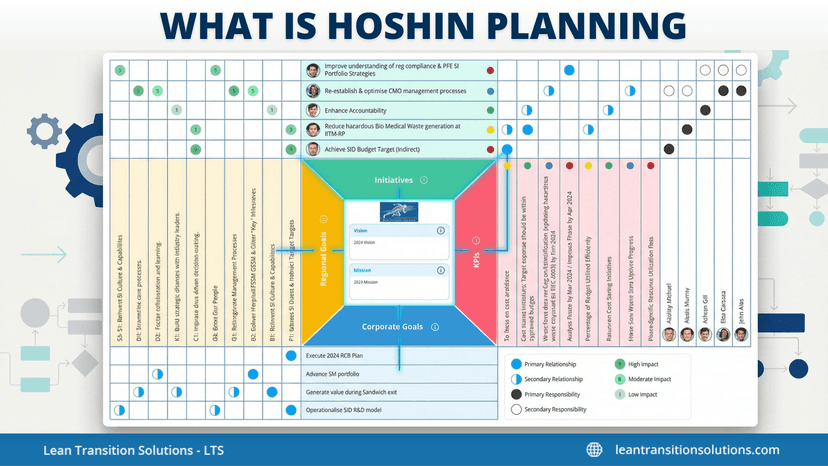
- Hoshin Kanri X Matrix: Hoshin Kanri X Matrix is a strategic planning tool that visually aligns long-term goals, annual objectives, top-level priorities, and metrics on a single page, helping organisations cascade strategy from leadership down to daily execution
Looking for the best tool to build, manage, and execute your strategy?
When should you make a strategic plan for your organisation?
Strategic planning is an ongoing process that organisations should undertake at regular intervals to stay aligned with their goals and the changing business environment. The specific time intervals for conducting strategic planning can vary depending on factors such as industry dynamics, organisational size, and the pace of change.
- Annual Planning: Many organisations conduct strategic planning on an annual basis. This allows them to review performance, set new goals, and adjust strategies based on the previous year's outcomes and anticipated market trends.
- Long-Term Planning: Long-term strategic planning typically covers three to five years or more, depending on the organisation's industry and stability. This planning horizon helps organisations establish a clear vision and chart a course for sustainable growth and success.
- Trigger Events: Strategic planning should also be conducted in response to specific trigger events such as mergers or acquisitions, significant changes in the competitive landscape, regulatory shifts, or disruptive technological advancements. These events may require organisations to reassess their strategies and adapt accordingly.
- Environmental Changes: Organisations should review and update their strategic plans in response to significant shifts in the external business environment. This can include changes in customer preferences, market trends, economic conditions, or political and regulatory landscapes.
- Performance Evaluation: Regular performance evaluation can serve as a trigger for strategic planning. Organisations should assess their progress towards goals and evaluate the effectiveness of their strategies. This evaluation can be conducted quarterly, semi-annually, or annually, depending on the organisation's preference and operational cycle.
- Organisational Milestones: Completing major projects, entering new markets, or reaching revenue targets can be suitable moments for organisations to conduct strategic planning. These milestones allow one to reflect on achievements and chart the next growth phase.
Strategic planning offers substantial benefits to businesses. From gaining a clear understanding of the external environment to setting realistic goals, formulating effective strategies, and implementing and evaluating them, strategic planning provides a framework for success. It helps businesses navigate uncertainty, adapt to change, and seize opportunities. For a broader look at how strategic planning fits into the wider discipline of strategic management, see our complete guide.
Remember that strategic planning is not a one-time event but an iterative and continuous process. Organisations should remain agile and flexible, adapting their strategies to seize emerging opportunities and address challenges. By investing time and effort into strategic planning, organisations can position themselves for sustainable growth and competitive advantage in today's dynamic business landscape.

Amer Jumah, Senior Lean Consultant
Amer is co-founder of Agile Solutions and a certified Six Sigma Black Belt, Lean Black Belt, and PMP, with over nine years of experience implementing Lean, Six Sigma, and Agile principles across diverse industries. He specialises in process optimisation, waste elimination, and delivering cost savings through organisational change.