Corporate Strategy 2026: Winning in a Disruptive World
Last updated on : January 16, 2026
The business world isn’t slowing down – if anything, it’s getting more unpredictable. As we head into 2026, companies can’t just stick to old playbooks and hope for the best. Disruption is everywhere, from tech breakthroughs to shifting customer expectations, and the winners will be those who adapt quickly, innovate boldly, and lead with confidence. In this guide, we’ll explore what corporate strategy really means, why it matters in 2026, key challenges faced by corporates and common drawbacks in outdated strategies, steps to achieve corporate strategy, corporate strategy in SMEs and MNCs, leadership skill requirements, and why LTS Data Point is the best choice.
Discover how to implement the right corporate strategy for your firm with LTS Data Point
What corporate strategy really means?
Corporate strategy can be considered as a universal plan that leads an industry’s long-term direction, decisions, and growth priorities. It defines where the firm competes (markets, organisations, customer segments) and how it cultivates value across its different business units. At its heart, corporate strategy aims on shaping the company’s portfolio of businesses, assigning resources effectively, building competitive advantages, and making sure all operations work toward common long-term goals. It demands high-level choices like diversification, mergers and acquisitions, internal expansion, vertical integration, and long-term capability building.
In simple words, corporate strategy offers the big picture blueprint that makes sure the whole industry moves in the right direction and stays competitive, resilient, and future-ready.
Why corporate strategy matters in 2026?
Corporate strategy has become more crucial in the year 2026, mainly because, companies function in a world moulded by fast-paced technological change, shifting customer expectations, and global economic uncertainty. A sturdy corporate strategy assists organisations remain flexible, allocate resources wisely, and move with clarity despite constant disruption. With AI redefining productivity, sustainability becoming a core business expectation, and digital transformation speeding across every firm, industries require a long-term strategic direction to remain competitive and relevant. Organisations that fail to plan for these shifts risk falling behind as markets evolve faster than traditional models can keep up.
Key reasons corporate strategy matters in 2026
- AI at scale: Automation, predictive analytics, and intelligent decision-support systems are transforming functions, requiring strategic investment and capability planning.
- Sustainability pressure: Global regulations and consumer expectations are pushing industries toward carbon reduction, circularity, and ethical processes.
- Digital transformation maturity: Businesses must incorporate digital into every function – not just IT – to stay active and customer-centric.
- Geopolitical and economic volatility: A clear strategy assists firms navigate supply-chain risks, talent shortages, and fluctuating market conditions.
- Future workforce shifts: Hybrid work, skills shortages, and automation demand prioritised long-term workforce planning.
Urgency indicators for 2026
- Analysts predict that AI-driven industries may grow up to 2x faster than those without an AI strategy.
- By 2026, over 70% of companies are expected to bind sustainability goals directly to corporate strategy.
- Digital-first customer behaviour continues to rise, with majority of B2B and B2C interactions occurring through digital channels.
A well-defined corporate strategy in 2026 is not just a planning tool – it is the cornerstone for long-term competitiveness, resilience, and sustainable growth.
Key challenges faced by corporates in disruptive era
In today’s rapidly changing environment, businesses face a mix of market inconstancy, geopolitical uncertainty, and pressure to adopt new technologies at a pace many are unprepared for. Market volatility – from fluctuating demand to sudden shifts in supply chains – forces companies to make faster, risk-based decisions. Geopolitical tensions, trade restrictions, and regional conflicts add further instability, making long-lasting planning difficult.
At the same time, swift tech adoption, especially in AI, automation, and digital platforms, exposes a widening gap between industries that innovate continuously and those that depend on outdated systems or lagging decision-making.
Common drawbacks in outdated strategies
- Rigid long-range plans that cannot adjust to sudden market changes.
- Siloed decision-making, where functions act independently instead of aligning around shared objectives.
- Delayed digital adoption, leaving firms behind competitors who automate and analyse faster.
- Overreliance on legacy systems, causing functional bottlenecks.
- Neglecting customer behaviour changes, especially toward digital-first experiences.
Real-world examples of corporate struggle
- Several traditional retail chains have declined or closed stores after failing to adopt e-commerce and multichannel models quickly enough.
- Established telecom operators lost market share in regions where digital-native competitors provided faster, app-based services and transparent pricing.
- Older media and publishing companies toiled to survive the shift to streaming and digital content due to lagging innovation and outdated revenue models.
These challenges represent that survival in a disruptive era needs continual adaptation, proactive investment in technology, and corporate strategies built for flexibility, integration, and long-term resilience.
Upgrade your corporate strategy with LTS Data Point
Steps to achieve corporate strategy
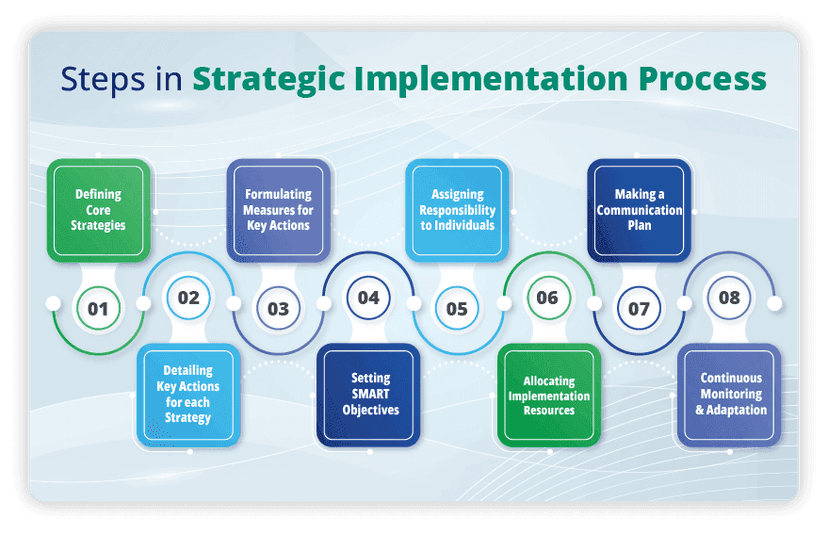
Here is a step-by-step guide on how to achieve a successful corporate strategy for your company:
Assess the current state
- Evaluate the firm’s internal strengths, weaknesses, capabilities, and resources.
- Examine market trends, industry shifts, customer expectations, and competitor moves.
- Spot key risks and opportunities moulding the future.
Define vision, mission, and long-term goals
- Set a clear vision that mirrors where the company wants to be in the future.
- Set up mission statements that guide action and purpose.
- Transform the vision into quantifiable long-term goals.
Choose where to compete
- Settle which markets, customer segments, and product lines to invest in.
- Analyse diversification, expansion, or integration opportunities.
- Decide strategic positioning (cost leadership, differentiation, niche focus, etc.).
Strategic resource allocation
- Direct financial, human, and technological resources to the highest-value areas.
- Prioritise initiatives that assist long-run growth and competitive advantage.
- Verify cross-functional alignment so all departments move in the same direction.
Build core capabilities and competitive advantages
- Reinforce potential in technology, talent, operations, and customer experience.
- Leverage innovation, digital tools, and data analytics to stay ahead.
- Create advantages that are difficult for competitors to imitate.
Develop an execution roadmap
- Divide strategy into practical programmes, timelines, and responsibilities.
- Establish success metrics (KPIs) to monitor progress and outcomes.
- Use dashboards or governance systems to maintain visibility and accountability.
Communicate and align the industry
- Share the strategy clearly across teams to confirm understanding and buy-in.
- Align performance targets, incentives, and culture with strategic priorities.
- Motivate cross-department collaboration to avoid silos.
Monitor, review, and adapt
- Continuously observe performance using Key Performance Indicators and strategic reviews.
- Adjust the strategy based on market changes, new risks, or emerging opportunities.
- Strengthen a culture of agility, innovation, and continuous improvement.
Embed change management
- Support people through change with training, communication, and leadership involvement.
- Address resistance early and ensure teams have the skills to carry out the strategy.
In short, attaining a corporate strategy needs clarity of direction, disciplined planning, strong implementation, and the swiftness to adjust as environments evolve. This balance guarantees long-term growth, competitiveness, and industrial resilience.
Corporate strategy in action: SMEs vs. MNCs
Despite getting a clear idea on everything else but not being able to choose the right corporate strategy will end up in utter disaster. For this, it is quite necessary to have a clear idea on what level of growth your organisation is at. For instance, small and medium sized enterprises (SMEs) and multinational corporations (MNCs) have very different needs when it comes to building their business, and thus, have very different approach as well.
Let's look into detail, these very different approaches:
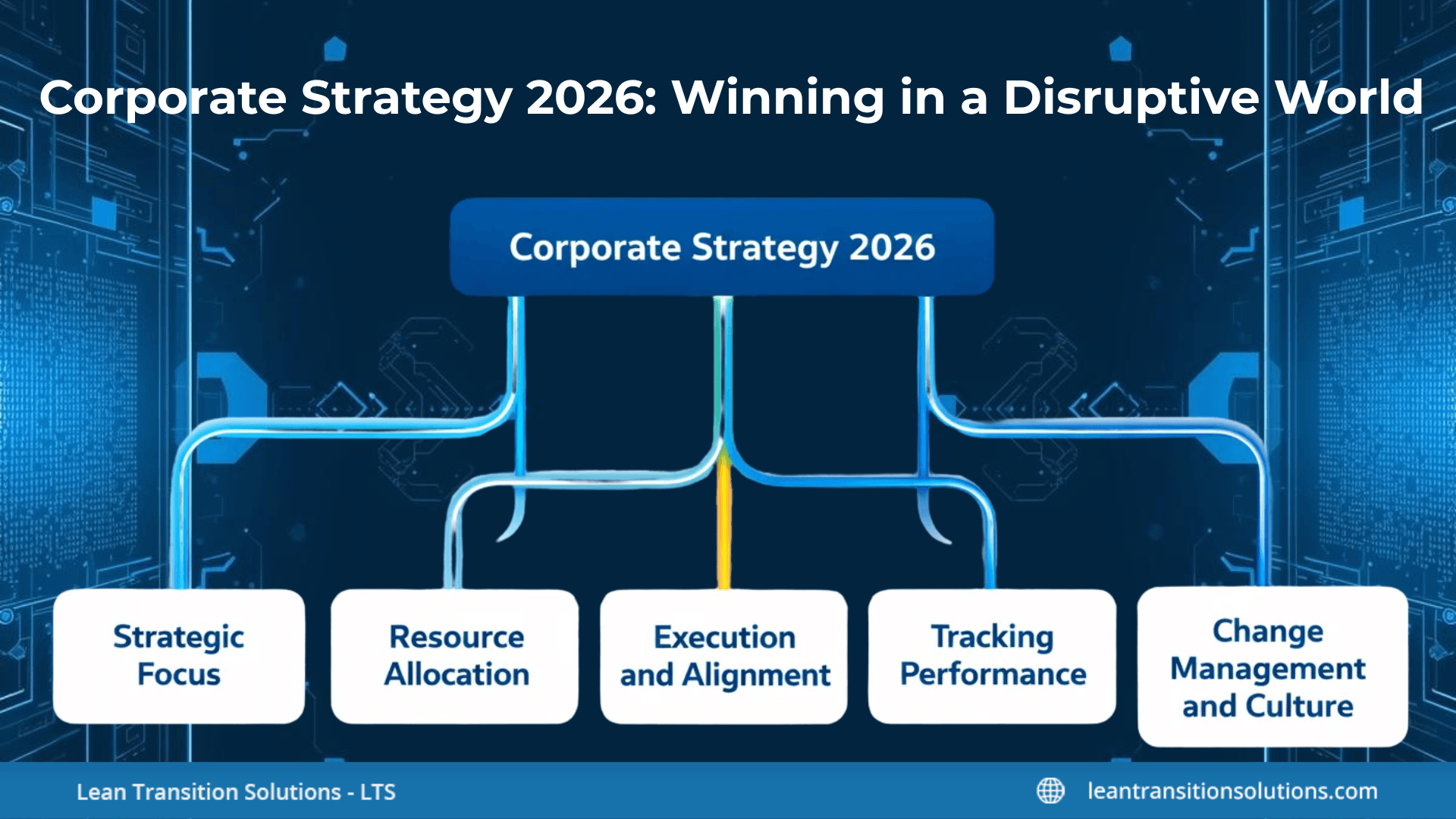
1. Strategic focus
- SMEs: Tend to concentrate on agility, fast decision-making, and niche differentiation. Their strategies usually revolve around market expansion, product discovery, cash-flow stability, and building operational efficiency. Digital strategy tools assist SMEs see preferences, map annual goals, and verify daily actions remain aligned with growth plans.
- MNCs: Huge corporations aim on global portfolio management, risk diversification, cross-border expansion, long-term capacity building. Strategy dashboards, multi-level scorecards, and governance boards allow MNCs to coordinate strategic goals across regions, business units, and leadership layers.
2. Resource allocation
- SMEs: Focus on strategies that produce faster ROI, within limited budget. Digital planning boards, cost dashboards, and KPI trackers aid them optimise resources, manage risks, and recognise high-impact improvement opportunities.
- MNCs: Manage complex investments across markets. Scenario analysis tools, multi-tier budgeting systems, and performance alignment frameworks guarantee global consistency, visibility, and informed capital allocation.
3. Execution and alignment
- SMEs: Execution typically relies on a small leadership team and cross-functional collaboration. Digital huddle boards, action trackers, and strategic planning templates, help SMEs separate major targets into weekly and monthly tasks to maintain attention and momentum.
- MNCs: Execution in large companies require systematic governance. Enterprise-level scorecards, OKR systems, and cascading strategy tools confirm each region or business unit aligns its activities with corporate-level aims. Automated workflow systems support consistency and accountability. This kind of clear line of sight from corporate goals down to individual actions is what keeps such cascades from breaking down at scale.
4. Tracking performance
- SMEs: Benefit from live dashboards that keep an eye on KPIs for sales, functions, finance, and customer outcomes. These tools assist teams quickly spot problems and respond with agility.
- MNCs: Require multi-layer reporting, risk tracking, and cross regional analytics. Integrated performance boards, strategic risk registers, and global KPI systems provide combined visibility and data-driven decision-making.
5. Change management and culture
- SMEs: Digital communication boards, idea-sharing tools, and team engagement dashboards support collaboration and inspire a culture of continuous improvement.
- MNCs: Structured change-management frameworks, competency models, and transformation roadmaps are used to lead industrial shifts at large scale.
In short, SMEs require speed, clarity, and simplicity, supported by tools that help focus, organise, and monitor strategic execution. On the other hand, MNCs demand scale, coordination, and governance, supported by tools that offer visibility, alignment, and multi-level performance management. Nevertheless, in both cases, digital strategy tools and visual management techniques reinforce execution, enhance alignment, and turn long-term objectives into quantifiable outcomes.
For more details, check out our blogs:
Why most MNC strategies fail — And how to fix them with real-time execution tools with examples
Mastering Corporate Strategy for SMEs: Foolproof steps customised for your SME
SME or MNC, find the right one for you with LTS Data Point
Leadership that converts corporate strategy into corporate action
Having appropriate digital tools and techniques gives you a headstart for sure, but don’t expect that technology will do your business for you. What technology, or AI, cannot replace is the human intuition and calibre. This is where human brain and tech brain cooperates and becomes a team in achieving corporate goals.
Let's look at what all skills you must need in 2026 to grab that silver spoon:
- Digital fluency: Leaders must comprehend AI, automation, data analytics, and digital workflows to make fact-based decisions and guide teams through tech-driven change.
- Resilience under pressure: With market instability and disruptions growing, leaders need emotional stability, adaptability, and the ability to steer teams through uncertainty.
- Collaborative mindset: Cross-functional thinking, open communication, and shared decision-making are vital to break silos and align teams around strategic objectives.
- Change agility: Leaders should embrace experimentation, support innovation, and adjust strategies quickly as conditions shift.
- People-centric focus: Training, empathy, and continuous skill development help teams remain engaged and capable of executing strategy.
- Data-driven judgement: Using live dashboards, KPIs, and insights make sure leaders act on evidence and not on assumptions.
Why LTS Data Point is the best choice for setting up corporate strategy?
- End-to-end strategy frameworks: Supports everything from vision building to execution through integrated tools like strategy boards, scorecards, and cascading objectives.
- Real-time visibility: Dashboards, KPIs, and performance analytics give leaders instant insights for faster, data-driven decisions.
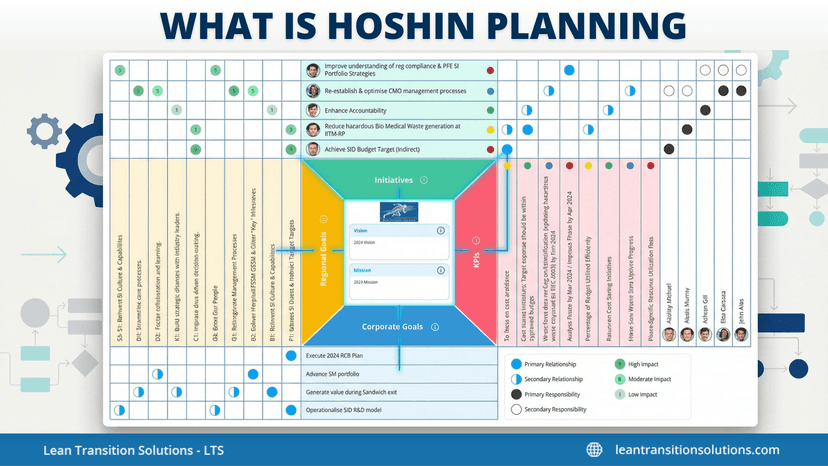
- Seamless execution alignment: Catchball, OKRs, and Hoshin planning tools ensure every department and team aligns with strategic priorities.
- Strong daily execution support: Digital TCards, daily management boards, and problem-solving workflows turn strategy into consistent action.
- Built for agility: Frequent review cycles, risk – opportunity logs, and scenario planning help organisations adapt quickly to market shifts.
- People and capability development: Skill Matrix, training trackers, and standard work builders strengthen the capabilities needed to support strategy.
- Unified platform: Combines planning, execution, monitoring, and improvement in one system – reducing silos and improving transparency.
As we move into 2026, one thing’s clear – sticking to old strategies just won’t cut it. The pace of change is relentless, and businesses that thrive will be those that adapt quickly, innovate boldly, and lead with confidence. Corporate strategy isn’t just a plan on paper; it’s the backbone of resilience and growth in a disruptive world. Whether you’re a small enterprise or a global giant, now’s the time to rethink your approach, embrace technology, and build a future-ready roadmap. Start today, because the companies that act fast will be the ones shaping tomorrow.
No more lagging, only leading – get it done with LTS Data Point now
FAQs
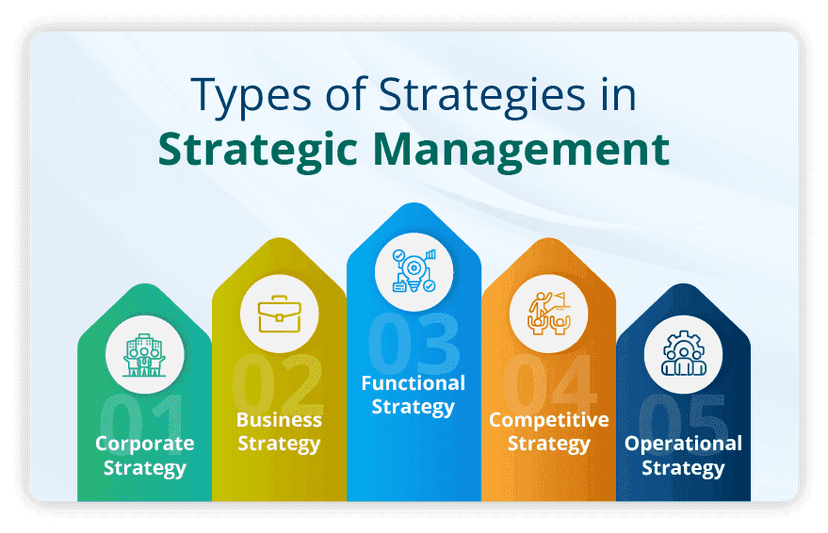
1. How is corporate strategy different from business strategy?
Corporate strategy focuses on the overall direction of the organisation, including which markets to compete in and resource allocation, while business strategy deals with how individual units compete within those markets.
2. What industries benefit most from agile corporate strategies in 2026?
Sectors facing rapid tech disruption – such as manufacturing, aerospace, retail, and telecom – will gain the most from agile strategies that allow quick pivots.
3. Can SMEs implement corporate strategy effectively without big budgets?
Yes. SMEs can use digital planning tools, prioritise high-impact initiatives, and focus on agility rather than scale to achieve strong results.
4. How does corporate strategy support digital transformation?
It sets the long-term vision and allocates resources for technology adoption, ensuring digital initiatives align with overall business goals.
5. What role does data analytics play in corporate strategy?
Data analytics provides insights for better decision-making, risk management, and performance tracking, making strategies more evidence based.
6. How can companies link sustainability goals to corporate strategy?
By embedding ESG targets into strategic objectives and using KPIs to measure progress, sustainability becomes a driver of growth rather than a compliance task.
7. What's the best way to communicate corporate strategy across teams?
Use clear messaging supported by digital dashboards, OKRs, and regular updates to ensure alignment and engagement at all levels.
8. How often should corporate strategy be updated in a disruptive market?
At least annually, with quarterly reviews to adapt to emerging risks, tech changes, and market shifts.
9. How do KPIs ensure corporate strategy success?
KPIs track progress against strategic goals, highlight gaps early, and provide accountability across departments.

Abel Jiménez, Lean Consultant
Abel is a Lean Consultant with over 30 years of expertise in operational analysis, process improvement, and organisational change across Mexican industries. Currently serving as Director of Insurance Promotions at CESCEMEX, he helps organisations leverage technology and lean practices to improve efficiency and manage change with continuity.