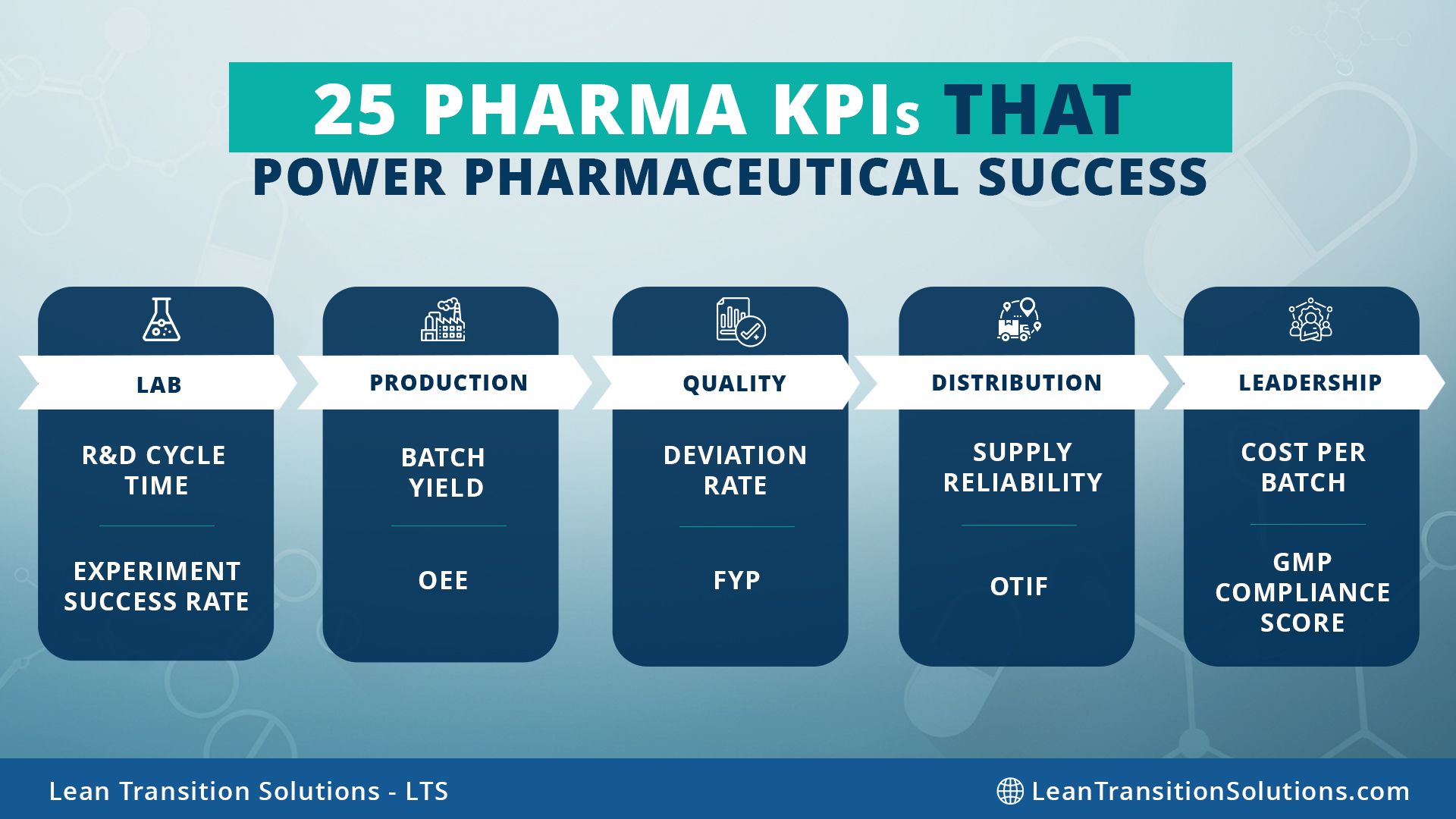
From Lab to Leadership: 25 Pharma KPIs That Power Pharmaceutical Success
Last updated on : November 18, 2025
In the fast-paced world of pharmaceuticals, it’s easy to get buried in data and miss what really matters. Without clear, targeted KPIs, teams can end up chasing numbers that don’t drive real progress—leading to wasted resources, compliance risks, and missed opportunities for innovation. Whether it’s manufacturing delays, poor audit outcomes, or underperforming R&D, the cost of not knowing which metrics to monitor can be steep. The truth is, if you’re not measuring what matters, you’re not managing it—and that’s a risk no pharma company can afford. In this blog, we will be focusing on what pharma KPIs are, why tracking them is important, what categories they are assigned to and how to efficiently track them.
So, if you have a pharmaceutical company, put on your white coat and gloves. Let's microscope into the details.
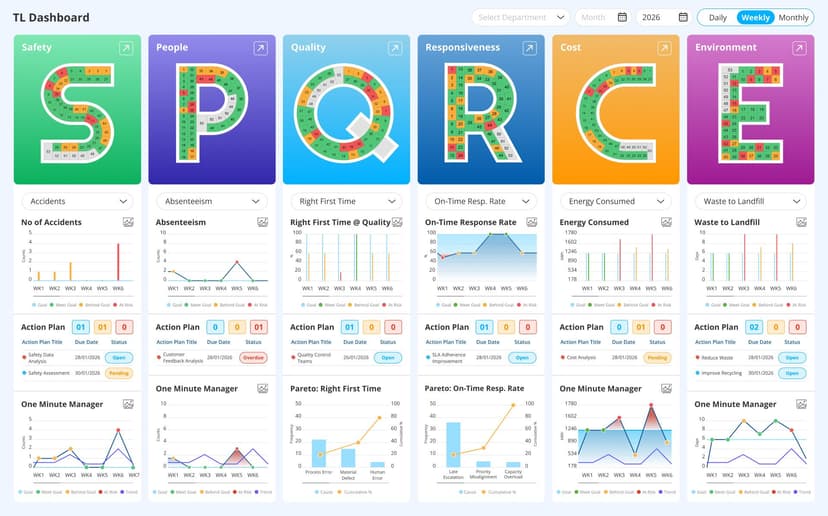
Track your pharma KPIs live with LTS Data Point
Setting the foundation straight
Before learning to run, every child learns to walk. That's exactly how this content will guide you on. First, it’s very important to set the foundation right. Before learning what kinds of KPIs are there, and to what categories they belong to, it’s important to focus on other basic things that may seem simple, but in fact, really important. This involves understanding how KPIs align with broader business objectives and ensuring they support strict compliance and quality standards that define the pharmaceutical industry.
Aligning KPIs with strategic goals
Simply choosing a random metrics to be your Key Performance Indicator is not how it works. Each KPI you choose should serve a purpose. In the pharma sector, where accuracy, safety, and innovation matters, KPIs must be directly tied to strategic objectives. Whether the objective is to speed up time-to-market, enhance patient outcomes, reduce functional costs, or improve regulatory readiness, each KPI should behave as a quantifiable indicator of progress.
For example, if an organisation’s strategic aim is to enhance manufacturing efficiency, relevant KPIs might include batch yield, Right-First-Time (RFT) rate, or equipment downtime. By aligning KPIs with these goals, industries can make sure that every metric monitored contributes to purposeful, data-driven decision-making and long-term success.
Regulatory compliance and quality standards
In an organisation led by strict regulations and high stakes, compliance and quality are inevitable. Regulatory bodies like MHRA (UK), EMA (EU), and FDA (USA) need pharma companies to preserve detailed records, follow Good Manufacturing Practices (GMP), and guarantee product safety and efficiency every time.
KPIs belonging to this area, help track adherence to these standards. Some of the examples include CAPA closure time, audit readiness scores, deviation rates, and out-of-specification (OOS) incidents. Monitoring these metrics not only secures compliance but also nurtures continuous improvement culture and risk reduction.
Ready to transform your pharma operations with LTS Data Point real-time KPI tracking tools?
Pharma KPIs: What are they and why tracking them matters?
A Pharma KPI is a measurable value that assists pharmaceutical companies monitor, measure and enhance their performance across critical areas such as research and development (R&D), manufacturing, quality, compliance, sales, and supply chain. These Key Performance Indicators (KPIs) offer insights into how effectively a pharma company is achieving its strategic and functional objectives – from securing product quality and regulatory compliance to optimising costs and accelerating time-to-market.
Monitoring these pharma KPIs in the pharmaceutical organisation is crucial mainly because they allow data-driven decision-making, continuous improvement, and regulatory readiness in an environment where accuracy and safety are non-negotiable. Common examples include metrics like Right-First-Time (RFT) rate, batch yield, CAPA closure time, on-time delivery, and R&D spend as a percentage of revenue – each aiding to make sure of consistent quality, efficiency, and compliance throughout the product lifespan.
How to identify the right KPI
Selecting the right Key Performance Indicators (KPIs) helps pharma companies to compute what truly drives success – quality, compliance, and efficiency.
Here's how to recognise them:
- Connect each KPI to business goals like enhancing product quality, reducing costs, or assuring compliance.
- Select metrics you can calculate and influence (e.g., increase batch yield by 5%).
- Choose KPIs that fit each function – R&D, manufacturing, quality, or supply chain – while assisting overall goals.
- Monitor both predictive metrics (like equipment uptime) and outcome-based metrics (like recall rate).
- Concentrate on KPIs that reflect GMP adherence, CAPA performance, and audit results.
- KPIs should be Specific, Measurable, Achievable, Relevant, Time-bound, Evaluate, and Readjust (SMARTER).
- Use KPI monitoring tools for live insights and data-driven decisions.
Make sure that the KPIs you choose are strategic, quantifiable, and productive helping you in maintaining compliance, improve performance, and encourage continuous improvement.
So far, so good, right? Now comes the most exciting part – various types of pharma KPIs and how relevant they are.
Need smart pharma KPI tracking tools?
25 trackable pharma KPIs in categories: Your guide to pharma excellence
Before diving into the full list of pharma KPIs, let’s talk about the five that really keep your business grounded – Safety, Quality, Delivery, Cost, and People. These aren’t just nice-to-have metrics – they’re the essentials that every pharma company should be tracking day in, day out.
- Safety KPIs help you monitor risks to patients, staff, and products. They’re key to spotting issues early and keeping operations safe and compliant.
- Quality KPIs focus on consistency, reliability, and adherence to standards like GMP. They make sure your products meet expectations every time.
- Delivery KPIs track how well you meet timelines and customer demand – whether it’s OTIF rates or inventory levels, they reflect your ability to deliver without delays.
- Cost KPIs show how efficiently you’re using resources. From cost per unit to operating margins, they help you stay profitable while maintaining quality.
- People KPIs measure how engaged, skilled, and productive your workforce is. After all, your people drive everything – from innovation to compliance.
Getting these five right sets the stage for broader performance tracking. From here, we’ll explore 25 pharma KPIs grouped into key categories like R&D and Innovation, Manufacturing & Operations, Quality & Compliance, Sales & Market Performance, and Financial Metrics – each offering deeper insights into how your company is performing and where it’s headed.
R&D and innovation
- Number of new drugs in pipeline: Monitors the total number of drug candidates under development across various R&D stages. Shows the pharma industry’s innovation capacity, research efficiency, and potential for future product release and profit growth.
- Patent application and approval rate: Computes the ration of filed patents to approved patents within a fixed period. Reflects the industry’s innovation results, research success, and competitive advantage in securing intellectual property.
- Clinical trial success rate: Monitors the percentage of clinical trials successfully advancing from one stage to the next. Shows the effectiveness of R&D operations, drug candidate quality, and the possibility of attaining regulatory approval. Higher success rate indicates stronger research efficiency and reduction in development risk.
- Time-to-market for new products: Calculates the duration from initial drug discovery to commercial launch. Indicates the efficiency of R&D, regulatory, and manufacturing operations. Shorter time-to-market rate reflects quicker innovation, enhanced competitiveness, and quick access to treatment.
- R&D expense ratio: Calculate research and development spending as a percentage of total profit. It reflects how much the company invests in innovation and future product development. A balanced ration indicates strong commitment to research while preserving financial stability.
- First-to-market drugs: Monitors the number of new drugs released before competitors in the same therapeutic category. It indicates the firm’s innovation speed, market leadership, and ability to capitalise on growing healthcare needs.
- Number of clinical trial failures: Monitors the number of trials that do not reach the primary end stage or are discontinued. Aids in analysing R&D risk, resource usage, and the effectiveness of early-stage research. Monitoring this KPI helps in better decision-making and enhanced trial design strategies.
Manufacturing and operations
- Manufacturing efficiency percentage: Calculates the ration of actual production output to the maximum possible output within a given timeframe. Indicates how effectively manufacturing resources, equipment, and labour are used. Higher efficiency shows optimised operations, reduced waste, and consistent product quality.
- Right-First-Time (RFT) rate: Calculates the percentage of manufacturing batches completed correctly without rework, deviation, or error. It indicates function accuracy, quality control effectiveness, and operational discipline. A high RFT rate reflects strong compliance with GMP standards and lower production costs.
- Process capability: Analyses how consistently a manufacturing process produces products within specified quantity limits. Calculates function stability and variation relative to specification standards. Higher values reflect well-controlled, reliable processes with least defects or deviations.
- On-Time In-Full (OTIF) delivery rate: Calculated the percentage of customer orders delivered both on schedule and in the correct quantity. It indicates the efficiency of supply chain planning, production, and logistics. A high OTIF rate reflects strong trustworthiness, customer satisfaction, and effective coordination across functions.
- Months of supply (inventory days): Calculates how many months the available inventory will last given current demand. Ensures supply chain efficiency and aids companies prevent both overstocking and potential stockouts that could threaten patient supply and income. Monitoring this KPI allows pharma organisations to enhance inventory levels and maintain reliability in product delivery.
- Production recall rate: Calculates the percentage of products recalled due to safety, quality, or regulatory issues within a specific period, measured against the total units produced or distributed. Monitors product quality, regulatory compliance, and functional risk, with a lower recall rate. Reflects stronger quality controls and lower incidence of manufacturing defects. Aids industries detect root causes and motivate continuous improvements, ensuring patient safety and brand reputation.
- Volume of drug production: Measures the total number of drug units produced within a fixed timeframe, offering insights into the functional capacity and result of a facility. Monitors whether manufacturing meets mapped out targets, aids benchmark productivity, and helps in examining operational efficiency and resource usage. Assists timely fulfilment of market demand, inventory management, and strategic planning for scaling functions.
Quality and compliance
- Compliance rate with GMP standards: Calculates how consistently an industry’s functions and products adhere to Good Manufacturing Practice (GMP) instructions, as mandated by regulatory authorities. Higher rate indicates durable quality systems, consistent product quality, and strong inspection results. Guarantees continuous regulatory alignment and safeguarding of patient safety.
- Number of successful audits: Monitors how man internal or external quality, compliance, or regulatory audits have brought about positive results without critical findings over a fixed time. High number indicates strong compliance culture, durable operational systems, and effective risk management across manufacturing and research processes. Allows pharma companies to evaluate the health of their quality management systems and proactively address gaps in regulatory or process adherence.
- Number of adverse events reported: Monitors the total instances of any unexpected or harmful medical occurrences experienced by patients during or after drug administration. Reflects medicine safety and supporting regulatory compliance by assuring regular reporting and analysis of such events. Helps in recognising potential risks, enhancing patient safety, and guiding remedial actions.
For more information, check out our blog: 7 Vital Pharma Quality Metrics to Monitor Real-Time Plant Control
Make your pharma KPI monitoring smart
Sales and market performance
- Sales revenue: Calculates the total income generated from drug sales over a period of time. Offers a direct indicator of an industry’s market performance, financial health, and the sales success of its products. Aids pharma companies analyse growth trends, analyse the effectiveness of sales strategies, and guide investment and marketing decisions for sustainable business development.
- Market share: Computes the percentage of total sales in a specific drug market or therapeutic area that a pharma company or its product captures compared to its competitors. Indicates competitive positioning and market influence, showing how well a drug performs against alternatives. Aids companies evaluate their growth, work out marketing efforts, and optimise resource allocation for better market penetration.
- Number of prescriptions: Monitors the total count of prescriptions distributed or written over a timeframe. Offers insight into market demand, product usage, and the effectiveness of sales and marketing efforts. Tracking prescription count aids pharma companies understand patient access to medications, examine prescribing trends, and optimise their commercial strategies for better healthcare outcomes.
- Number of strategic alliances or partnerships: Monitors the count of collaborations a company has set up with organisations, such as biotech companies, research institutes, or distribution partners. Reflects the company’s ability to leverage external expertise, share risks, and access new technologies or markets. Aids companies examine the strength and growth of their collaborative network, which can directly impact product development and sales success.
- Customer retention rate: Calculates the percentage of customers who continue to buy a firm’s products over a timeframe, indicating customer loyalty and satisfaction. High retention rate reflects strong brand loyalty, effective marketing, and consistent product quality, which assist long-term revenue stability and growth. Aids pharma companies recognise retention trends and optimise customer engagement strategies to lower churn and maximise lifetime value.
Financial metrics
- Cost per unit: Calculates the total cost incurred to produce a single unit of a drug, including raw materials, labour, manufacturing overhead, and other related expenses. Examines production efficiency and profitability, as lower cost per unit indicates better cost control and resource usage. Aids companies optimise manufacturing operations, control expenses, and enhance pricing strategies and improve overall financial performance.
- Gross margin: Represents the percentage of income remaining after deducting the direct costs of manufacturing pharmaceutical products, such as raw materials and manufacturing expenses. It reflects the profitability of a company’s core functions and indicates how efficiently production costs are managed relative to sales. Higher gross margin suggests strong cost control and pricing strategies, which are critical for preserving financial health in pharma industry.
- Operating margin: Computes the percentage of income remaining after covering all operating expenses, including production, sales, and administrative costs. It indicates how efficiently a company manages its core business functions to generate profit before interest and taxes, offering insight into operational profitability and cost control. Higher operating margin shows effective management and strong financial health, necessary for sustainable development in pharma industry.
In an industry where accuracy, compliance, and innovation are paramount, tracking the right Key Performance Indicators is not just beneficial—it’s essential. By aligning KPIs with strategic goals and regulatory standards, pharmaceutical companies can gain real-time insights, drive continuous improvement, and maintain a competitive edge. Whether it’s enhancing R&D efficiency, ensuring manufacturing quality, or optimising financial performance, these 25 KPIs provide a comprehensive framework for operational excellence. Embracing a data-driven approach empowers pharma leaders to make informed decisions, mitigate risks, and ultimately deliver better outcomes for patients and stakeholders alike.
What are you waiting for?
FAQs
1. What are Pharma KPIs?
Pharma KPIs (Key Performance Indicators) are measurable values that help pharmaceutical companies monitor, evaluate, and improve their performance across critical areas such as R&D, manufacturing, quality, compliance, sales, and finance. They provide insights into how effectively a company is achieving its strategic and operational goals.
2. Why is it important to track KPIs in the pharmaceutical industry?
Tracking KPIs is essential in the pharmaceutical sector due to its highly regulated and competitive nature. KPIs enable data-driven decision-making, ensure compliance with regulatory standards, improve operational efficiency, and support continuous improvement across all departments.
3. How can you choose the right KPIs for your pharma company?
- Align them with your strategic business goals.
- Ensure they are measurable and actionable.
- Choose KPIs relevant to specific functions (e.g., R&D, manufacturing).
- Include both predictive and outcome-based metrics.
- Follow the SMARTER criteria (Specific, Measurable, Achievable, Relevant, Time-bound, Evaluate, Readjust).
4. What are the main categories of Pharma KPIs?
Pharma KPIs can be grouped into five key categories:
- R&D and Innovation
- Manufacturing & Operations
- Quality & Compliance
- Sales & Market Performance
- Financial Metrics
Each category focuses on different aspects of pharmaceutical operations to ensure holistic performance monitoring.
5. Can KPI tracking help with regulatory compliance?
Yes, absolutely. KPIs such as CAPA closure time, audit readiness scores, and deviation rates help monitor adherence to Good Manufacturing Practices (GMP) and other regulatory requirements set by bodies like the MHRA (UK), EMA (EU), and FDA (USA).
6. What tools can help with tracking Pharma KPIs?
Pharmaceutical companies can use KPI tracking software like LTS Data Point to gain real-time visibility into performance metrics. These tools help streamline data collection, automate reporting, and support strategic decision-making.
7. How can KPI tracking improve manufacturing efficiency?
By monitoring KPIs such as Right-First-Time (RFT) rate, manufacturing efficiency percentage, and on-time in-full (OTIF) delivery, companies can identify bottlenecks, reduce waste, and ensure consistent product quality, ultimately enhancing operational performance.
8. What is the significance of R&D KPIs in pharma?
R&D KPIs like clinical trial success rate, time-to-market, and number of new drugs in the pipeline help assess innovation capacity, research effectiveness, and speed of development. These metrics are crucial for maintaining a competitive edge and meeting patient needs swiftly.

Geandra Queiroz, Operations Management Consultant
Geandra is an Operations Management Consultant at Lean Transition Solutions, specialising in Lean philosophy, Lean Six Sigma, and strategic planning across manufacturing and healthcare. She is currently completing her PhD in Industrial Engineering at the Federal University of São Carlos, researching the integration of Operations Strategy, Lean, and Green Manufacturing.