Strategic Implementation: Turning Business Strategy into Measurable Results
Last updated on : February 26, 2026
Having a clear strategy is easy – getting everyone to actually follow it is the hard part. Strategic implementation is what turns big ideas into everyday actions. It's how goals get translated into who does what, when, and how progress is tracked, so your strategy actually shows up in operations, not just in slides and documents. In this blog, we’ll explore what strategic implementation means and how it fits into the strategic planning process, how a strategic plan implementation framework turns strategy into structured execution, the role of a strategy implementation plan in cascading strategy across teams and functions, how leadership, workforce planning, and change management support successful execution, how the strategy execution process is managed and measured in real organisations, and how strategy implementation software helps sustain and scale strategic implementation.
Explore how LTS Data Point strategic performance software connects strategy to execution across teams
Strategic implementation within the strategic planning process
Strategic implementation sits at the critical point where strategic planning moves from ideas into action. Once the strategic planning process defines direction, priorities, and goals, this is the stage where industries use a strategic planning framework to turn those plans into coordinated, measurable execution across teams.
- Strategic planning defines what the organisation wants to accomplish.
- The strategic planning process sets the sequence from vision to objectives to initiatives.
- A strategic planning framework structures goals, key performance indicators (KPIs), and ownership.
- Strategic planning in management ensures leaders align departments to shared priorities.
- Strategic implementation activates these plans through daily operational decisions.
- Strategy moves from documents into workflows, budgets, and performance targets.
- Strategic planning examples show that even strong strategies fail without disciplined execution.
- Implementation binds long-term goals to short-term actions.
- Teams understand how their work contributes to enterprise objectives.
- Progress becomes visible, computable, and adjustable over time.
This is what closes the gap between planning a strategy and actually making it happen.
Strategic implementation using a strategic plan implementation framework
A strong strategic plan implementation framework offers the structure that turns intent into coordinated action. It links the strategy implementation process to daily functions, making sure the strategic management process and strategy execution process remain aligned as priorities, resources, and performance shift.
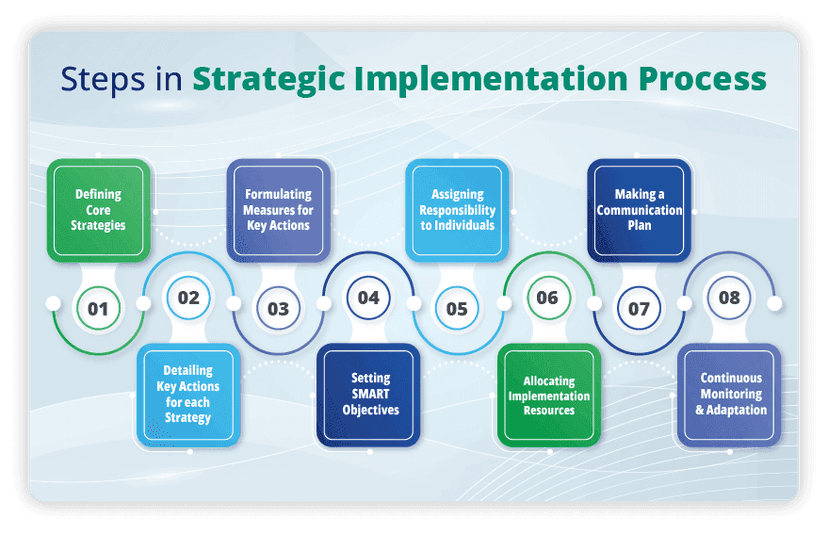
Strategic implementation step-by-step guide
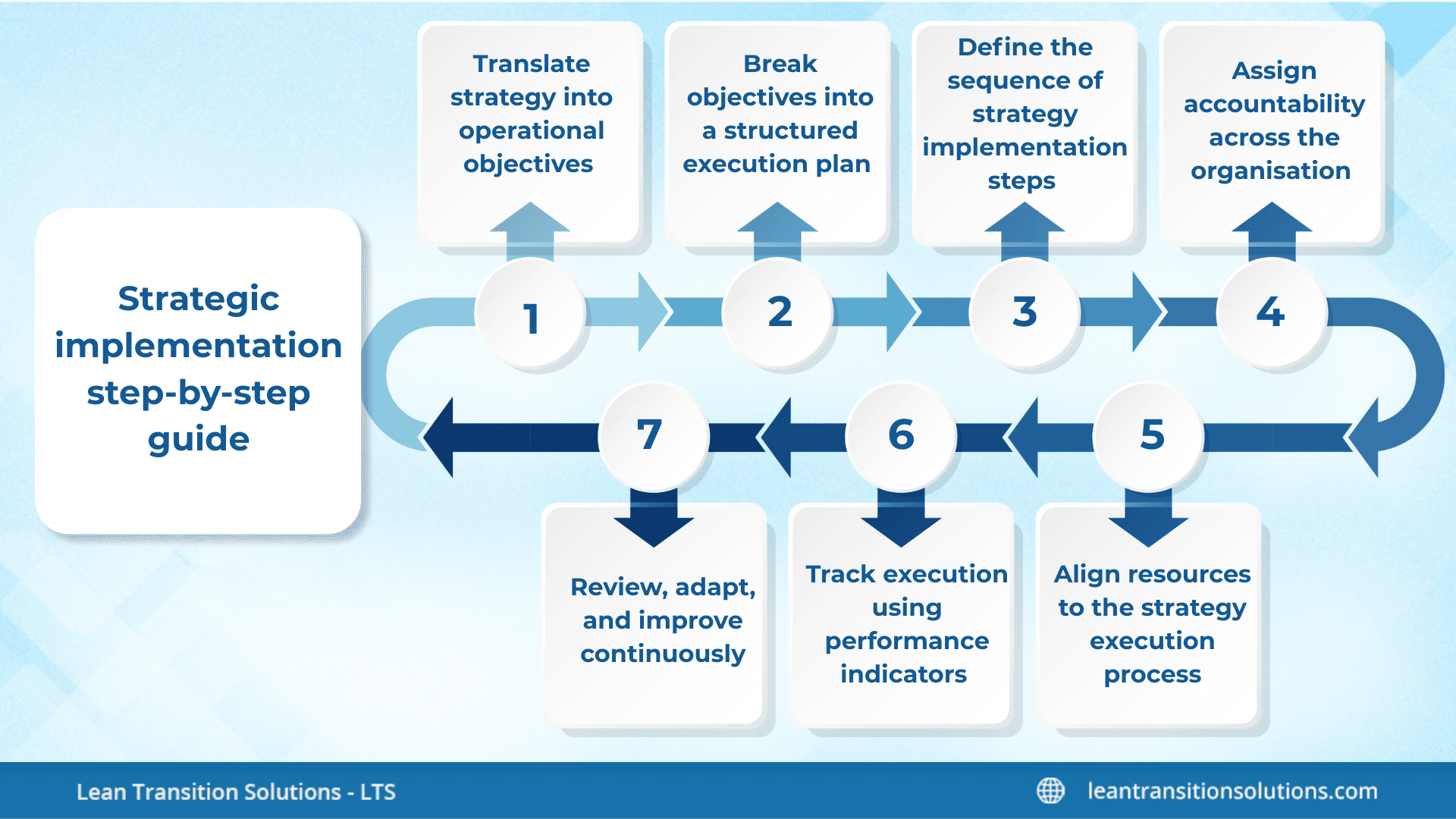
Below is a clear, execution-ready flow that businesses use to run an effective strategy implementation process.
Translate strategy into operational objectives
High-level goals from the strategic plan implementation framework must be converted into computable, department-level targets. This guarantees the strategy execution process begins with clarity instead of ambiguity.
- Define outcomes for finance, operations, customers, and people
- Align objectives to corporate strategy
- Avoid vague goals that cannot be executed or measured
Break objectives into a structured execution plan
This is where the strategy implementation process becomes actionable.
- Create a roadmap of initiatives and projects
- Allot owners and timelines
- Connect each initiative back to strategic goals
- Build this into the strategic management process
Define the sequence of strategy implementation steps
Execution fails when steps are unclear or disconnected.
- Prioritise initiatives based on business impact
- Set dependencies between teams
- Create a logical order of strategy implementation steps
- Remove bottlenecks before execution begins
Assign accountability across the organisation
A strategic plan implementation framework only works when responsibility is clear.
- Leaders own outcomes
- Managers own delivery
- Teams own execution
- This embeds accountability into the strategic management process
Align resources to the strategy execution process
The strategy execution process must be supported by the right people, budgets, and tools.
- Assign staff based on priority initiatives
- Fund high-impact activities first
- Make sure technology supports execution
- Remove low-value work that distracts from strategy
Track execution using performance indicators
This keeps the strategy implementation process under control.
- Monitor progress against milestones
- Observe KPIs linked to strategic objectives
- Use data to detect execution gaps early
Review, adapt, and improve continuously
No strategic plan implementation framework works without feedback loops.
- Compare planned vs actual performance
- Adjust priorities when conditions change
- Improve the strategy execution process based on results
- Keep the strategic management process dynamic rather than static
This step-by-step structure is what turns strategic implementation from a one-time project into a recurring execution system that drives measurable business outcomes.
Strategic implementation through a clear strategy implementation plan
A well-defined strategy implementation plan is what converts strategic intent into something teams can actually follow. It links the strategy and implementation in a business plan to real timelines, responsibilities, and performance targets, making sure that even ambitious business strategy examples become practical and executable rather than remaining theoretical.
- A strategy implementation plan outlines initiatives, owners, timelines, and success metrics.
- It shows how high-level strategy flows into operational priorities through a cascading strategy model across teams and functions.
- It bridges the gap between planning documents and real-world execution.
- The strategy and implementation in a business plan verifies financial, operational, and strategic goals remain aligned.
- A strong strategy implementation plan clearly charts goals to actions and resources.
- A strategy and implementation in business plan example typically includes goals, budgets, milestones, and accountability.
- Well-recorded plans lower confusion and execution drift.
- They help leaders track progress across departments.
- They make it easier to adjust when market or internal conditions change.
- Business strategy examples consistently show that clarity in execution planning leads to better results.
This is where strategic implementation becomes something teams can see, follow, and calculate – not just something leaders talk about.
Strategic implementation supported by leadership, workforce, and change
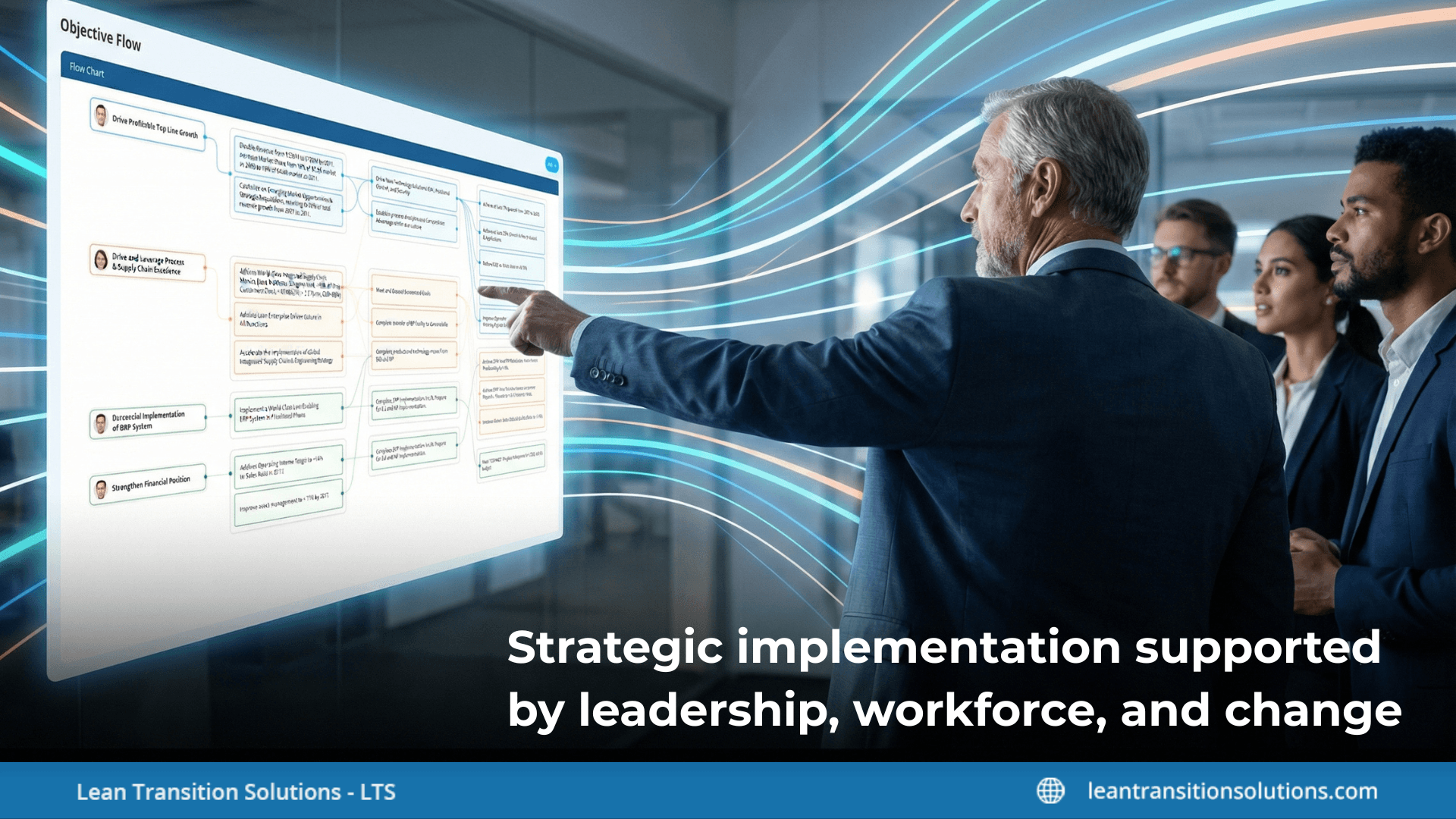
Even the best plans fail without the right people and behaviours behind them. Strategic implementation relies on strategic leadership, effective strategic planning in management, and a strong change management strategy to ensure new priorities are adopted, not resisted.
- Strategic leadership sets direction, eliminates obstacles, and strengthens execution discipline.
- Leaders translate strategy into clear expectations for teams.
- A strategic workforce planning framework makes sure the right skills are available to deliver the strategy.
- Workforce plans align hiring, training, and deployment with strategic priorities.
- Strategic planning in management ties leadership decisions to daily operational actions.
- Managers turn high-level goals into team-level targets.
- A strong change management strategy helps employees understand why things are changing.
- Change programmes reduce resistance and increase adoption.
- Communication and engagement keep teams aligned to strategic goals.
- Culture and incentives support long-term execution, not short-term firefighting.
This people-and-change layer is what converts strategic implementation into a sustained, organisation-wide capability rather than a one-off initiative.
Discover how LTS Data Point strategic performance management software tracks strategic implementation with KPIs
Strategic implementation across marketing and business functions
Strategic implementation becomes real when it is embedded into how different departments plan, operate, and calculate success. By connecting a marketing strategy plan and other functional plans into the strategic management process, industries ensure that business strategy examples translate into coordinated, cross-functional execution.
- A marketing strategy plan defines target segments, campaigns, and growth priorities.
- Strategic implementation links marketing goals to overall business objectives.
- Sales, operations, and finance align their activities to shared strategic targets.
- The strategic management process verifies all functions follow the same execution rhythm.
- Department-level KPIs roll up into enterprise performance measures.
- Business strategy examples show how successful industries integrate strategy across functions.
- Marketing investments support revenue and customer growth goals.
- Operational teams align capacity and delivery with market demand.
- Finance tracks how spending supports strategic priorities.
- Cross-functional alignment reduces silos and execution gaps.
This is how strategic implementation turns separate functional plans into a single, unified execution engine that drives quantifiable business results.
Strategic implementation enabled by strategy implementation software
Modern strategic implementation depends on more than spreadsheets and status meetings. Businesses increasingly use strategy implementation software to tie objectives, initiatives, and performance data into a single execution system, helping teams move from planning to consistent delivery at scale.
- Strategy implementation software centralises strategic goals, KPIs and execution plans.
- Teams can see how their work connects to enterprise priorities.
- Leaders gain visibility into progress, risks, and performance gaps.
- Execution data flows into the strategic management process for informed decision-making.
- Digital platforms reduce manual tracking and reporting overhead.
- A strategy implementation course helps teams learn how to use these tools and apply execution best practices.
- Training builds a common language around strategy, KPIs, and accountability.
- Software plus learning secures recurring strategic implementation.
- New hires and managers can quickly adopt the industry’s execution model.
- Continuous improvement becomes part of daily operations.
Where LTS Data Point strategic performance management software fits
LTS Data Point strategic performance management software is designed for industries that require to track and manage strategic implementation through structured performance data rather than informal reporting.
It is typically used when teams need to:
- Observe strategic objectives alongside operational KPIs
- Monitor performance trends across departments
- Spot execution gaps using data
- Support the strategic management process with reliable, centralised metrics
This enables leaders and managers to move beyond static plans and actively manage how strategy is being executed across the company.
For more details, visit our latest blog: 2026 Organisational Strategy Kit by LTS Data Point: Drive Innovation and Results
Strategic implementation is what turns strategic intent into measurable business performance. By combining clear planning, a structured execution framework, leadership alignment, workforce readiness, and the right performance systems, industries can ensure that strategy is not just defined but consistently delivered. When strategic implementation is managed as an ongoing process rather than a one-time initiative, it becomes a powerful driver of operational focus, accountability, and long-term results.
FAQs
1. How long does strategic implementation usually take?
Timelines vary based on organisation size and complexity, but most strategic initiatives require continuous execution over multiple quarters rather than a fixed end date.
2. What is the difference between strategy formulation and strategic implementation?
Strategy formulation defines what to do, while strategic implementation focuses on how those plans are carried out across the organisation.
3. Who is responsible for strategic implementation in an organisation?
Responsibility is shared between executive leadership, functional managers, and operational teams, each owing different parts of execution.
4. How do you know if strategic implementation is failing?
Common signals include missed milestones, unclear ownership, poor KPI visibility, and teams working on activities that do not support strategic goals.
5. Can small businesses use formal strategic implementation frameworks?
Yes. Even small organisations benefit from simplified frameworks that align goals, people, and execution.
6. How often should a strategic implementation plan be reviewed?
Most organisations review execution performance monthly or quarterly to keep strategy aligned with changing conditions.
7. What skills are most important for successful strategic implementation?
Leadership, communication, performance management, and change management skills are critical to sustaining execution.
8. How does strategic implementation support long-term business growth?
It ensures that investments, projects, and daily work consistently move the organisation toward its long-term strategic objectives.

Amer Jumah, Senior Lean Consultant
Amer is co-founder of Agile Solutions and a certified Six Sigma Black Belt, Lean Black Belt, and PMP, with over nine years of experience implementing Lean, Six Sigma, and Agile principles across diverse industries. He specialises in process optimisation, waste elimination, and delivering cost savings through organisational change.