Annual Strategy Planning with the Balanced Scorecard Framework
Last updated on : January 21, 2026
Annual strategy planning defines what an organisation must achieve over the next 12 months to stay aligned with its long-term goals. Yet many annual plans fail in execution because objectives are disconnected from KPIs, progress reviews are infrequent, and ownership is unclear.
Annual strategy planning with the Balanced Scorecard turns planning into a continuous, measurable process. It provides a structured way to define priorities, align teams, and track execution throughout the year. Instead of treating planning as a one-time exercise, the Balanced Scorecard turns strategy into a living system that connects objectives, KPIs, initiatives, and reviews in a continuous cycle.
What is annual strategy planning?
Annual strategy planning is the process of defining strategic priorities, objectives, and initiatives for a one-year period, aligned with an organisation’s long-term vision. It bridges the gap between multi-year strategic goals and day-to-day execution.
A strong annual strategy plan:
- Clarifies what success looks like for the year
- Defines measurable objectives and KPIs
- Allocates resources and budgets
- Identifies key initiatives and milestones
Creating the plan is only the first step. Execution, monitoring, and adjustment determine whether the strategy succeeds.
Why annual strategy planning often fails
Many organisations invest significant time in annual planning but see limited results because:
Annual plans fail when:
- Strategy lives in spreadsheets or presentations
- KPIs are tracked separately by each department
- Progress is reviewed only at mid-year or year-end strategy evaluation
- Teams lack visibility into how their work supports strategy
Without a structured annual strategy planning framework, plans remain static while reality changes. There are many reasons why strategy fails, and the lack of a modern visual performance management software is one of the key ones. Here comes the role of Digital Balanced scorecard.
Why use the Balanced Scorecard for annual strategy planning?
The Balanced Scorecard is a proven strategic management framework that helps organisations translate strategy into action. It expands planning beyond financial targets to include customer outcomes, internal processes, and organisational capability.
What is Balanced Scorecard Software?
Balanced Scorecard software is a strategic performance software solution that helps organisations translate strategy into measurable objectives and KPIs across financial, customer, internal process, and people perspectives.
Using the Balanced Scorecard for annual strategy planning allows organisations to:
In practice, balanced scorecard cloud software enables organisations to:
- Align strategic goals across departments
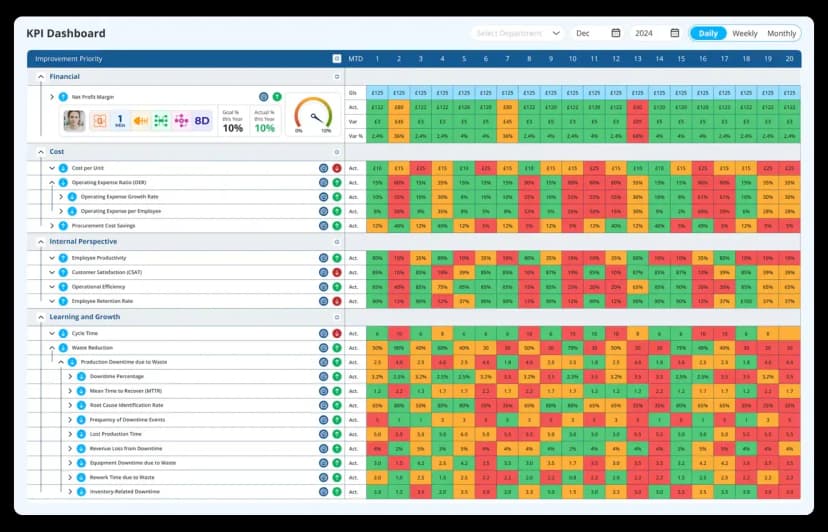
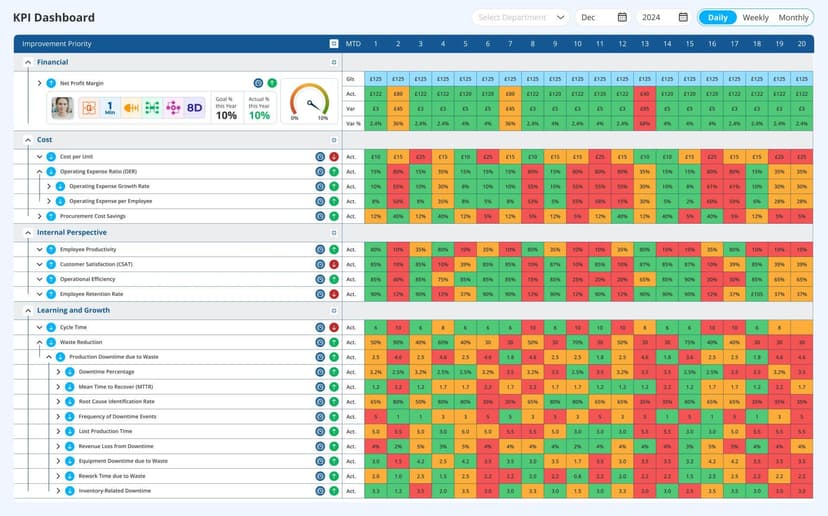
- Track KPIs using dashboards and scorecards
- Review progress regularly and adjust execution
This makes it a core component of strategic planning and reporting software.
Annual Goals Shouldn’t Be Forgotten. Keep Them Front and Centre with LTS Data Point
What Balanced Scorecard do for effective annual strategy planning?
Annual strategy planning requires more than defining goals at the start of the year. It requires a system that supports execution and review throughout the year.
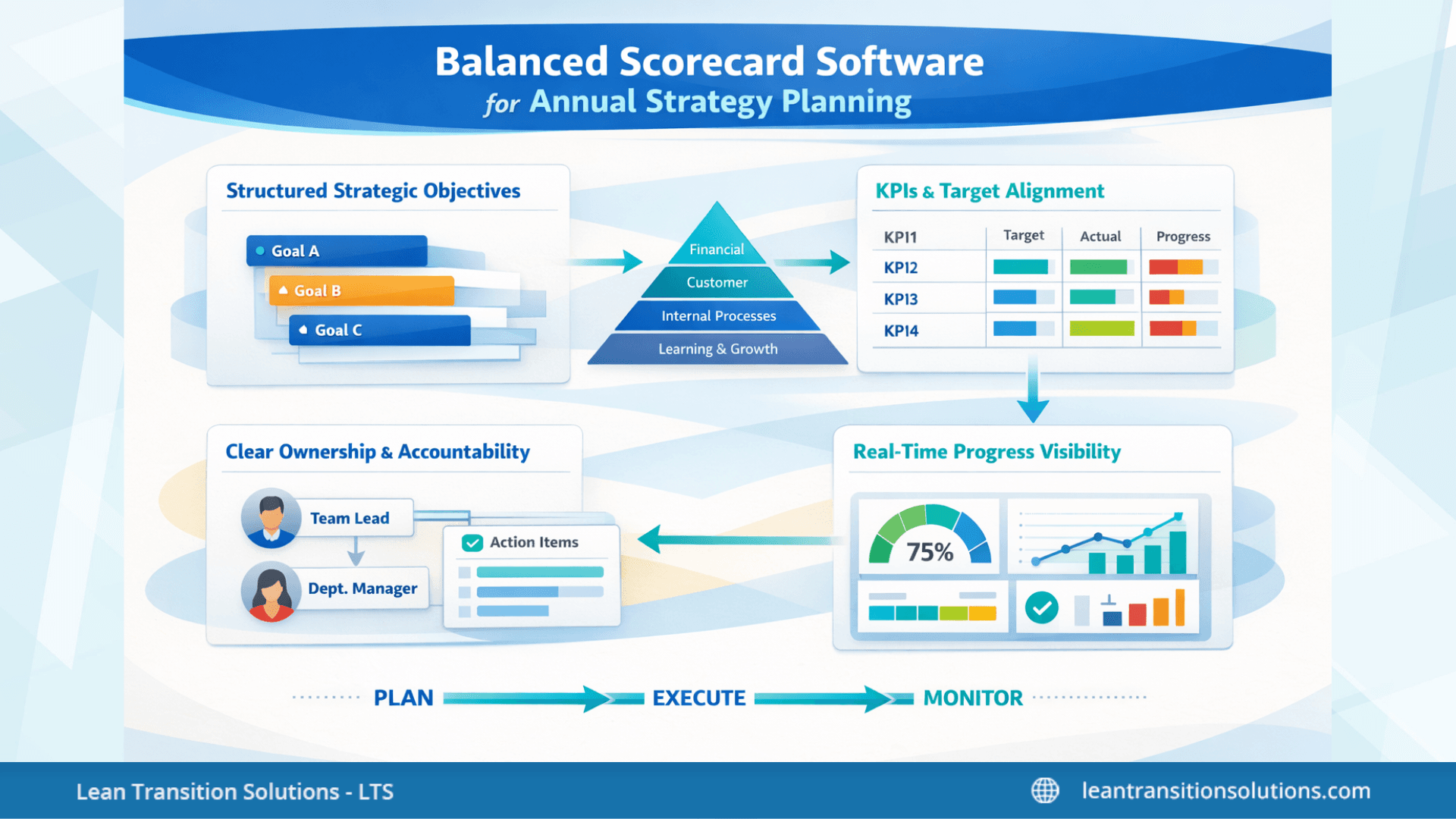
Within the Balanced scorecard framework Balanced scorecard software solution supports annual strategy planning by:
- Structuring objectives within the annual planning framework
- Linking objectives to KPIs and targets
- Assigning ownership to teams and individuals
- Providing real-time visibility into progress
This is why many organisations adopt business scorecard software as their foundation for annual planning. Want do dive more? Read 2026 corporate strategy that make you outperform.
Spreadsheets vs Balanced Scorecard cloud software
Traditional tools like spreadsheets and presentations lack real-time visibility and collaboration. As organisations grow and strategies become more complex, these tools create data silos and manual overhead.
This shift enables leadership teams to manage strategy proactively rather than reacting at year-end.
LTS Data Point helps organisations move from spreadsheet-based planning to a digital, execution-focused Balanced Scorecard system.
Key elements of annual strategy plan
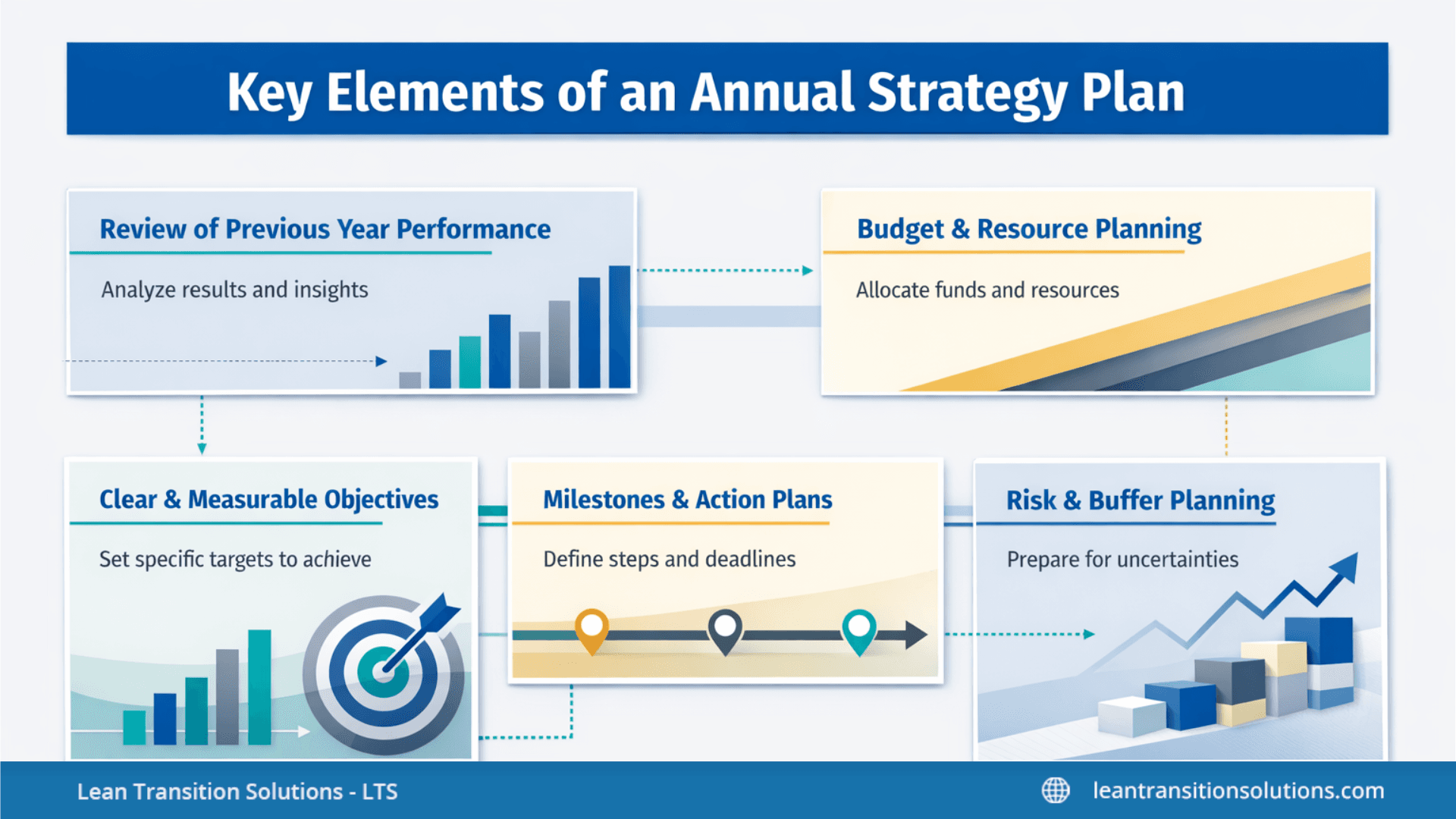
Review of previous year performance
Annual planning should begin with an objective assessment of the previous year’s results. Analysing achievements, gaps, and lessons learned creates a strong foundation for setting realistic priorities.
Budget and resource planning
Strategic objectives must align with available resources. Budget estimation ensures initiatives are feasible and supported throughout the year.
Clear and measurable objectives
Objectives should be specific and measurable. Linking objectives to KPIs ensures progress can be tracked consistently.
Milestones and action plans
Breaking strategy into initiatives, responsibilities, and timelines provides clarity and accountability.
Risk and buffer planning
Identifying risks and defining mitigation plans helps organisations remain resilient as conditions change.
How the Balanced Scorecard improves annual strategy planning
Annual strategy planning with the Balanced Scorecard enabling organisations to:
- Define organisational goals and strategic priorities for the year
- Visualise strategy using strategy maps and objective flow charts
- Analyse previous performance and identify improvement areas
- Establish KPIs to measure progress toward objectives
- Prioritise initiatives based on strategic impact
- Assign ownership and timelines for execution
- Monitor performance continuously using dashboards
- Adjust plans based on real-time data and changing conditions
This transforms annual strategy planning into a continuous management process.
Balanced Scorecard Software Tools in LTS Data Point
Discover more about the enhanced functionalities implemented in LTS Data Point Balanced Scorecard software to enhance and streamline every aspect of annual planning process. This section identifies how each of them enhances planning, implementation and monitoring and evaluation processes. Learn how to effectively do annual strategy planning with the Balanced Scorecard with the embedded tools in a modern software.
Annual operational planning
Digital Balanced Scorecard create an annual operating plan by cascading strategy. Also, it breaks the tactical initiatives like day-to-day tasks, deadlines, and personnel responsibilities.
Data Point capabilities include:
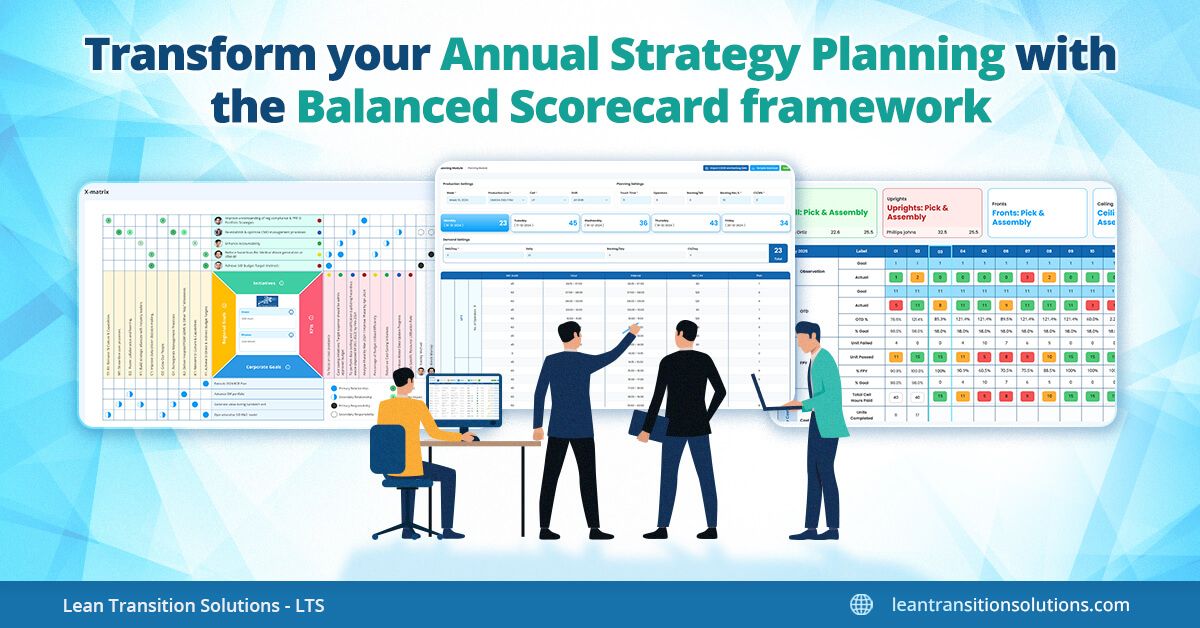
- Hoshin Kanri X Matrix for strategy-to-action alignment
- Action plan timelines for execution tracking
- Process flows to visualise operational workflows
Operational and Financial Forecasting
Operational forecasting involves preparing for the future based on quantitative analysis of data collected in the past. It facilitates the ability to forecast resource requirements, optimise activities, and prepare for potential challenges, hence enhancing informed decisions.
At the same time financial forecasting focus on anticipating the organisation’s economic future to help in the formulation of the organisational budget as well as in the control of the finances and investments of the organisation.
What Data Point offers for better operational and finance forecasting:
- Quad chart for visualising and prioritising forecast outcomes
- MES/ERP integration to incorporate data from operational systems
- Scorecard view for a comprehensive overview of financial targets and progress
Capital and facilities planning
The capital and facilities planning are essential for identifying the future requirements for the acquisition of capital and establishment of facilities for an organisation’s expansion. It ensures proper distribution of funds, effective use of facilities, and achievement of organisational objectives for capital projects.
Supporting capabilities include:
- Fishbone diagrams for risk analysis
- Huddle boards for collaborative planning
- Dashboards to consolidate key facility metrics
Strategy alignment across the organisation
Strategic alignment ensures consistency in that all departments, teams, and people must act in accordance with the ultimate objectives of the company.
Data Point Balanced Scorecard contains:
- Objective flow charts
- KPI management across functions
- Virtual Gemba walks for real-time reviews
- Bowling charts and SQDCP boards tailored for industries for visual tracking
Explore 2026 strategy kit by LTS Data Point to gain complete visibility of strategy tools.
Who are using Balanced Scorecard for annual strategy planning?
Annual strategy planning with the Balanced Scorecard software is commonly managed by:
- Strategy and PMO teams
- Operations and continuous improvement teams
- Finance and budgeting teams
- Enterprise leadership teams
- Consumer goods organisations using consumer goods annual operating plan software
Final thoughts
Annual strategy planning with the Balanced Scorecard provides clarity, alignment, and execution discipline. When supported by the right digital tools, organisations can move beyond planning and focus on delivering results throughout the year.
Turn Your Annual Strategy into Action—Start Using DataPoint Today!
FAQs
1. What is annual strategy planning?
Annual strategy planning defines the objectives, initiatives, and KPIs an organisation must achieve within a one-year period to support long-term goals.
2. How does the Balanced Scorecard support annual planning?
The Balanced Scorecard links strategic objectives to KPIs across financial, customer, process, and people perspectives, enabling structured planning and execution.
3. What is the difference between annual planning and strategic planning?
Strategic planning defines long-term direction, while annual planning focuses on what must be achieved in the next year to move toward that direction.
4. Why use software for annual strategy planning?
Digital tools provide real-time visibility, collaboration, and continuous monitoring, making annual strategy planning more effective and actionable.
5. Is the Balanced Scorecard only for large organisations?
No. The Balanced Scorecard works for any organisation that needs clarity, focus, and alignment across teams.
6. What makes Balanced Scorecard better than traditional planning methods?
It connects strategy to KPIs, targets, and initiatives, instead of relying on static documents or spreadsheets.
7. How often should strategy be reviewed using a Balanced Scorecard?
Strategy should be reviewed regularly, monthly or quarterly, not just at the end of the year.
8. Can annual strategy planning be adjusted during the year?
Yes. A Balanced Scorecard allows teams to track progress and adjust priorities as conditions change.
9. What role do KPIs play in annual strategy planning?
KPIs show whether strategic objectives are on track and help leaders make decisions based on facts.
10. Does Balanced Scorecard help with execution, not just planning?
Yes. It ensures strategy is reviewed, owned, and acted on throughout the year.

Amer Jumah, Senior Lean Consultant
Amer is co-founder of Agile Solutions and a certified Six Sigma Black Belt, Lean Black Belt, and PMP, with over nine years of experience implementing Lean, Six Sigma, and Agile principles across diverse industries. He specialises in process optimisation, waste elimination, and delivering cost savings through organisational change.