Why Strategy Execution Fails Without Visual Tools
Last updated on : January 19, 2026
Strategy execution fails because organisations lack visibility, alignment, and real-time feedback on how strategy is being carried out.
When goals, priorities, and actions are not made visual, teams struggle to connect daily work to strategic outcomes, causing delays, misalignment, and missed results.
Understanding why strategy execution fails
Most organisations do not fail at strategy formulation. They fail at strategy execution.
Plans are approved, objectives are defined, and KPIs are documented—yet results fall short. The most common reason why strategy execution fails is not poor intent or capability, but the absence of systems that make execution visible and actionable on a daily basis.
Without visual tools, strategy remains abstract, periodic, and disconnected from real work.
Here comes the role of LTS Data Point visual management tool, typically used when organisations experience strategy execution failure. Data Point is a visual management and strategy execution software designed to help organisations align objectives, track performance, and connect daily actions to strategic goals across manufacturing and service environments.
Let's understand the reasons why strategy execution fails, how to solves the challenges while executing strategy, how do it right with visual management tools and role of visual management software organisational overall strategy.
What strategy execution actually depends on
Strategy execution is a continuous process, not a one-time rollout. It depends on four operational conditions:
- Clear priorities at every level
- Alignment between goals and daily activities
- Visibility into progress and gaps
- Accountability for actions and outcomes
When any of these are missing, strategy execution fails - even if the strategy itself is sound. So, it is important to understand strategy alignment challenges.
See how strategy execution can be made visible across teams
Why strategy execution fails in practice
1. Strategy is communicated, not operationalised
Many organisations rely on:
- Presentations
- Policy documents
- Annual plans
These formats explain strategy but do not embed it into daily routines. Teams understand what the strategy is, but not how to execute it consistently.
This disconnect is a primary reason why strategy execution fails.
2. Lack of execution visibility
When execution is not visible:
- Issues surface too late
- Leaders rely on lagging reports
- Teams work without knowing if they are on track
Execution visibility requires more than dashboards, it requires visual systems that show status, trends, and ownership in real time.
3. Misalignment between goals and actions
A common strategy execution gap occurs when:
- Leadership KPIs differ from team-level metrics
- Improvement actions are not linked to strategic objectives
- Teams optimise locally instead of system-wide
Without visual alignment mechanisms, strategy execution fragments across functions.
4. Accountability is unclear or inconsistent
Execution fails when:
- Actions are tracked separately from objectives
- Ownership is implied rather than explicit
- Follow-ups depend on meetings instead of systems
Visual execution tools make accountability structural, not personal. Lack accountability and improper accountability tracking is another major reason why strategy execution fails.
5. Review cycles are too slow
Traditional review cycles:
- Focus on monthly or quarterly outcomes
- Miss early warning signals
- Encourage reactive decision-making
Effective strategy execution requires short-interval management, supported by visual management practices.
The role of visual tools in preventing execution failure
Visual tools do not replace strategy, they enable execution.
Strategy execution tool help organisations:
- Translate strategy into visual frameworks
- Track execution continuously, not periodically
- Make deviations immediately visible
- Connect actions directly to objectives
This is the purpose of visual strategy execution systems, not reporting or business intelligence tools.
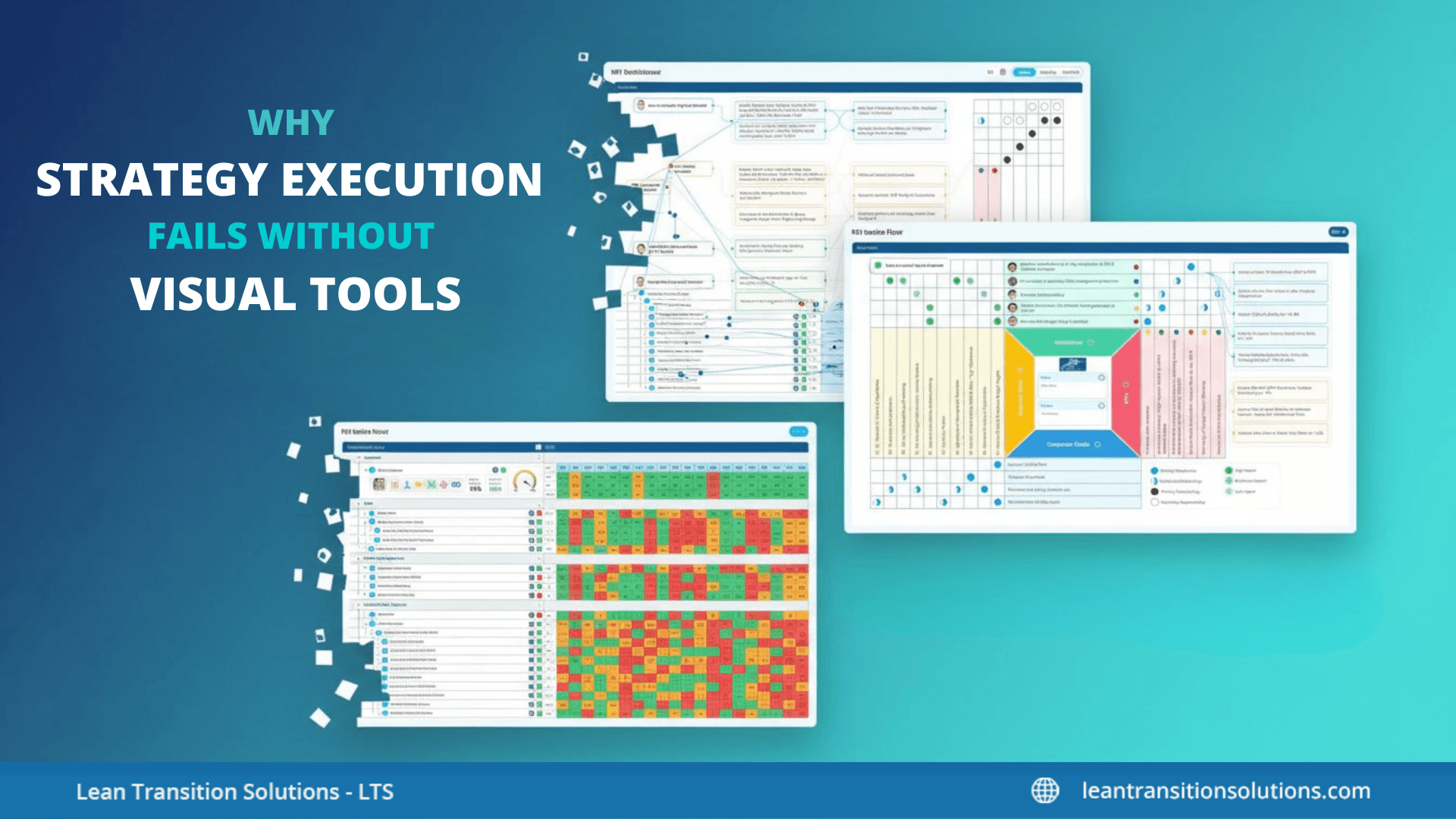
Understand what a visual strategy execution system looks like in practice
Visual execution systems vs traditional reporting
This difference explains why reporting-heavy organisations still struggle with execution.
Who is most affected when strategy execution fails?
Execution failure is most common in organisations with:
- Multiple departments or locations
- Rapid growth or operational complexity
- Heavy reliance on spreadsheets or static reports
- Regular strategy reviews but weak follow-through
In these environments, lack of visual execution tools directly increases risk.
Where LTS Data Point fits in addressing strategy execution failure
The perfect fit answer for the question why strategy execution fails is ‘getting the right strategy software for your process”. LTS Data Point visual management software is best suited for organisations that need to:
- Bridge the gap between strategy and operations
- Maintain execution visibility across teams or sites
- Run structured performance reviews and huddles
- Align KPIs, actions, and improvement initiatives
It is typically used when strategy execution must be visual performance management not reviewed occasionally. This visual performance management system works from strategy planning to strategy execution by cascading strategy and aligning them with the goals.
Visual tools that support effective strategy execution
Look at the visual tools that support effective strategy execution powered by LTS Data Point. When organisations address why strategy execution fails, these are essential to implement.
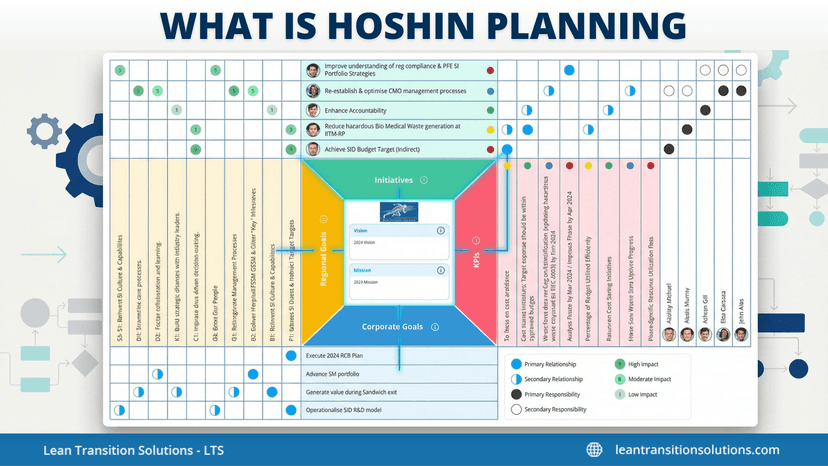
- Hoshin Kanri X-Matrix – Connects breakthrough objectives to annual priorities, KPIs, owners, and key initiatives in one visual
- Strategy maps – Show how objectives relate across outcomes, customers, processes, and people
- Objective flow charts – Clarify how top-level goals translate into department and team-level priorities
- Visual KPI dashboards – Make performance status and trends visible at a glance
- Digital huddle boards – Support structured daily/weekly execution reviews and team alignment
- Action tracking boards – Link actions directly to objectives, with ownership and due dates
- Escalation visualisation - Surfaces blockers, risks, and deviations early so teams can respond faster.
Read here in detail for implementing latest strategy kit for your organisation: 2026 Organisational Strategy Kit by LTS Data Point.
View examples of visual tools used in strategy execution
FAQs
1. Can strategy execution fail even when KPIs are met?
Yes. Strategy execution can fail even if KPIs are achieved in isolation. When KPIs are not connected to strategic intent, teams may optimise metrics without advancing long-term objectives, leading to short-term success but strategic drift.
2. How does organisational structure affect strategy execution?
Strategy execution often weakens in highly siloed structures. When departments operate independently with limited shared visibility, coordination gaps emerge, making it difficult to execute cross-functional strategic initiatives effectively.
3. Is strategy execution more difficult in growing organisations?
Yes. As organisations scale, informal communication and manual tracking methods break down. Growth increases complexity, making execution harder unless supported by structured, visual systems that scale with teams and locations.
4. What role does middle management play in strategy execution failure?
Middle management is often caught between strategic intent and operational pressure. Without clear visual frameworks, managers may prioritise short-term delivery over strategic alignment, unintentionally weakening execution.
5. Why do strategy initiatives lose momentum after launch?
Strategy initiatives commonly lose momentum because execution is not reinforced through routine reviews, visual progress tracking, and feedback loops. Without these mechanisms, focus gradually shifts back to operational firefighting.
6. Are spreadsheets a reliable tool for strategy execution?
Spreadsheets can support planning, but they are poorly suited for ongoing execution. They lack real-time visibility, shared context, and built-in accountability—making it difficult to manage execution dynamically.
7. How does remote or hybrid work impact strategy execution?
Remote and hybrid environments increase the risk of execution failure if strategy is not made visible digitally. Without shared visual systems, alignment relies heavily on meetings and messaging, which are less consistent at scale.
8. What is the difference between managing performance and executing strategy?
Performance management focuses on measuring results, while strategy execution focuses on guiding actions. Organisations can measure performance accurately and still fail at execution if actions are not clearly directed toward strategic goals.
9. When should organisations reassess their strategy execution approach?
Organisations should reassess their execution approach when strategy reviews feel disconnected from day-to-day work, when issues are identified too late, or when teams struggle to explain how their work supports strategic priorities.
10. Is strategy execution a one-time effort or an ongoing process?
Strategy execution is an ongoing management process. It requires continuous visibility, regular adjustment, and consistent reinforcement to remain effective as conditions, priorities, and constraints change.

Amer Jumah, Senior Lean Consultant
Amer is co-founder of Agile Solutions and a certified Six Sigma Black Belt, Lean Black Belt, and PMP, with over nine years of experience implementing Lean, Six Sigma, and Agile principles across diverse industries. He specialises in process optimisation, waste elimination, and delivering cost savings through organisational change.