What is DMAIC for Lean Six Sigma success: Everything you need to know for smarter processes
Lean Six Sigma DMAIC process offers a structured approach to problem-solving, leading to process optimisation and continuous improvement.
Contents
- What is DMAIC, and Why is it important?
- What are the 5 phases of the DMAIC Process?
- Why use the DMAIC process?
- When should DMAIC be used?
- Why should you use a Balanced Scorecard for your DMAIC projects?
- What are the differences between DMAIC and other Problem-solving Methodologies?
- Where can you use the DMAIC Model?
- What are the benefits of using the DMAIC framework?
- DMAIC vs DMADV (Define-Measure-Analyze-Design-Validate)
- What should be included in a DMAIC Report?
- DMAIC in Project Management
- DMAIC Example
- How to avoid common mistakes when using DMAIC Six Sigma methodology?
- Employee and Employer Benefits of Six Sigma DMAIC Training
- Can DMAIC be used outside of Six Sigma?
Last updated on : September 29, 2026
What is DMAIC, and Why is it important?
DMAIC, an acronym denoting Define, Measure, Analyse, Improve, and Control, is a structured data-driven problem-solving framework within Lean Six Sigma that enhances business processes. The DMAIC process begins by defining the problem and project goals and measuring key metrics to establish a baseline. Then, a detailed analysis is performed, where the root causes of inefficiencies are identified, leading to targeted improvements to reduce process variability and enhance overall process stability.
The DMAIC project management helps organisations achieve process optimisation, cost reduction, quality improvement, and enhanced customer satisfaction. Product and project managers use a DMAIC template for process efficiency. DMAIC templates can enhance the visual representation of DMAIC data and help create DMAIC reports easily. A copy of the DMAIC template can be used for every project, keeping the original DMAIC template available for future use.
Main objectives of the DMAIC approach include the following:
- Reaching meaningful improvement opportunities and defining success criteria effectively.
- Utilising data to comprehend the problem's scope accurately.
- Analysing root causes of business issues and directing improvement efforts accordingly.
- Exploring solutions through brainstorming and employing the affinity diagram for selection.
- Using Lean Six Sigma DMAIC tools to enhance the efficiency and effectiveness of the organisation's current processes.
- Sustaining improvements from the 'Improve' phase beyond project completion.
Data Point can streamline your DMAIC process with actionable insights
What are the 5 phases of the DMAIC Process?
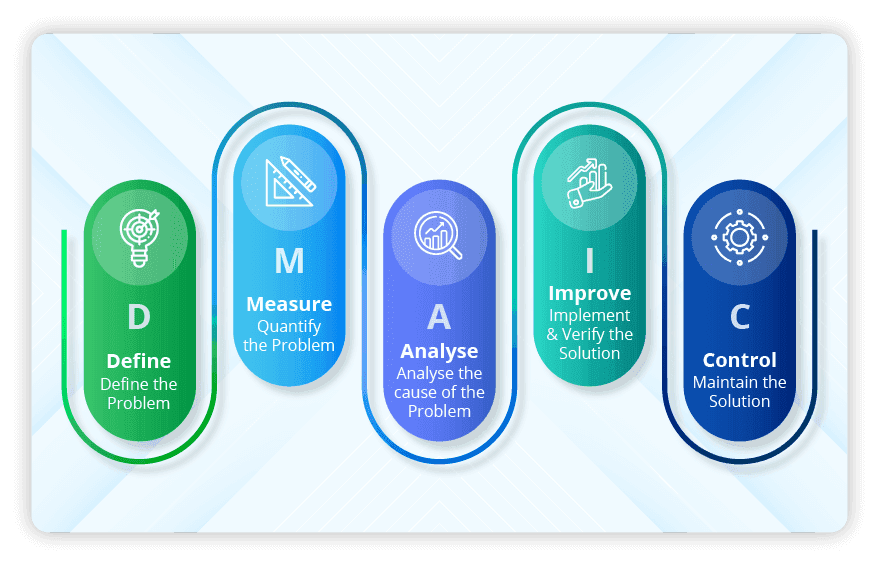
How to use DMAIC to solve problems? The 5 steps of the DMAIC process—Define, Measure, Analyse, Improve, and Control—can efficiently address challenges and drive process enhancement for sustained improvements. Understanding each DMAIC phase and DMAIC tools by phase is essential for successful implementation of DMAIC projects.
➤ Define phase in DMAIC
The define stage within the DMAIC process of Six Sigma marks the initial step in identifying and understanding the issues that a business is facing, setting a crucial foundation for subsequent problem-solving efforts. The define phase in DMAIC emphasises the importance of a shared understanding of the problem and project goals among team members, which helps with successful project execution. By collaboratively defining the scope and objectives, the team ensures alignment and commitment to the project's goals. Best practices, such as brainstorming the problem statement and conducting Gemba walks before drafting the project charter, facilitate successfully completing the define phase within the DMAIC framework.
DMAIC Define Phase Tools Include:
- Stakeholder Analysis Matrix: Identifies and categorises stakeholders, understanding their interests and influence levels for effective engagement.
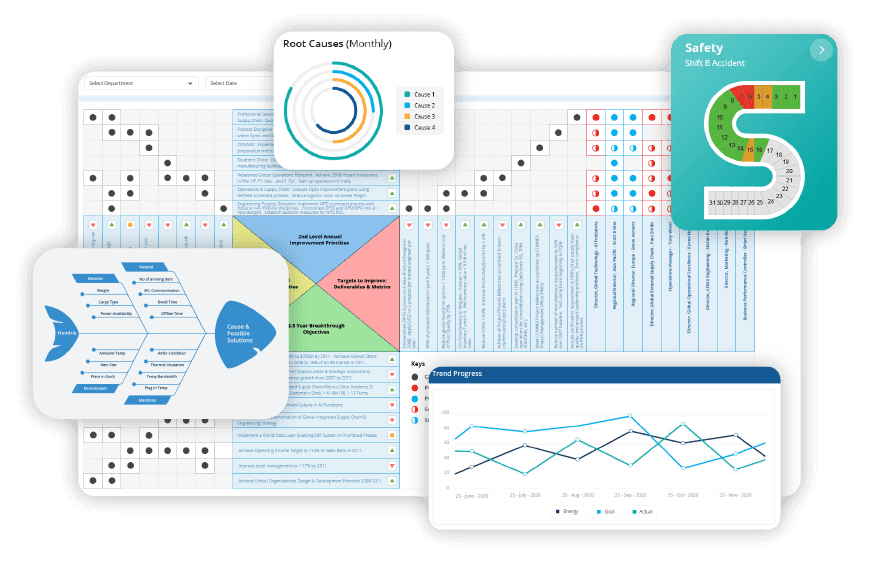
- Hoshin Kanri X Matrix: Utilised in the DMAIC process to ensure alignment of strategic goals, Key Performance Indicators, action plans, and responsible individuals and fosters interconnectedness among them. Hoshin Kanri X Matrix is a helpful feature within the DataPoint Balanced Scorecard software that aligns long-term needs with strategic initiatives, and identifies where you need to improve.
- Project Charter: Officially launches the project, outlining objectives, scope, resources, and timelines, empowering the Six Sigma professional to lead effectively.
- SIPOC Diagram: Maps out the Suppliers, Inputs, Processes, Outputs, and Customers of a process, providing a high-level view of the process flow and helping to identify areas for improvement.
- Gantt Chart: Visual project management tool that illustrates the timeline of a project, detailing tasks, milestones, and dependencies, providing a clear overview of project progress.
- DMAIC Checklists: DMAIC process checklists ensure that all necessary steps and considerations are addressed during the measure phase of DMAIC, helping maintain consistency and thoroughness in data collection and analysis.
- Multi-Generational Planning (MGP): Breaks down projects into manageable stages, aiding in clearer project management and task prioritisation. It also facilitates progress tracking and scope management within the define phase of the DMAIC method.
➤ Measure Phase in DMAIC
The measure phase is the second stage in the Lean Six Sigma DMAIC process (Define, Measure, Analyse, Improve, Control). It helps gather relevant data by assessing how operations are currently performed based on a set frequency to identify improvement areas and evaluate the overall performance of various shop floor operations. Hence, the Measure phase quantifies the current state of the process through data collection and analysis, establishing a baseline performance metric.
Key tasks in the measure phase of DMAIC framework include:
- Determining suitable metrics for measuring the process.
- Developing a data collection plan.
- Comparing the Actual performance with Target performance based on strategic plans.
- Gathering relevant information through surveys, interviews, and observation.
By comprehensively understanding the process's current performance, Six Sigma professionals can pinpoint the root causes of inefficiencies. The Measure phase provides the necessary insights and groundwork for effective process improvement initiatives within the DMAIC framework.
DMAIC Measure Phase Tools include:
- Control Charts: Tracks process variation over time, aiding in stability monitoring and anomaly detection, which are crucial for maintaining quality standards.
- Process Maps: Helps Visualise process flow, clarifying step sequences and interactions between inputs, outputs, and activities, enhancing process understanding.
- Quad Chart: By dividing the chart into four quadrants, teams can effectively summarise and analyse data on factors such as process performance, customer requirements, potential causes of defects, and project goals. The digital Quad Chart is a supporting feature within the DataPoint Balanced Scorecard software, facilitating comprehensive data visualisation for efficient performance evaluation.
- Measurement System Analysis (MSA): Evaluates measurement system reliability, ensuring accurate data collection for analysis by focusing on factors like accuracy and precision.
- Process Capability Analysis: Assess the process's ability to meet specifications, analyse variation against tolerance limits, and improve quality and efficiency.
➤ Analyse Phase in DMAIC
The analysis phase of DMAIC in Lean Six Sigma is crucial for understanding collected data to pinpoint the root causes of issues. It involves examining data to inform decisions on prioritising improvements and adjusting project charters if needed. By analysing data, practitioners gain insights into process states and interplaying factors, ensuring focus on urgent problems. The analyse phase of DMAIC prevents the team from premature conclusions and ensures improvement efforts are based on a thorough investigation and analysis.
Outcomes expected from this phase include:
- Identification of critical Root Causes
- Action plans for improvement
- Revised Project Charter
- Identifying process variation and calculating variance percentage
- Prioritisation of process failure points
- Review of supplier-generated waste and defects
- Correlations between inputs and process variation
DMAIC Analyse Phase Tools include:
- Pareto Charts: Graphs showing key problem factors, helping prioritise improvements based on the 80/20 principle.
- Fishbone Diagram: Visual tool that helps identify potential causes of a problem by organising them into categories, aiding root cause analysis and action planning. Digital Fishbone diagrams are integrated into DataPoint Balanced Scorecard Software which aids in problem solving and root cause analysis.
- Failure Modes and Effects Analysis (FMEA): Systematically helps identify and prioritise potential failures, enhancing proactive risk management.
- Scatter Diagrams: Display variable relationships, aiding data analysis and decision-making.
- 5 Why Analysis: Repeatedly asks "Why" to uncover root causes, enabling effective problem-solving.
➤ Improve Phase in DMAIC
The improve phase of the DMAIC methodology within Lean Six Sigma focuses on implementing solutions to enhance product or service quality. This phase involves making minor, incremental adjustments to processes, training methods, communication strategies, or technology to achieve improvements.
Key tasks in improve phase of Lean Six Sigma DMAIC include:
- Documenting process standards
- Planning for pilot DMAIC projects to measure successes and failures
- Reducing risks in DMAIC projects
Improve phase in DMAIC is important because it can drive significant improvements in product or service quality by leveraging data collected in the measure and analyse phases. Sustained improvement requires thorough planning, clear understanding, and effective implementation of solutions.
Strategies for driving lasting enhancements include:
- Focusing on long-term process improvements
- Adopting digital technologies
- Refining training methods
DMAIC Improve Phase Tools include:
- Design of Experiments (DOE): Systematically plans and analyses experiments to optimise processes, aiding data-driven decisions during improvement stages within DMAIC.
- Brainstorming: Fosters collaboration and innovation in generating diverse solutions to address process issues throughout DMAIC's enhancement process.
- Kaizen: Drives incremental improvements involving all employees, fostering sustainable enhancements in the continual improvement phase of DMAIC.
- Poka-yoke: Prevents errors, ensuring reliability and consistency of process outputs during the improvement process in DMAIC approach.
➤ Control Phase in DMAIC
The control phase, the final stage in DMAIC within Six Sigma, ensures the sustainability of improvements. Its goal is to establish mechanisms for lasting process enhancement. This phase involves:
- Creating a structured control plan and aligning it with FMEA (Failure Modes and Effects Analysis)
- Implementing process monitoring tools, which facilitate communication and transition to the process owner and relevant stakeholders.
- Formalising control measures helps maintain optimised processes.
The control phase in DMAIC serves as a checkpoint to assess the effectiveness of implemented solutions and promptly address any persisting issues. Tracking progress and performance metrics using visual management boards like SQDCP allows for ongoing refinement and adjustment to ensure continuous improvement. The control phase of DMAIC ensures that the improvements made during the previous stages are maintained and sustained for long-term success, preventing backsliding.
DMAIC Control Phase Tools include:
- Control Plans: Documents ensuring process stability and sustaining DMAIC improvements, detailing steps, measures,metrics, and team responsibilities.
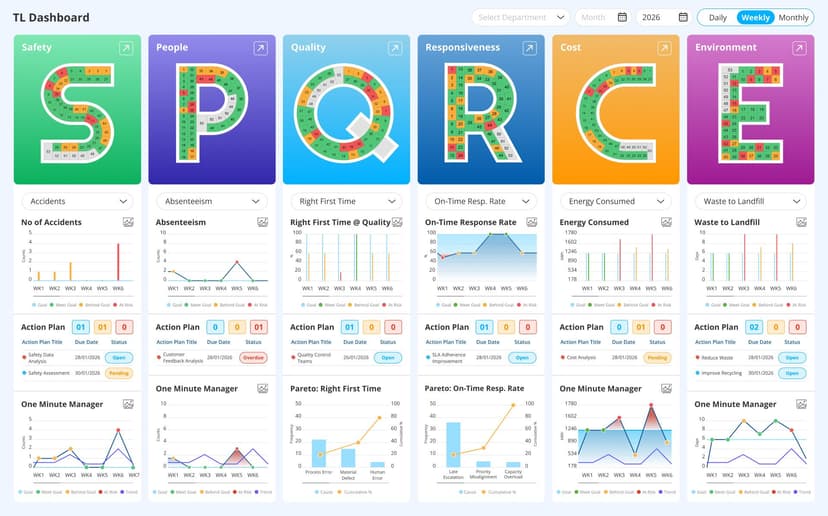
- SQDCP Boards: Serve as visual management tools used in the measure phase of DMAIC, focusing on Safety, Quality, Delivery, Cost, and People metrics to track and communicate performance indicators effectively.
- Statistical Process Control (SPC): Monitors and controls process variation in real-time during the control phase of DMAIC. SPC analyses data, enabling swift corrective actions using statistical techniques like control charts.
- 5S Audits: Assessments ensuring workplace organisation and efficiency are conducted in the control phase to uphold improvements from prior DMAIC stages. They evaluate based on Sort, Set in Order, Shine, Standardise, and Sustain principles, fostering continuous improvement and productivity.
Manage every DMAIC phase with clarity and strategic alignment using Data Point
Why use the DMAIC process?
The DMAIC Lean Six Sigma process offers a structured approach for measuring and driving process improvement. It enables organisations to systematically Define, Measure, Analyse, Improve, and Control processes, leading to improved performance, reduced waste, and enhanced quality control. DMAIC cycle is a data-driven decision-making approach that empowers teams to identify root causes of issues, implement targeted solutions, and sustain improvements over time. The DMAIC method results in increased customer satisfaction, higher productivity, and better financial performance, making the DMAIC tool essential for organisations striving for operational excellence and competitive advantage.
When should DMAIC be used?
DMAIC should be employed when improving existing processes, particularly in cases where the problem is complex or associated risks are high. DMAIC diagrams offer a systematic approach to problem-solving, making it ideal for managing complex issues and ensuring sustainable improvements. By following the Define, Measure, Analyse, Improve, and Control phases, organisations can effectively address challenges, optimise processes, and achieve desired outcomes while mitigating risks and maximising efficiency.
Why should you use a Balanced Scorecard for your DMAIC projects?
Utilising a Balanced Scorecard (BSC) for DMAIC projects is crucial for measuring success comprehensively. The Balanced Scorecard software integrates all DMAIC phases and aligns DMAIC projects with the organisational vision, mission, and goals. This ensures balance across Financial, Customer, Internal processes, and Learning & Growth (FCIL) perspectives.
- The Key Performance Indicators (KPIs) in the Balanced Scorecard framework track and report project results.
- The Balanced Scorecard's Strategy Maps and Interactive Dashboards aid in strategic planning, process visualisation, and measurement of performance metrics associated with DMAIC projects.
How does the Balanced Scorecard work for your DMAIC projects?
Successful DMAIC projects have reduced process variation and enhanced KPI performance across all four Balanced Scorecard perspectives: Financial, Customer, Internal processes, and Learning & growth. If the KPIs set against DMAIC objectives in the Balanced Scorecard indicate low performance, then it's time to improve some of your internal processes associated with that KPI. Implementing necessary action plans to improve the particular internal processes that are falling behind will enhance the other three perspectives within your scorecard, leading to overall business success. Balanced Scorecard offers comprehensive insights into the Key Performance Indicators (KPIs) that are performing well and fall behind, helping you make data-driven decisions for your business. It also helps in easier analysis of root causes that resulted in performance losses and what actions you should take to overcome this in a single interactive visual platform that offers dashboards, performance indicators, trend comparison graphs and charts for a comprehensive analysis of your business needs. Implementing Balanced Scorecard Software for your business can take your strategic implementation to the next level, letting you prioritise your action plans promptly to achieve your goals and align your operational processes with your strategic goals.
What are the differences between DMAIC and other Problem-solving Methodologies?
DMAIC, PDCA, 8D, and A3 are problem-solving methodologies with unique approaches and applications. PDCA (Plan-Do-Check-Act) is a cyclic method focused on continuous improvement, suitable for well-defined and simple problems due to its simplicity and speed. A3 problem solving is a structured approach that uses a single sheet of paper to outline problems, analyse them, and find solutions. It is ideal for straightforward issues. In contrast, DMAIC (Define, Measure, Analyse, Improve, Control) and 8D (Eight Disciplines) are more rigorous and comprehensive, best suited for vague and complex problems, offering detailed steps and tools for thorough problem analysis and resolution. In other words, PDCA or A3 methodologies are suitable for well-defined and simpler issues, while DMAIC or 8D are better suited for complex problems requiring in-depth analysis and solution implementation. For a broader comparison of process improvement techniques beyond these four, see our complete guide.
Where can you use the DMAIC Model?
The DMAIC model finds application across various industries and sectors, including manufacturing, automotive, healthcare, energy, electronics, banking, FMCG & Retail, government and many more. Six Sigma practitioners leverage the DMAIC process for improvement projects to enhance efficiency and quality. The 6 Sigma DMAIC method has proven effective in manufacturing for process improvement, healthcare for addressing care delivery issues, and business for instigating company-wide behavioural changes. Whether streamlining production processes, optimising healthcare delivery, or driving organisational transformations, DMAIC is a versatile and valuable framework for achieving desired outcomes and sustaining improvements.
What are the benefits of using the DMAIC framework?
- Improved Organisational Efficiency: The DMAIC method identifies and eliminates inefficiencies, streamlining processes and enhancing productivity through systematic data analysis and targeted improvements. This ultimately reduces operational costs and contributes to overall operational efficiency.
- Enhanced Quality Control: The DMAIC framework contributes to quality improvement by employing tools like Statistical Process Control (SPC) to promptly monitor and address process defects, ensuring consistent process efficiency and customer satisfaction.
- Data-Driven Decision-Making: The DMAIC methodology relies on data analysis for informed decision-making, enabling organisations to identify improvement opportunities and maximise effectiveness.
- Continuous Improvement Culture: DMAIC tool fosters innovation and excellence by engaging cross-functional teams in problem-solving, promoting organisational agility and long-term success.
- Customer Satisfaction: The DMAIC process aligns processes with customer needs, enhancing satisfaction, loyalty, and competitiveness through consistent quality and customer-centric improvements.
- Cost Reduction: The DMAIC diagram identifies and eliminates wasteful activities, reducing operational expenses and improving profitability.
- Strategic Alignment of Goals: The DMAIC framework links improvement initiatives to strategic objectives, focusing efforts on areas with the greatest impact on performance and competitiveness.
- Risk Mitigation: The DMAIC initiatives proactively identify and mitigate risks, enhancing resilience and stability against costly errors and disruptions.
DMAIC vs DMADV (Define-Measure-Analyze-Design-Validate)
What should be included in a DMAIC Report?
- The project goals and the deliverables associated with each goal.
- Assessment of the current performance by comparing it to established benchmarks and quantifiable metrics.
- A thorough analysis of collected data that pinpoints the root causes of the identified problem.
- Potential steps implemented to enhance the process, systems, or design to address identified issues.
- Control measures to monitor and maintain the effectiveness of the improved process or system over time
DMAIC in Project Management
Six Sigma DMAIC project management stands out as a systematic approach to process improvement and quality enhancement regardless of organisational background, processes and practices.
Selecting the right projects for DMAIC implementation is crucial, ensuring alignment with organisational goals and the potential to impact organisational performance significantly. Understanding the deliverables of a Lean DMAIC project and its distinct phases—Define, Measure, Analyse, Improve, and Control—provides a roadmap for the successful execution of a DMAIC project.
While the duration of a DMAIC project varies depending on complexity, scope, and resources, it typically involves a defined timeline to achieve measurable improvements.
A well-defined DMAIC project plan and templates for DMAIC project management streamline the process and facilitate efficient progress tracking.
With a comprehensive awareness of DMAIC principles and strategies, organisations can guide projects effectively, using DMAIC diagrams and tools to uphold quality standards and achieve positive results throughout the DMAIC project lifecycle.
DMAIC Example
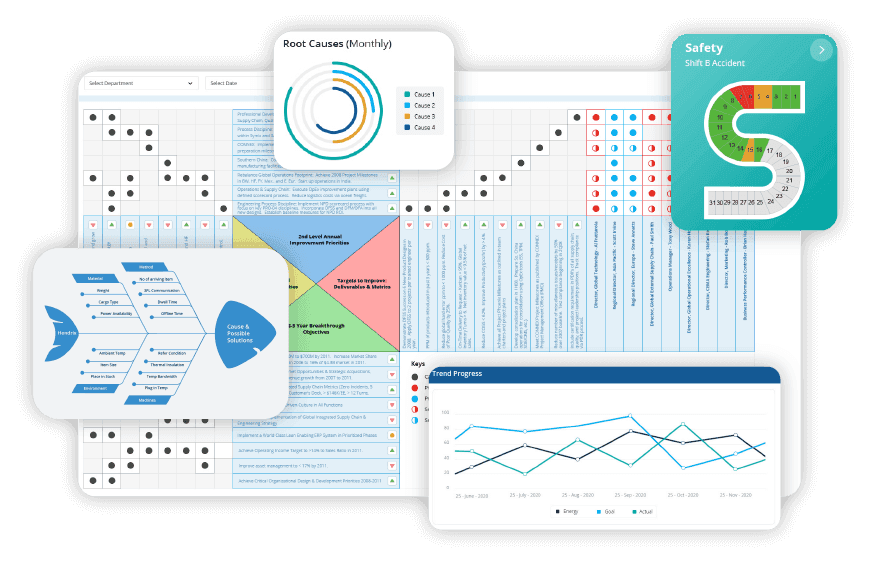
In a manufacturing organisation, the lack of performance data availability for analysis, inadequate strategic project planning, and inefficient coordination across departments resulted in production line inefficiency. The company's project managers decided to implement the DMAIC methodology to overcome these challenges.
As the DMAIC cycle proceeded through various DMAIC phases, the following findings, key activities and outcomes were observed:
- Define phase: Identified the issues affecting production line efficiency, such as frequent downtime or bottlenecks, and marked the associated KPIs in the Balanced Scorecard framework. The Hoshin Kanri X Matrix feature within the Balanced Scorecard helped identify correlations between performance indicators, goals, operational processes, and responsible individuals.
- Measure phase: Measured the performance metrics associated with the production rates and quality management using Quad Charts or Balanced Scorecard's internal processes perspective to compare the actual performance with target plans.
- Analyse phase: Analysed KPI data to pinpoint root causes of inefficiencies, such as equipment malfunctions and analysed overall process variance based on data-driven insights gained using the Balanced Scorecard Software.
- Improve phase: Implemented solutions like predictive maintenance using CMMS software (Computerised Maintenance Management System) to prevent equipment breakdowns and redesigned the workflow to minimise bottlenecks.
- Control phase: The team monitored the real-time progress of KPIs for various processes using the digital SQDCP visual management board software to ensure sustained efficiency gains and promptly address any emerging issues.
Hence, the DMAIC implementation and adequate DMAIC training to support employees helped overcome the challenges associated with production line inefficiencies, significantly improving productivity, quality, and overall shop floor performance within the manufacturing organisation.
How to avoid common mistakes when using DMAIC Six Sigma methodology?
- Undefined project goals and scope lead to ambiguity and scope creep; establish specific, measurable objectives aligned with organisational priorities from the beginning of the DMAIC six Sigma process.
- Inadequate data collection undermines analysis effectiveness; implement robust data collection strategies and tools like Balanced Scorecard software for accurate insights.
- Neglecting stakeholder involvement hampers buy-in and sustainability; foster open communication, engage stakeholders, and seek their input and support.
- Rushing analysis compromises effective solutions; conduct comprehensive root cause analyses using tools like fishbone diagrams and Pareto charts.
- Improvements without monitoring and control risk regression; establish clear control plans and performance metrics using a Balanced Scorecard and conduct regular reviews for sustained success.
Stop failing your DMAIC goals - Use Data Point to fix the cracks
Employee and Employer Benefits of Six Sigma DMAIC Training
DMAIC training is crucial in project management, leadership, statistical analysis, and understanding complex business processes. The Six Sigma DMAIC methodology offers various levels of certification, catering to different roles and expertise levels. These include Yellow Belt, Green Belt, and Black Belt certifications. A Yellow Belt certification provides an entry-level understanding of DMAIC and Lean Six Sigma, while a DMAIC Green Belt certification offers intermediate-level proficiency in applying DMAIC to projects. Advanced practitioners seek DMAIC Black Belt certification, which signifies mastery of DMAIC and leadership skills in managing complex projects and teams. When seeking DMAIC training, choosing reputable providers offering comprehensive curricula, flexible scheduling, and reasonable costs is essential. Evaluation of prerequisites, course duration, format, and assessment methods ensure suitability and effectiveness in mastering the DMAIC model and Lean Six Sigma principles.
Can DMAIC be used outside of Six Sigma?
The DMAIC methodology, while closely associated with Six Sigma, can indeed be applied outside of this specific framework, finding utility in various industries and contexts. Here are some instances where DMAIC is utilised beyond Six Sigma:
- Process Improvement Initiatives: DMAIC is employed in any organisation seeking to enhance processes and achieve operational excellence.
- Quality Management: Industries such as healthcare, manufacturing, and service sectors utilise DMAIC to improve quality standards.
- Product Development: DMAIC aids in streamlining product development processes and ensuring customer satisfaction.
- Supply Chain Optimisation: DMAIC helps identify inefficiencies and improve supply chain processes for enhanced performance.
- Risk Management: DMAIC is applied to identify and mitigate risks associated with various business processes.
- Environmental Sustainability: DMAIC can be utilised to analyse and improve processes related to environmental sustainability initiatives.
- Information Technology (IT) Management: DMAIC optimises IT processes and systems for improved efficiency and effectiveness.

Amer Jumah, Senior Lean Consultant
Amer is co-founder of Agile Solutions and a certified Six Sigma Black Belt, Lean Black Belt, and PMP, with over nine years of experience implementing Lean, Six Sigma, and Agile principles across diverse industries. He specialises in process optimisation, waste elimination, and delivering cost savings through organisational change.
Your questions, answered!
How does the DMAIC process help in identifying root causes?
What role does data play in the DMAIC methodology?
How can organizations ensure sustainability after implementing DMAIC improvements?
How does DMAIC differ from the PDCA (Plan-Do-Check-Act) cycle?
What is DMAIC for Lean Six Sigma success: Everything you need to know for smarter processes
Get a Demo