How a Leading Environmental Services Organisation Transformed Daily Operations with Daily Management Software
Customer Overview
- Industry:
Environmental & Growing Services - Location: North America (Multi-site)
- Challenge:
Managing multi-site performance without a consistent daily operating rhythm
This organisation is one of North America's largest providers of environmental growing services, managing production operations across a wide network of sites with a variable workforce spanning full-time staff, seasonal employees, and contractors.
Executive Summary
A North American environmental services organisation operating across multiple growing sites and a large seasonal workforce struggled to turn daily operational data into timely decisions. Despite having the data, performance was only reviewed at the end of pay periods - leaving managers reacting to problems rather than preventing them.
By implementing LTS Data Point's daily management software for environmental services, the organisation established a structured daily operating rhythm, connected fragmented data sources into a single visual system, and gave every level of the business, from crew leads to regional directors - the visibility they needed to act. What made the difference was not the data - they already had it. It was having a system that structured the daily conversation around it, assigned ownership, and ensured nothing slipped between shifts, sites, or seasons.
Transformation at a Glance
- ✓Daily SQCDP reviews embedded across all departments
- ✓End-of-period surprises eliminated through same-day visibility
- ✓Safety, productivity, and cost data connected in one system
- ✓Action ownership tracked from issue to resolution
The Challenge: Performance Data Without a Daily Operating Rhythm
Despite having operational data available every day, the organisation had no structured system to review it, discuss it, or act on it before the damage was done.

Monthly Reviews, Daily Problems
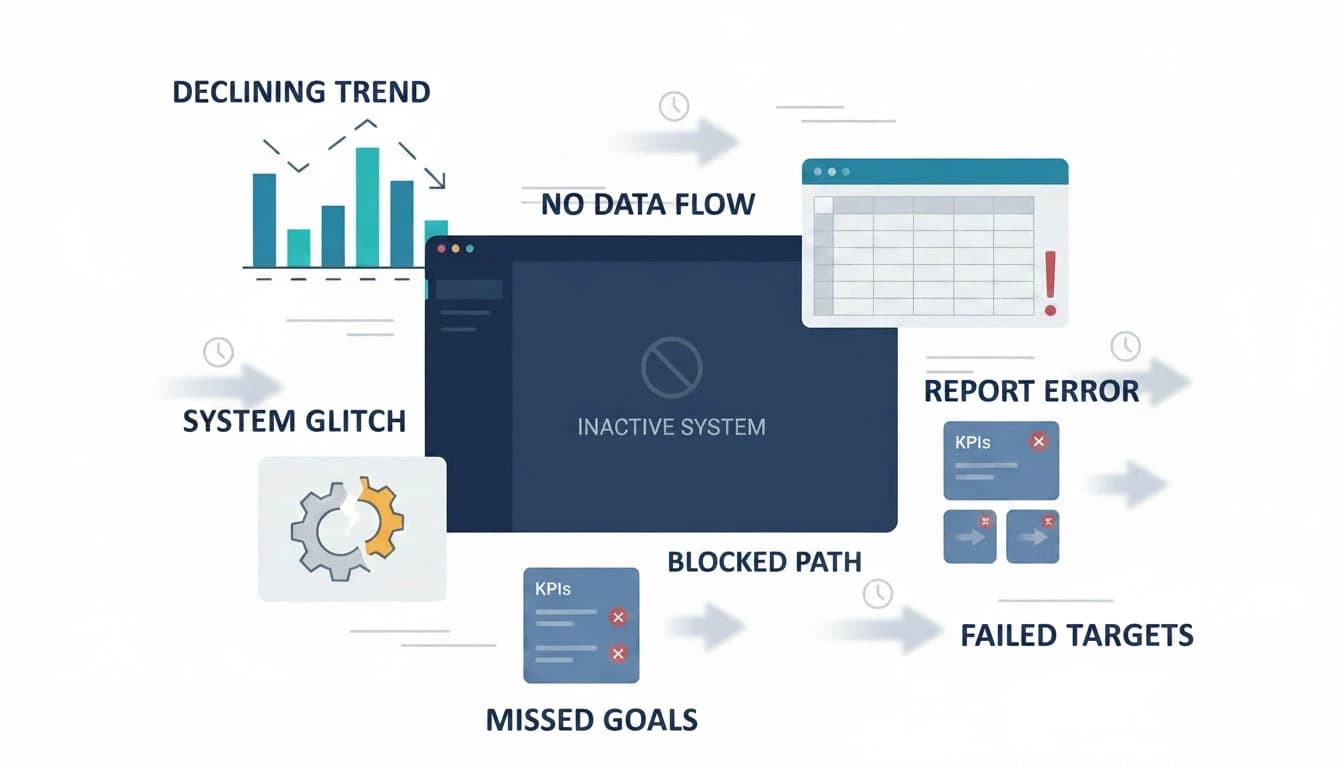
Performance was reviewed at the end of pay periods-typically every two weeks. By the time issues surfaced, productivity had already slipped and labour costs had already overrun. As the operations leader put it: "Rather than wait two weeks and realise we have a problem, we need it visual right off the bat."

Fragmented Data Across Disconnected Systems
Operational data lived across multiple platforms. A specialist production system, daily Excel files on SharePoint, and a separate safety reporting tool, with no single view connecting them. Teams in safety, operations, and IT were working from different sources with no common methodology.

No Consistent Daily Operating Rhythm
There were no structured daily huddles, no shared visual management approach, and no consistent way to discuss performance across shifts, departments, or seasons. Each site operated differently, making it impossible to build a scalable, repeatable model across the network.

Accountability Gaps in CAPA and Action Tracking
When safety incidents, quality deviations, or productivity shortfalls were identified, follow-up was managed manually across task tools and spreadsheets. There was no clear link between issue identification and resolution and problems recurred without structured ownership.
Solution Selection: Why LTS Data Point
How LTS Data Point Was Configured for Environmental Services
Environmental services operations don't run like a factory floor. Output varies by season, crews rotate, and no two sites are identical. LTS Data Point was adapted to fit that reality: tracking what matters in growing services, in the language the team already uses.
- ✓KPIs defined around seasonal productivity, labour utilisation, and safety compliance
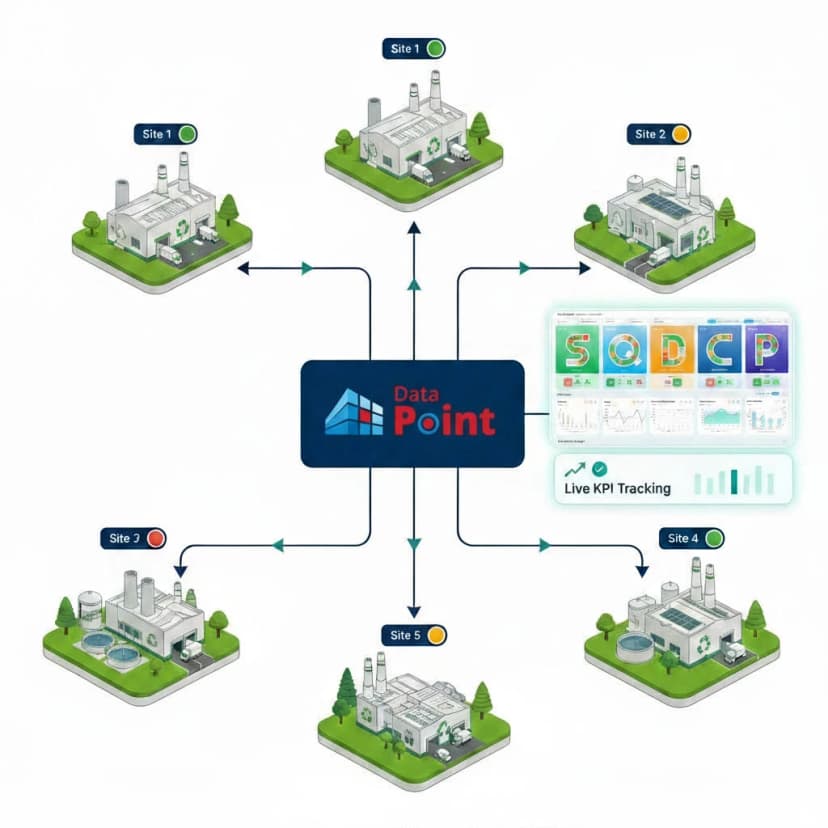
- ✓Visual daily management built for multi-site, multi-shift operations
- ✓One consistent operating model was deployable across every site in the network
Implementation Details
- ✓
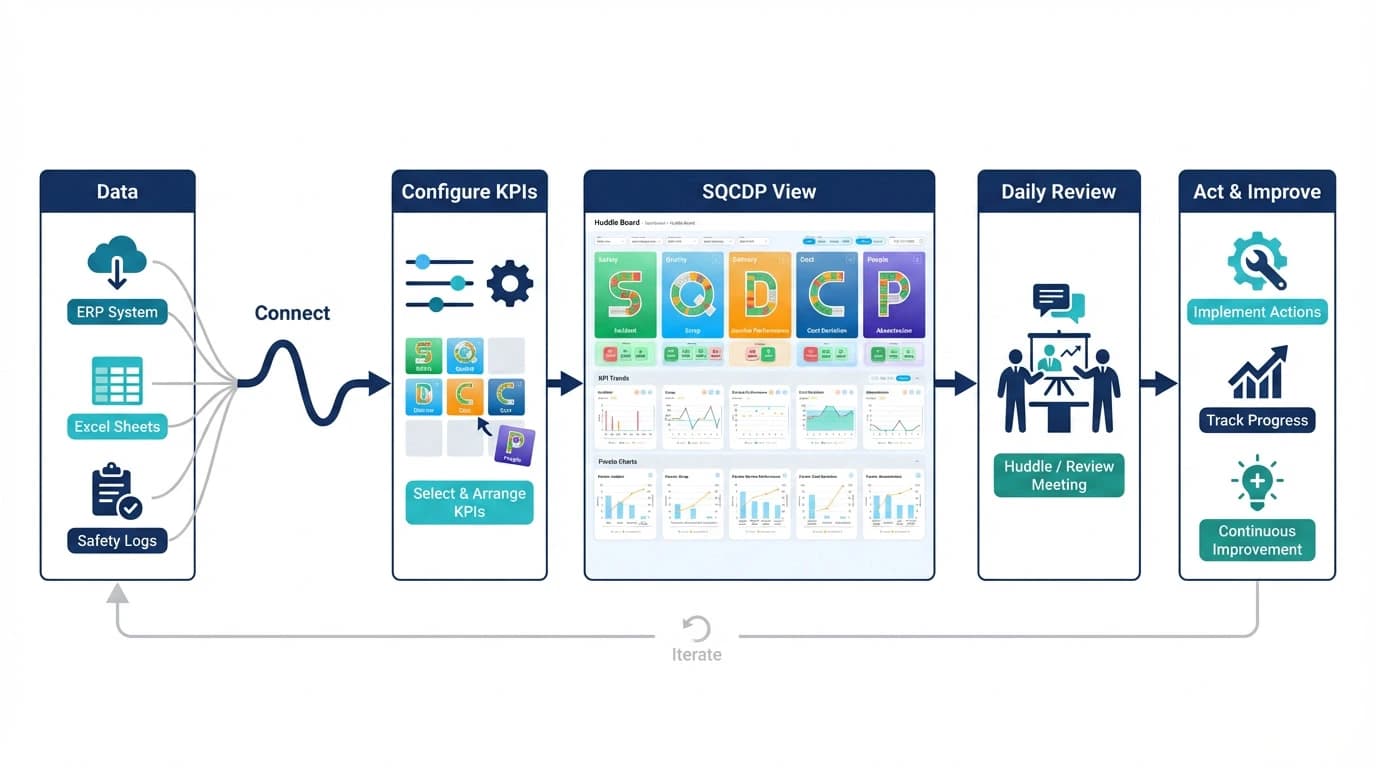
SQCDP daily management system: configured for Safety, Quality, Cost, Delivery, and People across all departments
- ✓
Visual traffic-light dashboards: with Green / Yellow / Red thresholds defined per KPI - instantly understood by crew and leadership
- ✓
Daily huddle boards: designed for crew-level and leadership use, pre-loaded with prior-day performance data: no manual prep required
- ✓
Existing data sources integrated: production system, SharePoint Excel files, and safety logs connected without replacing existing tools or duplicating effort
- ✓
Action Plan dashboard: with issue logging, owner assignment, and status tracking - closing the loop from problem identification to resolution
- ✓
Role-based access control: department visibility for operational teams, consolidated SQCDP view for regional leadership and directors
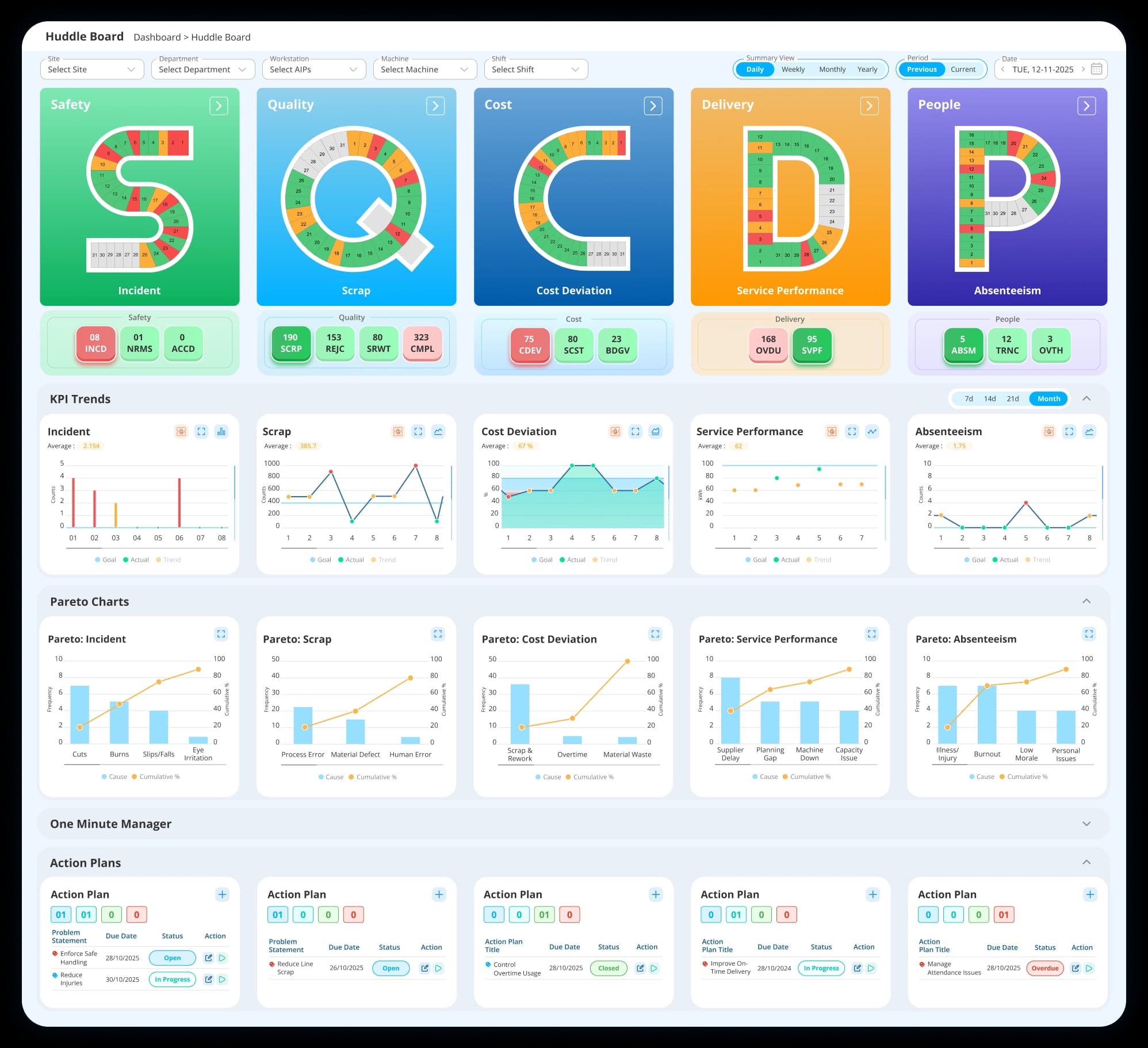
The solution was designed to work for everyone - from seasonal crew leads running morning talks to regional directors monitoring cross-site performance. The goal was a shared operating model built on daily management software for environmental services, not just a reporting upgrade.
Results: From End-of-Period Surprises to Daily Operational Control
100%
Daily reviews
Conducted consistently across the pilot site
5 min
Daily Rhythm
Average morning huddle time with pre-loaded prior-day data
Zero
Manual Prep
Morning huddles run with visual data - no spreadsheet prep
60%
Faster Action
Problems identified in morning reviews actioned the same day
Within weeks of deploying Lean daily management software, the organisation moved from reacting to problems to managing them proactively. Morning crew talks, which earlier depended on memory and manual slide preparation, were replaced with structured visual reviews using pre-loaded prior-day data. Leaders could quickly see whether safety, productivity, and cost were on track, and action ownership was clearly defined before the meeting ended.
A Scalable Operating Model
The pilot was designed as a reference implementation from the beginning, focusing on one site, one season, and one consistent methodology. Once the daily operating rhythm was established and data connections across safety, productivity, and cost were validated, it became easier to extend the same model to other sites and regions. What started as a trial soon became a standard approach for managing daily performance across the organisation.
Conclusion
For organisations in environmental and growing services, where output is seasonal, workforces change frequently, and performance varies daily, the difference between having data and acting on it determines results. This case study shows that daily management software for environmental services does not need to replace existing tools. Instead, it should connect them, structure how teams review performance, and provide clear visibility at every level, from site crews to regional leadership, so decisions can be made in real time rather than at the end of the month.