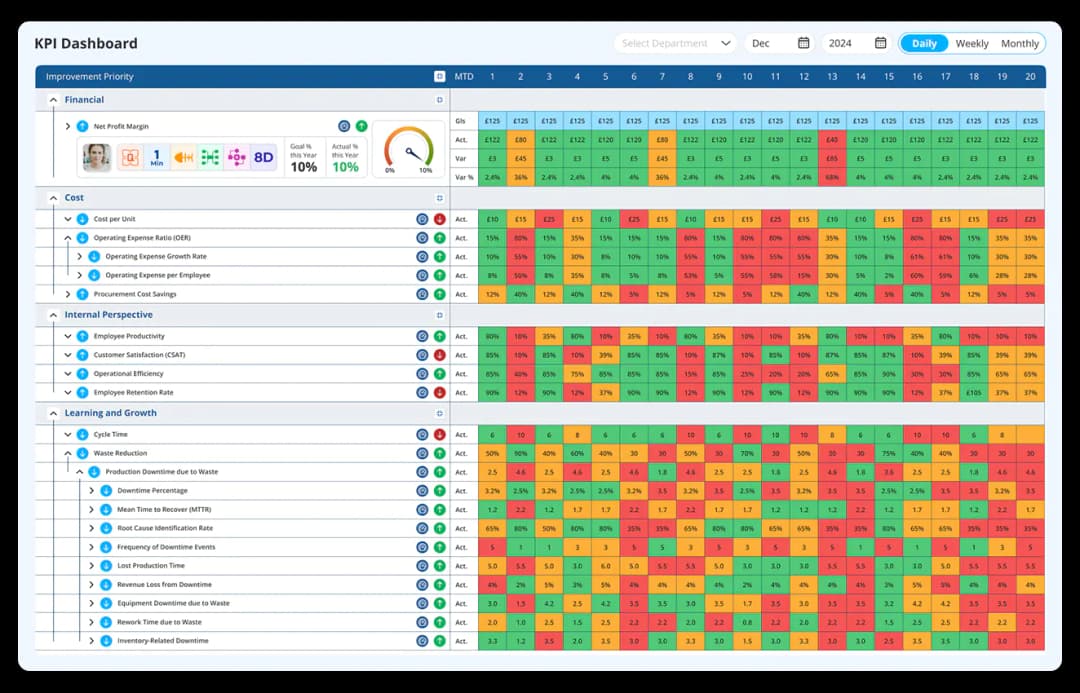
KPI Visual Management Tools for Mobile, Global Operations
Access your performance data, dashboards, and reports seamlessly across devices—desktop, tablet, or mobile. Keep your team connected and informed, no matter where they are.
Access anytime from anywhere

The Choice is yours! Whether its iPad, Mobile or a Web-based solution, access Computerised digital Balanced scorecard on multiple devices.
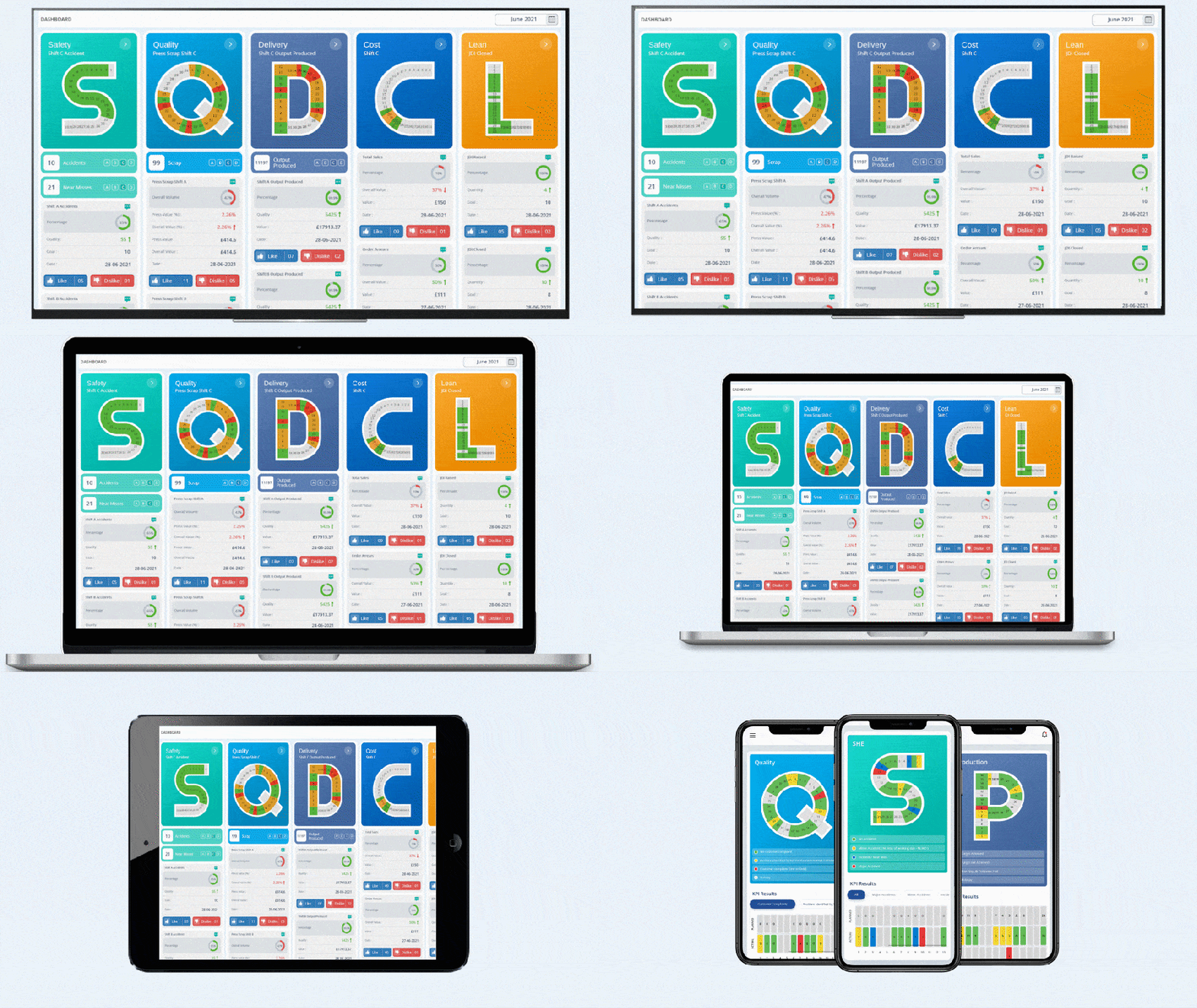
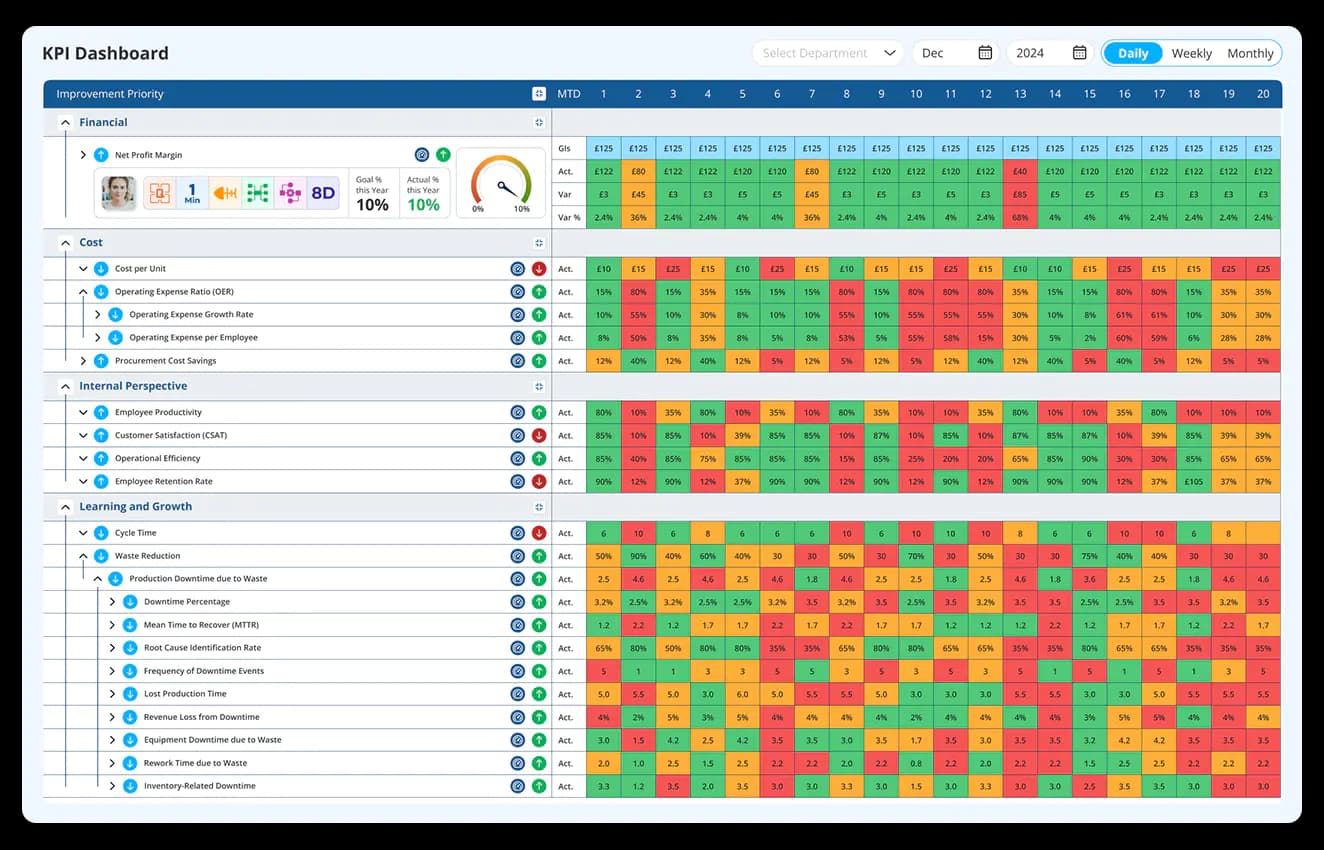
Track and monitor KPIs from anywhere at any time without any restrictions. Analyse the deployed strategic plans. Gain meaningful feedback for each action initiated.
Stay Connected across your organisation with Data Point
Bespoke Balanced Scorecard system. Customise Digital Balanced Scorecard system according to your preference based on your KPIs, business operations and much more.
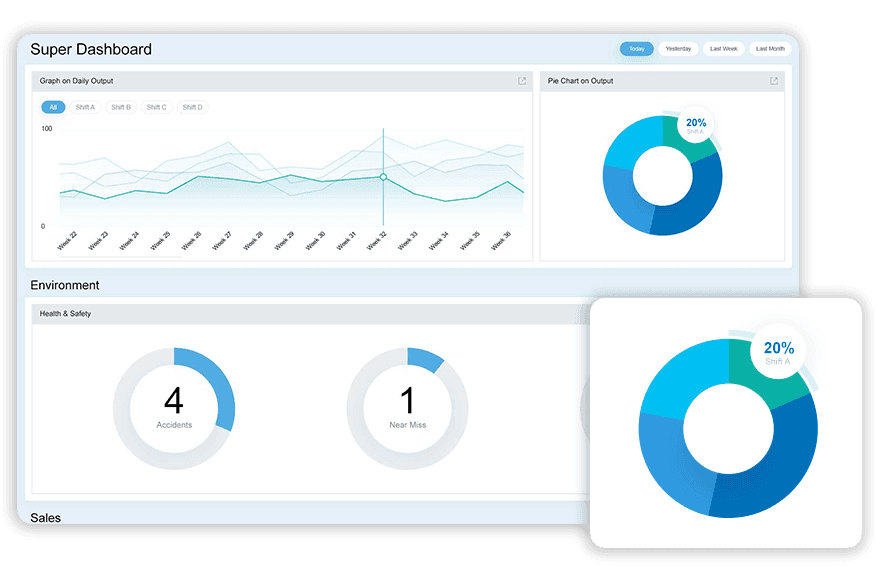
Choice of industry leaders and Fortune 500 companies


















Redefine accessibility for your business
Data Point ensures uninterrupted access to your data and tools across geographies and devices.

Multi-Device compatibility
From desktops to tablets and mobile devices, access your data effortlessly on the go.

Global data synchronisation
Keep your teams aligned with real-time updates, no matter where they are located.

Cross-Platform integration
Seamlessly integrate with web-based solutions for ultimate convenience and performance.
Real-Time data access for a global workforce
KPI Visual Management Tools for Mobile & Global Operations
Discover how mobile-ready KPI dashboards empower global teams with real-time visibility, secure access, cross-platform integration, offline capabilities, and seamless collaboration to support faster decisions anytime, anywhere.
How does multi-device compatibility change who can actually engage with KPI data day to day?
A dashboard that only works well on desktop effectively excludes anyone not sitting at a desk, which in manufacturing is most of the operational workforce. Shopfloor supervisors, site visitors, and mobile-first roles need the same data, just accessed differently.
Compatibility across desktops, tablets, and mobile devices means the sae underlying dashboards and reports render properly regardless of the device someone is holding. This is not simply a cosmetic scaling issue. It determines whether a supervisor walking the floor with a tablet has the same real-time visibility as someone reviewing performance from a desk, or whether the mobile experience is a stripped-down version that misses the detail needed to act on what it shows.
How does cross-platform integration reduce the friction of moving between web-based tools and the core system?
Teams rarely work from a single tool in isolation. Performance data often needs to connect with other web-based systems already in use across the organisation, whether that is for reporting, communication, or additional analysis.
Cross-platform integration means the system is designed to work alongside existing web-based tools rather than requiring teams to abandon what they already use. This reduces the friction that typically comes with introducing a new platform into an environment where other tools are already embedded into daily workflows.
How does security stay consistent when data is being accessed from multiple devices and locations simultaneously?
Expanding access across devices and geographies naturally raises the question of whether that expanded access comes at the cost of security. More endpoints and more locations typically mean more potential points of vulnerability if security is not built in consistently across all of them.
Encryption and compliance with international security standards apply regardless of which device or location is being used to access the system. This means the security posture does not weaken as accessibility increases. The mobility and the security are not competing priorities that trade off against each other. They are both built into the same underlying access layer.
How does mobile access change the relationship between strategic plans and day-to-day execution?
Strategic plans are often reviewed at a fixed cadence, disconnected from the daily operational reality they are meant to guide. By the time a monthly or quarterly review happens, the plan may already be out of step with what has actually occurred on the ground.
Accessing performance data and dashboards from mobile devices means the connection between a strategic objective and its current status is available continuously, not just at the scheduled review. This shortens the distance between strategy and execution, since anyone with mobile access can check whether current activity is actually tracking toward the stated objective, rather than waiting for the next formal checkpoint to find out.
How does real-time global data synchronisation keep distributed teams working from the same numbers?
When teams across different locations or time zones are each working from their own local copy of performance data, small delays in synchronisation compound into genuine disagreement about what the current numbers actually are. A site manager reviewing data an hour before a global call may be looking at a different picture than a colleague joining from another region.
Global data synchronisation in real time removes that lag. Every user, regardless of location, is working from the same live dataset rather than a locally cached or delayed version. For organisations coordinating decisions across multiple regions, this consistency is what prevents a conversation from stalling on reconciling whose numbers are correct before it can move to what those numbers mean.
When does offline access make sense, and what does customisable offline functionality actually cover?
Real-time data inherently requires connectivity, since the value of live synchronisation depends on an active connection to the source. But not every function needs to be blocked simply because connection drops temporarily, particularly in facilities where signal strength varies across different areas of a site.
Certain functionalities can be customised for offline access, meaning specific tasks can continue even without an active internet connection, while functions genuinely dependent on live data remain appropriately restricted until connectivity resumes. This distinction matters for operations in facilities with inconsistent connectivity, where a rigid all-or-nothing approach to access would otherwise interrupt work unnecessarily.
How does global accessibility support organisations coordinating strategic reviews across multiple time zones?
A strategic review that depends on everyone being in the same physical location, or even the same time zone, is a limitation for any multi-region organisation. Waiting for a scheduled call to align on current performance means decisions are made less frequently than the underlying data actually changes.
With real-time data accessible from anywhere, translating strategy into action does not need to wait for a synchronous meeting. A regional leader can review current performance and act on a deviation independently, informed by the same live data that would otherwise only be discussed at the next scheduled global review.
What is the practical difference between accessing dashboards on mobile and accessing the full Balanced Scorecard system?
Not every task requires the same depth of interaction. Checking a KPI status while walking the floor is a different use case from configuring a scorecard or building a new strategy map, which benefits from a larger screen and more deliberate interaction.
The system supports both, giving the choice of iPad, mobile, or a full web-based interface for the computerised Balanced Scorecard depending on what the task requires. This flexibility means the same underlying platform serves quick, in-the-moment checks and deeper configuration work without forcing either use case into an interface poorly suited to it.
Hear it from our customers

MARC ROBINSON
Director, Global Operational Excellence


“By providing a central location to input, analyse and share our KPIs, 'Data Point' enables site management to more easily focus on the entire business as a team. Its ability to allow automated data entry and trend analysis gives us more time for improvement rather than just reporting numbers. Combined with a disciplined approach within our SQDC meeting process, I believe 'Data Point' will help us continually focus on key issues and drive business excellence in all areas.”
Stay updated on your strategic goals and get real-time insights.
Break the barriers of location with our mobility and global accessibility features. Stay connected, access your data, and drive collaboration anytime, anywhere.