Hassle-free MES and ERP integrations for unified data management
Balanced Scorecard system performs data synchronisation in real time and gives a glimpse of live organisational performance.
Integrate Digital Balanced Scorecard to MES and ERP System
Streamline operations with integration for better efficiency, flexibility, and cost savings.
- No data redundancy
- Increased flexibility and process efficiency
- Centralised and accessible information
- Saves data entry time and cost
- Comprehensive process visibility
- Integrated operation
- Simplified IT administration
- Cost and storage saving

Easily integrate online Balanced Scorecard system with ERP and gain benefits such as:
- Increased productivity
- Increased mobility
- Improved overall management
- Reduction of errors and duplication
Boost your efficiency with Data Point smart integration
Track and monitor KPIs without any restrictions.Analyse the deployed strategic plans. Gain meaningful feedback for each action initiated.
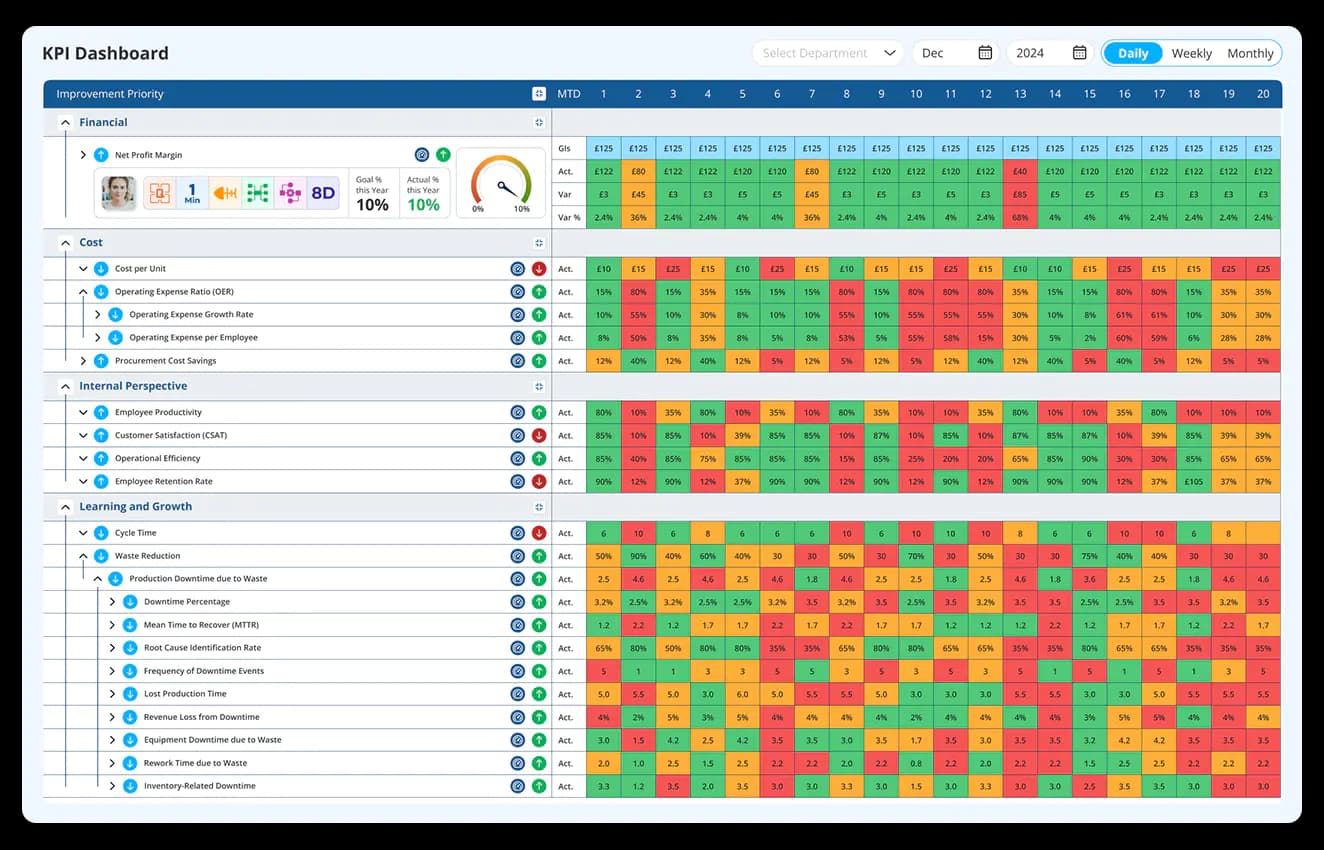
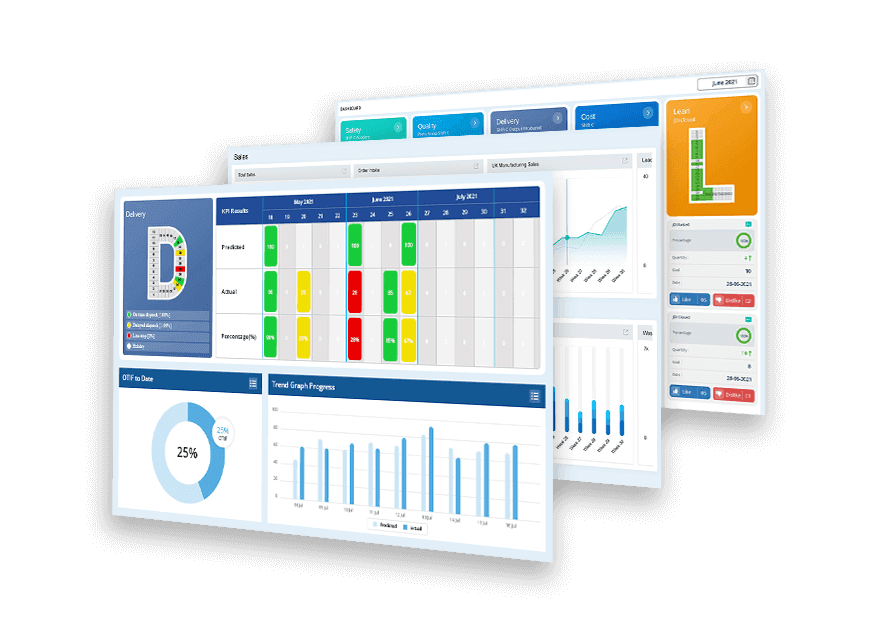
Interactive Dashboards give meaningful insights to businesses. An interactive dashboard allows users to access data on a single screen, easily share results, save time, and increase productivity.
Choice of industry leaders and Fortune 500 companies


















How seamless integrations with Data Point can benefit your business?
Seamless integrations with systems like MES and ERP transform how your business operates:

Unified data management
Consolidate data from multiple platforms into one centralised view for better accessibility.

Enhanced efficiency
Automate workflows and reduce manual effort through real-time system synchronization.

Cross-Department collaboration
Enable smoother communication and data sharing across teams to align goals.
Unify your data by integrating Data Point with your existing business systems
MES & ERP Integration: The Complete Guide to Connected Manufacturing Data and Unified Performance Management
Learn how MES and ERP integration connects production, quality, maintenance, and business systems, eliminates duplicate data entry, enables real-time synchronisation, and provides a single source of truth for performance management.
How does integration eliminate data redundancy across systems that previously required duplicate entry?
When production data lives in an MES, quality data lives in a separate quality system, and maintenance records sit in yet another platform, keeping a Balanced Scorecard current means, someone is manually re-entering the same figures into a fourth system. That duplication is not just wasted time. It is a point where numbers can drift apart, since a figure entered twice by two different people rarely stays perfectly consistent.
Integration with existing Production Management Systems, Quality Systems, and Maintenance Management Systems removes that duplication entirely. Data flows into the scorecard from its original source once, rather than being copied and re-entered. The scorecard reflects the same underlying figures the source systems hold, which means there is no second version of the truth to reconcile.
How does cross-department collaboration improve when quality, maintenance, and production data sit in one system?
Quality, maintenance, and production teams working from separate systems each have visibility into their own function but limited insight into how their data connects to what the other teams are seeing. A quality issue that traces back to a maintenance gap is harder to identify when the two datasets never sit side by side.
Bringing quality, maintenance, and production data into the same integrated environment means teams working on connected problems can see the same underlying information rather than exchanging exported reports. This is what allows a cross-functional root cause analysis to move faster, since the maintenance history relevant to a quality investigation is already visible in the same system rather than requiring a separate request to another department.
How does a guided integration setup process reduce the barrier to connecting existing systems?
Organisations considering a new platform often hesitate because previous system integrations have been long, resource-intensive projects requiring dedicated technical staff and extended timelines. That history creates reasonable caution about undertaking another integration project.
A guided, step-by-step setup process is designed specifically to reduce that barrier, structuring the integration so it does not require the same scale of dedicated technical resourcing that legacy system integrations have historically demanded. This matters most for organisations that want the benefits of integration without committing to a lengthy, high-risk implementation project before seeing any value.
How does integrating maintenance system data with the scorecard support proactive reliability decisions?
Maintenance data often sits in its own system, disconnected from the production and quality KPIs it directly affects. A pattern of increasing minor faults on a specific asset might be visible in the maintenance system but invisible in the performance scorecard until it eventually causes a production or quality deviation significant enough to be noticed elsewhere.
Integration with the Maintenance Management System means maintenance-related data contributes to the same scorecard tracking production and quality performance. This connection makes it possible to see early maintenance indicators alongside the KPIs they are likely to affect, rather than only connecting the two after a failure has already impacted output.
How does simplified IT administration change the cost of maintaining a multi-system operational environment?
Every additional system an organisation runs adds to the IT team's maintenance burden: separate user management, separate data validation, separate troubleshooting when something does not match between systems. That overhead compounds as more disconnected tools are added to the environment.
Integrated systems reduce that administrative load because data flows automatically rather than through manually configured exports and imports that need ongoing maintenance. Fewer manual data pathways mean fewer points where a broken connection needs to be diagnosed and fixed. For IT teams supporting multiple sites, this reduction in administrative complexity is a direct and measurable cost saving, not just a convenience.
How does a unified dashboard bring data from multiple integrated sources into a single view without losing source-level detail?
Once data from ERP, MES, and quality systems all flow into the same platform, the risk is that the resulting view becomes an overwhelming mix of everything rather than a coherent picture. The value of integration depends on the dashboard being able to consolidate that data meaningfully, not just aggregate it.
A unified dashboard presents data from every integrated source on a single screen, structured so users can access what they need without switching platforms. This is what makes the integration valuable in practice rather than just architecturally tidy. The data is combined, but it remains navigable, with the ability to move into source-specific detail when a summary view is not sufficient.
How does real-time synchronisation between the scorecard and connected systems keep performance data current?
A scorecard populated through a nightly batch import or a weekly manual export is only as current as the last time that process ran. Between updates, the scorecard is showing a snapshot that may already be out of date, particularly for KPIs that move quickly during a shift.
Real-time data synchronisation means the scorecard reflects current organisational performance as it happens, rather than a periodically refreshed copy. This distinction matters most for KPIs directly tied to production or quality events, where a lag between the actual event and its appearance in the scorecard reduces the value of monitoring it all.
How does integration security stay consistent during the data synchronisation process itself, not just at rest?
Data is often most vulnerable while it is moving between systems, not while it is sitting stored in one place. An integration architecture needs to account for security during the transfer itself, not only apply protections once data has landed in its destination system.
Integrations adhering to strict security protocols throughout the synchronisation process means data remains protected both during and after transfer between connected systems. For organisations integrating sensitive production, quality, or financial data across multiple platforms, this end-to-end approach to security is what makes the integration a safe architectural choice rather than one that trades data protection for convenience.
Hear it from our customers

MARC ROBINSON
Director, Global Operational Excellence


“By providing a central location to input, analyse and share our KPIs, 'Data Point' enables site management to more easily focus on the entire business as a team. Its ability to allow automated data entry and trend analysis gives us more time for improvement rather than just reporting numbers. Combined with a disciplined approach within our SQDC meeting process, I believe 'Data Point' will help us continually focus on key issues and drive business excellence in all areas.”
Integrate seamlessly, operate effortlessly
Transform your business operations with fully integrated solutions. Eliminate data silos, improve collaboration, and make faster, more informed decisions. Experience the simplicity and efficiency of synchronised systems tailored to your needs.