Make your strategic goals visible with Line-of-Sight alignment
Ensure every individual, department and team works toward the same strategic goals by making visual flow for evaluating strategies, allocating resources, and optimising the plan.
Line-of-Sight alignment streamlines your strategic alignment
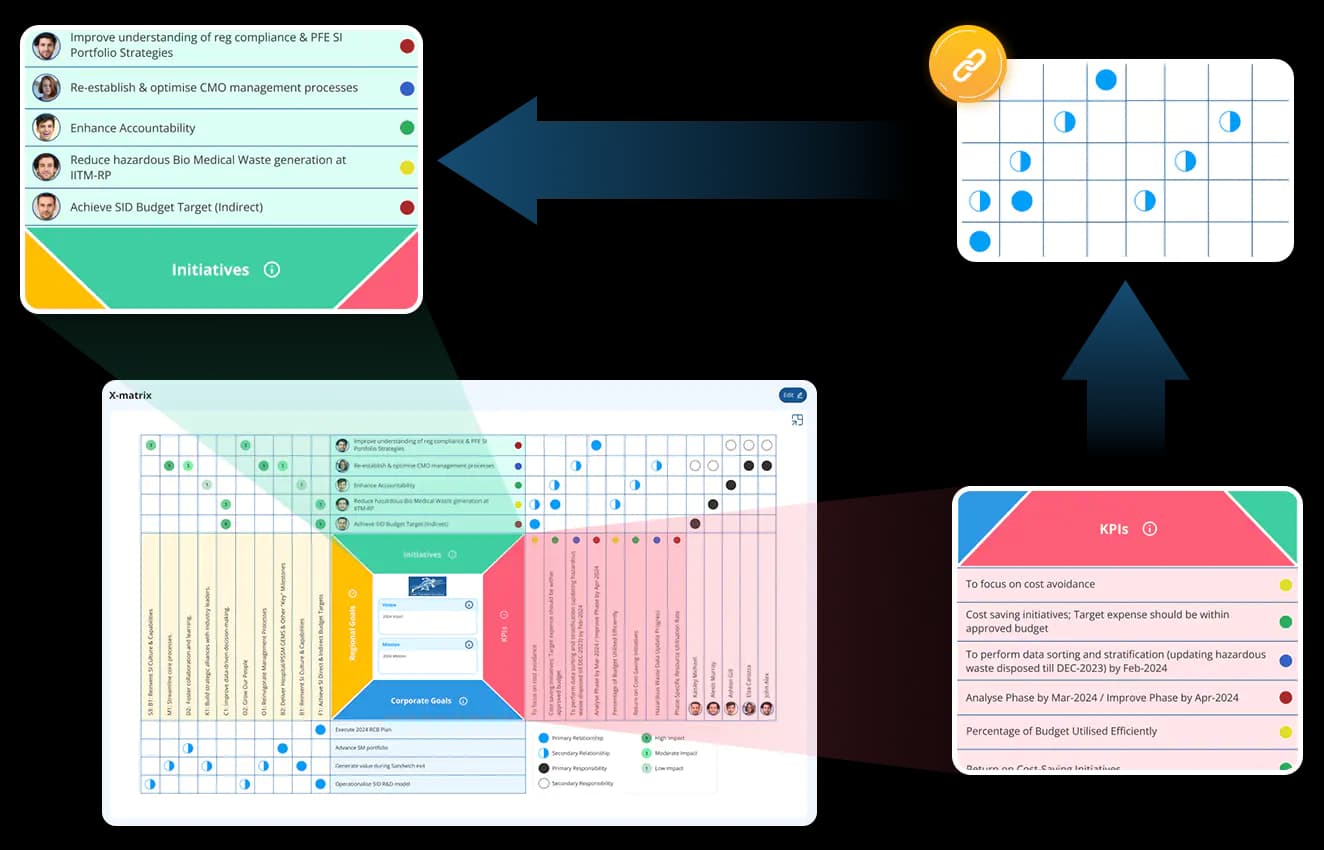
Represent the breakdown of organisation’s long-term vision into tangible, measurable actions.
- Visual representation of strategy to actions
- Structured pathway for achieving objectives
- Clear mapping


Visualise goals, assign responsibilities and track contributions with precision, empowering both managers and leaders to drive alignment effectively.
- Helps leaders to keep everyone on the same page
- Transform leadership into a proactive, results-driven force
- Allows managers to analyse flow and allocate resources
Drive alignment from your vision to execution with Data Point’s Line-of-Sight
Foster a unified approach by aligning all team members with the organisation’s strategic goals.
- Link individual team objectives to targets
- Seamless KPI integration
- Clear role definitions and responsibility assignments
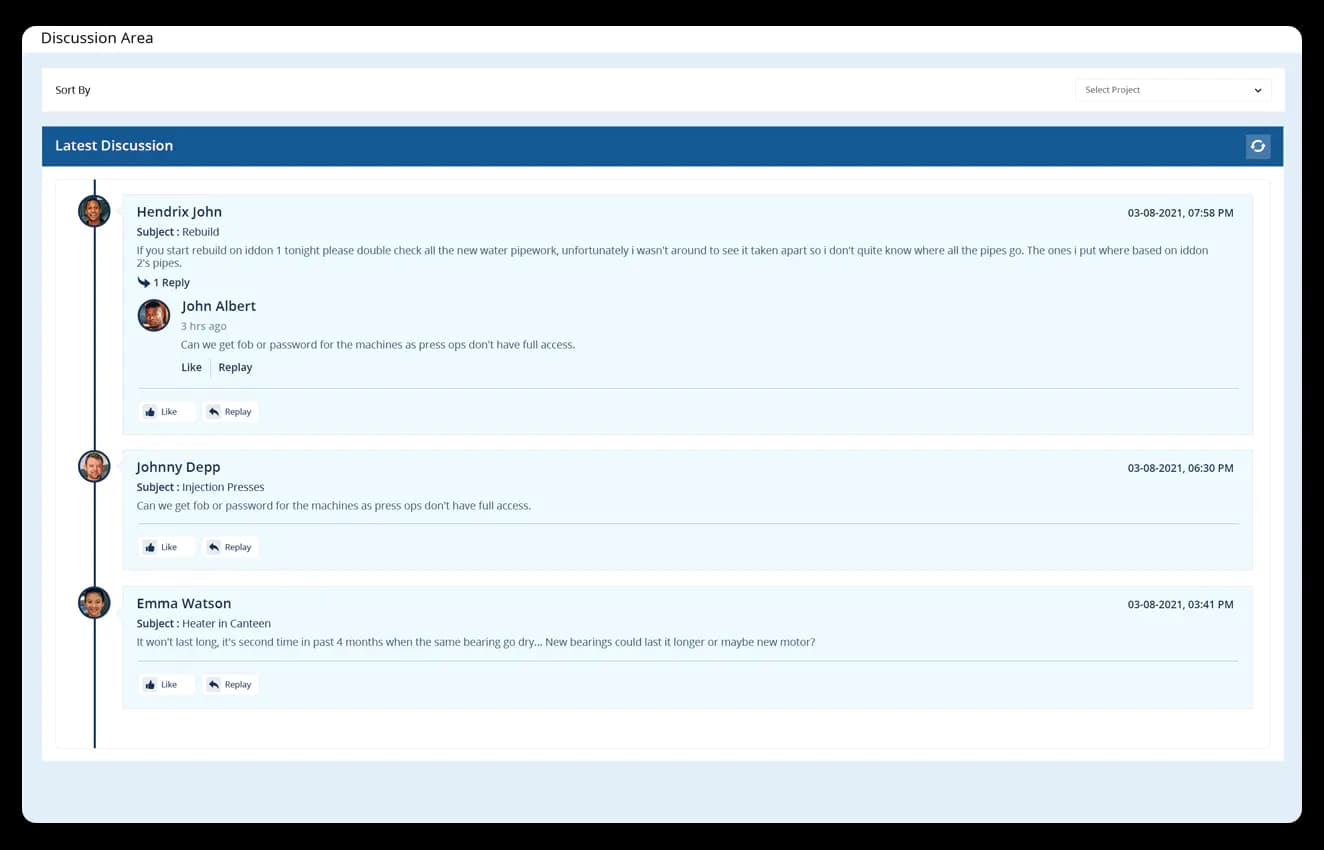
Bring a shared understanding of strategic goals through seamless communication and transparent data visualisation.
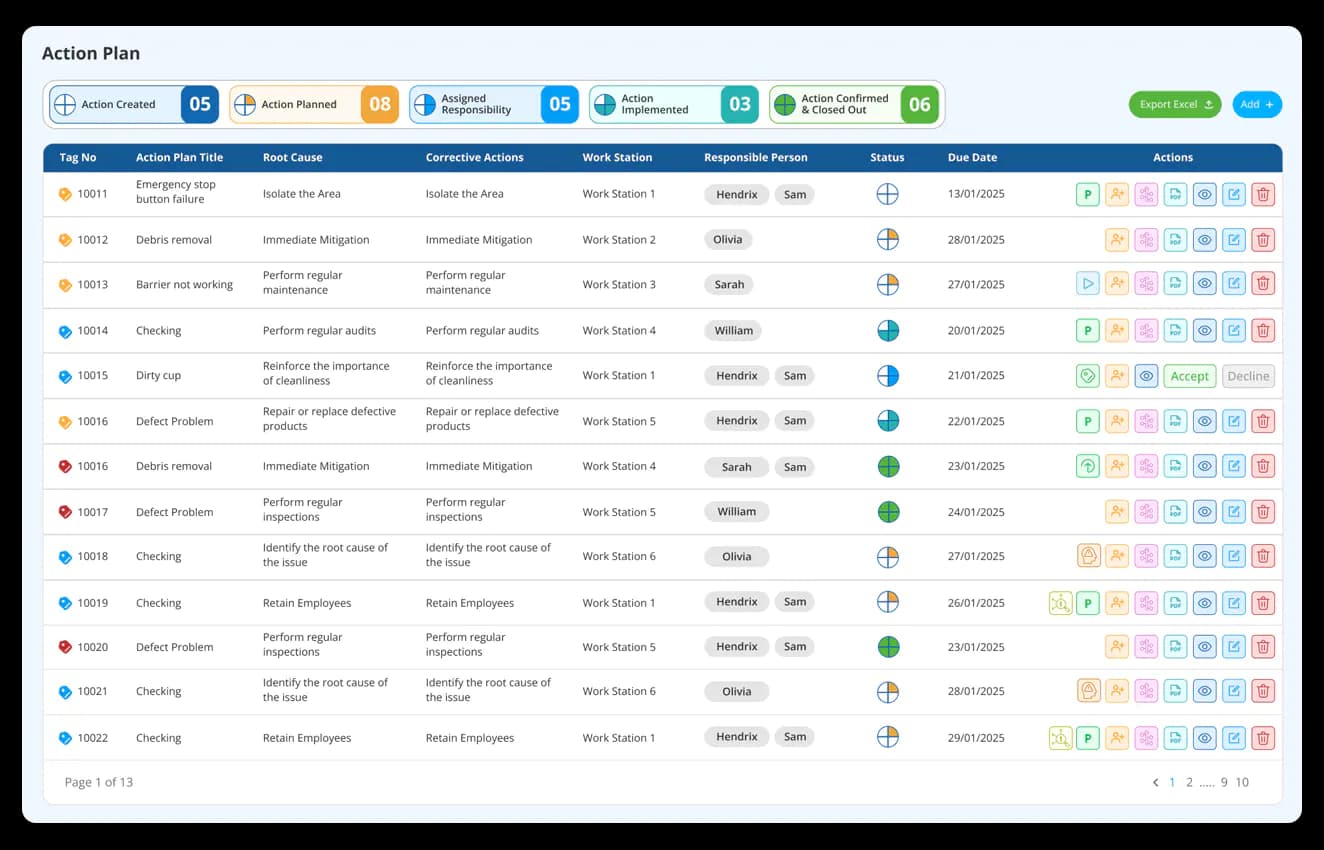
- Easy-to-follow task breakdown visualisation for team members
- Clear mapping of responsibilities and deadlines
- Real-time feedback loops
Define, track, and adjust their priorities and tactics with precision
- Display the most critical areas to focus on
- Highlight established priorities
- Review and adjust regularly
Unite your teams around clear goals and responsibilities with Data Point.
Choice of industry leaders and Fortune 500 companies


















How does Data Point’s Line-of- Sight alignment drive clear communication?
Data Point ensures every team member understands their tasks, priorities, and timelines through transparent role assignments and real-time updates by visualisation.

Clear goal visibility
Big picture focused on goal understanding.

Prioritised focus
Emphasis on what matters most.

Enhanced collaboration
Alignment through cross-departmental connections
Empower your organisation with complete strategic clarity and alignment using Data Point
Line-of-Sight Alignment: The Complete Guide to Connecting Strategy, Goals and Team Execution
Learn how Line-of-Sight alignment software helps organisations connect long-term goals to team objectives, align tasks with targets, manage priorities, allocate resources, and keep strategy execution on track.
How does a matrix view of strategic planning differ from a flowchart view of the same objectives?
A flowchart is built to show sequence and connection between objectives. A matrix view is built to show sequence and connection between objectives. A matrix view is built to answer a different question: for any given point in the organisation, what strategic goal does this role, task, or metric connect back to. The matrix format organises information by relationship rather than by flow.
This distinction matters because not every strategic question is about how objectives connect to each other. Sometimes the question is narrower: does this specific person's work tie back to something the organisation has committed to. A matrix view answers that question directly, without requiring someone to trace a path through a diagram to find the connection.
How does giving managers the ability to analyse flow and allocate resources change how alignment gets maintained day to day?
Alignment is often treated as something set once, during planning, and then assumed to hold unless something obviously breaks. In practice, alignment needs ongoing maintenance, and that maintenance is a management function, not a one-time planning exercise.
Giving managers visibility to analyse flow and allocate resources within the same structure means alignment can be actively managed rather than passively assumed. When a manager sees that resource allocation in one area is drifting away from what the strategic priority requires, that visibility is what allows a correction to happen before the drift becomes a significant gap. Leadership becomes a proactive, results-driven force specifically because the tool gives them something concrete to act on, not just a static reference document.
How does task breakdown visualisation with deadlines differ from a general project timeline?
A project timeline typically shows what needs to happen and by when for a single initiative. Task breakdown visualisation within line-of-sight alignment is doing something slightly different: showing how a specific task connects back to the strategic priority it exists to support, not just when it is due.
That distinction changes how a team member understands their own deadline. A task with a date attached is a deadline to meet. A task visually mapped back to the strategic objective it serves is a deadline with a context, which changes how a team member prioritises it against competing demands on their time when something must give.
How does highlighting established priorities help teams focus when everything on a plan feels urgent?
A strategic plan with a long list of objectives, all technically important, gives a team very little guidance about what needs attention first. Everything being labelled a priority is functionally the same as nothing being a priority, since it provides no basis for sequencing decisions.
Displaying the most critical areas to focus on, distinct from the full list of objectives, gives teams an actual answer to what should happen first when time or resource is constrained. Reviewing and adjusting that priority list regularly means it reflects current urgency rather than the priorities that were most pressing when the plan was originally written, which may no longer be the ones that matter most now.
How does breaking a long-term vision down into tangible, measurable actions avoid the plan staying abstract?
A long-term vision statement, however well written, does not tell anyone what to do differently tomorrow. The distance between a five-year ambition and a specific team's weekly task list is where most strategic plans lose their grip on the organisation, because nobody has formally made that translation.
A structured pathway that breaks vision down into measurable actions closes that distance deliberately. Each stage of the breakdown, from vision to annual objective to specific action, is mapped rather than left to individual interpretation. This is what prevents a vision statement from becoming a document that leadership refers to occasionally while the rest of the organisation continues operating from separate, unconnected priorities.
How does linking individual team objectives directly to targets change accountability compared to a general awareness of company goals?
Most employees can describe, in general terms, what their organisation is trying to achieve. Far fewer can point to the specific target their own individual objective is meant to move. That gap, between general awareness and direct accountability, is where a lot of strategic intent quietly evaporates at the point of execution.
Linking individual team objectives to specific targets, with KPI integration built directly into that link, removes the ambiguity. An individual's objective is not just loosely related to a company goal. It is tied to a measurable target that confirms whether the objective is being achieved. This is the same discipline that KPI management applies at the metric level, extended here to the individual objective level so that ownership and measurement sit together rather than being defined separately.
How do real-time feedback loops keep line-of-sight alignment current rather than a one-time mapping exercise?
Mapping roles and responsibilities to strategic goals once, at the start of a planning cycle, gives an accurate picture on day one. Without a mechanism for that picture to be updated as circumstances change, the mapping becomes progressively less accurate as the year goes on, even though it still looks authoritative on screen.
Real-time feedback loops mean the connection between a role's work and the strategic goal it supports can be corrected or adjusted as conditions change, rather than being locked in at the original mapping exercise. This is what keeps the alignment genuinely current, since a static map that nobody revisits eventually communicates a relationship between task and strategy that may no longer be accurate.
How does adapting priorities and tactics in response to changing conditions keep a strategic plan from becoming a fixed document that leadership quietly stops following?
A strategic plan that cannot be adjusted without a formal, lengthy revision process tends to get quietly ignored the moment conditions change faster than the plan can be updated. Leadership starts making decisions based on current reality while the documented plan continues to describe a situation that no longer exists.
Highly adaptable priority and tactics charts that leaders can adjust quickly are what prevent that divergence. When market conditions or internal shifts require a change in direction, the plan itself changes with it, rather than becoming a document leadership works around. This is the same principle behind the PDCA cycle integrated into Hoshin Kanri planning: a plan that adjusts on a shorter feedback loop than the annual cycle is one that stays genuinely operative rather than becoming symbolic.
Hear it from our customers

MARC ROBINSON
Director, Global Operational Excellence


“By providing a central location to input, analyse and share our KPIs, 'Data Point' enables site management to more easily focus on the entire business as a team. Its ability to allow automated data entry and trend analysis gives us more time for improvement rather than just reporting numbers. Combined with a disciplined approach within our SQDC meeting process, I believe 'Data Point' will help us continually focus on key issues and drive business excellence in all areas.”
See the big picture, act with precision!
Connect daily actions to strategic goals and drive clarity across teams with Data Point’s Line of Sight alignment.

Get Started
Your Questions, Answered!
What is Line-of-Sight alignment, and how does it work with Data Point?
How does Line-of-Sight alignment help my team understand company priorities?
What benefits will my company experience by using Line-of-Sight alignment in Data Point?
- Clear goal understanding
- Enhanced collaboration
- Improved accountability
- Better decision-making