How an Aerospace company achieved real-time KPI
visibility with digital Hoshin Kanri
With Data Point Balanced Scorecard’s digital Hoshin Kanri and real-time KPI visibility, an aerospace company aligned its strategy, improved execution, and strengthened operational control.

Customer overview
- Industry: Aerospace and defence manufacturing
- Location: United Kingdom
- Specialisation: Production of high-performance composite structures using carbon and glass fibre for aircraft, rotorcraft, and defence systems.
A UK-based aerospace and defence manufacturer, the company is a trusted supplier to leading global OEMs. Renowned for its expertise in lightweight composite components, it operates with a strong focus on precision engineering, strict safety compliance, and seamless alignment between design, production, and strategic objectives.
Executive Summary
A leading UK-based aerospace and defence manufacturer specialising in advanced composite structural components struggled with fragmented strategies, siloed departments, and outdated KPI tracking. By implementing Data Point Balanced Scorecard software with digital Hoshin Kanri and real-time KPI dashboards. They achieved real-time KPI visibility and streamlined performance management with effective visual management.
Impact at a glance:
- 20% reduction in equipment downtime
- 15% decrease in production waste
- 70% improvement in cross-functional alignment
- Real-time KPI dashboards across all departments
Complexities and challenges in Aerospace production
Despite its strong market position and technical expertise, the company faced several pain points threatening its operational excellence and long-term sustainability:
The production team struggled with:
- Strategy execution gaps
Departmental goals lacked alignment with corporate strategy, making it difficult to cascade priorities from leadership to the shop floor. Monthly reviews were disconnected from real-time shop floor conditions, leading to missed opportunities for tactical adjustments.
- Ineffective KPI monitoring
Critical performance indicators like throughput, defect rates, OEE, and scrap costs were monitored using static spreadsheets, resulting in delays, inconsistencies, and missed alerts. Leaders lacked a single source of truth to make data-driven decisions.
- Production inefficiencies
Manual data collection and fragmented systems slowed down visibility into bottlenecks, especially during high-mix, low-volume production runs. Equipment utilisation was suboptimal, and there was no systematic approach to proactively track downtime or quality deviations.
- Limited continuous improvement culture
Although Lean initiatives were in place, there was no structured framework like Hoshin Kanri X matrix to drive cross-functional alignment, measure impact, or maintain momentum over time. Employees often struggled to connect their day-to-day actions to wider business goals.
Key objectives set to overcome challenges and drive growth
To overcome these challenges, the aerospace manufacturer set out to:
- Integrate Hoshin Kanri X Matrix for strategic planning and goal deployment across departments.
- Achieve real-time visibility of KPIs such as throughput, yield, machine uptime, and defect rates.
- Improve cross-functional collaboration through centralised, digital dashboards.
- Establish a data-driven culture of continuous improvement from leadership to operators.
- Reduce waste, enhance OEE, and optimise production planning through actionable insights.
Implementation: Leveraging Data Point for Aerospace performance excellence
The company partnered with LTS to integrate Data Point digital Balanced Scorecard platform built for high-performance manufacturing environments. Key components of the implementation included:
- Phase 1: Hoshin Kanri deployment
The journey began with strategy deployment, where long-term objectives were cascaded into measurable annual and quarterly goals. Using the digital Objective Flow Chart, responsibilities, focus areas, and timelines were clearly mapped across departments.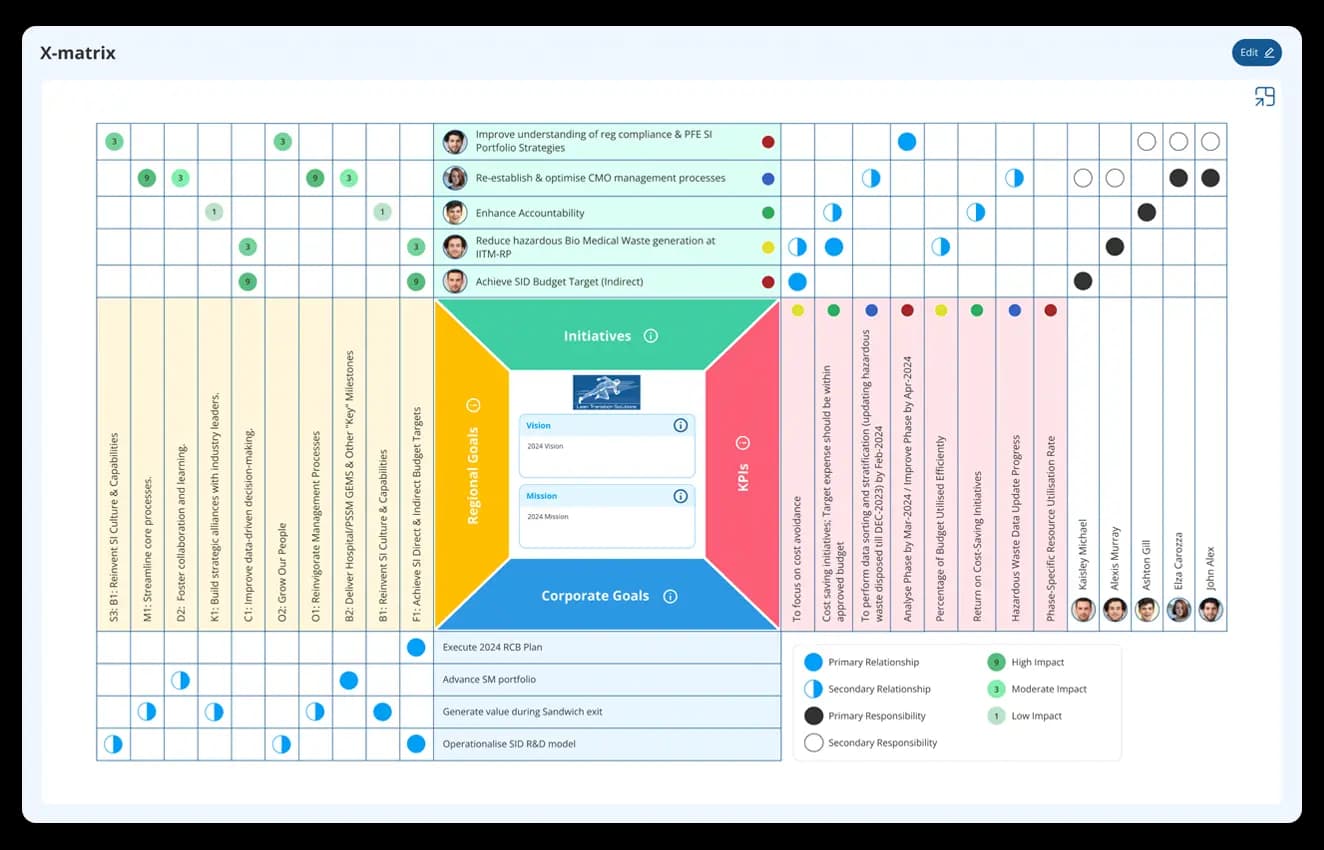
- Phase 2: Real-time KPI dashboards
Next, interactive dashboards were introduced to deliver live visibility on critical metrics such as downtime, scrap, cycle time, and delivery performance. Automated data capture from MES systems and operator inputs replaced manual reporting delays. - Phase 3: SQCDP Board integration
The company then integrated the SQCDP Board framework to visually track Safety, Quality, Cost, Delivery, and People metrics. This strengthened Gemba walks, enhanced daily reviews, and accelerated root cause analysis.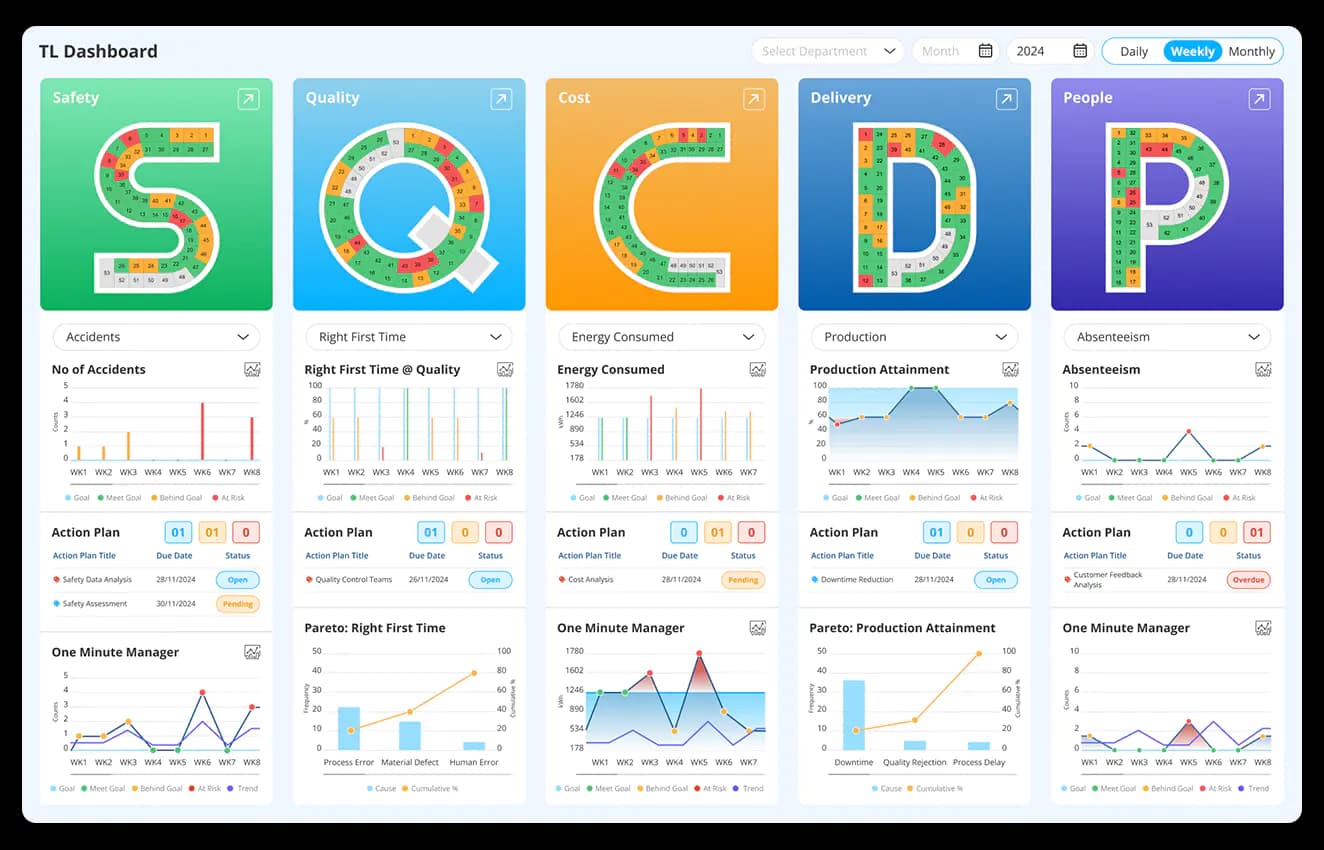
- Phase 4: Cross-departmental strategy alignment
Using Data Point’s centralised platform, operations, engineering, and quality teams monitored progress in real time, collaborated on corrective actions, and shared updates through a unified view. This seamless interaction ensured alignment with company goals and reinforced a culture of accountability. - Phase 5: Insight-driven decision making
Finally, Data Point’s analytics engine enabled leaders to spot trends, detect anomalies, and forecast future risks. Proactive interventions, resource reallocation, and scaling of best practices drove sustainable performance gains across the plant.
Results: Enhanced KPI tracking and operational excellence
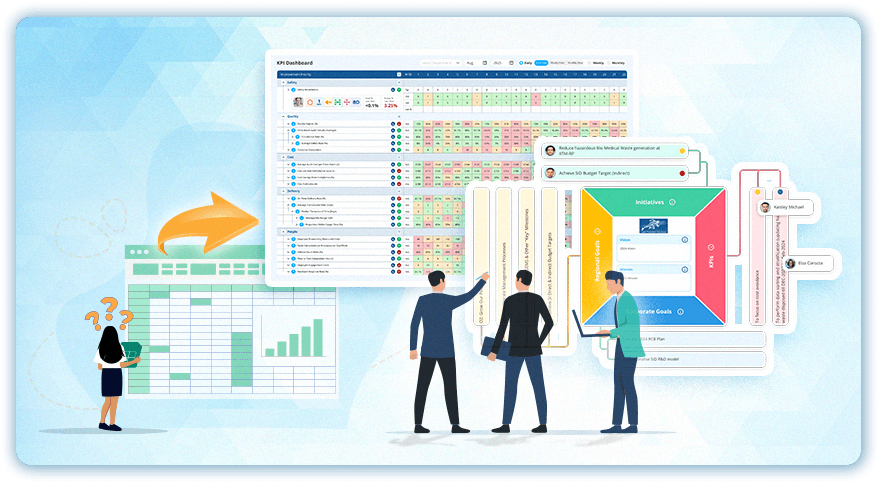
Within six months of implementation, the aerospace manufacturer saw tangible improvements in performance, engagement, and strategic clarity.
Impact highlights:
improvement in strategic alignment
Using Hoshin Kanri via Data Point, the company saw a 70% improvement in goal alignment across functions. Teams gained clear visibility into their objectives and contributions to enterprise strategy.
rise in cross-department engagement
Daily SQCDP reviews created structured touchpoints for employees to contribute ideas and solve problems. Staff participation in improvement activities rose by 60% strengthening Lean culture.
reduction in downtime
Real-time insights enabled a 20% reduction in production downtime, thanks to faster issue detection and smarter scheduling. Quality escapes decreased by 15% through embedded inspection workflows.
faster decision-making
Data Point empowered leadership to adjust strategic priorities in real-time, responding swiftly to changes in demand, supply chain disruptions, or regulatory updates — a key advantage in the aerospace sector.
boost in KPI visibility
Live dashboards reduced report preparation time by 80%, allowing managers to shift from data collection to decision-making. Department heads could identify trends and adjust plans without delay.
fewer defects
Achieved through real-time monitoring, faster root cause analysis, and stricter process controls, ensuring higher compliance with aerospace standards.
From fragmented metrics to focused execution, Data Point powered performance
This case study illustrates how a UK-based aerospace composite manufacturer used Data Point’s Balanced Scorecard platform to bridge the gap between strategy and execution. By digitising Hoshin Kanri deployment, adopting real-time KPI monitoring, and enabling cross-functional accountability, the company built a resilient, data-driven organisation ready to thrive in a highly regulated and competitive industry.
Is your Aerospace operation ready for a strategic take-off?
Let Data Point help you connect strategy with execution.
- Deploy goals with clarity
- Monitor KPIs in real-time
- Empower teams with visual management tools