SQDC Board: Lean Visual Management tool for Safety, Quality, Delivery & Cost
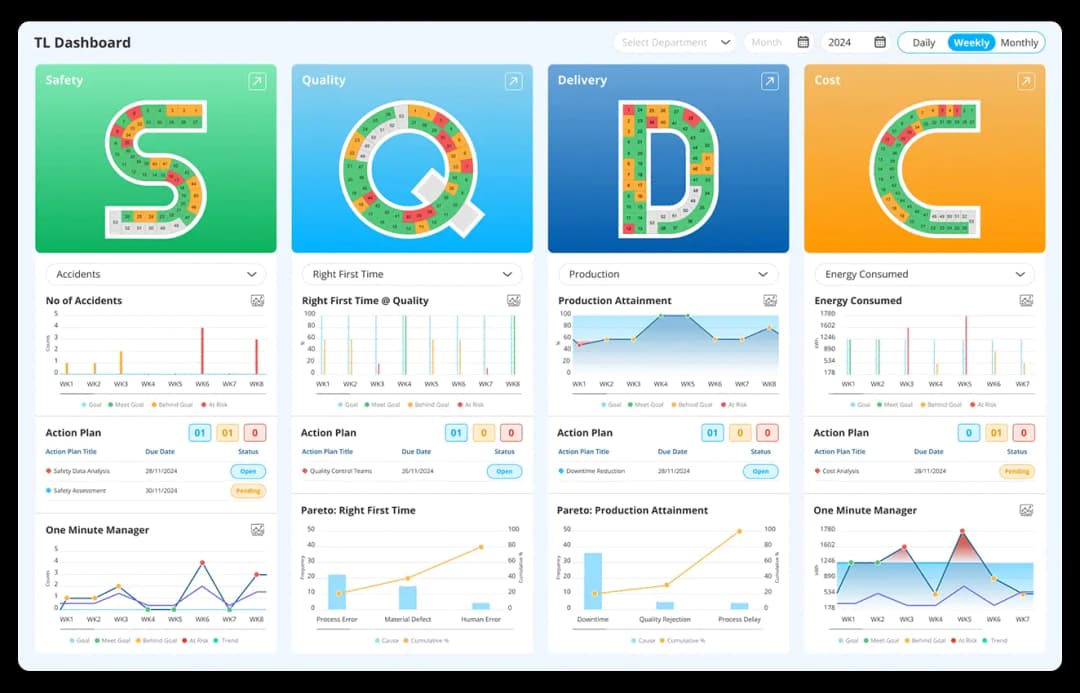
Plan your strategic development with digital SQDC visual management boards. Track your daily management process by measuring how the process is performing against safety, quality, delivery and cost metrics.
Choice of industry leaders and Fortune 500 companies


















What is a SQDC Board?
The acronym SQDC stands for Safety, Quality, Delivery, and Cost. These are core key performance indicators (KPIs) that reflect how well a process is performing. A SQDC board is a daily management tool placed in the workplace to give teams a clear, visual snapshot of performance against these metrics.
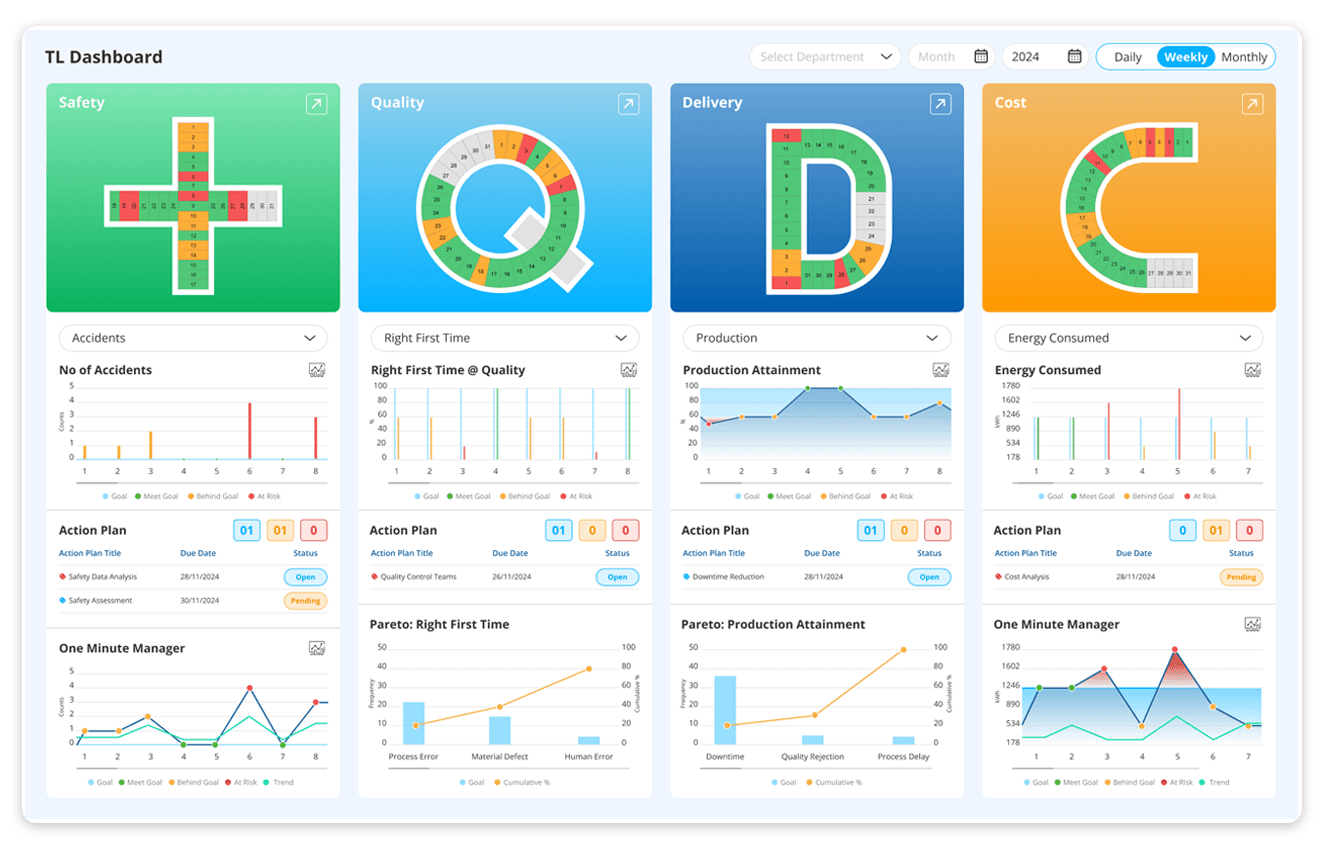
Unlike traditional static boards, digital SQDC boards make results visible in real time, support daily huddles and Gemba walks, and help teams act quickly on deviations. By combining performance tracking with easy updates and custom layouts, they turn routine monitoring into a driver of accountability, problem-solving, and continuous improvement.
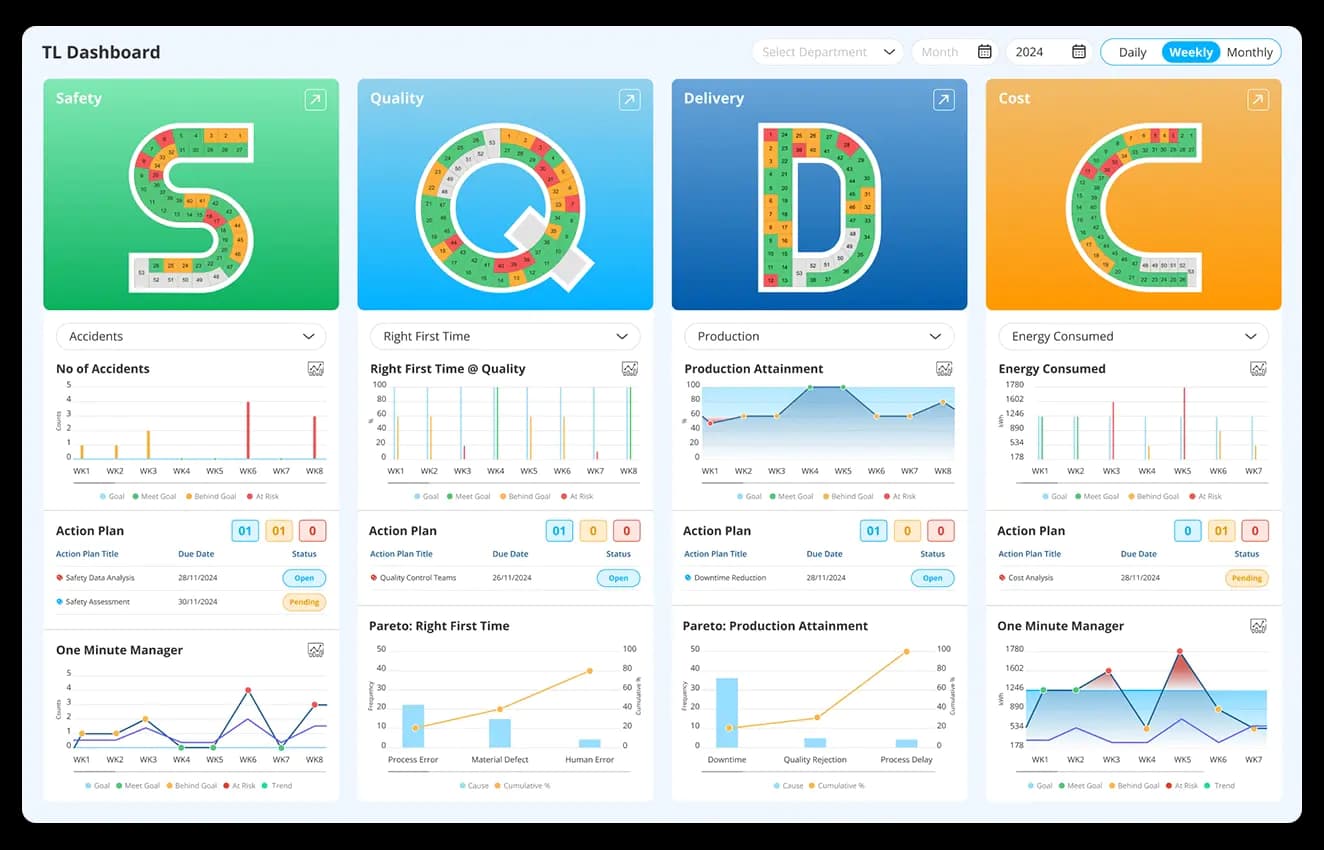
Key benefits of using a SQDC Board and how it supports Lean manufacturing goals?
SQDC software is more than a visual tool; it is a management system that connects senior leaders, managers, and frontline teams to shared Lean manufacturing goals. Leaders gain visibility of performance trends, managers ensure processes stay on track, and frontline teams use the boards to make progress and issues visible in real time. By placing digital SQDC boards in process areas, organisations embed visibility, communication, and problem-solving into everyday operations.
Here’s what you will achieve with an SQDC board:

Operational efficiency
Enhance overall performance by tracking and improving key balanced scorecard metrics, ensuring streamlined processes.

Cost control
Monitor and reduce costs through consistent oversight, leading to more profitable operations.

Quality and delivery improvement
Maintain high product quality and improve delivery times to meet customer expectations efficiently through KPI scorecard board.
Discover how the SQDC Huddle Board enhances productivity
How SQDC works? Breaking down SQDC dashboard metrics
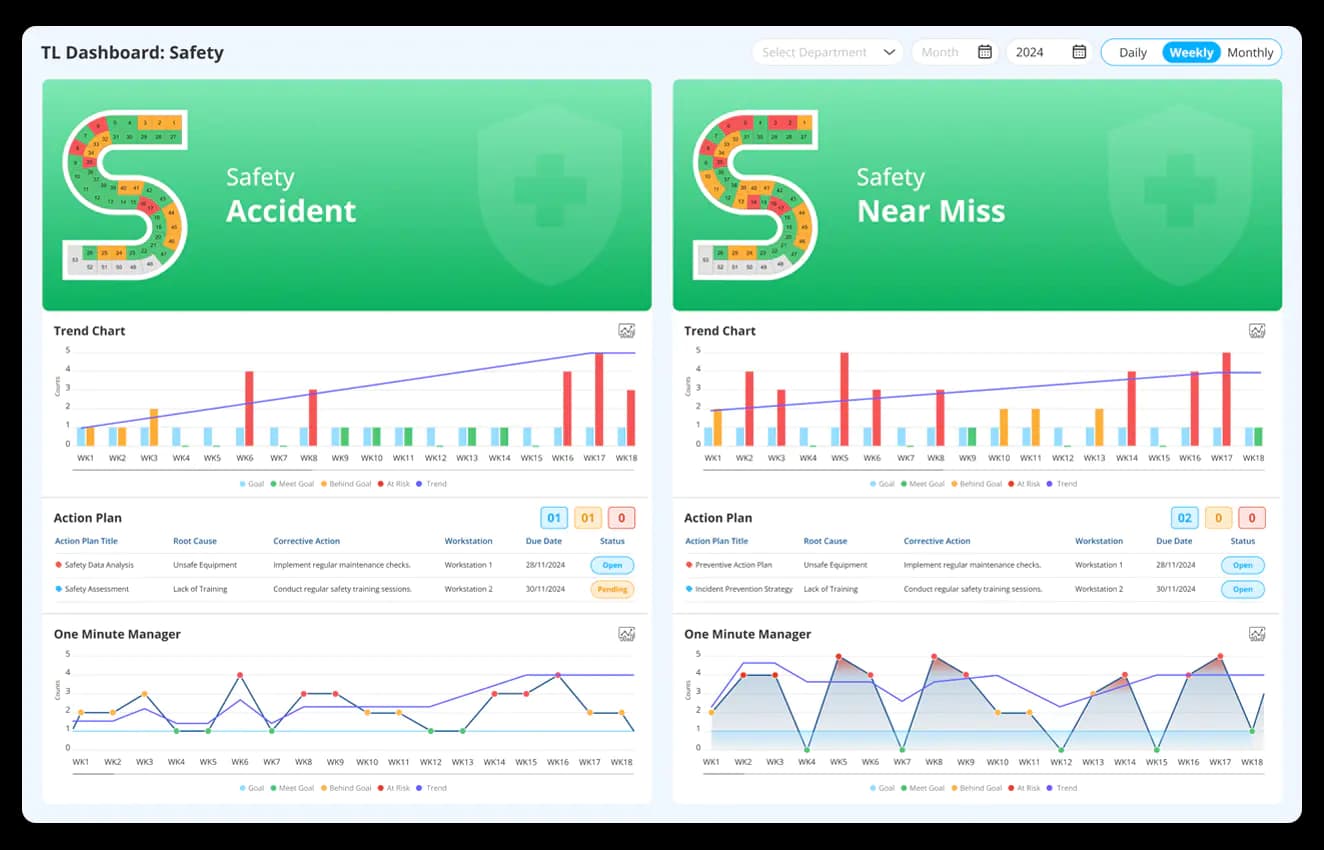
SQDC boards in lean manufacturing track workplace incidents to identify potential hazards and ensure compliance with safety standards. Implement preventive measures to foster a secure environment for employees. Build a culture of safety that minimises risks and prioritises well-being.
- Track safety incidents, near misses, and compliance metrics.
- Monitor workplace hazards and implement preventive measures.
- Ensure regulatory compliance and a safe working environment.
Use case example:
On a shop floor, a digital SQDC board highlights a rise in minor slips near a machine area. The visibility prompts immediate corrective action — adding anti-slip mats and updating safety protocols — preventing future incidents and reinforcing a culture of workplace safety.
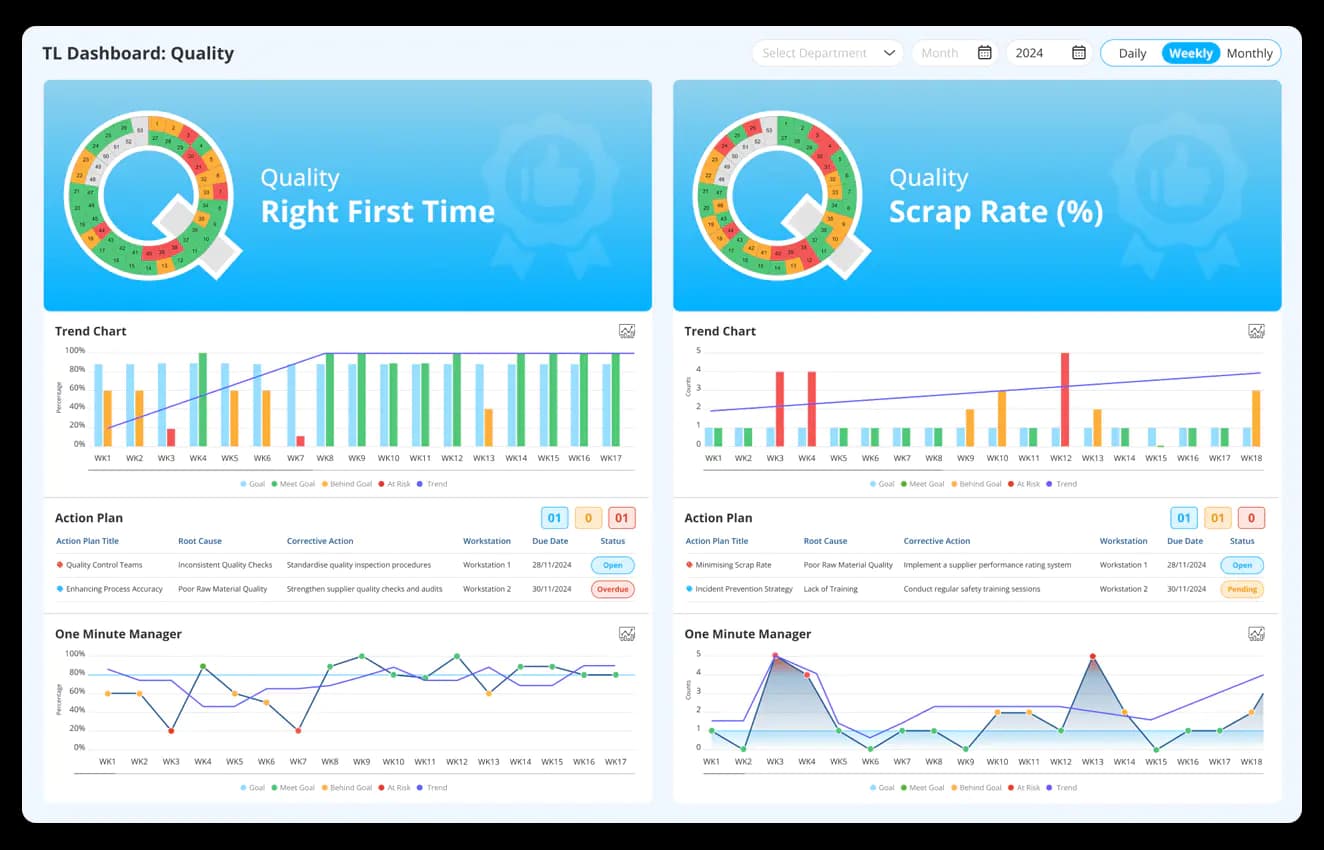
Monitor product quality metrics to detect and address defects early. Enhance processes to maintain high standards and consistently deliver superior products daily, weekly or monthly in the quality chart. Focus on quality improvement to build customer trust and loyalty.
- Monitor defect rates, production rework, and quality KPIs.
- Identify process inefficiencies and implement quality improvement strategies.
- Enhance customer satisfaction through defect-free production.
Use case example:
A Pareto chart on the SQDC board reveals that most defects come from a single welding station. With this insight, the team revises the workstation process and tracks improvements through weekly quality reports, reducing rework and stabilising output.
Need Expert Guidance? – Talk to our SQDC specialist for tailored solutions.
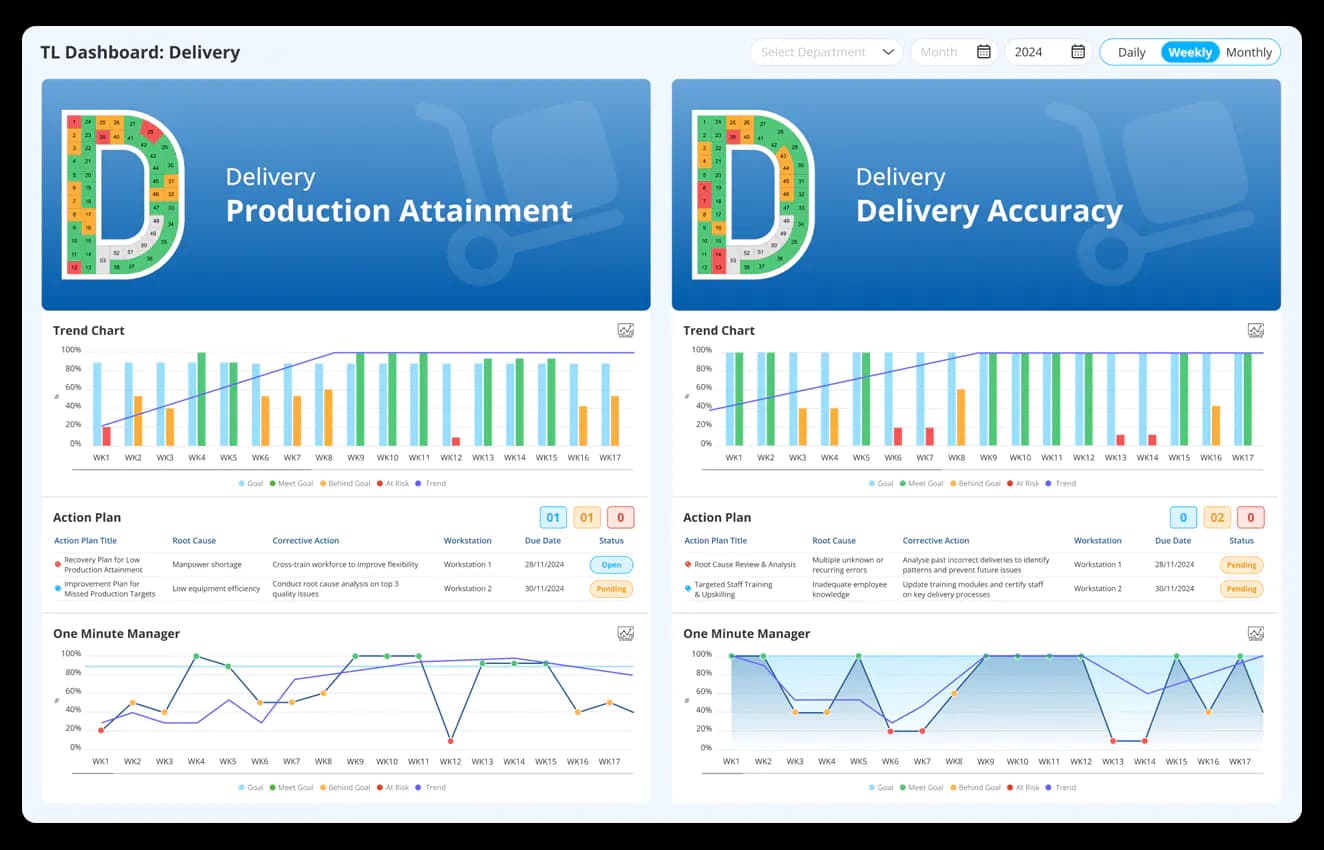
Optimise delivery schedules to consistently meet customer expectations. Use real-time tracking to monitor performance and address delays proactively. Improve delivery efficiency to ensure reliability and customer satisfaction.
- Optimise supply chain efficiency with real-time delivery tracking.
- Improve OTD (On-Time Delivery) and warehouse stock movement.
- Reduce bottlenecks and ensure a smooth production workflow.
Use case example:
On the SQDC board’s one-minute manager view, a delay trend in outbound shipments is flagged in red. The team quickly identifies warehouse stock movement as the cause and adjusts the schedule, restoring on-time delivery performance by the next cycle.
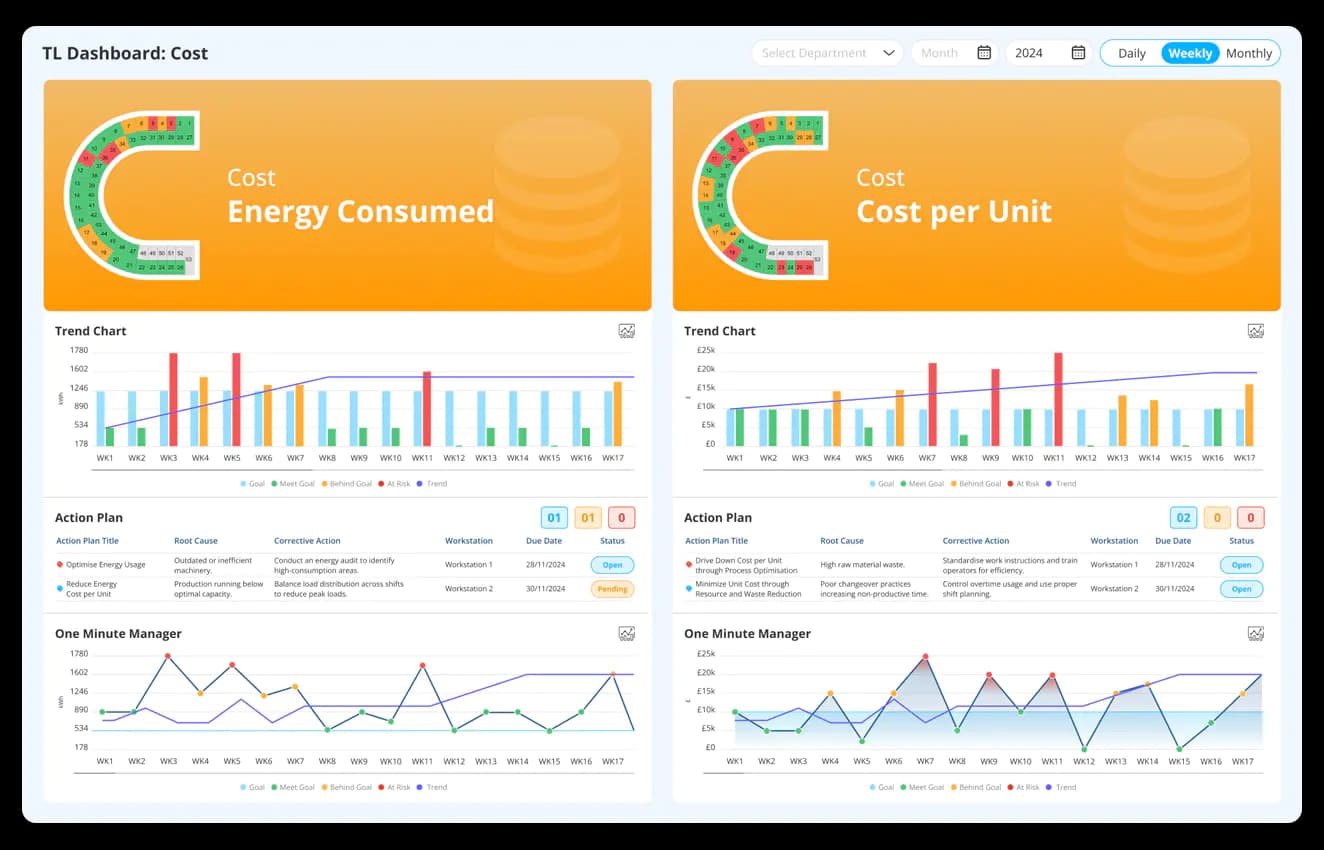
Analyse operational expenses to identify areas of waste and inefficiency. Implement cost-saving measures without compromising quality or productivity. Optimise resource allocation to boost profitability and sustain long-term growth.
- Track manufacturing costs, waste reduction, and cost-saving opportunities.
- Identify non-value-added activities and optimise resource allocation.
- Ensure budget adherence while improving production efficiency.
Use case example:
A monthly cost trend graph on the SQDC board reveals rising energy expenses in one production line. The team creates an action plan to optimise machine run times, cutting unnecessary power usage and reducing operating costs within weeks.
Start managing your daily SQDC metrics with our free template
How to use the SQDC Board: Setup, updating, and review
This section outlines the daily rhythm that keeps the SQDC Board meaningful—making performance visible, focusing attention on gaps, and ensuring teams stay aligned.
Step 1
For each criterion, the measures are specified.
| Safety | Quality | Delivery | Cost/Customer |
|---|---|---|---|
| No missed days | Less than 5 defects per day | 100% on-time to customers, schedule, following process etc. | No escape notifications |
| No injuries | DPMO less than 50 | Complete 10 units per day | No defects at installation |
| Test yield greater than 95% | No warranty claims in the first three months |
Step 2
A new SQDC diagram is set at the beginning of each month. They are placed in the order, in a location viewable by both the employee and the managers. The following measures are given for the metrics - SAFETY, QUALITY, DELIVERY and COST.
| Safety | Quality | Delivery | Cost/Customer | |
|---|---|---|---|---|
| Green | Zero Accident | No customer complaint | Ontime Dispatch | Zero defects at installation |
| Amber | Minor accident | Problem identified | Delayed Dispatch | Defect resolved |
| Red | Major accident | Customer complaint | Line Stop | Defect detected |
Step 3
After the production day, the colour of the diagram is updated. Every day, the managers walk around and analyse whether every metric was achieved. Time is spent discussing the ones in unattained goals only. The time spent on each area and overall management time is reduced.
SQDC Board in action: An example of how it’s used on the Shop Floor
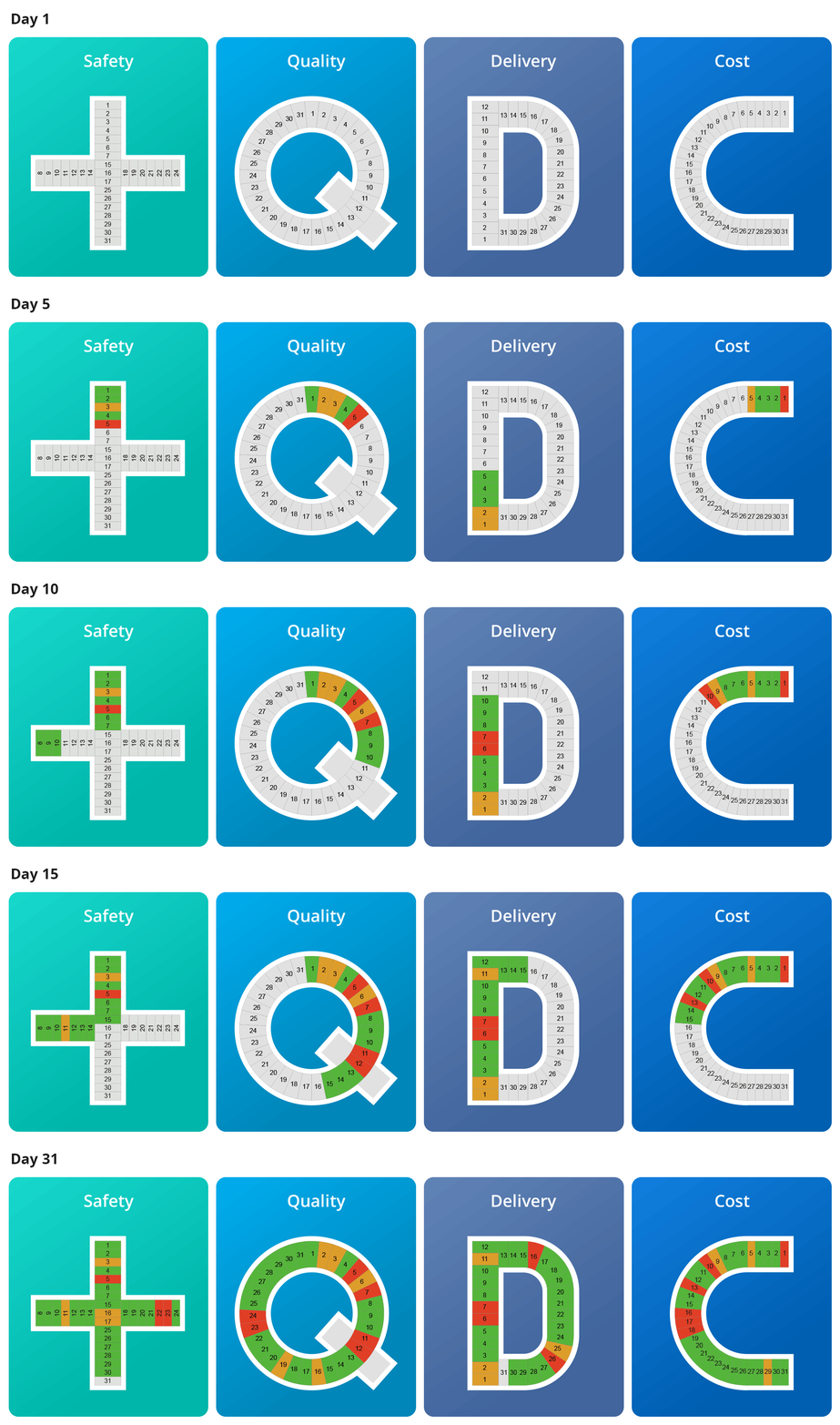
This section shows a day-by-day example of how the SQDC Board reflects real shop floor events and performance over time.
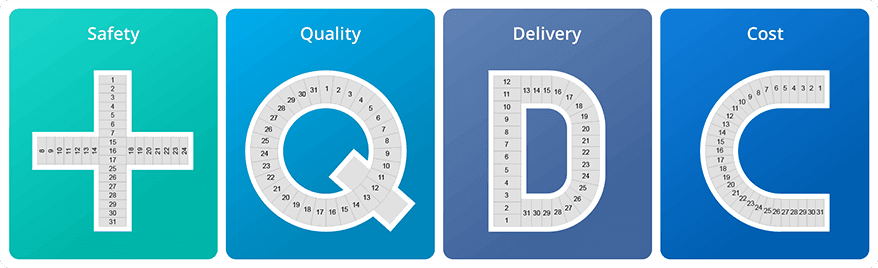
Display a new QDIP/SQDC diagram at the beginning of each month. Place them in order in a location which is accessible and viewable for everyone.
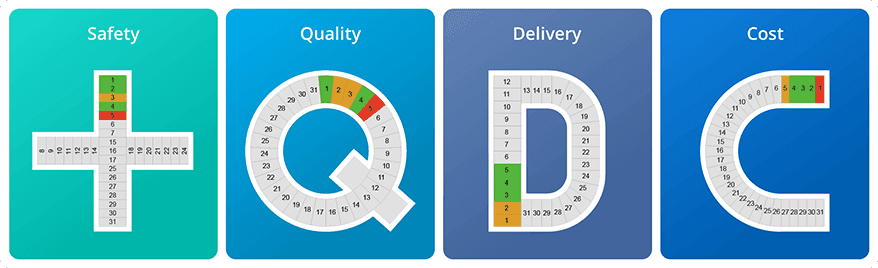
After each production day, colour the Day on each diagram with GREEN, AMBER and YELLOW. After Day 5,
- Safety: There was a major accident on Day 5.
- Quality: A problem was identified on Day 2 and 3.
- Delivery: Ontime dispatch on Day 3,4 and 5.
- Cost: Defect was detected on Day 1.
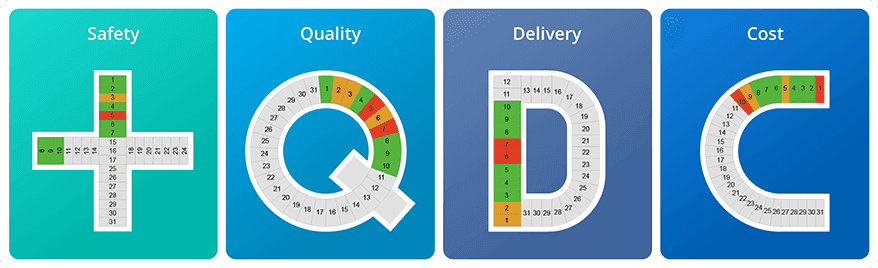
After Day 10,
- Safety has met zero accident target on 8 days.
- Quality has met the no customer complaint on 5 days.
- Delivery has met the target of on-time dispatch on 4 days.
- Cost has met zero defects at installation on 6 days.
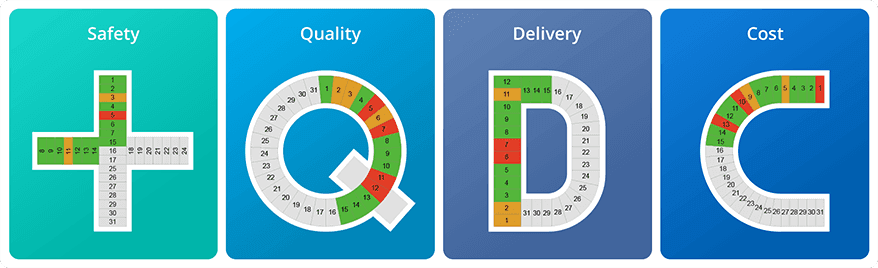
After Day 15,
- Safety has met zero accident target on 12 days.
- Quality has met the no customer complaint on 8 days.
- Delivery has met the target of on-time dispatch on 10 days.
- Cost has met zero defects at installation on 5 days.
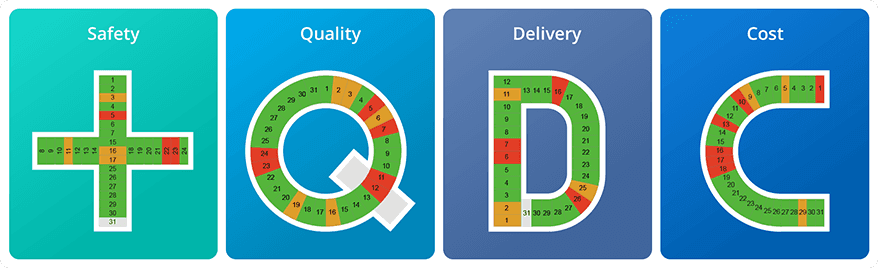
At the end of the 31 days, the SQDC diagram gets filled, and the managers or the leaders move to the next analysis step.
Step 4
After the production day, the colour of the diagram is updated. Every day, the managers walk around and analyse whether every metric was achieved. Time is spent discussing the ones in unattained goals only. The time spent on each area and overall management time is reduced.
Boosting Performance with SQDC Boards
0%
improvement in on-time delivery performance
0%
reduction in product defects through quality tracking
0%
reduction in operational costs with real-time monitoring
Hear it from our customers

MARC ROBINSON
Director, Global Operational Excellence

“By providing a central location to input, analyse and share our KPIs, 'Data Point' enables site management to more easily focus on the entire business as a team. Its ability to allow automated data entry and trend analysis gives us more time for improvement rather than just reporting numbers. Combined with a disciplined approach within our SQDC meeting process, I believe 'Data Point' will help us continually focus on key issues and drive business excellence in all areas.”
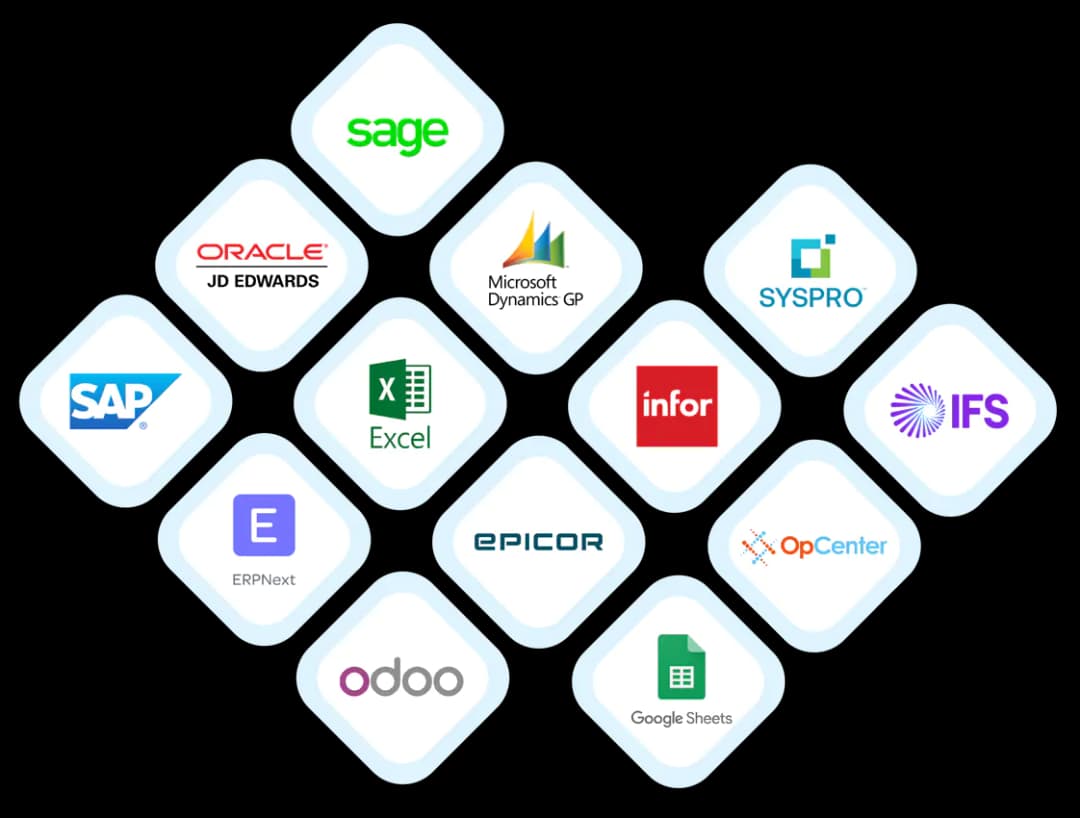
Hassle Free Data Point Integrations
Connect your SQDC board to essential business tools, integrating ERP systems, project management software, and more to unify performance tracking seamlessly.
Discover MoreLearn more about the SQDC Board
Fill out the form below to discover how the SQDC Board can help streamline your operations
Get Started


Explore other Visual Management Frameworks
Your Questions, Answered!
How can the SQDC Board improve our team’s daily performance?
What industries can benefit from the SQDC Board?
How does the SQDC Board track safety performance?
Can the SQDC Board be customised to fit our business needs?
Can I customise the SQDC board to include my required KPI framework?
How to Use the SQDC Huddle Board for Lean Management?
- Set clear KPIs for Safety, Quality, Delivery, and Cost to track performance trends.
- Use the huddle board in daily stand-up meetings to discuss progress and improvement areas.
- Analyse real-time data and take corrective actions for better process efficiency.
- Engage employees in continuous improvement by making performance data accessible.
- Drive lean transformation by integrating SQDC metrics into your decision-making process.