How a Global Biologics Manufacturer Achieved Real-Time Batch KPI Visibility with LTS Data Point
A global biologics manufacturer was managing production on data that was already twelve hours old. With LTS Data Point, the biologics manufacturer received real-time performance visibility within a single click.
Customer overview
- Industry: Biologics Manufacturing
- Location: Global Operations
- Specialisation: Commercial and clinical-scale upstream fermentation and downstream purification across continuous multi-shift operations
- Challenge: No real-time visibility of batch KPIs across production stages – performance gaps were identified after the fact, when corrective action could no longer influence the outcome
A global manufacturer running large-scale biologics production facilities, with fermentation and purification operations running continuously across multiple shifts and sites. The company production mainly focuses on specialised biological medicines at commercial and clinical scale.
Executive Summary
The biologics manufacturing organisation held review meetings where the managers had to work through data that described a problem that was already twelve hours old. They relied heavily on manually updated data that was not visible in real-time. The safety, quality, delivery, cost, and people metrics were tracked in isolation.
After implementing LTS Data Point performance management system, real-time custom KPI dashboards replaced manual shift logs. Live visibility across batch performance, production adherence, and quality outputs, were made possible. Structured tier meetings replaced informal shift handovers. This created a clear escalation path with deviations on the production floor reaching the right management level without delay.
Challenges Before Digitalisation
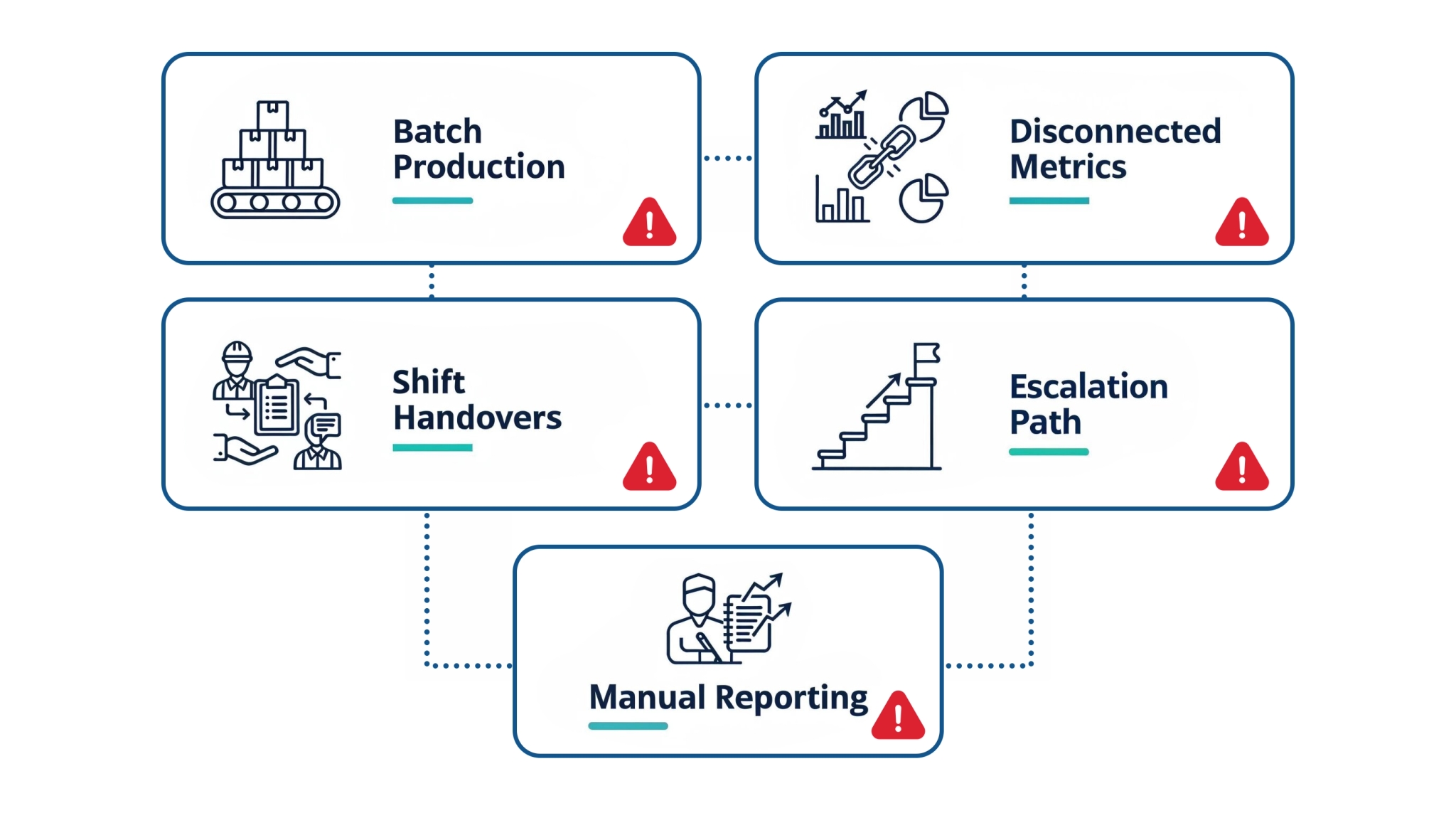
- No real-time batch visibility
Batch performance data was collected at the end of the shift. Deviations were identified after the production run when it was already too late, they kept recurring across shifts as there was no live view.
- Disconnected metrics across sites
Each site tracked safety, quality, delivery, cost, and people metrics in its own way. There was no common view across facilities preventing them from having a site-to-site comparison. This resulted in days of consolidating cross-site data for monthly reviews.
- Shift handovers losing critical production intelligence
Batch status and in-process issues were communicated verbally, if at all they did. This caused the next shift to automatically inherit the problems without any record of it. This lack of structured format meant handover quality depended on the sole person responsible for it.
- No structured escalation path
Issues raised on the shopfloor rarely made it to the management level. Lack of proper structure forced leaders to decide informally what to escalate and what not to. The issues were already grown before they reached the leadership.
- Manual reporting consuming operational time
Supervisors spend shift time compiling data rather than managing the production. Morning review meetings included discussions on what happened rather than what was happening.
The Digital Transformation
LTS Data Point was implemented as the connected performance management system across all global production sites, integrating with existing ERP and process control infrastructure. It was also customised across all tiers.
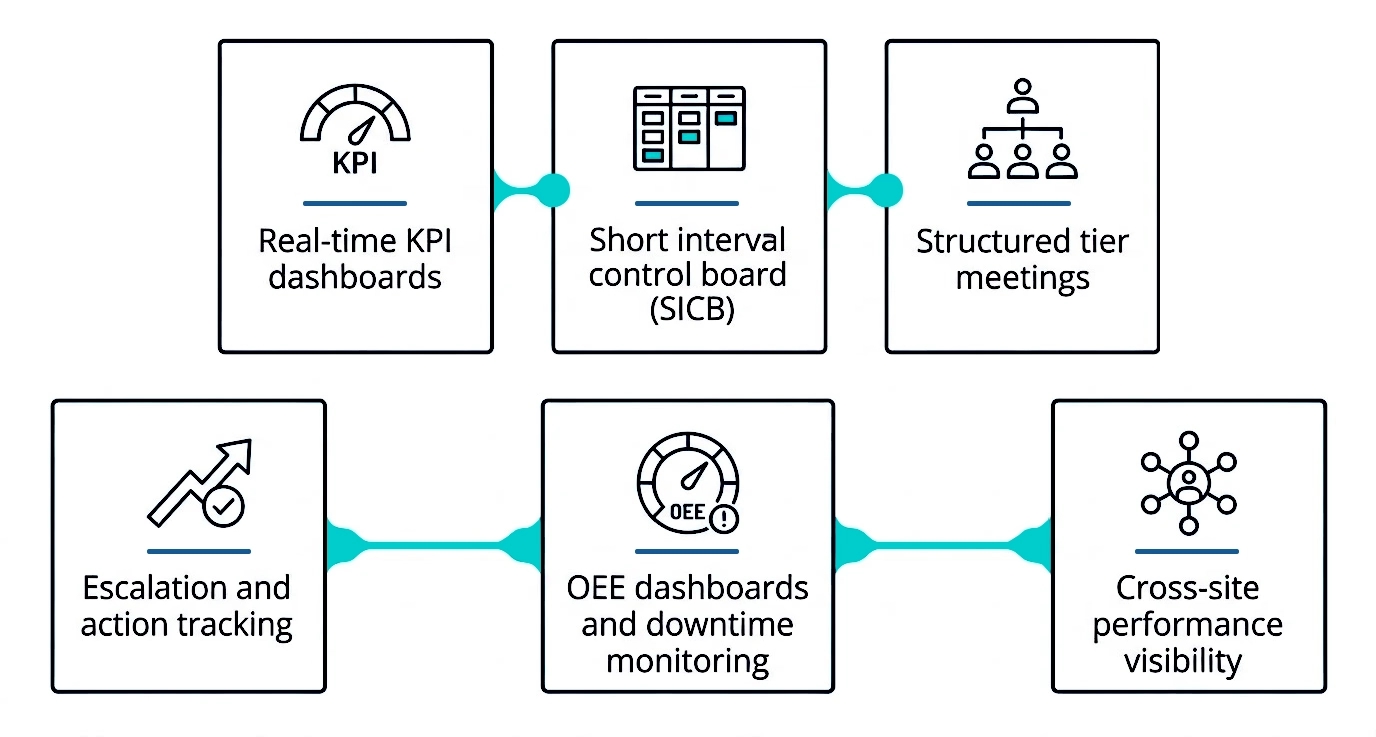

Real-Time KPI Dashboards
- Live SQDCP dashboards deployed across all production sites and shifts
- Batch performance, production adherence, and quality outputs visible in real time
- RAG indicators flagging deviations as they occurred – not after shift end
- Every site operating from the same dashboard format, resulting in consistent view across all facilities

Short Interval Control Board (SICB)
- Hour-by-hour SICB deployed across fermentation and purification suites
- Production performance tracked against plan at hourly intervals throughout the batch run
- Deviations flagged within the hour resulting in immediate intervention
- Team leaders able to act on live data rather than waiting for end-of-shift summary

Structured Tier Meetings
- For Tier 1, monthly site-wide batch and production performance view was made easily accessible to everyone
- For Tier 2, weekly assessment of department and shift performance was made possible
- For Tier 3, batch KPIs were daily reviewed at the start of every shift with actions already assigned
- Informal standups were replaced with structured meeting cadence – every tier working from live data and not recalled information
- Clear path from shopfloor to the right management tier was created without delay resulting in timely escalation

Escalation and Action Tracking
- 4C workflow was deployed
- Every deviation was logged, assigned, tracked, and closed with full audit trail
- Escalation path was defined with shopfloor issues reaching the right management level on time
- File and image attachments can be added to actions making full traceability across every production event possible

OEE Dashboards and Downtime Monitoring
- Real-time OEE dashboards were implemented across key production assets
- Downtime events are logged at point of occurrence with immediate capture of root cause
- Takt time tracker was integrated giving shift-level accountability against production targets
- Recurring downtime patterns became visible for the first time enabling structured root cause analysis

Cross-Site Performance Visibility
- Single connected platform enabled global leadership to access live performance data across all facilities from one dashboard
- Monthly strategy reviews connected to live shopfloor performance using Hoshin Kanri X-Matrix
Results Achieved
35%
Reduction in Deviation Response Time
deviations identified and acted on within the shift, not the following morning
28%
OEE Improvement
across key fermentation and purification assets within six months of deployment
90%
Reduction in Manual Reporting Time
automated KPI dashboards eliminating manual data entry across all global sites
80%
Reduction in Cross-Site Data Consolidation Time
monthly performance reviews completed in hours rather than days
Within months of deployment, the following changes were visible:
- Deviations caught during the run, not after it – SICB boards tracking production performance hour by hour made issue visible within the run and RAG indicators across KPI dashboards began flagging performance against plan in real time. This helped reduce recurring batch deviations as patterns became visible across shifts for the first time.
- Shift handovers no longer losing production intelligence – Full batch status became visible at the beginning of every shift. Issues are logged, assigned, and traced across shifts consistently. This ensures that the oncoming team leaders begin each shift with full context and not simply on verbal summary.
- Escalation reaching the right level without delay – 4C workflow ensured a defined escalation path for every deviation. This helped senior leadership get awareness about recurring issues before they grew, not after.
- Global leadership operating from one live view – Single connected dashboard across all facilities guaranteed live performance data in a single view. This enabled leadership to have a site-to-site comparison. Connecting monthly strategy reviews to live shopfloor performance via Hoshin Kanri X-Matrix also reduced unnecessary time consumption.
- Supervisors managing production, not compiling reports – Automated KPI dashboards eliminated manual data entry across all sites. Morning review meetings shortened as discussions focused on what was happening rather that what had already happened.
Conclusion
Implementing LTS Data Point performance management system ensured a single consistent view from the operator to senior leadership. Batch performance, quality outputs, and production adherence became visible in real-time across every site.
SICB and RAG indicators empowered teams with the ability to act within the hour, not the following morning. Escalation paths were made clear ensuring the problems reach the right person at the right time. Further, every tier working from the data shared a single view from production floor to boardroom.
Hear it from our customers

MARC ROBINSON
Director, Global Operational Excellence


“By providing a central location to input, analyse and share our KPIs, 'Data Point' enables site management to more easily focus on the entire business as a team. Its ability to allow automated data entry and trend analysis gives us more time for improvement rather than just reporting numbers. Combined with a disciplined approach within our SQDC meeting process, I believe 'Data Point' will help us continually focus on key issues and drive business excellence in all areas.”