Streamline your shop floor with SQCDP Board visual management software
Maximise productivity and optimise shop floor operations with a digital SQCDP board designed for real-time KPI monitoring and manufacturing performance management.
Choice of industry leaders and Fortune 500 companies


















What is SQCDP? A comprehensive digital visual management system
In lean manufacturing, SQCDP means Safety, Quality, Cost, Delivery, and People. SQCDP lean visual management tool tracks and displays performance in real time, empowering teams to drive continuous improvement and align with strategic goals. SQCDP Board as a daily Lean visual system or as a simple Lean tool shows daily performance in these areas at a glance. It helps teams spot issues quickly, take corrective actions, and keep everyone aligned through clear visual updates every shift.
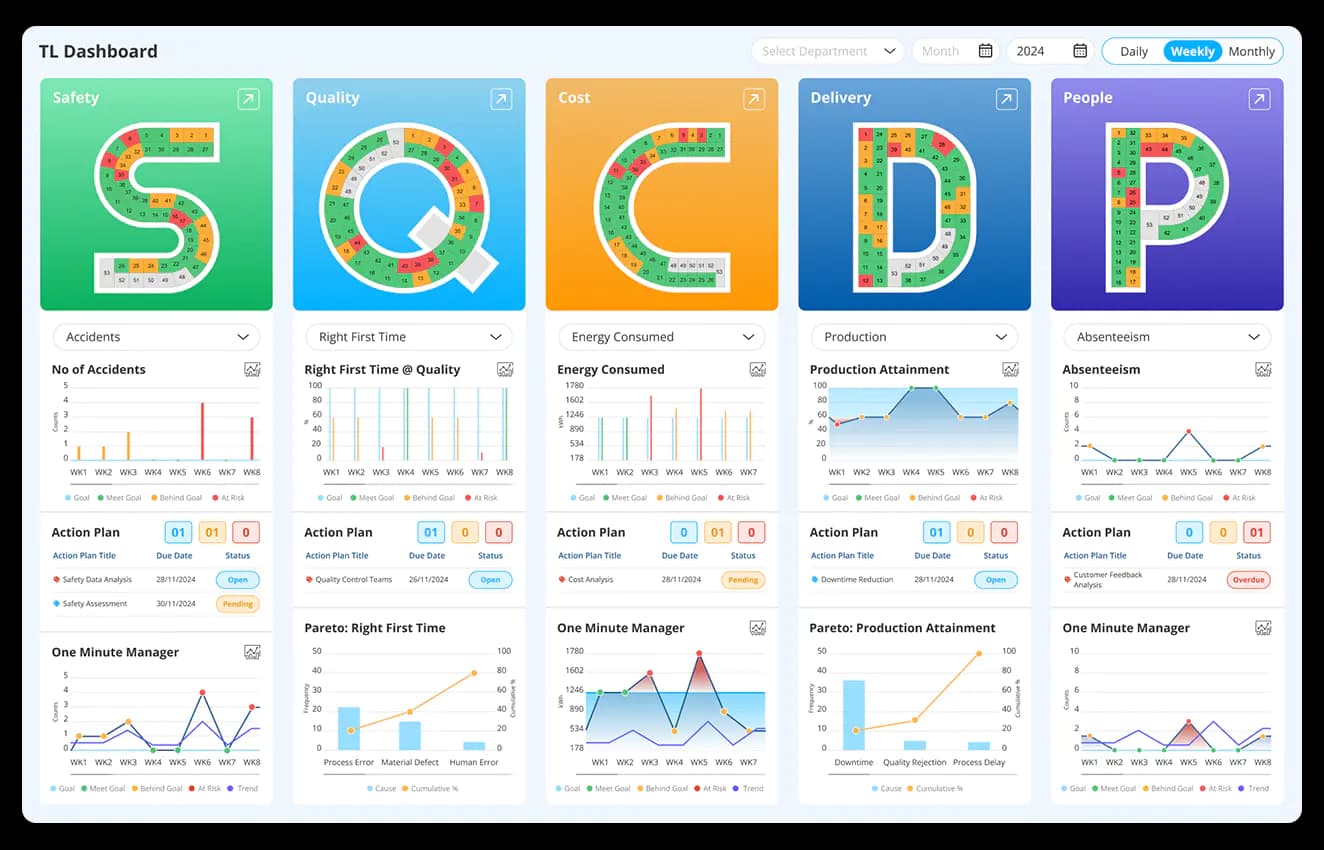
How SQCDP visual management boards support Lean manufacturing goals?
Visual management is a core element of Lean methodology. When combined with digital SQCDP systems, it ensures problems are visible, actions are tracked, and decisions are timely. Here’s how it contributes to performance and continuous improvement:

Real-time production tracking with visual KPIs
Track your SQDCP metrics daily using live dashboards. Eliminate delays in reporting by getting instant insights into performance areas like Safety, Quality, Delivery, Cost, and People.

Continuous improvement through live metric analysis
SQCDP visual lean board identifies bottlenecks and recurring issues with real-time visual trend data. Use performance dashboards to take immediate corrective actions and drive ongoing process optimisation.

Smarter decisions with transparent operations
Ensure leaders, team members, and stakeholders share the same performance view withtiered daily meeting boards. Digital boards promote accountability and empower teams to act faster with fact-based insights.
Optimise your workflow with SQCDP visual management
Inside the SQCDP Dashboard: A practical guide to each performance metric
SQCDP process software embed safety into daily routines by tracking accidents and records the serious near-miss incidents that occurred onsite. The system analyse health and safety records enables Lean teams to monitor safety KPIs include near-misses, unsafe acts, and safety observations.
How SQCDP board drive safety?
- Visualises incidents and near-miss reports
- Highlights overdue safety actions and root causes
- Displays trends by shift, cell, or department
- Tracks closure rates to ensure accountability
Real-time safety monitoring supports faster resolution, audit readiness, and continuous improvement.
SQCDP use case in safety:
One manufacturer cut repeat incidents by 40% after visualising safety hotspots on their SQCDP board.
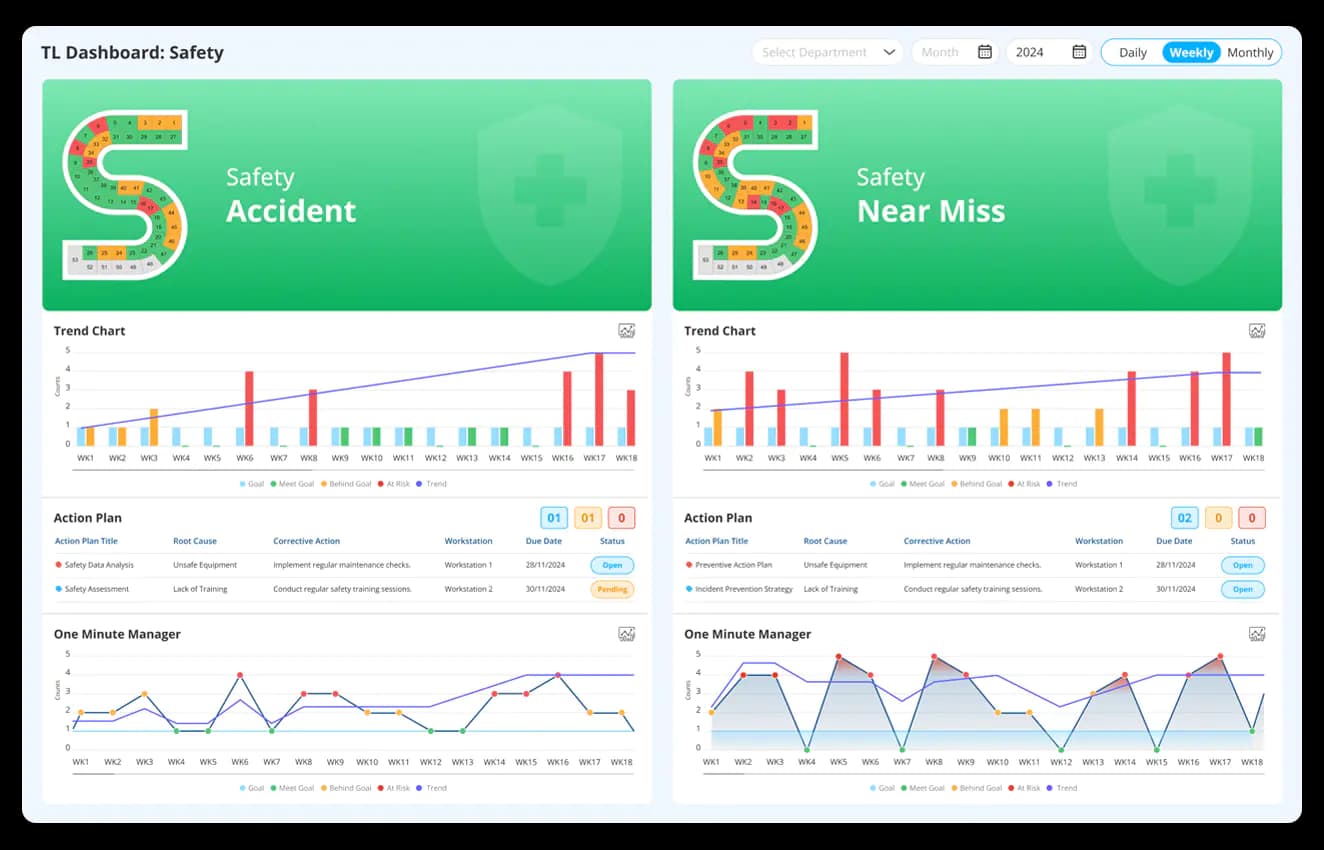
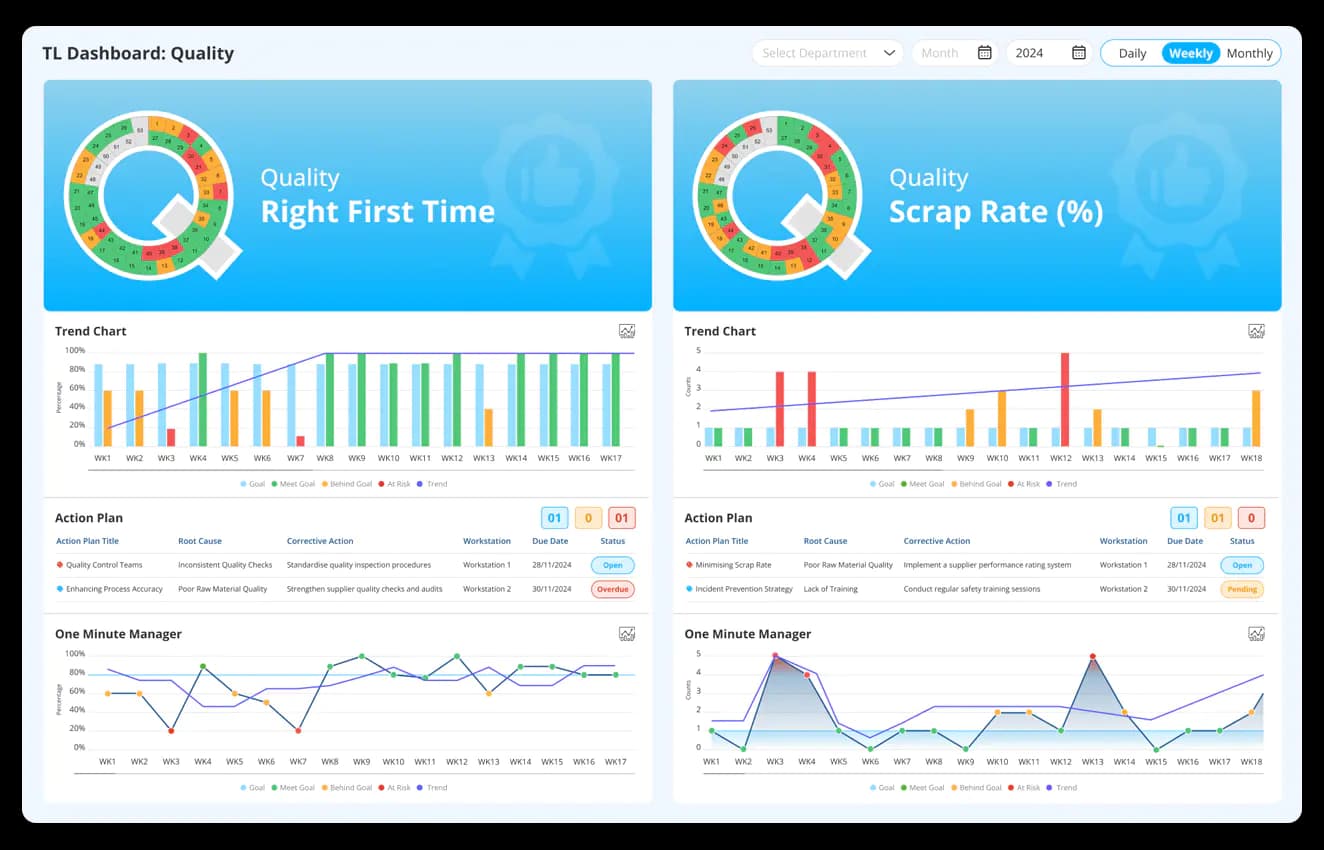
The digital SQCDP solution enables teams to visually track product quality performance at the source. By focusing on quality metrics like first time-right metrics, defect types, and rework trends, it supports a culture of continuous improvement and early error detection—key principles in Lean manufacturing.
How does the SQCDP board improve quality?
- Highlights daily defects by type or station
- Tracks First Pass Yield (FPY) and rework volumes
- Displays trends by shift, batch, or product line
- Ensure continuous quality improvement with real-time data
It enhances traceability and supports zero-defect strategies aligned with Industry 4.0 practices.
SQCDP use case in quality :
An automotive line reduced defect rates by 35% in 3 months using visual alerts and FPY trend charts on their digital quality board.
Experience the Power of SQCDP - Get hands-on with a live demo and see the impact.
The digital SQCDP tool gives real-time visibility into delivery accuracy, production attainment, and logistics performance. By tracking Delivery KPIs like OTIF (On Time in Full) and warehouse flow metrics, it aligns supply chain execution with Lean and Just-in-Time (JIT) delivery goals.
How does SQCDP improve delivery performance?
- Monitor on-time delivery performance (OTIF metrics)
- Improve warehouse and inventory management
- Streamline logistics operations for timely deliveries
- Analyse stock movement trends for better forecasting
SQCDP board streamline inventory flow, dispatch coordination, and supplier-customer fulfilment by acting as a centre for delivery performance.
SQCDP use case in delivery :
A plant improved OTIF by 28% within 60 days by using visual alerts for late dispatches and aligning stock movement data with real-time delivery dashboards.
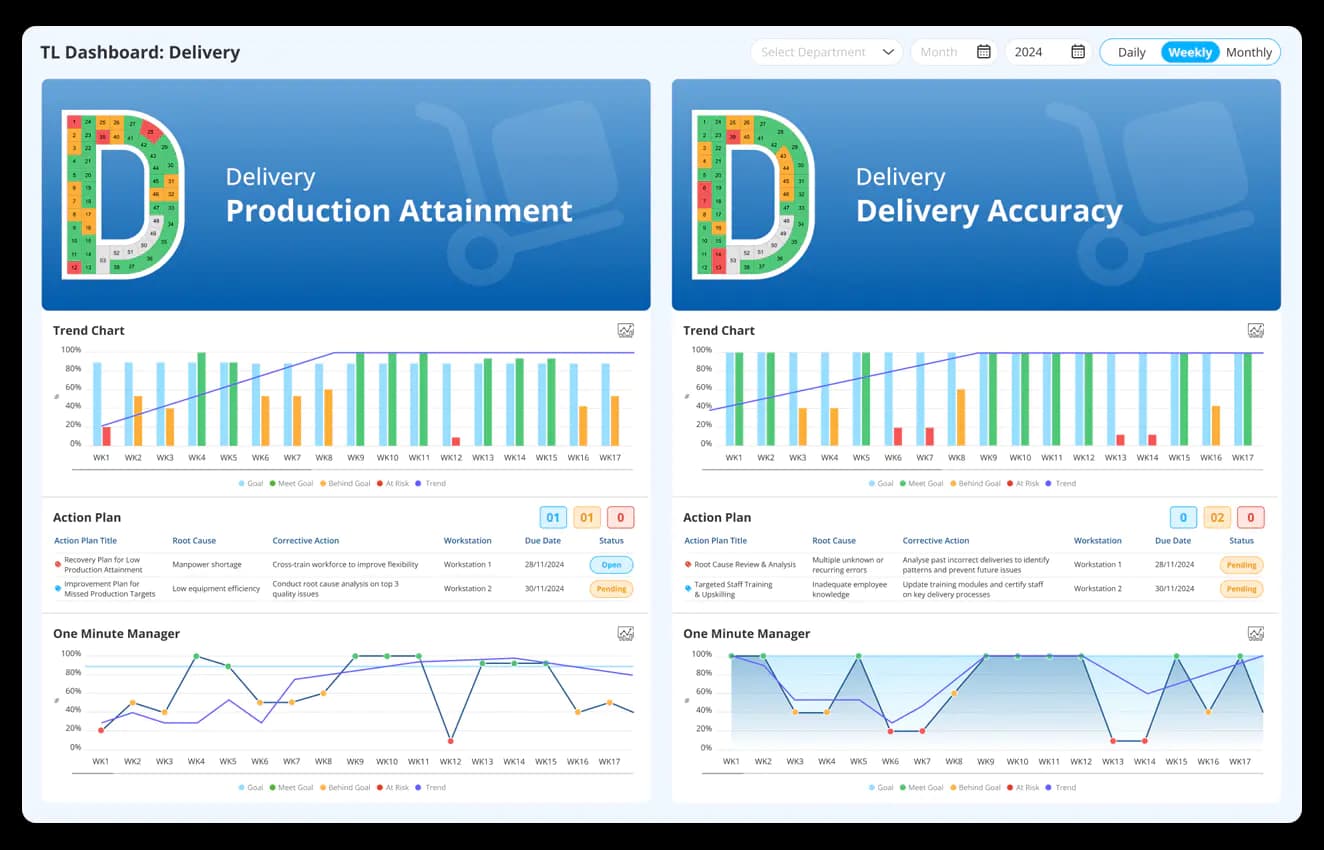
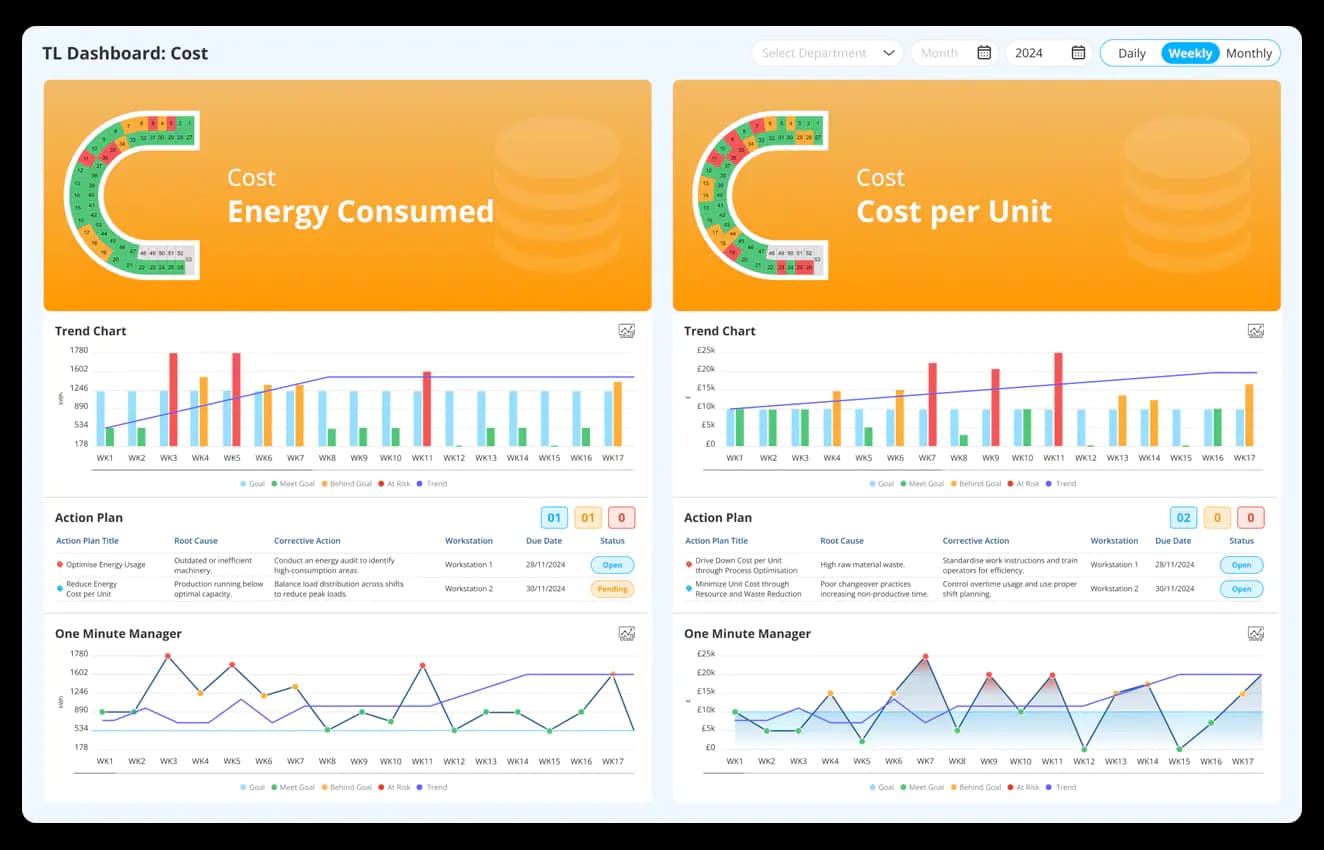
The SQCDP board empowers teams to monitor financial KPIs tied to operational activities—linking waste, downtime, and inefficiencies to actual cost impact. It supports cost optimisation through visual accountability and Lean-based spending control.
How does the SQCDP board controls cost?
- Tracks cost per unit, downtime losses, and rework cost
- Highlights overspend triggers by shift, process, or material
- Visualises cost trends across departments
- Improve budget management and resource allocation
With real-time cost visualisation and actionable metrics, teams can reduce unnecessary expenses and align daily actions with financial strategy.
SQCDP use case in cost :
By using the cost panel to track rework and idle time, one factory reduced production cost per unit by 11% in under 45 days.
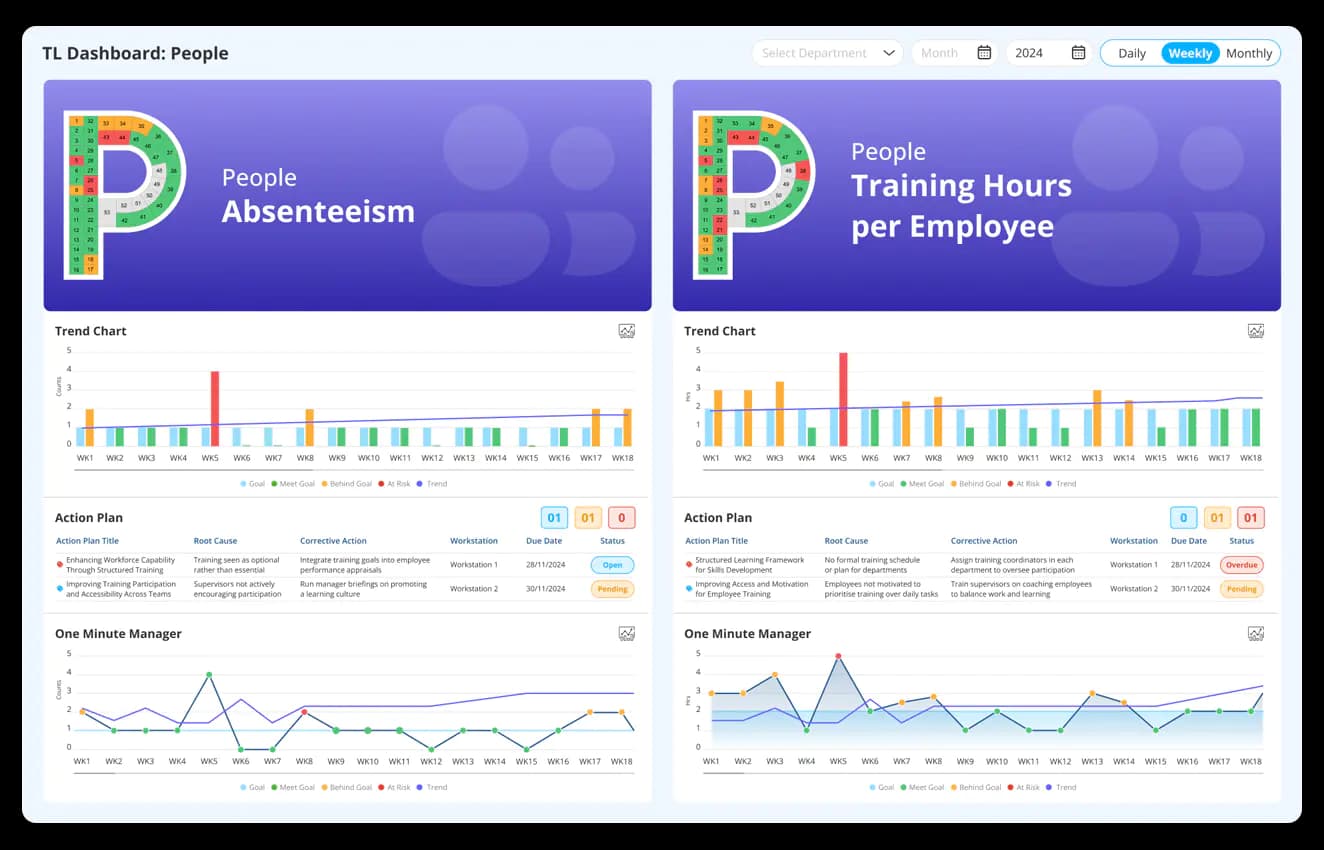
TThe SQCDP visual management board enables teams to track people KPI examples such as workforce capability, skill growth, and role-based readiness, aligning people development with Lean goals.
How SQCDP board enhances workforce performance?
- Tracks skill matrix updates and training completion
- Flags capability gaps by team, line, or shift
- Monitors team alignment with strategic goals
- Measures engagement through visual performance indicators
Gain clarity on training ROI, cross-skilling status, and team contribution with all on one SQCDP visual board.
SQCDP use case in People :
A plant improved team agility by 22% after using the board to identify and close skill gaps across three shifts.
How to use SQCDP board daily?
Use your SQDCP template during daily huddles and shift handovers. Update the board with fresh KPI data, review any gaps in Safety, Quality, Delivery, Cost, or People, and agree on actions. This keeps the whole team focused on what matters now. Here is the step-by-step guide to use it on your shop floor.
Streamline your reviews with SQDCP board template!
Boosting Performance with SQCDP Boards: Proven Benefits
0%
improvement in shop floor productivity
0%
reduction in operational costs
0%
faster decision-making through real-time data
Hear it from our customers

MARC ROBINSON
Director, Global Operational Excellence


“By providing a central location to input, analyse and share our KPIs, 'Data Point' enables site management to more easily focus on the entire business as a team. Its ability to allow automated data entry and trend analysis gives us more time for improvement rather than just reporting numbers. Combined with a disciplined approach within our SQDC meeting process, I believe 'Data Point' will help us continually focus on key issues and drive business excellence in all areas.”
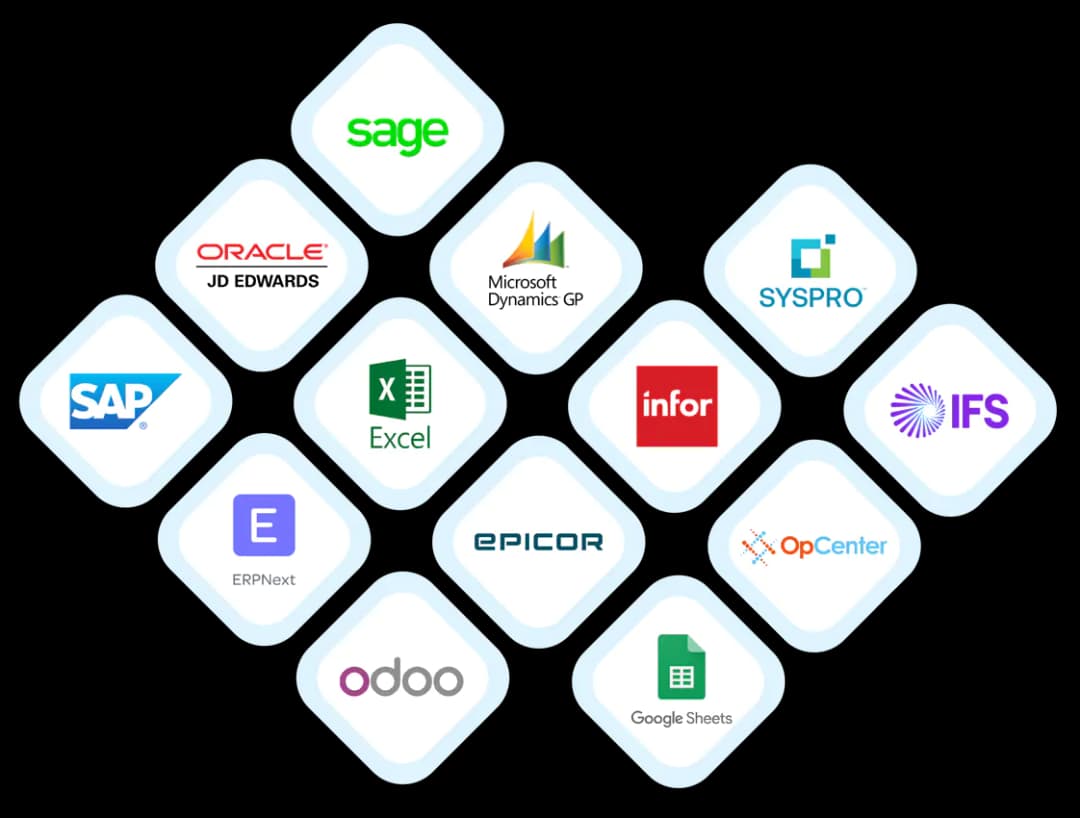
Hassle free Data Point integrations
Connect your SQDCP board to essential business tools, integrating ERP systems, project management software, and more to unify performance tracking seamlessly.
Discover MoreGet in Touch with Us for your Customised SQDCP Demo!
Discover how our SQCDP Board Visual Management Software can revolutionise your shop floor performance.

Get Started
Learn More about SQCDP Boards


Explore other Visual Management Frameworks
Your Questions, Answered!
How does the SQCDP Board help in lean manufacturing?
How to use the SQCDP Board?
Step 1: Identify key SQDCP metrics
Define critical metrics for Safety, Quality, Delivery, Cost, and People.
Step 2: Strategic placement
Place the board near the team for the members for easy daily access and engagement.
Step 3: Review
Conduct daily reviews to assess performance and address issues promptly.
Step 4: Evaluate progress
Regularly evaluate data to track improvements and identify trends.