Shop floor Management in US: How Modern Factories Control Performance
Last updated on : March 23, 2026
Running a modern factory without strong shop floor management is like running a professional sports team without a playbook. You may have world-class players, expensive equipment, and big ambitions – but if no one knows today’s game plan, who owns which move, or how to respond when something goes wrong, performance quickly falls apart. In the same way, US manufacturing plants operate in fast-moving, high-pressure environments where small problems can snowball into missed shipments, quality escapes, and rising costs unless daily execution is tightly managed.
Shop floor management in US factories exists to prevent drifts. It creates the daily rhythm that turns strategy into action – making performance visible, assigning clear ownership, and ensuring every shift knows exactly what “winning” looks like before the first machine starts running.
See how LTS Data Point runs real shop floor management in US factories
What shop floor management in US actually means today
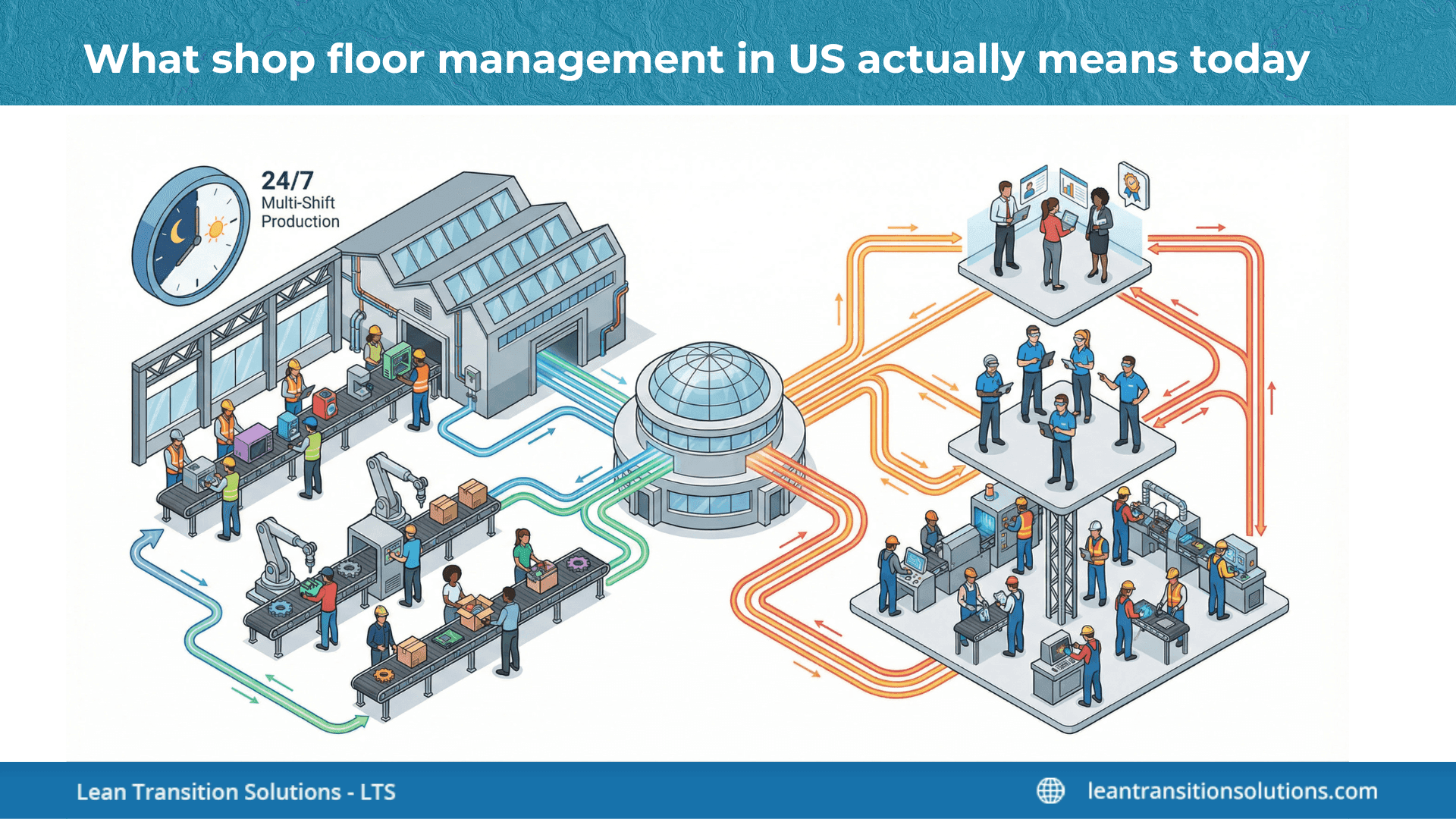
Shop floor management in US manufacturing is the way American factories turn production plans into daily reality across multiple shifts, parallel lines and thousands of SKUs. Unlike smaller plants with a single steady flow, US factories often run 24/7 operations, serve different customer segments at once, and switch between product variants constantly – which makes shop floor execution in US manufacturing a discipline of coordination, not just efficiency.
Plant floor management in US environments is therefore not just about removing waste. It is about controlling complexity. Supervisors are responsible for keeping output, quality, safety and staffing aligned even as orders, materials and labor availability change shift by shift. That is why manufacturing floor control in the US focuses on visibility, accountability, and fast problem response – not just standard work.
In practical terms, this means:
- Multiple shifts must stay synchronized so that night shifts, weekend shifts, and day shifts do not create hidden backlogs.
- Parallel production lines need consistent performance tracking, so problems on one line do not contaminate the whole plant.
- High-mix, high-volume SKUs require tighter shop floor execution to avid scheduling, quality and inventory drift.
- Supervisors need real-time control, not end-of-day reports.
Shop floor management in US also links every level of the organization:
- Operators see today’s targets, defects and downtime
- Supervisors manage daily priorities and resource conflicts
- Operations leaders track whether the plant is on pace for cost, delivery and safety
This is why plant floor management in US is best understood as a daily performance system, not just a lean toolkit. It provides the structure that keeps thousands of production decisions aligned to business outcomes, shift after shift, across the entire factory.
How shop floor management in US controls daily performance
Shop floor management in US factories works because performance is managed every single day, not just reviewed at the end of the month. In high-volume American plants, thousands of production decisions are made every shift, and daily production management in US provides the structure that keeps those decisions aligned with output, quality, and delivery goals.
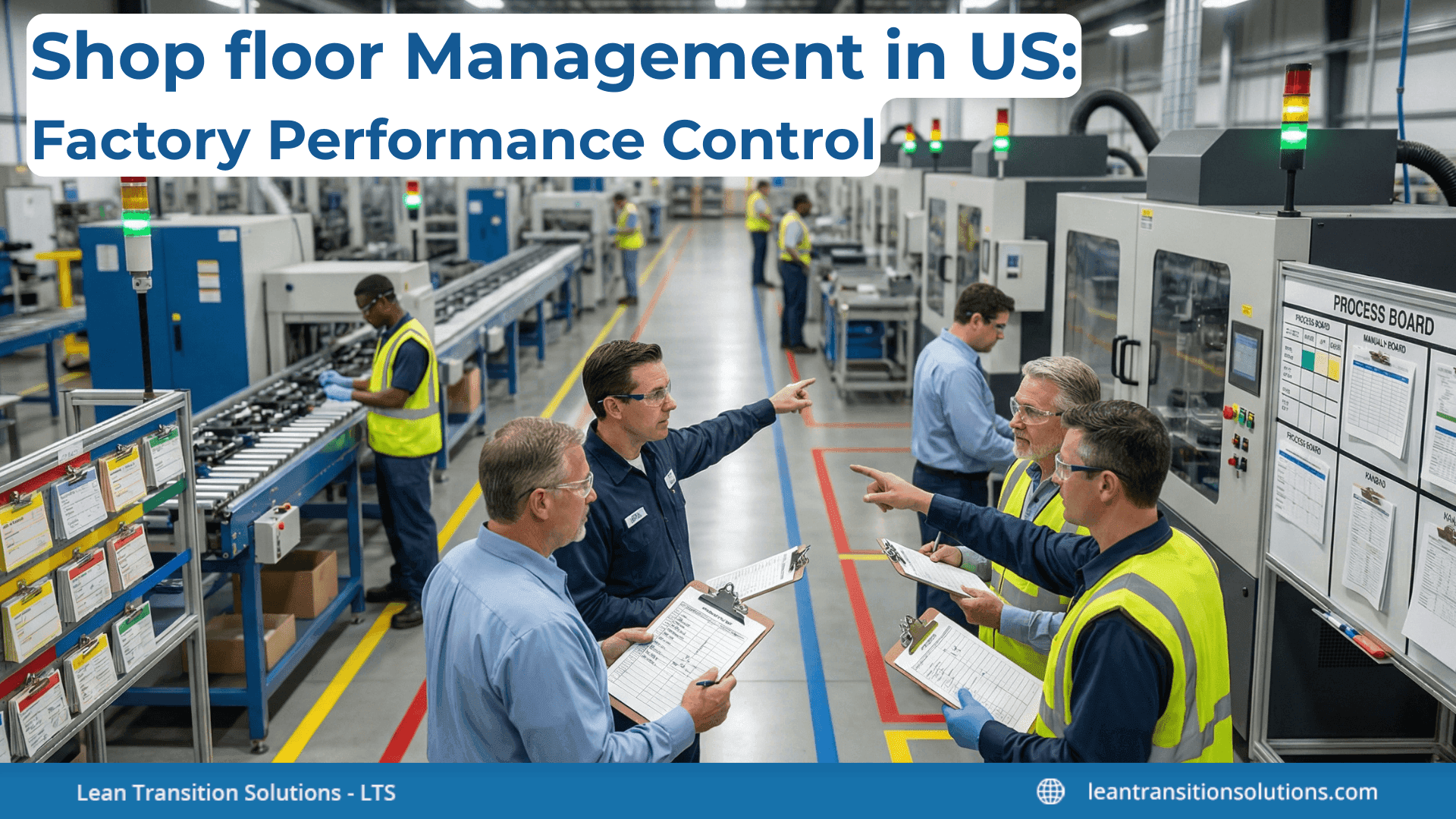
At the center of this system are performance boards and daily reviews that make US factory performance management visible and actionable:
- Each line tracks today’s production target versus actual output
- Quality, scrap, and rework are logged as they happen
- Downtime and material issues are flagged immediately
- Staffing gaps and skill shortages are highlighted before they disrupt flow
This turns factory KPI management from a reporting exercise into a live control system. Instead of waiting for dashboards or weekly reports, supervisors and operators can see real time whether the plant is on pace – and if it is not, they know exactly where the problem is.
Shift-to-shift continuity is where US shop floor management really proves its value:
- The outgoing shift records what was achieved, what was missed, and why.
- The incoming shift sees open issues, priority orders, and risk areas.
- Supervisors use the same key performance indicators (KPIs), targets, and standards across all shifts
This prevents the common US factory problem where night shifts and day shifts run the same line in completely different ways.
Most importantly, factory KPI management must live on the shop floor, not in spreadsheets or office systems. When KPIs are visible where the work happens:
- Operators understand how their work affects delivery and quality
- Supervisors can intervene before problems grow
- Leaders can whether the plant is truly under control
That is how US factory performance management moves from hindsight to real-time execution control.
The role of visual management for shop floor management in US
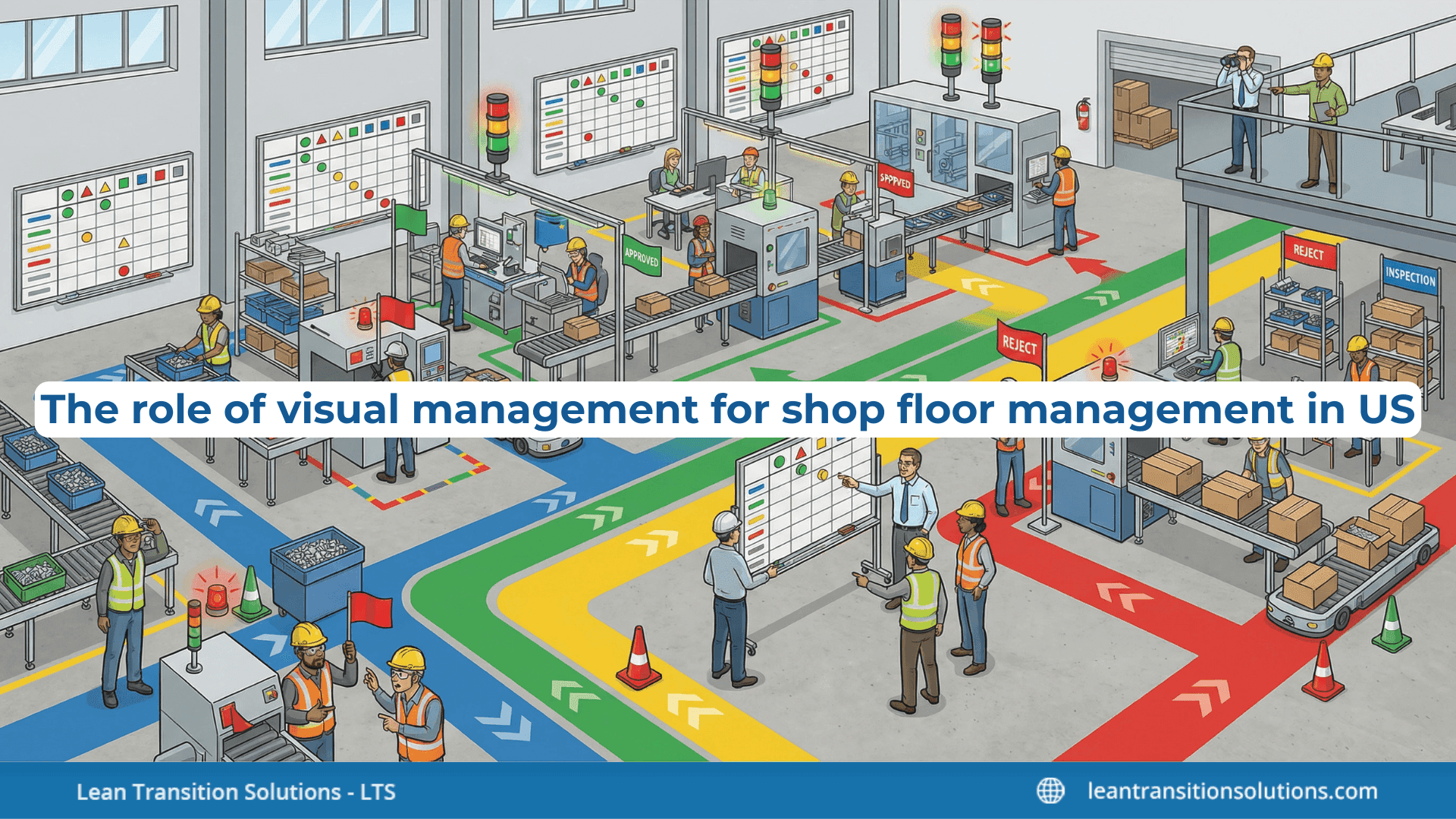
In US manufacturing environments, problems move fast – and if teams cannot see them, they cannot control them. That is why visual factory management is a core pillar of shop floor management in US plants. When performance, quality, and safety are made visible at the point of work, teams do not need to wait for meetings or emails to know what is happening. They can act immediately.
Shop floor dashboards play a central role in creating this visibility. Instead of burying performance data inside office systems, these dashboards display the most important information right where production happens:
- Line-level output versus today’s target
- Downtime, defects, and material shortages
- Staffing and skill coverage for the current shift
- Safety alerts and compliance checks
This creates operational visibility that manufacturing teams can trust. Everyone – from operators to plant managers – sees the same version of the truth, reducing arguments, confusion, and finger-pointing.
The real power comes from real-time factory metrics. In modern US plants, teams no longer rely on yesterday’s reports to understand today’s performance. They use live data to:
- Spot problems while they are still small
- Prioritize which issues need immediate attention
- Adjust staffing, sequencing, or maintenance before output is lost
By combining human judgement on the floor with real-time digital signals, visual management turns data into action. That is what makes it such a powerful driver of control inside shop floor management in US plants.
How shop floor management in US supports frontline operations and accountability
At its core, shop floor management is a system for frontline operations management – the daily work of supervisors, team leads, and operators who keep US factories running. These roles make hundreds of small decisions every shift about priorities, staffing, quality, and problem response. Without a clear structure, those decisions quickly become inconsistent from one area of the plant to another.
That structure is created through tiered daily meetings manufacturing teams rely on to stay aligned:
- Line-level huddles focus on today’s targets, safety issues, and immediate risks.
- Area-level reviews look at bottlenecks, quality trends, and resource conflicts.
- Plant-level meetings escalate unresolved issues and confirm whether the factory is on pace.
This tiered approach builds ownership because problems are expected to be solved at the lowest responsible level, with clear escalation when they cannot be solved.
Consistency is protected through standard work for supervisors. In US factories, this defines:
- What each supervisor must check every shift
- Which KPIs must be reviewed
- How problems should be documented and followed up
This prevents leadership styles, experience levels, or personality differences from creating gaps in control.
The shift handover process manufacturing teams use is just as critical. A disciplined handover ensures:
- Open issues are not lost between shifts
- Production priorities are carried forward
- Quality and safety risks remain visible
Together, frontline operations management, tiered meetings, standard work, and structured handovers create a people-driven execution system that keeps US shop floors stable, accountable, and in control – even as conditions change from shift to shift.
How US factory and labor laws shape shop floor management in US
US shop floor management is not just an operational discipline – it is also shaped by US manufacturing compliance and labor law. Unlike many regions, American factories operate under strict legal frameworks that directly affect how work is scheduled, how performance is tracked, and how supervisors interact with their teams.
OSHA safety requirements are one of the biggest influences on daily shop floor routines. Plants must document and enforce:
- Machine guarding, lockout-tagout, and safe work procedures
- Hazard reporting and corrective actions
- Training records and incident response
This means shop floor management in US factories must make safety performance as visible as production performance, because failures can lead to shutdowns, fines, or serious injuries.
Wage and hour rules also play a major role in how shifts are planned and managed. US labor law defines how time is recorded, when overtime applies, and how breaks must be handled. Many plants manage this complexity with a dedicated shift management tool, tracking clock-in data, overtime thresholds, and break compliance in one system rather than reconciling it after the fact. On the shop floor, this means:
- Supervisors must know exactly who is clocked in and for how long.
- Production plans must account for overtime thresholds and fatigue.
- Staffing decisions have both cost and compliance consequences.
In many industries, union environments and workforce regulations further shape how performance is managed. Job classifications, seniority rules, and grievance processes all affect:
- Who can be assigned to which tasks
- How work is distributed across shifts
- How performance issues are addressed
Effective shop floor management in US must therefore balance operational control with legal and workforce realities. Plants that ignore this connection risk not only missed targets, but also compliance violations, labor disputes, and operational disruption.
Where performance management platforms fit into shop floor management in US operations
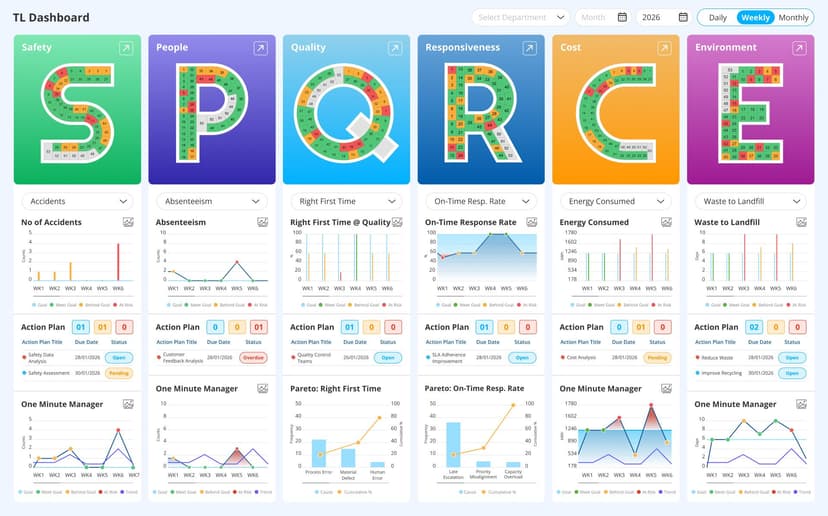
As US factories scale across more shifts, lines, and SKUs, spreadsheets and whiteboards can no longer keep up with the pace of daily execution. That is why US shop floor management systems have become a core part of modern operations. These platforms replace manual tracking with manufacturing management systems that give every level of the plant the same real-time view of performance. This includes structured formats like the One Minute Manager Board, which condenses line-level check-ins into a fast, repeatable format supervisors can run every shift.
In practical terms, production tracking systems bring together the data that used to live in separate places:
- Output, scrap, and rework from each line
- Downtime, changeovers, and maintenance events
- Staffing, skills coverage, and attendance
- Safety checks and compliance actions
This allows supervisors and managers to run daily production management in US routines from a single source of truth rather than reconciling numbers at the end of the shift.
That is where factory performance software supports shop floor management in US operations. Instead of chasing updates, teams can:
- See whether today’s targets are being met in real time
- Identify where losses are coming from
- Escalate problems through structured daily workflows
- Track whether actions take on the floor actually worked
LTS Data Point is designed for this exact environment. As a shop floor performance and daily management platform, it provides configurable frameworks and template that align with how US plants run their factories – including:
- SQDCP – Safety, Quality, Delivery, Cost, People
- SQDCPS – Safety, Quality, Delivery, Cost, People, Sustainability
- EQDCPS – Environment, Quality, Delivery, Cost, People, and Site action
- SQDCM – Safety, Quality, Delivery, Cost, Morale
LTS Data Point provides configurable templates and performance structures that map directly to these frameworks, including:
- Framework-aligned KPI boards for safety, quality, delivery, cost, people, and environment
- Daily and tier-meeting views structured around those same categories
- Action, escalation, and follow-up workflows tied to framework losses
- Shift and area performance views that keep accountability consistent across teams
This allows US manufacturers to run their existing operating model – whether SQDCP-based, ESG-extended, or improvement-driven – through a single digital performance layer that combines production tracking systems, shift management software, and manufacturing project management software into one operational rhythm.
In US plants, LTS Data Point is typically used when leaders need factory performance software that supports real-time control, workforce coordination, and continuous improvement without breaking the way their shop floor framework already works.
Shop floor management in US is ultimately about turning complexity into control. When performance is visible, responsibilities are clear, and issues are addressed in real time, factories can run multiple shifts, high-mix production, and tight labor rules without losing stability. From frontline routines and visual management to compliance, data, and digital platforms, effective shop floor management in US plants creates the daily discipline that keeps output, quality, and delivery aligned with business goals – even as conditions change from shift to shift.
Connect with an LTS Data Point advisor on performance, compliance, and control
FAQs
1. Is shop floor management only for large US factories?
No. While large plants benefit most from formal systems, small and mid-size US manufacturers also use shop floor management to improve visibility, accountability, and production stability.
2. How long does it take to implement shop floor management in a US plant?
Most US factories see measurable improvements within 30-90 days once daily meetings, KPIs, and visual controls are established and consistently used.
3. Does shop floor management replace ERP or MES systems?
No. Shop floor management works alongside ERP and MES by turning their data into daily, frontline-friendly performance control.
4. Can shop floor management work in highly automated US factories?
Yes. Even in automated plants, people still manage exceptions, quality, and flow. Shop floor management ensures that those issues are handled quickly and consistently.
5. How does shop floor management affect employee engagement?
It improves engagement by giving operators clear goals, visibility into performance, and a structured way to raise and solve problems.
6. Is shop floor management only about manufacturing KPIs?
No. It also includes safety, staffing, compliance, and improvement actions – not just output and efficiency.
7. What is the difference between shop floor management and daily management?
Daily management is the routine of meetings and reviews, while shop floor management includes the tools, visuals, and data that support those routines on the factory floor.
8. Can shop floor management help reduce unplanned downtime?
Yes. By tracking issues in real time and escalating them quickly, plants can address root causes before downtime becomes chronic.
9. How do remote leaders stay connected to shop floor performance?
Digital shop floor platforms allow managers to see live KPIs, actions, and risks without being physically on the floor.