Data Point vs iObeya : An Honest Operational Excellence Software Comparison
Last updated on : July 24, 2026
Key insights
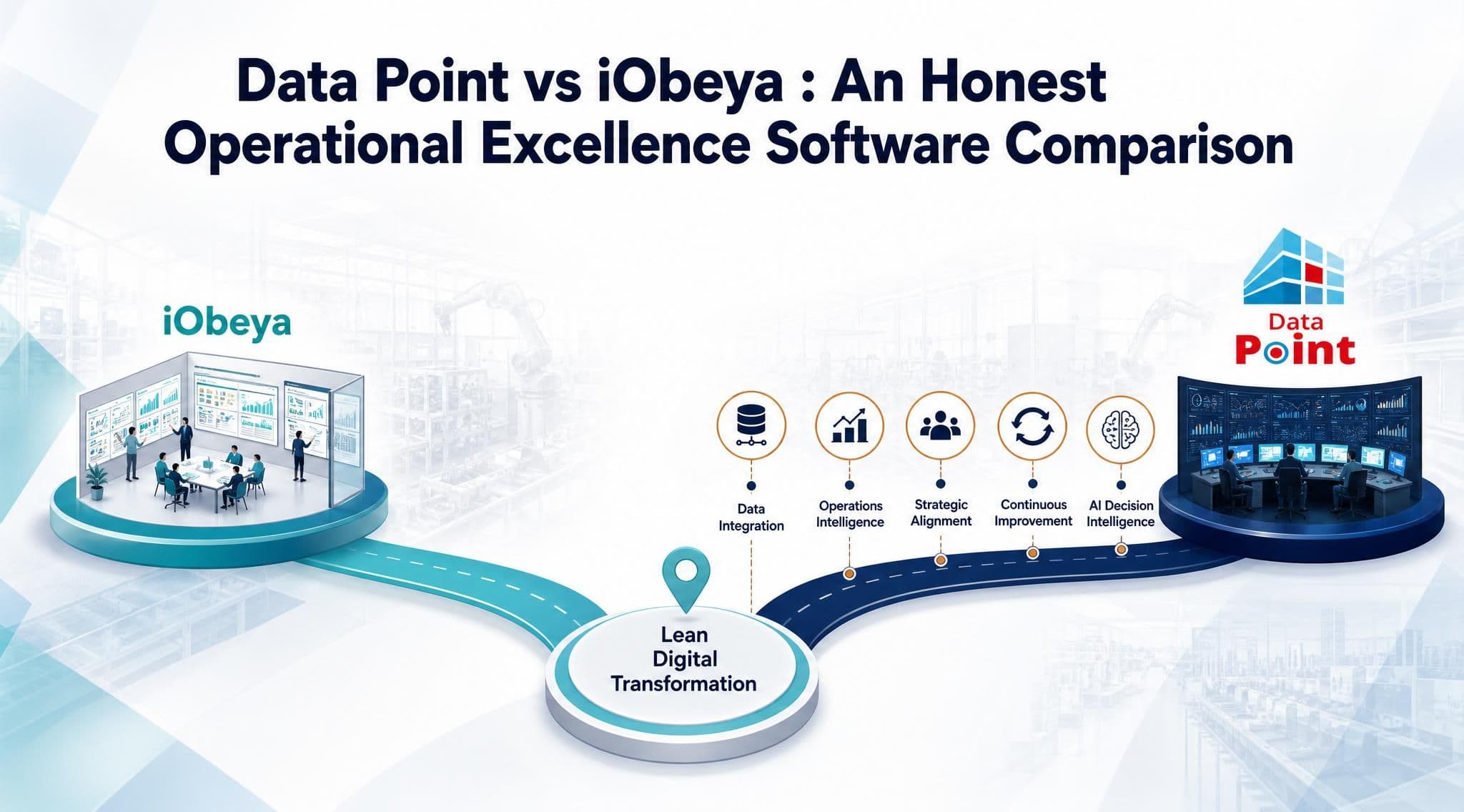
When operations teams evaluate lean digital transformation software, LTS Data Point and iObeya frequently appear on the same shortlist. Both are credible. Both support Lean. Both promise visibility across multi-site operations.
Sitting on the same shortlist does not mean they are solving the same problem. This comparison is built on verified product information; so, your decision is based on evidence.
1. Two Platforms, Two Different Answers to the Same Problem
Where both platforms begin: digitising Lean
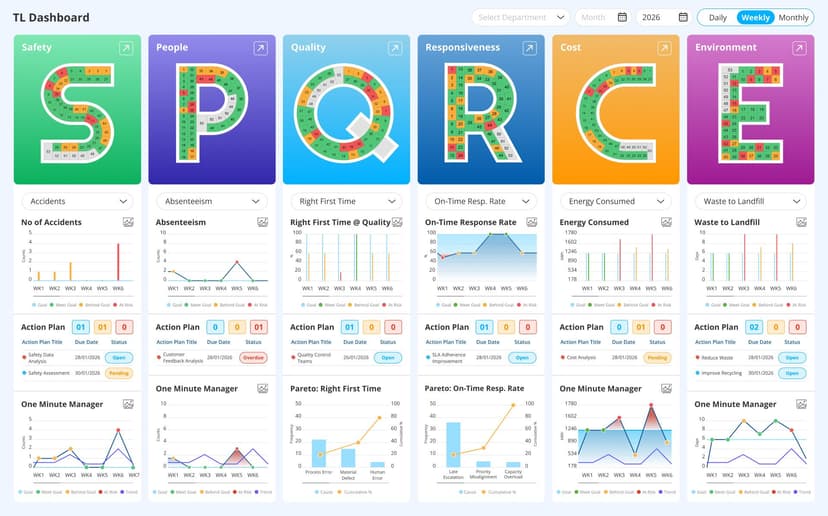
Data Point and iObeya share a common starting point. Both are rooted in Lean methodology. Both exist to replace paper boards, disconnected spreadsheets, and siloed KPI systems with something digital, visible, and connected. For a Lean or Continuous Improvement leader evaluating either platform, the surface features will look familiar: SQCDP boards, Hoshin Kanri, strategy cascading, problem-solving tools.
The divergence begins when you ask what happens after the data is captured.
Data Point: from operational truth to operational intelligence
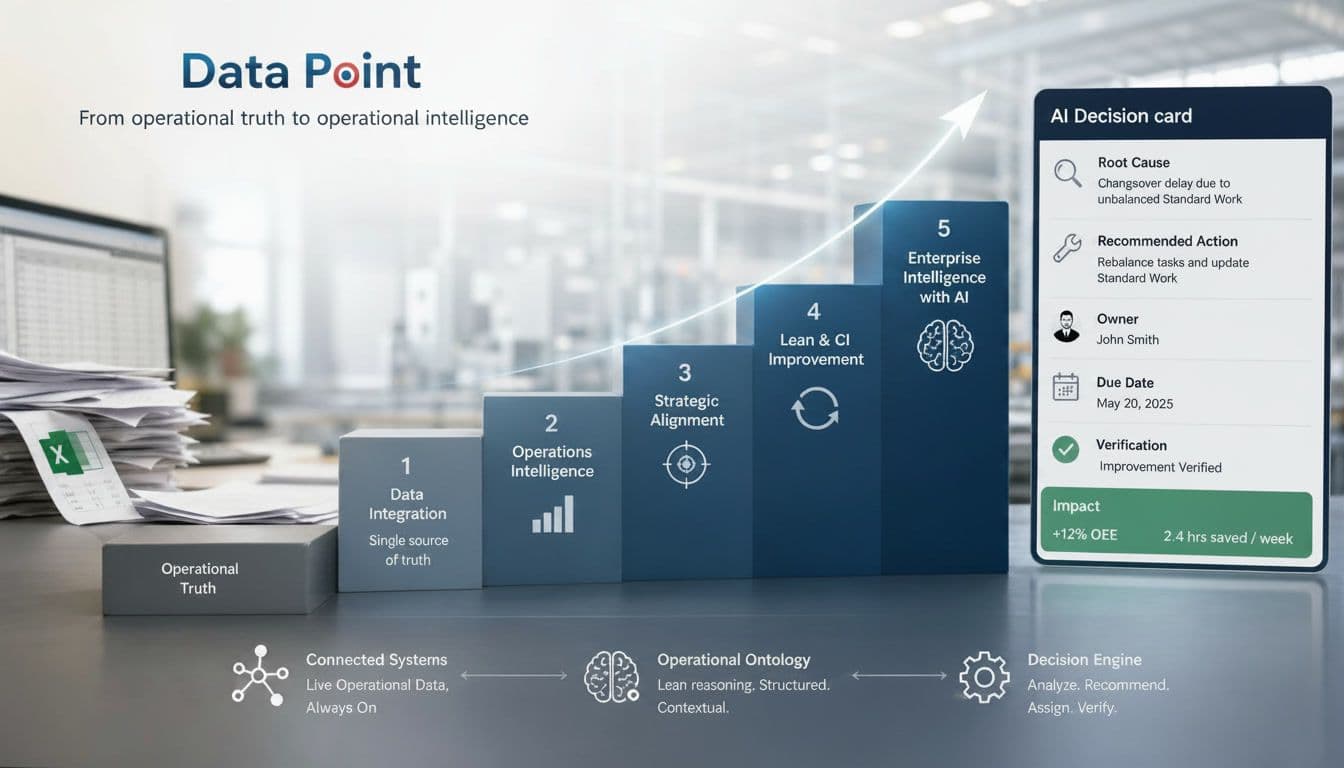
Data Point, built by Lean Transition Solutions (LTS), begins in the same place: connecting operational data, digitising Lean processes, and replacing Excel-based management systems. But it does not stop at visibility.
The platform is designed to move through five intelligence levels:
- Data integration as single source of truth
- Operations Intelligence
- Strategic Alignment
- Lean & CI Improvement
- Enterprise Intelligence with predictive AI
Every level build on the last. Every month of deployment compounds the system's knowledge of your specific operation.
At the top of this architecture sits Data Point AI Intelligence. This is not a dashboard enhancement or a chatbot. It is a Connected Operational Intelligence engine: a decision engine that takes live data from every connected system, applies Lean reasoning through a structured Operational Ontology, surfaces root causes, generates recommended actions, assigns named owners with due dates, and verifies that improvement actually happened. The output is a Decision Card, not a report.
iObeya: the digital Obeya room network
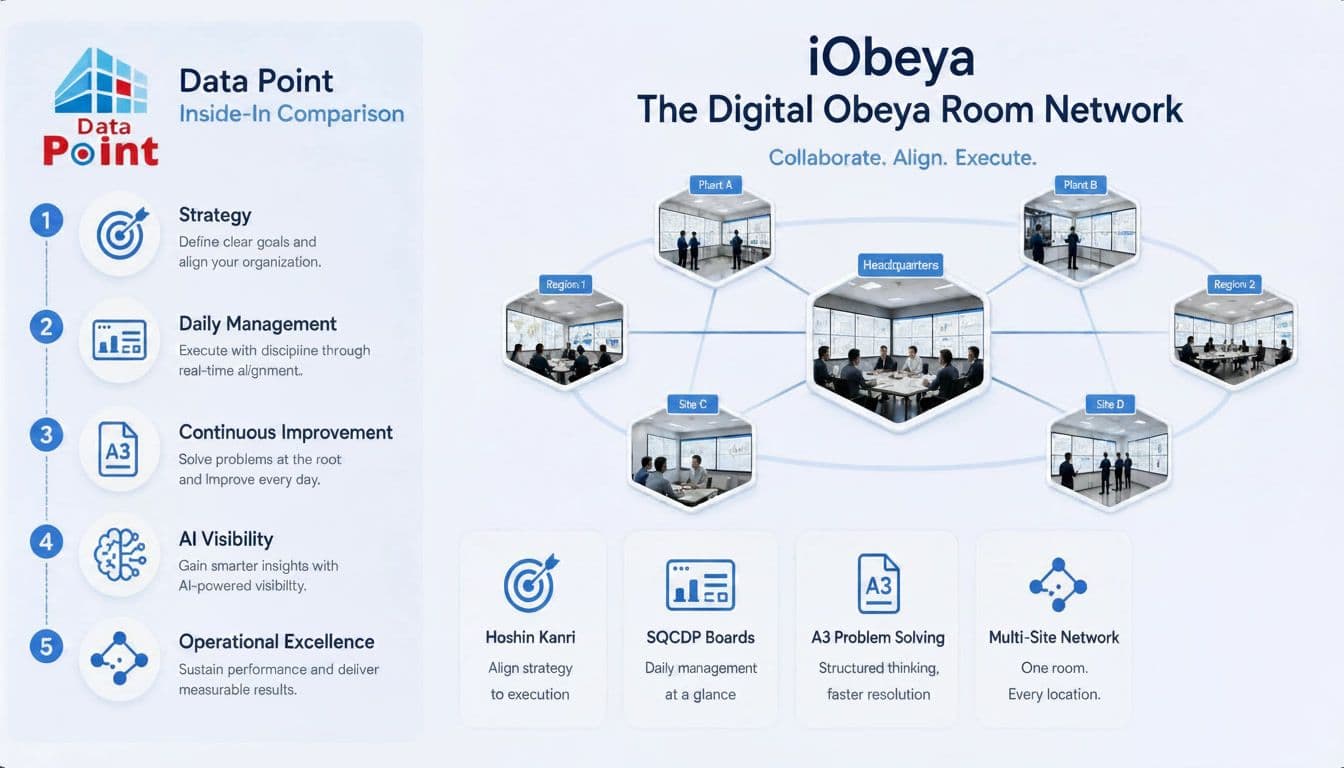
iObeya built on the Toyota concept of the Obeya room. Its core proposition is virtualising the physical big room: strategy walls, KPI boards, daily stand-ups, and Hoshin Kanri tables brought into a browser-based environment where distributed teams can collaborate in real time.
This is a genuine and mature capability. iObeya has native Hoshin Kanri digitisation (a real product strength, not a bolt-on), SQCDP daily management boards, A3 problem solving, and multi-site room networks. For office-based Lean teams in SAP or Microsoft environments, it is a well-supported choice.
The practical difference
- iObeya shows you what is happening and helps your team collaborate around it.
- Data Point shows you what is happening, tells you why, recommends what to do, assigns it to someone, and confirms it was fixed.
What is LTS Data Point?
The platform in one sentence
Data Point is Connected Operational Intelligence platform is trusted by Hitachi, Pfizer, Philips, JCB, Syngene, Astec, Novo Nordisk and more.
Designed for mid-to-large manufacturers; and fully modular
Data Point is not exclusively for large enterprises. Organisations can deploy a single module: SQCDP dashboards, daily management, or strategy deployment, and scale to the full platform over time. No minimum. No forced full rollout.
Four operational phases
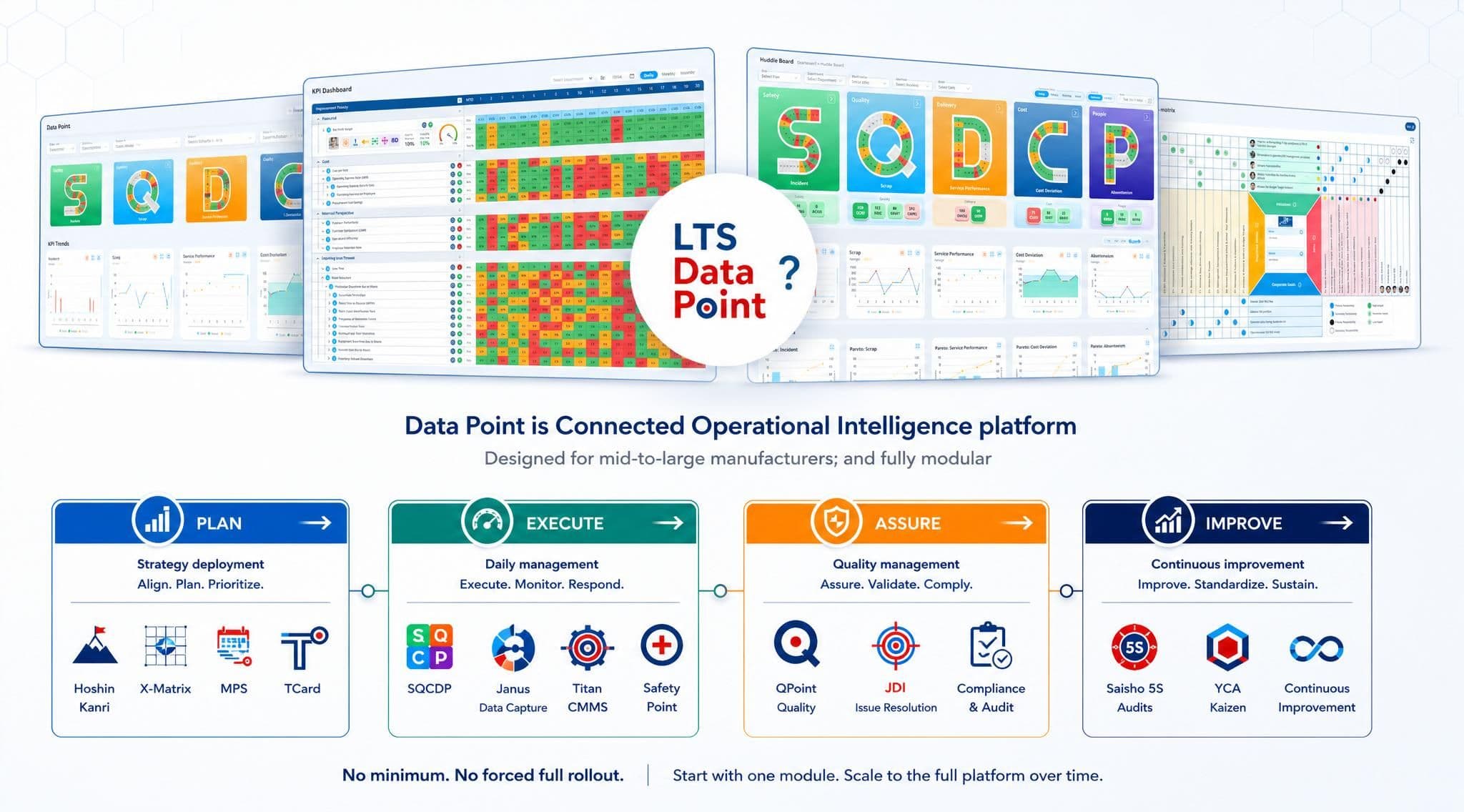
- PLAN: Strategy deployment, X-Matrix, MPS, Hoshin Kanri, Digital TCard
- EXECUTE: Daily management, SQCDP, Janus Data Capture, Titan CMMS, Safety Point
- ASSURE: Quality management (QPoint), JDI issue resolution, compliance and audit
- IMPROVE: 5S audits (Saisho), Kaizen management (YCA), continuous improvement
Five intelligence levels: start anywhere, grow everywhere
- L1 Foundation: Data integration, KPI definition, single source of truth
- L2 Operations Intelligence: Live scorecards, shift alerts, real-time visibility
- L3 Strategic Alignment: KPIs connected to strategic goals, executive dashboards
- L4 Lean and CI Improvement: Full Operational Ontology; every gap drives root cause and verified action
- L5 Enterprise Intelligence: Predictive AI, autonomous agents, cross-site benchmarking, board governance
What is iObeya?
The platform in one sentence
iObeya digitises the Toyota Obeya room, the 'big room' for cross-functional visual management.
Where iObeya genuinely excels
- Hoshin Kanri: native digitisation. A real product strength, not a bolt-on
- SQCDP daily management: boards, Andon, tier meeting structure. Native and mature
- Multi-site scale: proven at 80+ sites (ID Logistics case study)
- Problem solving: PDCA, A3, 5 Whys, Fishbone. All available natively
- SAP and Microsoft ecosystem: SAP, Power BI, Jira, Azure DevOps. Clean integration
The honest positioning
iObeya is built for office-based Lean teams in SAP or Microsoft environments. It excels at visual collaboration and strategy visualisation. Where it shows limits is when the deployment requires field operations, offline mobile, structured Leader Standard Work, or an AI decision layer beyond visual analytics.
3. Capability Comparison
4. Three Gaps That Decide Most Evaluations
Leader Standard Work: built in vs bolted on
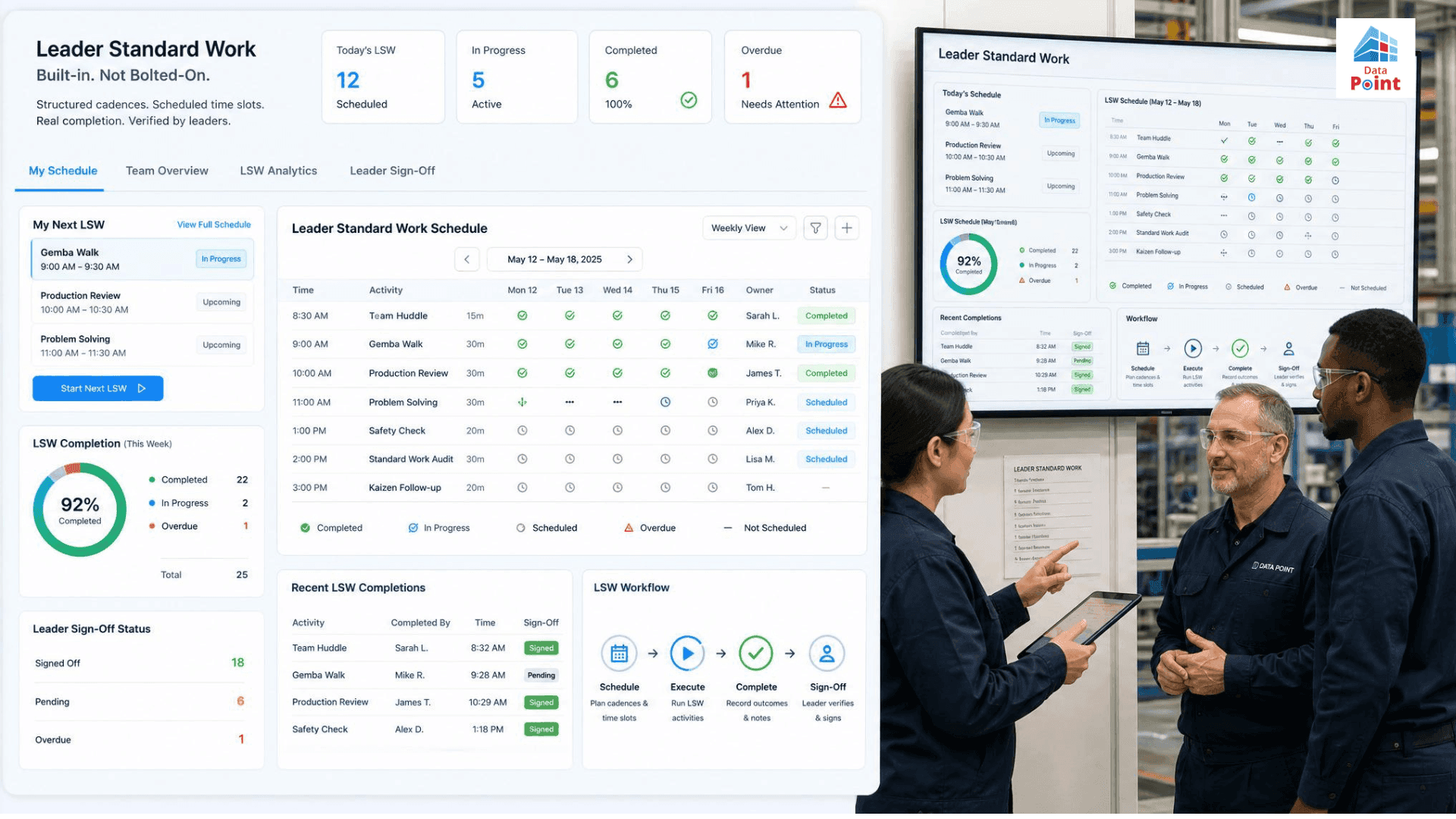
Leader Standard Work is a daily discipline in serious manufacturing operations. Plant managers, supervisors, and team leaders run structured routines; safety walks, shift reviews, quality checks, strategy updates, at daily, weekly, and monthly frequencies.
Data Point has a dedicated LSW module. Cadences are structured, time-slots are schedulable, completion is recorded, and sign-off is tracked. It is a workflow.
iObeya teams replicate LSW using custom board configurations. It works, but it is an approximation, not a purpose-built system.
Offline mobile: built for how plants actually work
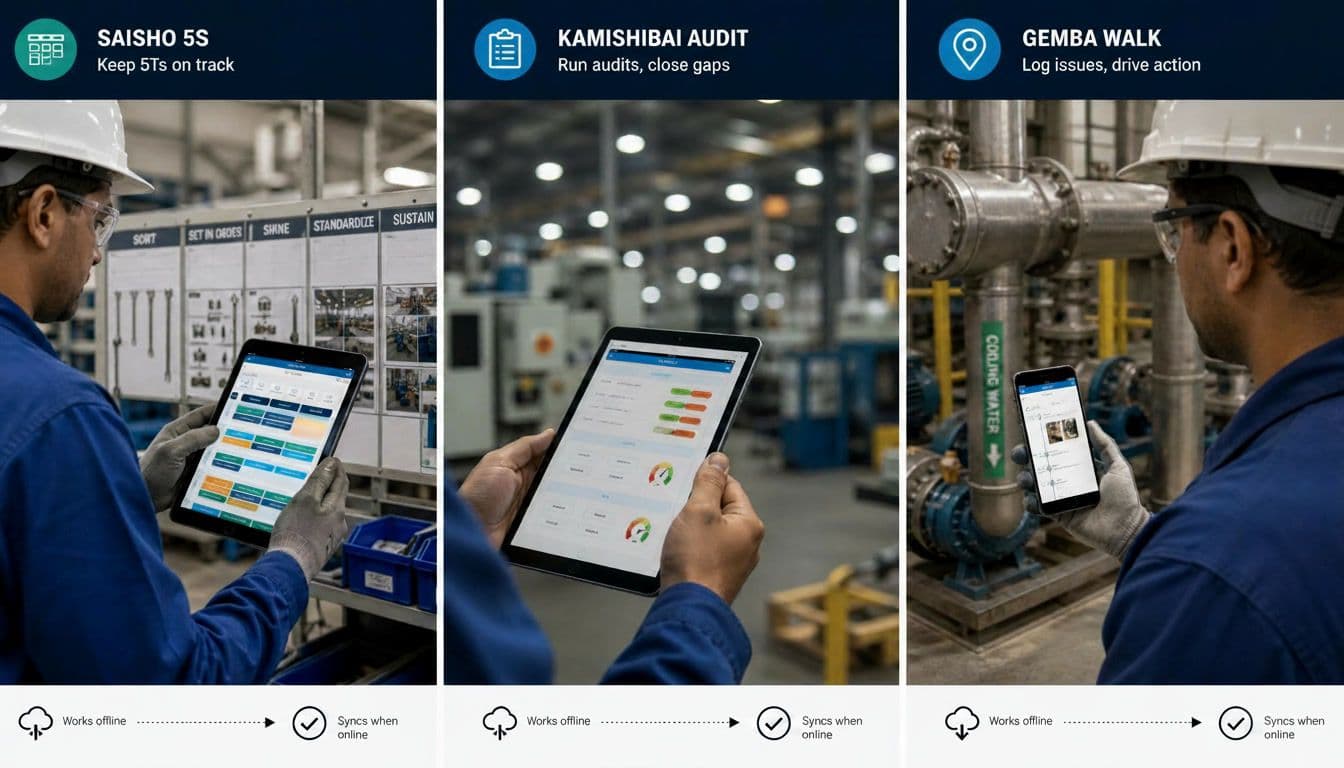
Most plant floors are not fully connected. Cold stores, high-bay areas, outdoor yards, and older buildings commonly have patchy or no Wi-Fi. Workers cannot stop a Gemba Walk because the browser will not load.
Data Point's mobile apps are built offline-first. Operators capture data on the floor; it syncs automatically when connectivity returns.
Integrations: the full operational landscape, not just SAP
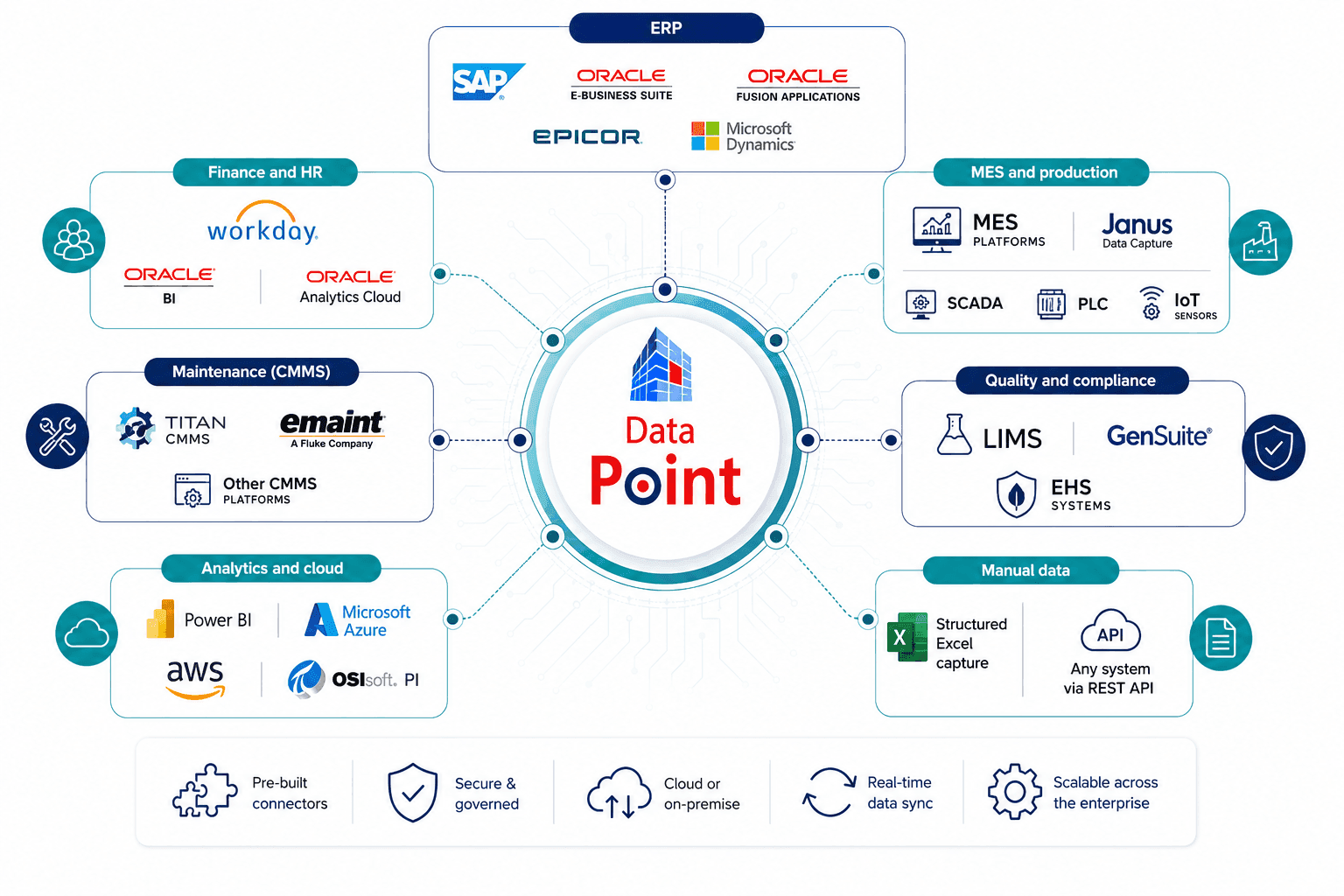
iObeya connects well with SAP, Power BI, Jira, and the Microsoft ecosystem. For SAP-first organisations it is a clean fit.
Most global manufacturers run a broader stack. Data Point connects across it:
The connected operational ecosystem: the bigger picture
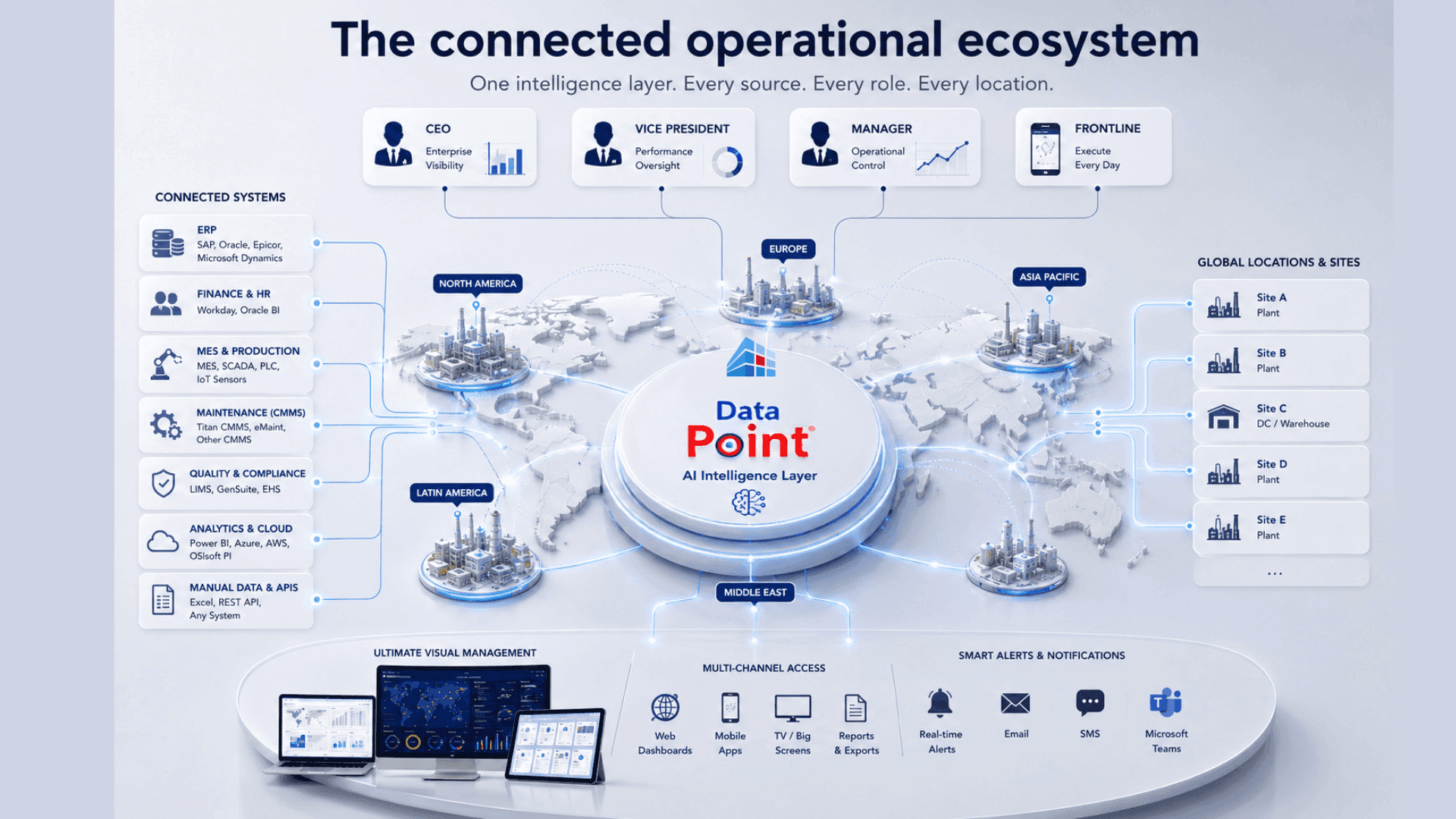
Data Point is not a collection of features. It is a connected operational ecosystem where every module, every integration, and every data source feed one central intelligence layer.
An overdue maintenance record in Titan CMMS correlates with an OEE drop in the MES. The AI surfaces the connection, generates a Decision Card, assigns an owner, and tracks the fix to verified completion. No manual cross-referencing. No weekly report. No meeting to decide what the data means.
iObeya surfaces data. Data Point acts on it.
5. Which Platform Fits Your Operation?
Data Point is the right fit when...
- Full operational intelligence is the goal: strategy to shop floor, Tier 1 to Tier 8, connected and AI-driven
- The ERP stack includes Oracle, Workday, LIMS, or CMMS: Data Point connects to the full enterprise landscape
- Plant-floor and field workers are part of the scope: offline Gemba, 5S, Kamishibai; purpose-built for plant conditions
- AI that closes the loop is required: Decision Cards, named owners, verified improvement; not dashboards
- Speed matters: 1 to 3 months at multi-site scale is standard
- Modular entry is preferred: start with one pack; scale when ready; no minimum commitment
iObeya is the right fit when...
- Visual Lean collaboration is the primary need: Obeya rooms, strategy boards, daily management for office-based teams
- SAP is the core ERP: iObeya connects cleanly and quickly in SAP environments
- Teams are office-based with stable connectivity: no offline or field operations requirement
- Analytics visibility is sufficient: KPI trends and performance boards meet the intelligence need
At a glance
Your operation is data rich. Is it decision ready?
If the same problems keep recurring and improvement actions never close, that is an intelligence gap. Data Point AI Intelligence closes it.The bottom line: iObeya is a well-built platform for visual Lean management. Data Point is built for operations that need more than visibility. It is built for the organisations that want every gap identified, every action owned, and every improvement verified.
FAQs
1. Is iObeya a genuine Lean platform?
Yes. iObeya is a credible, mature Lean platform with native Hoshin Kanri and SQCDP capabilities. It is well-suited to office-based teams in SAP environments. Where Data Point goes further is in operational depth: AI intelligence, offline mobile, dedicated Leader Standard Work, and integrations beyond the SAP ecosystem.
2. Does Data Point replace iObeya?
They serve different primary purposes. iObeya is built for visual Lean collaboration. Data Point is built for connected operational intelligence; strategy, daily management, CI, and AI in one platform. For manufacturers that need both breadth and operational depth, Data Point covers the full scope.
3. Can a mid-size manufacturer use Data Point?
Yes. Data Point is fully modular. A single plant can start with SQCDP dashboards and daily management and be live in weeks. There is no minimum site count or user count. The platform scales from one plant to a global enterprise at the same architecture.
4. What systems does Data Point integrate with?
SAP, Oracle EBS, Oracle BI, Workday, Microsoft Azure, Power BI, Epicor, AWS, OSIsoft PI, LIMS, CMMS platforms, GenSuite, MES, SCADA, eMaint, and manual data capture. Any system that exposes data via an API can be connected.
5. How is Data Point AI Intelligence different from a generic AI tool?
Generic AI tools know nothing about your operation. Data Point AI Intelligence knows your KPIs, your targets, your Lean logic, and your improvement history. It generates Decision Cards with specific actions, named owners, and due dates. Every verified outcome feeds back into the system. It gets more accurate every month.
6. How quickly can Data Point deploy across multiple sites?
Typically 1 to 3 months for initial deployment. The modular architecture means sites onboard progressively. A site can be running live daily management in weeks, with integrations and AI intelligence added as the programme scales.
7. What is the ROI case?
Build the ROI case from your largest operational gap: OEE, quality, or delivery. In one deployment, closing 50% of a primary OEE gap returned over 8 times the annual platform investment in Year 1. Management overhead reduction and accelerated improvement cycles compound that further over 24 to 36 months.

Abel Jiménez, Lean Consultant
Abel is a Lean Consultant with over 30 years of expertise in operational analysis, process improvement, and organisational change across Mexican industries. Currently serving as Director of Insurance Promotions at CESCEMEX, he helps organisations leverage technology and lean practices to improve efficiency and manage change with continuity.