Why Multi-Site KPI Management Creates Alignment Gaps Across Locations
Last updated on : March 25, 2026
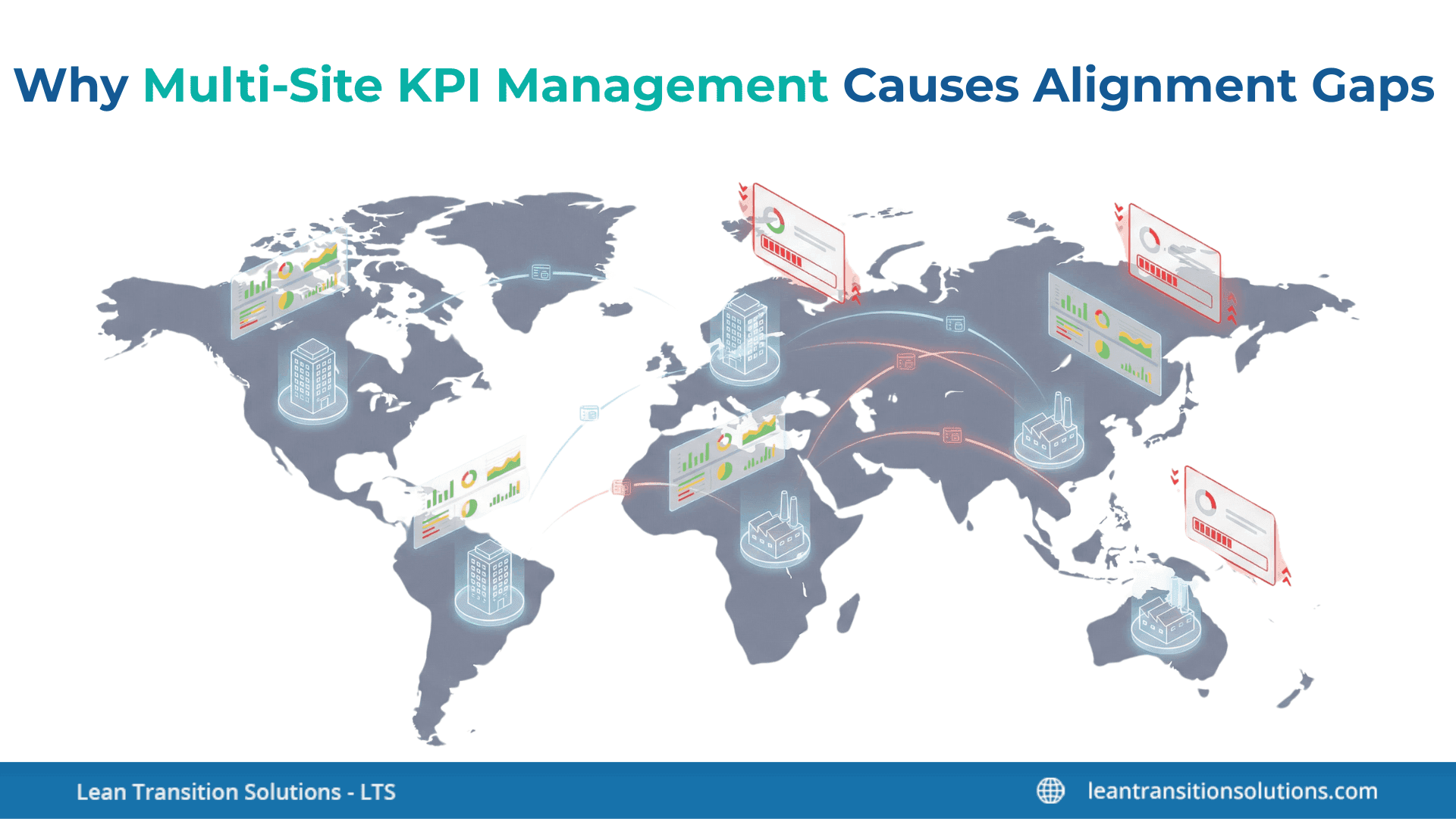
Managing KPIs across multiple sites can feel like trying to conduct an orchestra where each musician is in a different city. Each location has its own rhythm, instruments, and interpretations of the score. Without a central conductor or a shared sheet of music, the performance becomes disjointed, with key signals lost, timing misaligned, and harmony impossible to achieve. This is exactly what happens in multi-site KPI management – without clear visibility, standardised processes, and coordinated ownership, alignment gaps naturally emerge, creating confusion and inefficiency across the organisation.
Understanding multi-site KPI management and its challenges
Multi-site KPI management is the process of tracking, measuring, and analysing key performance indicators (KPIs) across multiple locations. While essential for enterprise performance, it comes with unique challenges.
Key challenges of multi-site KPI management
- Cross-site performance tracking is difficult when each location uses different reporting tools or formats.
- KPI misalignment occurs when teams interpret metrics differently, leading to conflicting priorities.
- Fragmented KPI data slows down decision-making because information is scattered across systems.
- Reporting silos in organisations prevent leadership from getting a clear, consolidated view of performance.
Without addressing these challenges, organisations risk inconsistent performance visibility, misaligned goals, and inefficiencies that ripple across all sites.
How multi-site KPI management leads to alignment gaps
Even with the right KPIs in place, KPI management often results in alignment gaps across locations. These gaps happen when teams don’t share the same understanding of performance goals.
Common causes of multi-site KPI mismanagement
- Performance gaps across sites arise when different locations set local priorities that conflict with overall organisational objectives.
- Inconsistent KPI tracking makes it hard to compare results, as data collection methods and reporting standards vary.
- KPI accountability issues occur when ownership of metrics isn’t clearly assigned, leaving teams unsure who is responsible for outcomes.
Alignment gaps slow down decision-making, reduce operational efficiency, and make it difficult for leadership to act on real-time insights across multiple sites.
The impact of misaligned KPIs on enterprise performance
When multi-site KPI management fails, the effects are felt across the entire organisation. Misaligned KPIs make it harder for leadership and teams to drive consistent results.
Key impacts of misaligned KPIs
- Reduced organisational performance visibility: Leaders struggle to see how each site is performing, making strategic decisions less informed.
- Inefficient cross-site performance tracking: Without standardised KPIs, comparing results between locations becomes time-consuming and error-prone.
- Fragmented KPI data: Data scattered across systems and spreadsheets leads to gaps in reporting, slowing down corrective actions.
Misalignment not only affects daily operations but can also lead to missed targets, uneven performance, and reduced accountability across multiple sites.
Common causes of KPI misalignment across locations
Understanding the root causes of misalignment is crucial for fixing multi-site KPI management issues. Alignment gaps often stem from operational and structural challenges within organisations.
Frequent causes of KPI misalignment
- Reporting silos in organisations: When teams work in isolation, KPI data isn’t shared, preventing a clear enterprise-wide view.
- Inconsistent KPI tracking: Different methods, tools, or frequency of measurement across sites lead to mismatched results.
- Variations in multi-location performance metrics: Without standardisation, each site may define and measure KPIs differently, creating confusion.
These organisational gaps make it hard to coordinate actions, compare performance across sites, and maintain accountability at scale.
Best practices to improve multi-site KPI management
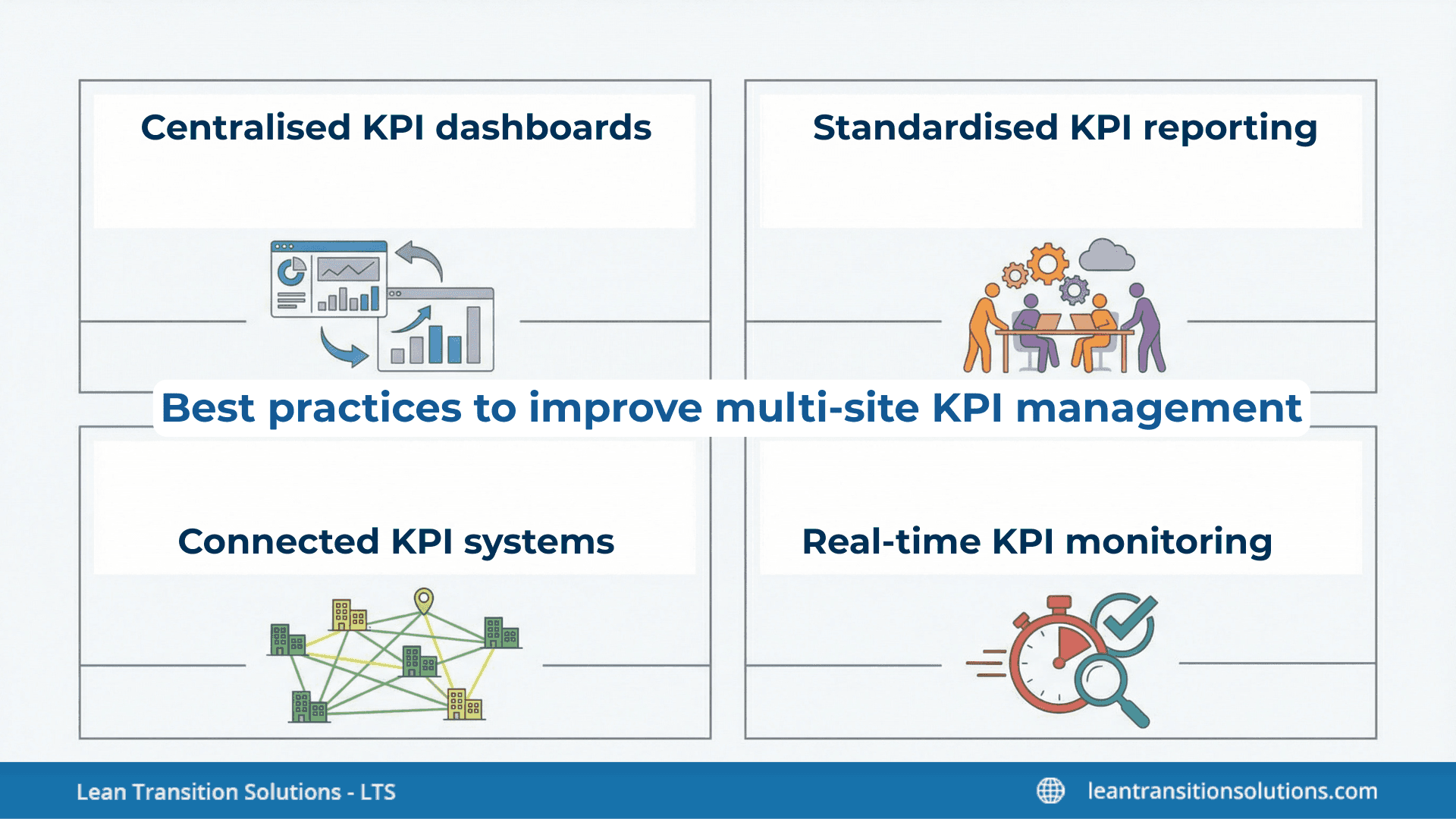
To reduce alignment gaps, organisations need structured approaches to multi-site KPI management. Implementing best practices ensures consistency, accountability, and real-time visibility across locations.
Key strategies to improve multi-site KPI management
- Centralised KPI dashboards: Consolidate data from all sites into a single view for easy cross-location comparison.
- Standardised KPI reporting: Use consistent metrics, definitions, and reporting frequency across all locations to avoid confusion.
- Connected KPI systems: Integrate data sources so teams have access to accurate and up-to-date performance information.
- Real-time KPI monitoring: Enable leaders and teams to track progress continuously and act on deviations immediately.
Applying these practices helps organisations close performance gaps, improve decision-making, and align teams across multiple sites.
Closing alignment gaps through standardised multi-site KPI management
Organisations can close alignment in multi-site KPI management by implementing a structured, enterprise-ready system. LTS Data Point offers a centralised solution that standardise KPI frameworks and ensures consistent visibility across all locations.
Why LTS Data Point is the better option
- Connected KPI systems: Seamlessly integrates multiple data sources into one dashboard.
- Real-time KPI monitoring: Provides instant visibility and actionable insights.
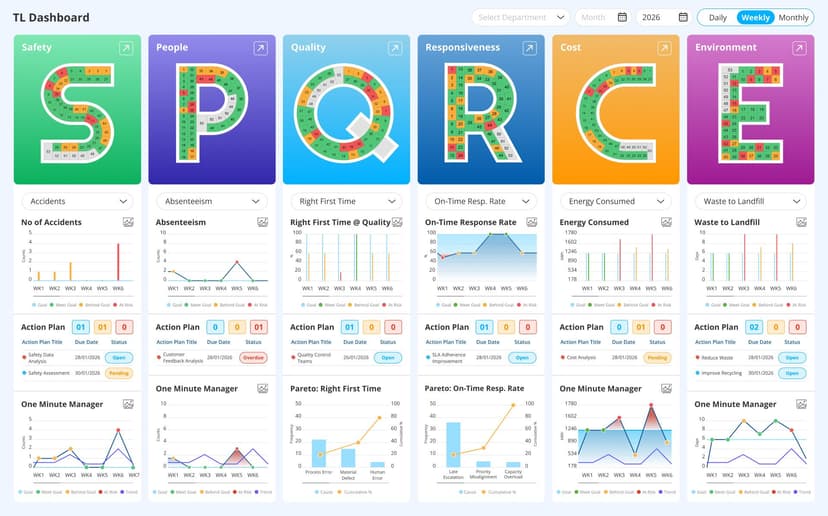
- Enterprise performance management: Standardises Balanced Scorecard, custom KPI dashboards such as FCIL and SQDCP, multi-site OKR, operational, financial, customer, and compliance KPI frameworks across all locations.
- Scalable solution: Easily grows with your organisation, maintaining standardisation across all sites.
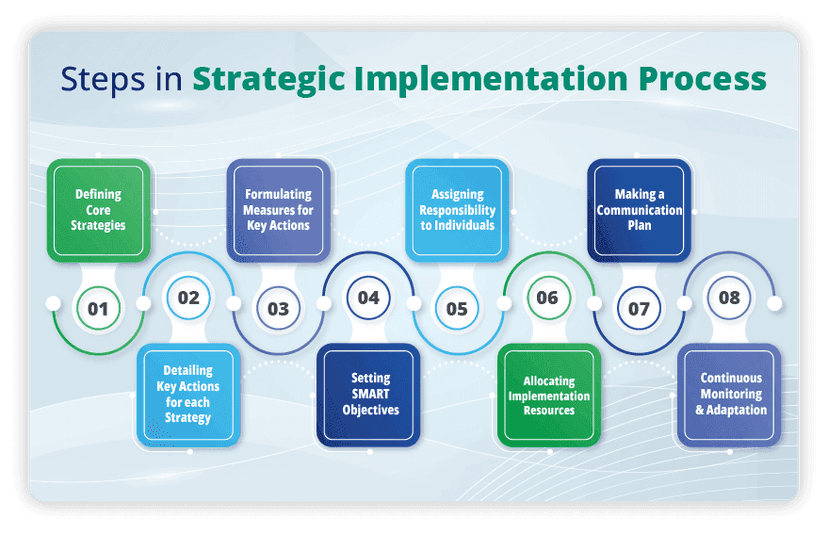
Steps to implement an LTS Data Point KPI dashboard
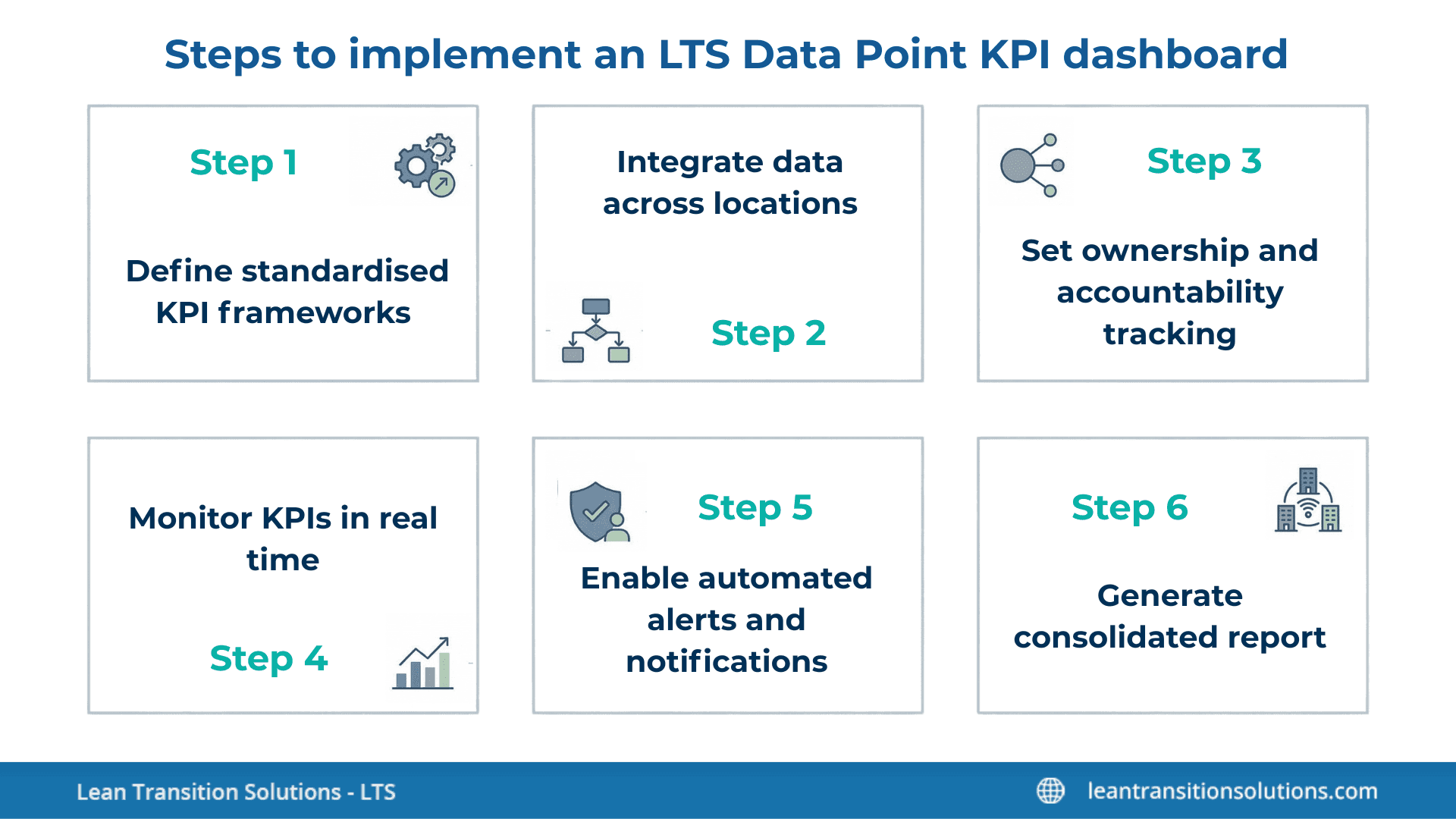
Define standardised KPI frameworks
Set clear metrics for all sites to track performance consistently.
Integrate data across locations
Connect existing systems and tools to consolidate fragmented KPI data.
Set ownership and accountability tracking
Assign responsible teams or individuals for each KPI to prevent gaps in accountability.
Monitor KPIs in real time
Use the LTS dashboard to view live performance across all sites.
Enable automated alerts and notifications
Receive instant updates when KPIs deviate from targets.
Generate consolidated reports
Easily compare performance across locations and drive data-backed decisions.
Effective multi-site KPI management is critical for maintaining alignment, accountability, and performance across multiple locations. Misalignment often stems from inconsistent tracking, fragmented data, and siloed reporting – but these challenges can be addressed with structured, standardised approaches. By implementing centralised KPI dashboards, connected KPI systems, and real-time monitoring, organisations can close performance gaps and improve decision-making. Solutions like LTS Data Point provide the tools to standardise KPI frameworks, consolidate data, and empower teams to act quickly, ensuring consistent visibility and operational excellence across all sites.
Get expert advice on implementing LTS Data Point across locations
FAQs
1. What is the difference between single-site and multi-site KPI management?
Single-site KPI management focuses on one location, making alignment simpler. Multi-site KPI management involves multiple locations, increasing complexity due to inconsistent data and varying local processes.
2. How often should KPIs be reviewed across multiple sites?
KPIs should ideally be monitored in real-time or weekly, with formal reviews monthly or quarterly to ensure alignment and timely corrective actions.
3. Can misaligned KPIs affect employee motivation?
Yes. When KPIs aren’t consistent across sites, employees may feel unclear about priorities, leading to confusion, low engagement, and reduced accountability.
4. Are software dashboards necessary for multi-site KPI management?
While not mandatory, centralised dashboards streamline cross-site tracking, reduce data fragmentation, and improve organisational performance visibility.
5. How can organisations standardise KPIs across multiple locations?
By defining a standardised KPI framework, setting clear metric definitions, and using connected systems for consistent reporting and ownership.
6. What role does leadership play in KPI alignment?
Leadership ensures consistency, accountability, and clarity by defining priorities, reviewing cross-site performance, and addressing gaps proactively.
7. Can multi-site KPI management work without real-time data?
It can, but delayed or fragmented data increase the risk of misalignment, slower decision-making, and missed corrective opportunities.
8. How does LTS Data Point help with KPI misalignment?
It provides centralised dashboards, real-time monitoring, connected systems, and standardised frameworks, enabling clear visibility and accountability across sites.
9. Are there industries where multi-site KPI management is particularly challenging?
Yes. Manufacturing, pharmaceuticals, retail chains, and logistics often face higher complexity due to distributed operations, varied processes, and regulatory requirements.

Geandra Queiroz, Operations Management Consultant
Geandra is an Operations Management Consultant at Lean Transition Solutions, specialising in Lean philosophy, Lean Six Sigma, and strategic planning across manufacturing and healthcare. She is currently completing her PhD in Industrial Engineering at the Federal University of São Carlos, researching the integration of Operations Strategy, Lean, and Green Manufacturing.