ESG KPIs: How Organisations Measure Environmental, Social and Governance Performance
Last updated on : March 12, 2026
Think of ESG KPIs as a company’s health report. You can say you care about sustainability, employees and ethics, but until you measure them, you don’t know if the organisation is healthy or hiding serious risks. ESG KPIs provide the vital signs — emissions, safety, compliance, diversity, risk — that show whether the business is stable, resilient or heading for trouble.
Understand how LTS Data Point structures ESG data for leadership and compliance teams
What ESG KPIs measure inside modern organisations
ESG KPIs define how an organisation converts its environmental, social and governance goals into measurable business signals. In simple terms, what are ESG KPIs? They are ESG performance metrics and ESG performance indicators that leadership teams use to understand whether sustainability commitments, workforce responsibilities and governance standards are actually being met across operations, sites and business units. This is how to measure ESG performance in a way that supports decision-making, compliance and long-term risk management through a structured ESG measurement framework.
What ESG KPIs track in practice
- Environmental performance: Monitors how operations impact energy use, emissions, water, waste and climate risk using ESG performance metrics aligned to sustainability goals.
- Social performance: Calculates how the industry treats employees, contractors and communities through safety, wellbeing, inclusion and labour-related ESG performance indicators.
- Governance performance: Tracks how well the company manages compliance, ethics, audits and oversight using risk-focused ESG KPIs.
Why organisations use ESG KPIs
- To create a consistent ESG measurement framework across sites, departments and regions.
- To compare ESG performance metrics over time and spot risk or improvement trends.
- To support board-level reporting and regulatory compliance.
- To turn sustainability and responsibility into operationally quantifiable performance.
How ESG KPIs differ from simple reporting
- ESG KPIs are designed to drive management decisions, not just external disclosures.
- They connect environmental, social and governance objectives directly to daily operations.
- They allow leadership teams to see where ESG risks and performance gaps exist before they become compliance or reputation issues.
The ESG KPI framework – How organisations measure environmental, social and governance performance
This section introduces how ESG tracking metrics are organised into three connected pillars – Environmental, Social and Governance – and how organisations use them inside an ESG KPI dashboard, ESG scorecard, and ESG KPI reporting processes to track risk, compliance and performance across the business.
Environmental KPIs – How companies track resource and climate impact
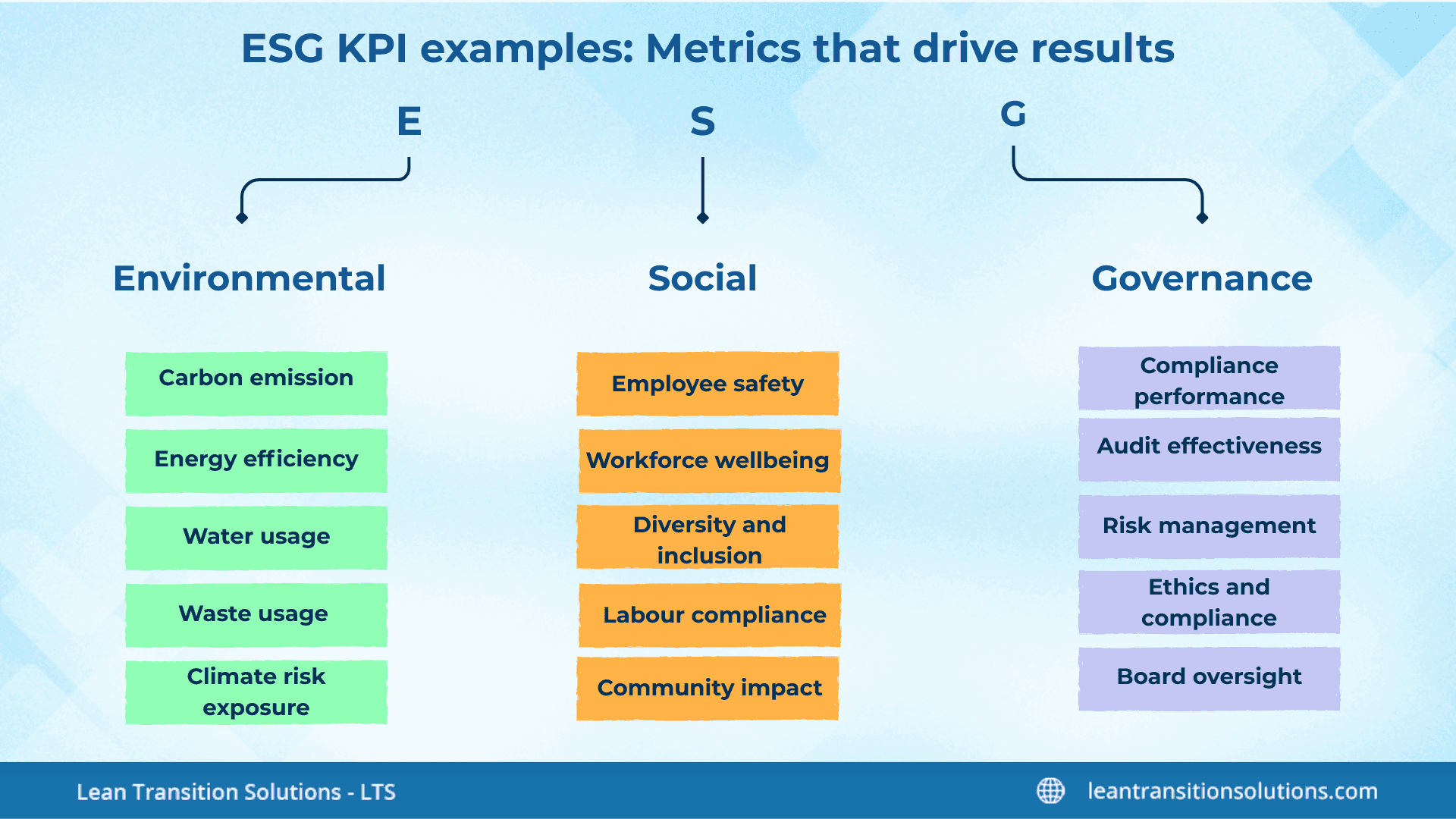
Environmental KPIs focus on how an industry manages its physical footprint on the planet. These environmental performance metrics include carbon emissions KPIs, energy efficiency indicators, water usage KPIs, waste reduction metrics, and climate risk metrics. Together, they form the environmental pillar of ESG tracking metrics, helping companies understand how efficiently they use resources and how exposed they are to climate-related risks.
These Key Performance Indicators (KPIs) are typically displayed in an ESG KPI dashboard so leadership teams can:
- Observe carbon emissions KPIs across sites and suppliers
- Track energy efficiency indicators to control cost and environmental impact
- Compare water usage KPIs between plants, regions and processes
- Identify improvement trends through waste reduction metrics
- Assess long-term exposure using climate risk metrics
Social KPIs – How organisations measure workforce and community performance
Social KPIs show how well an industry looks after its people and the communities it operates in. These social performance KPIs include employee safety metrics, diversity and inclusion KPIs, workforce wellbeing indicators, labour compliance metrics, and community impact metrics. Together, they form the social layer of ESG metrics for companies that want to manage reputation, retention and regulatory risk.
These KPIs are often structured into an ESG scorecard to help organisations:
- Reduce incidents using employee safety metrics
- Track representation and fairness through diversity and inclusion KPIs
- Monitor burnout and engagement via workforce wellbeing indicators
- Ensure regulatory adherence with labour compliance metrics
- Measure external responsibility using community impact metrics
Governance KPIs – How companies monitor risk, compliance and oversight
Governance KPIs focus on how well a company is controlled, audited and governed. These governance KPIs include compliance performance metrics, audit KPIs, risk management indicators, ethics and compliance KPIs, and board oversight metrics. They feed directly into ESG KPI reporting and ESG reporting metrics used by boards, regulators and investors. Tracking these consistently often requires dedicated corporate governance software, since spreadsheets rarely hold up once audit trails, board reporting, and compliance evidence all need to stay linked together.
Organisations rely on these KPIs to:
- Track regulatory exposure through compliance performance metrics
- Monitor internal controls using audit KPIs
- Identify emerging threats via risk management indicators
- Enforce standards with ethics and compliance KPIs
- Demonstrate accountability using board oversight metrics
ESG KPI examples: Metrics that drive results
Environmental KPIs
1. Carbon emissions
Measures the total greenhouse gas emissions generated by operations.
- Why it matters: Carbon emissions drive regulatory risk, climate exposure and brand reputation. Reducing emissions also lowers energy and fuel costs.
- How to measure: Carbon emissions = Total CO2 emitted / Units produced or revenue
2. Energy efficiency
Calculates how efficiently energy is used to produce output.
- Why it matters: Energy is one of the largest cost and emissions drivers. This is one of the most critical KPIs for enhancing profitability and sustainability at the same time.
- How to measure: Energy efficiency = Total energy consumed (kWh) / Units produced
3. Water usage
Tracks how much water is consumed to support operations.
- Why it matters: Water scarcity, rising tariffs and regulatory pressure make water one of the fastest-growing environmental risks for many industries.
- How to measure: Water usage = Total water consumed (litres) / Units produced
4. Waste reduction
Measures how much waste is prevented, recycled or diverted from landfill.
- Why it matters: Waste directly impacts disposal costs, environmental footprint and regulatory compliance.
- How to measure: Waste reduction = (Total waste recycled or reused / Total waste generated) x 100
5. Climate risk exposure
Estimates how much of the business is exposed to climate-related threats.
- Why it matters: Extreme weather, supply chain disruption and regulatory change can materially impact asset values and operational continuity.
- How to measure: Climate risk exposure = Value of assets in high-risk climate zones / Total asset value
Social KPIs
1. Employee safety
Tracks how often workplace injuries or incidents occur.
- Why it matters: Safety failures lead to downtime, legal risk and reputational damage.
- How to measure: Employee safety = Number of recordable incidents / Total hours worked
2. Workforce wellbeing
Measures employee stability and engagement.
- Why it matters: High stress, burnout and turnover directly productivity and hiring costs.
- How to measure: Workforce = Employee turnover rate or engagement score
3. Diversity and inclusion
Tracks how balanced the workforce is across gender, ethnicity and roles.
- Why it matters: Diverse organisations perform better, attract talent and face lower reputational risk.
- How to measure: Diversity ratio = Number of underrepresented employees / Total employees
4. Labour compliance
Monitors adherence to labour laws and standards.
- Why it matters: Violations can lead to fines, shutdowns and brand damage.
- How to measure: Labour compliance = Number of compliance breaches per period
5. Community impact
Measures how the organisation contributes to local communities.
- Why it matters: Strong community relationships reduce opposition, delays and reputational risk.
- How to measure:
Governance KPIs
1. Compliance performance
Tracks how well the company meets regulatory and legal requirements.
- Why it matters: Compliance failures lead directly to financial and legal risk.
- How to measure: Compliance performance = Number of regulatory breaches per period
2. Audit effectiveness
Measures how well internal and external audits are resolved.
- Why it matters: Unresolved audit issues signal weak controls and rising risk.
- How to measure: Audit effectiveness = Audit issues closed on time / Total audit issues
3. Risk management
Tracks how many high-risk issues remain unaddressed.
- Why it matters: Unmanaged risks lead to operational disruption and financial loss.
- How to measure: Risk exposure = Number of unresolved high-risk items
4. Ethics and compliance
Monitors ethical conduct and internal rule adherence.
- Why it matters: Ethical failures erode trust with regulators, investors and employees.
- How to measure: Ethics KPI = Number of code-of-conduct or whistleblower cases
5. Board oversight
Tracks how actively leadership governs ESG issues.
- Why it matters: Strong governance requires visible and consistent board involvement.
- How to measure: Board oversight = ESG issues reviewed or actions approved by the board
Localised ESG KPIs: How countries prioritise different ESG metrics
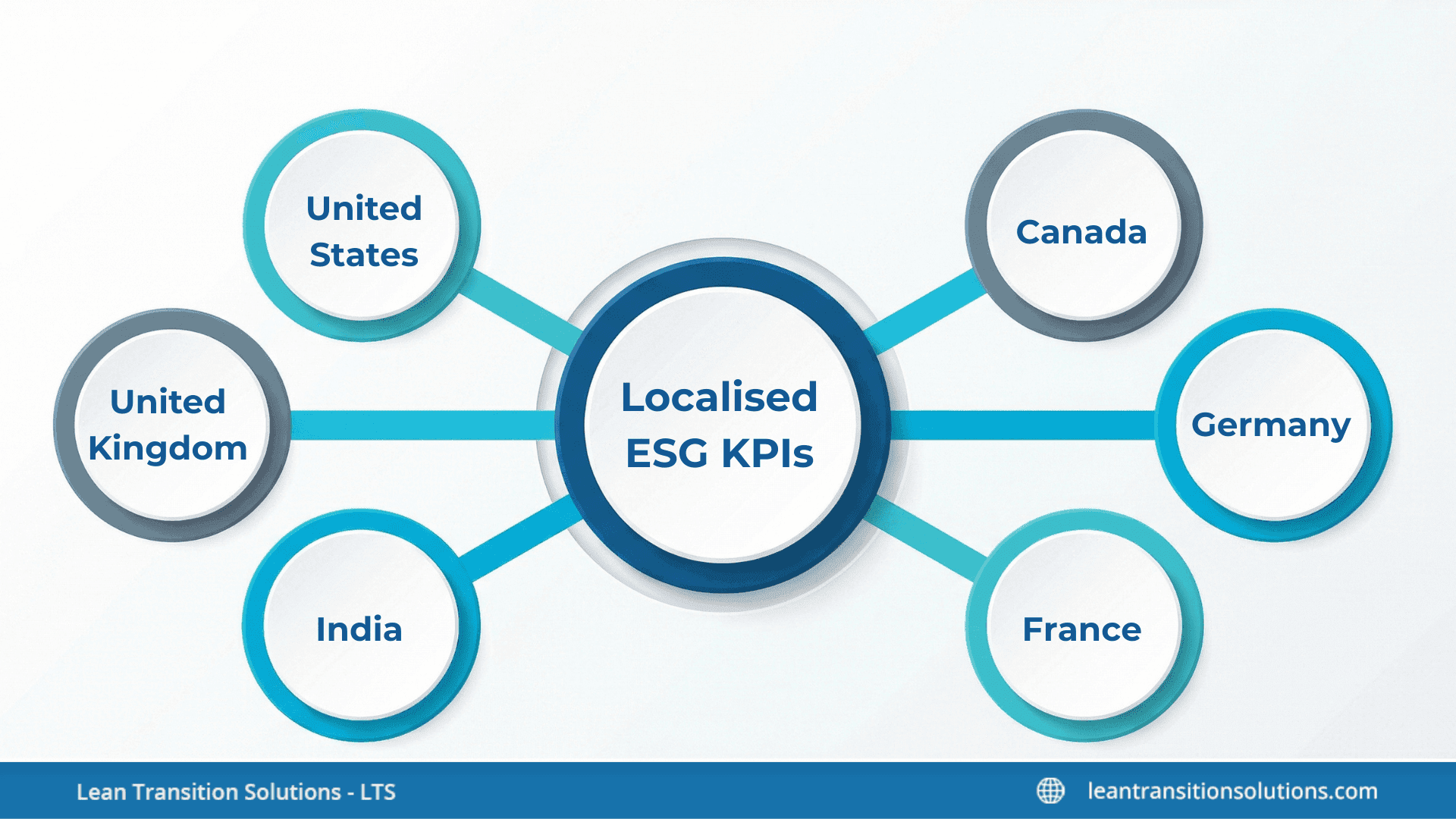
While ESG principles are global, ESG KPIs are not measured same way everywhere. Regulations, energy mix, labour laws and climate exposure vary by country, which means organisations must localise their ESG performance metrics to stay compliant and competitive.
Below is how ESG priorities typically shift across major economies.
United States – Governance and environmental risk
Common US ESG KPIs include:
- Carbon emissions – Tracks compliance with federal and state climate regulations
- Energy efficiency – Controls operating costs in energy-intensive industries
- Audit effectiveness – Ensures compliance with SEC, EPA and labour rules
- Risk management – Identifies legal and regulatory exposure
US companies face strong investor scrutiny and litigation risk, making governance and emissions KPIs critical.
United Kingdom – Environmental and social responsibility
Common UK ESG KPIs include:
- Energy efficiency – Supports net-zero and energy cost reduction
- Carbon emissions – Required for climate reporting
- Workforce wellbeing – Linked to retention and productivity
- Diversity and inclusion – Part of social and governance expectations
UK organisations are expected to prove ESG performance, not just disclose it.
India – Resource efficiency and workforce protection
Common Indian ESG KPIs include:
- Water usage – Critical due to scarcity and regulatory pressure
- Energy efficiency – Controls cost and emissions
- Employee safety – High priority in manufacturing and infrastructure
- Labour compliance – Ensures adherence to labour laws
ESG KPIs in India are closely tied to operational risk and regulatory compliance.
Canada – Climate and governance
Typical Canadian ESG KPIs include:
- Climate risk exposure – Important for energy, mining and logistics
- Carbon emissions – Strong climate disclosure requirements
- Compliance performance – Ensures regulatory adherence
- Audit effectiveness – Supports governance transparency
Canadian firms must show that climate and governance risks are actively managed.
Germany – Environmental efficiency and governance control
Typical German ESG KPIs include:
- Energy efficiency – A major cost and sustainability driver
- Carbon emissions – Required for EU climate compliance
- Audit effectiveness – Ensures process and regulatory control
- Risk management – Tracks operational and compliance risk
Germany's strong manufacturing base makes environmental and governance KPIs critical.
France – Social and environmental performance
Typical French ESG KPIs include:
- Workforce wellbeing – Heavily regulated and closely monitored
- Community impact – Important for public trust
- Carbon emissions – Required for climate and sustainability reporting
- Waste reduction – Supports circular economy goals
French ESG regulation places heavy emphasis on social responsibility alongside environmental impact.
Why localisation matters
A global ESG strategy only works when ESG KPIs reflect local realities. Organisations that localise their ESG measurement frameworks can compare performance across countries while still meeting regional compliance, cost and risk requirements.
Sustainability KPIs vs ESG KPIs: Key differences
If you’d like a deeper breakdown of how these two metric systems differ and how companies use each one, explore our full guide: Sustainability KPIs vs ESG KPIs
ESG KPIs in business performance management
ESG KPIs only create business value when they are managed as part of a broader performance system. Many organisations use concepts such as a sustainability balanced scorecard to structure how environmental, social and governance objectives are linked to financial, operational and risk outcomes. In operations-led organisations, ESG performance is also structured using integrated frameworks such as EQDCPS, ESQDCP and SHEQCPLDCPS, which connect environment, safety, quality, delivery, cost and people into a single management model.
The challenge is that, in practice, ESG data is often scattered across sustainability reports, audits, HR systems and spreadsheets, making it difficult to manage ESG performance consistently across all of these dimensions.
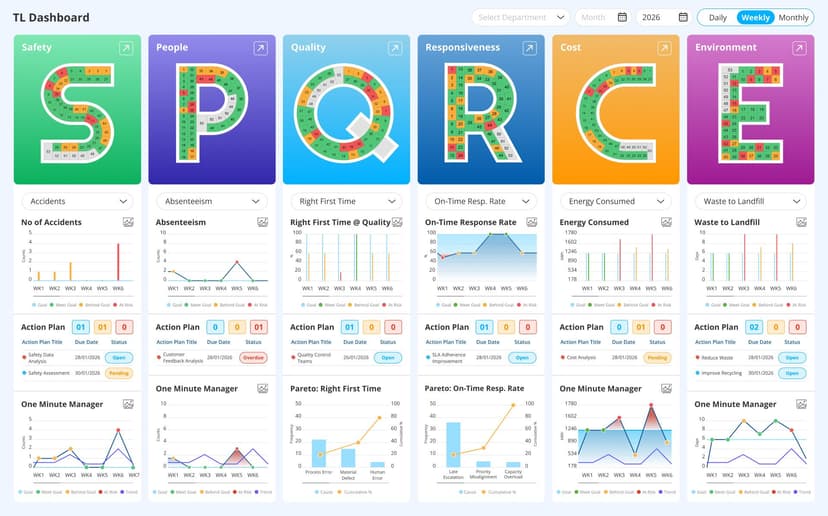
LTS Data Point is designed to support this kind of performance-based ESG management by acting as a central business performance management platform for ESG KPIs. It supports EQDCPS, ESQDCP and SHEQCPLDCPS frameworks, allowing organisations to manage environmental, social and governance KPIs alongside quality, delivery, cost, safety and people in one structured system — the same logic that underpins a sustainability balanced scorecard.
LTS Data Point is typically used when companies need to:
- Run ESG KPIs inside EQDCPS, ESQDCP or SHEQCPLDCPS frameworks
- Manage environmental, social and governance KPIs alongside cost, quality, delivery, safety and people
- Apply a consistent ESG measurement framework across sites, regions and business units
- Support sustainability balanced scorecard-style management with real KPI data
- Replace spreadsheet-based ESG tracking with controlled, auditable KPI workflows
- Create standardised ESG scorecards and ESG KPI reporting for leadership and compliance teams
Unlike standalone ESG reporting tools, LTS Data Point governs how ESG KPIs are owned, reviewed and improved inside operations. It allows teams to assign KPI ownership, track trends, identify performance gaps and link ESG metrics to corrective and improvement actions — making sustainability, workforce and governance part of day-to-day operational control.
This makes LTS Data Point well suited for organisations running ESG through:
- EQDCPS, ESQDCP and SHEQCPLDCPS frameworks
- A sustainability balanced scorecard
- Enterprise-wide business performance management
- Multi-site, multi-country ESG governance models
By embedding ESG KPIs into everyday performance management, LTS Data Point enables organisations to move from ESG reporting to ESG control — ensuring environmental impact, social responsibility and governance are managed with the same rigour as cost, quality and delivery.
Understand how LTS Data Point supports Sustainability Balanced Scorecard-style ESG management
FAQs
1. Are ESG KPIs the same as ESG ratings?
No. ESG KPIs are the internal metrics organisations track, while ESG ratings are external scores produced by agencies based on disclosed data.
2. Who owns ESG KPIs are inside an organisation?
ESG KPIs are usually owned across functions – sustainability, operations, HR, finance and compliance – rather than by a single team.
3. How often should ESG KPIs be reviewed?
Most organisations review ESG KPIs monthly for management control and quarterly for board and regulatory reporting.
4. Can ESG KPIs be audited?
Yes. Many ESG KPIs, especially governance and emissions metrics, are subjects to internal or third-party audits.
5. How do ESG KPIs affect access to capital?
Investors increasingly use ESG performance to assess risk, which can influence borrowing costs, insurance and shareholder confidence.
6. Do small companies need ESG KPIs?
Yes. Even small organisations use ESG KPIs to meet customer, lender and supply chain requirements.
7. Are ESG KPIs required by law?
In many countries, large organisations are required to disclose ESG-related data, and this is expanding over time.
8. How do companies ensure ESG data is accurate?
By using standard definitions, data controls, audit trials and consistent reporting processes.
9. Can ESG KPIs be linked executive performance?
Yes. Many organisations now include ESG KPIs in leadership scorecards and incentive plans.

Geandra Queiroz, Operations Management Consultant
Geandra is an Operations Management Consultant at Lean Transition Solutions, specialising in Lean philosophy, Lean Six Sigma, and strategic planning across manufacturing and healthcare. She is currently completing her PhD in Industrial Engineering at the Federal University of São Carlos, researching the integration of Operations Strategy, Lean, and Green Manufacturing.