Poka-Yoke: A Practical Guide to Error Prevention in Daily Operations
Last updated on : April 10, 2026
Imagine sending an email without the “undo send” option – one small slip and the mistake is permanent. That’s exactly the problem many operations face daily. Poka-Yoke is a simple error-proofing approach that designs processes, tools, or systems so mistakes are either impossible to make or instantly detected before they cause problems.
Experience how LTS Data Point helps organisations manage performance, track improvement actions, and strengthen operational execution
What is Poka-Yoke? Definition, meaning, and why it matters in operations
At its core, Poka-Yoke is a practical approach to designing processes so that mistakes either cannot occur or are detected immediately before they create defects. Instead of depending on inspections after production, it builds error prevention directly into the workflow.
The term Poka-Yoke is the Japanese term for mistake-proofing. It combines the Japanese words “Poka” (inadvertent error) and “Yokeru” (to avoid). The concept was popularised by Shigeo Shingo as part of the Toyota Production System to reduce human errors in manufacturing operations.
In simple terms, what is Poka-Yoke?
- A process design method that prevents mistakes before they become defects
- A way to build quality into operations rather than inspect it later
- A practical technique widely used in Poka-Yoke manufacturing environments
Key ideas behind Poka-Yoke
- Error prevention at the source rather than defect detention later
- Simple mechanisms that make incorrect actions difficult or impossible
- Immediate feedback systems that alert operators to mistakes
- Visual or physical constraints that guide correct execution
Why Poka-Yoke in lean manufacturing matters
In Poka-Yoke lean manufacturing, the goal is operational stability and zero defects. Instead of relying on training or supervision, processes are designed so that the correct action becomes the easiest action.
Quick definitions to go through:
- Poka-Yoke → A mistake-proofing technique that prevents human errors in processes; designing systems that eliminate that possibility of incorrect actions
- Poka-Yoke manufacturing → Integrating error-prevention mechanisms directly into production workflows
In essence, Poka-Yoke shifts quality from inspection to prevention, ensuring that processes themselves guide correct behaviour.
How Poka-Yoke works in Lean manufacturing and Six Sigma
Within operational excellence frameworks, Poka-Yoke is used to eliminate defects before they occur, rather than detecting them after production.
In Poka-Yoke Six Sigma, mistake-proofing is typically introduced during the Improve phase of DMAIC cycle, where teams redesign processes to permanently remove the root causes of errors.
The objective is not just defect reduction – it is to make defects structurally impossible.
In practice, Poka-Yoke in lean manufacturing operates through three main mechanisms.
1. Prevention mechanisms
These mechanisms physically prevent incorrect actions from occurring. Common examples include:
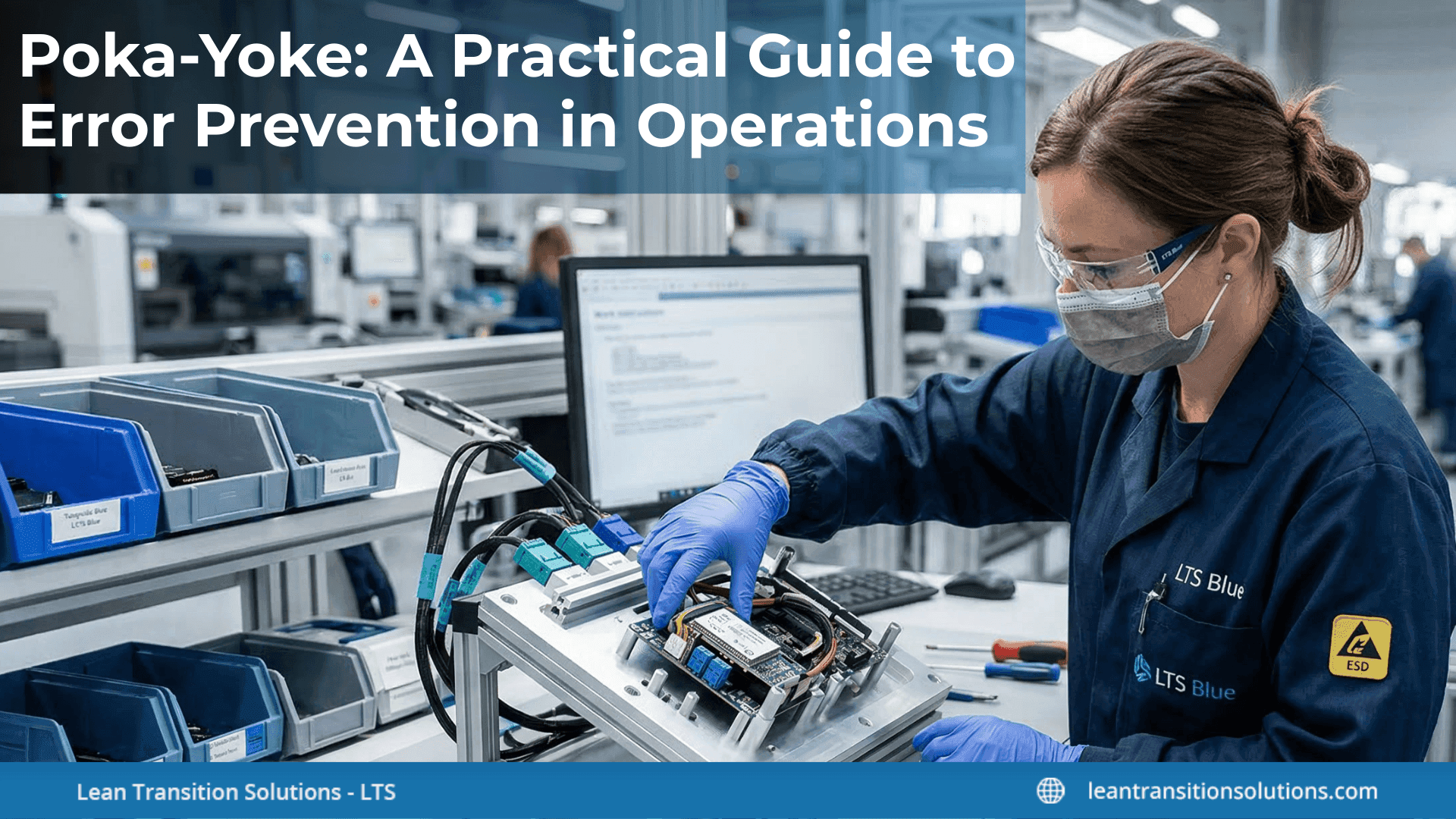
- Fixtures that allow parts to be inserted only in the correct orientation
- Connectors that fit only one configuration
- Tooling that prevents machines from running when components are missing
These designs eliminate the possibility of errors before the process continues.
2. Detection mechanisms
Detection systems spot mistakes immediately before the next process step begins.
Examples include:
- Sensors that detect missing screws or components
- Barcode scanning systems verifying correct materials or parts
- Vision inspection systems confirming assembly completion
These mechanisms stop defects before they move downstream in the production flow.
3. Guidance mechanisms
Guidance mechanisms help operators perform the correct actions consistently.
Examples include:
- Colour-coded components that prevent incorrect assembly
- Digital work instructions guiding operators step-by-step
- Process checklists ensuring critical tasks are completed
These tools reduce reliance on memory and help maintain consistent execution.
Together, these mechanisms form the operational foundation of Poka-Yoke manufacturing, ensuring that quality is built into the process itself rather than controlled through inspection.
Types of Poka-Yoke methods used in manufacturing processes
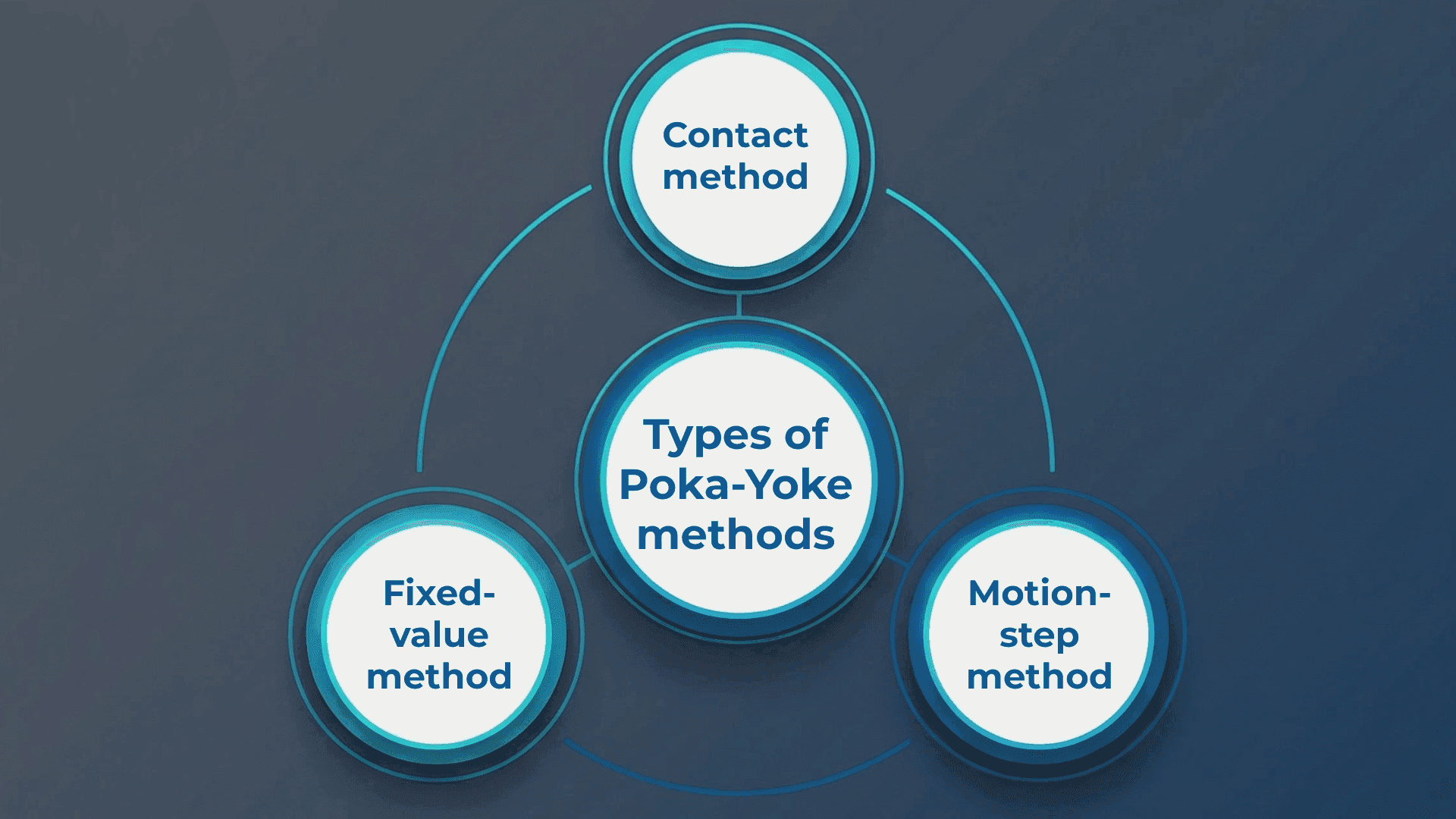
Different production environments implement Poka-Yoke methods depending on the type of errors that need to be prevented. These methods help ensure that mistakes are either physically impossible or immediately detected during the process.
Below are the most widely used Poka-Yoke methods in manufacturing.
1. Contact method
The contact method detects physical characteristics such as shape, size, position, or colour to identify incorrect parts or assembly conditions.
Example:
- Sensors detecting incorrect part dimensions
- Fixtures ensuring components fit only in the correct orientation
This method is commonly used in Poka-Yoke manufacturing to prevent incorrect components from entering the production process.
2. Fixed-value method
The fixed-value method ensures that a specific number of actions or components are completed before the process continues.
Example:
- A system confirming all bolts are tightened before machine operation begins
- Sensors verifying the exact number or parts required for assembly
This approach prevents errors caused by missing steps or incomplete tasks.
3. Motion-step method
The motion-step method ensures that operators follow the correct process sequence.
Example:
- Machines that cannot move to the next step until the previous operation is completed
- Systems that prevent production if a required step is skipped
This method helps maintain standardised workflows and process discipline.
How these methods demonstrate Poka-Yoke characteristics
These techniques illustrate which examples demonstrate Poka-Yoke characteristics – systems designed to prevent incorrect action or immediately highlight process errors.
In real manufacturing environments, these mechanisms appear in many forms, including:
- Fixtures and jigs that guide correct assembly
- Automated detection sensors that verify process conditions
- Interlock safety systems that stop machines when errors occur
- Visual management indicators that highlight abnormal conditions
Together, these methods form the operational backbone of modern error-proofing strategies, ensuring that processes remain reliable and defects are prevented before they occur.
Poka-Yoke examples in manufacturing and daily operations
Understanding Poka-Yoke examples helps illustrate how simple design changes can significantly reduce operational errors. These mechanisms ensure mistakes are either physically prevented or immediately detected before they impact production.
Below are some common Poka-Yoke examples in manufacturing.
1. Assembly orientation fixtures
Components are designed to fit only in the correct orientation, preventing incorrect assembly.
Example:
- Fixtures or jigs that allow parts to be inserted only one way
This is widely used example of Poka-Yoke in manufacturing that stops assembly errors before they occur.
2. Sensor-based part detection
Machines verify that all required components are present before continuing production.
Example:
- Sensors detecting missing screws or components during assembly
This method is a classic example of Poka-Yoke in manufacturing used in automated assembly lines.
3. Barcode verification systems
Production systems confirm that the correct materials or parts are used before processing begins.
Example:
- Barcode scanning systems validating the right product or batch
These are among the most widely implemented examples of Poka-Yoke in manufacturing, especially in packaging, pharmaceutical, and electronics industries.
4. Colour-coded process indicators
Visual indicators help operators quickly verify whether process settings or components are correct.
Example:
- Colour-coded knobs are connectors to prevent incorrect machine configuration
These visual controls act as simple Poka-Yoke sample that reduces setup errors.
Why Poka-Yoke is critical for reliable manufacturing systems
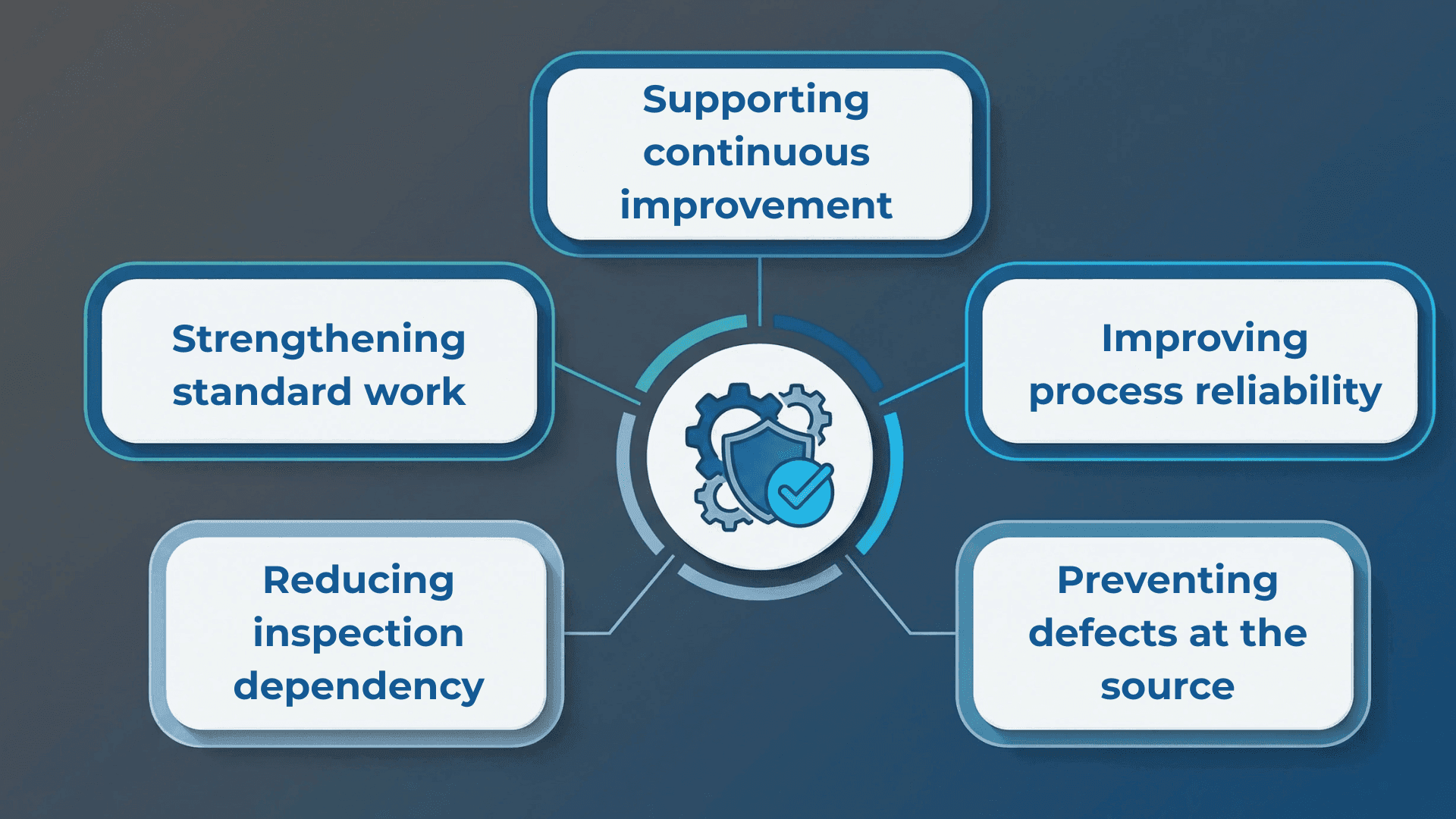
As manufacturing systems grow in scale and complexity, human errors become inevitable without built-in safeguards. This is why Poka-Yoke plays a critical role in modern operational excellence initiatives and Poka-Yoke manufacturing environments.
Rather than relying only on inspections or operator vigilance, Poka-Yoke integrates error prevention directly into the process, ensuring quality is maintained at every step.
Key benefits of Poka-Yoke in manufacturing
1. Preventing defects at the source
- Errors are detected or prevented before products move to the next process stage
- Reduces the risk of defects spreading through the production line
2. Reducing inspection dependency
- Processes are designed to prevent mistakes automatically
- Minimises the need for extensive manual quality checks
3. Improving process reliability
- Operations become more predictable and consistent
- Reduces variability in production outcomes
4. Strengthening standard work
- Processes guide correct execution without relying solely on operator memory
- Helps maintain discipline in Poka-Yoke in lean manufacturing environments
5. Supporting continuous improvement
- Error-proofing mechanisms highlight process weaknesses
- Helps teams identify opportunities for improvement within Poka-Yoke lean manufacturing systems
For industries pursuing Lean manufacturing and continuous improvement, Poka-Yoke becomes a foundational strategy for achieving consistent quality, stable operations, and stronger process discipline.
How the LTS Data Point performance management system supports Poka-Yoke driven operations
While Poka-Yoke mechanisms prevent errors at the process level, sustaining error-free operations requires structured performance management and clear operational visibility.
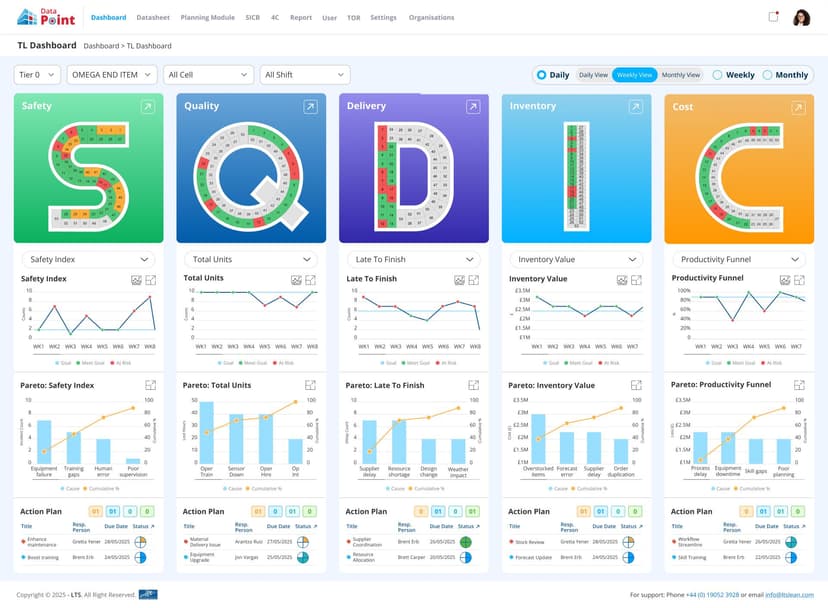
The LTS Data Point performance management system supports this by creating the organisational discipline needed to maintain reliable processes and continuously monitor operational performance.
In complex manufacturing environments, teams must track KPIs, detect deviations early, and ensure corrective actions are executed quickly before problems escalate. Without a structured system, these activities often become fragmented across spreadsheets, dashboards, and manual coordination.
The platform helps teams:
- Track operational KPIs linked directly to process performance
- Monitor deviations that may signal process breakdowns
- Align teams through structured performance reviews
- Ensure improvement actions are assigned, tracked, and closed
By connecting operational data, accountability, and structured improvement routines, the LTS Data Point performance management system helps industries sustain the operational discipline required to support Poka-Yoke-driven quality systems.
Instead of relying on disconnected tools, manufacturers operate within a unified performance environment that links metrics, operational reviews, and improvement actions.
A practical implementation framework used in factories
To effectively sustain Poka-Yoke-driven operations, many manufacturing organisations follow a structured operational framework:
Identify error-prone processes
- Analyse production workflows to identify steps where human errors frequently occur
- Review defect reports, quality deviations, and operational KPIs
Implement Poka-Yoke mechanisms
- Introduce fixtures, sensors, interlocks, or visual controls to prevent or detect errors
- Ensure the process physically guides the correct action
Monitor process performance
- Track KPIs that indicate process stability, defect trends, and operational efficiency
- Use structured dashboards or review systems to maintain visibility
Detect and escalate deviations
- Identify process abnormalities early through regular performance reviews
- Escalate issues before defects propagate across production lines
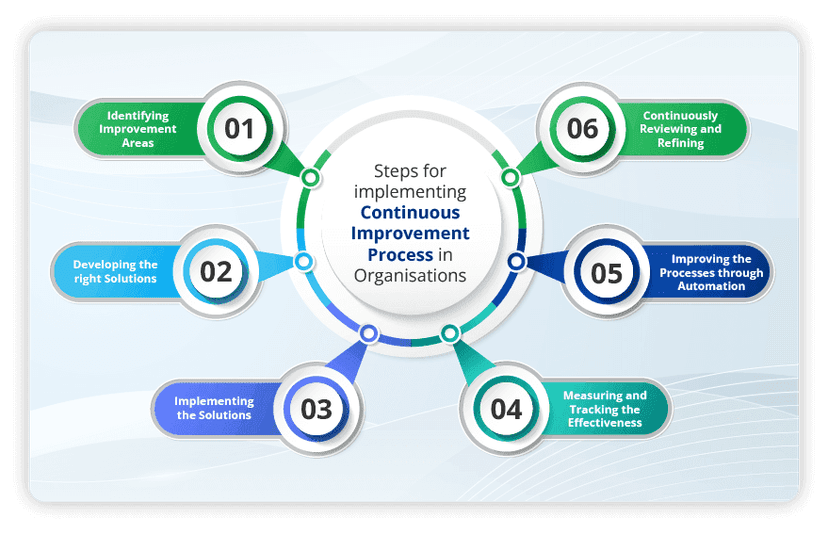
Drive continuous improvement
- Investigate recurring issues through root cause analysis
- Implement corrective actions and strengthen process controls
When supported by structured performance systems like the LTS Data Point performance management system, this framework helps industries maintain consistent process reliability, stronger accountability, and sustained error prevention across operations.
Poka-Yoke proves that preventing errors does not always require complex technology – often, simple design improvements can eliminate costly mistakes before they occur. By embedding mistake-proofing into processes, organisations reduce defects, strengthen process reliability, and build quality directly into daily operations. When combined with structured performance management and continuous improvement practices, Poka-Yoke helps manufacturing teams sustain operational discipline and achieve more consistent, reliable production.
Have questions about implementing structured performance management with LTS Data Point?
FAQs
1. What types of errors can Poka-Yoke prevent?
Poka-Yoke can prevent many common operational mistakes, including missing components in assembly, incorrect part orientation, skipped process steps, wrong material usage, and incorrect machine settings. These errors are typically caused by human oversight, process complexity, or unclear workflows.
2. Is Poka-Yoke only used in manufacturing?
No. While Poka-Yoke is widely used in manufacturing, the concept can also be applied in healthcare processes, software design, service operations, and administrative workflows. Any environments where human errors can occur repeatedly can benefit from mistake-proofing mechanisms.
3. What is the difference between Poka-Yoke and quality inspection?
Quality inspection detects defects after they occur, whereas Poka-Yoke prevents defects from occurring in the first place.
Inspection focuses on identifying problems, while Poka-Yoke focuses on designing processes that eliminate the possibility of errors.
4. Can Poka-Yoke be implemented without automation?
Yes. Many Poka-Yoke solutions are intentionally simple and low-cost. Some of the examples include mechanical guides, colour coding, shape-based part designs, and visual indicators. These solutions often require minimal technology but deliver significant quality improvements.
5. What industries benefit the most from Poka-Yoke?
Poka-Yoke is especially valuable in industries where process errors can lead to defects, safety risks, or regulatory issues, such as automotive manufacturing, pharmaceutical production, electronics assembly, food and beverage manufacturing, and aerospace manufacturing. These industries rely heavily on process reliability and error prevention.
6. What are the common challenges when implementing Poka-Yoke?
Some industries face challenges such as identifying the root cause of recurring errors, designing practical mistake-proofing mechanisms, integrating error prevention into existing processes, and ensuring operators adopt the new system. Successful implementation usually requires process analysis, cross-team collaboration, and continuous improvement.
7. How does Poka-Yoke support continuous improvement initiatives?
Poka-Yoke supports continuous improvement by eliminating recurring process errors and stabilising operations. Once errors are prevented, teams can focus on improving efficiency, productivity, and process optimisation instead of repeatedly fixing the same defects.