Strategic Leadership Decision-Making Process Explained: What Separates Decisive Manufacturing Leaders from the Rest
Last updated on : May 4, 2026
A majority of manufacturing leaders believe the strategic leadership decision-making process is something they have under control.
But a peek behind the scenes will show scattered spreadsheets, disconnected systems, and delayed data updating forcing them to make decisions based on a hunch.
If this is you, then you need to upgrade your system.
Strategic decision-making is not intuition. It includes choices made from facts that mould the long-term direction of your industry. Decisions made on gut-feeling cost more than most leaders realise – and the gap only widens as long as the system stays the same.
See how LTS Data Point gives manufacturing leaders the real-time KPI visibility they need to make faster, more confident decisions
What is strategic leadership decision-making process?
Strategic decisions don’t always come easy as normal day-to-day decisions. Strategic decisions shape the future of the company – what it does, where it goes, and what it should achieve.
Before making a choice, every strategic decision-maker must know the various types of strategic decision-making:
- Big bets – The rare, heavy calls that set the company’s path for years – such as plant expansions, major investment decisions, or structural changes.
- Cross-cutting decisions – The frequent, organisation-wide calls that touch multiple teams at once. Quality escalations, delivery priority shifts, capacity reallocation across lines.
- Delegated decisions – The high-volume daily calls that sit with the owner. Shift scheduling, output targets, team-level problem responses.
Some leaders assume any information is good enough to decide. It is not.
In the manufacturing sector, all the three types of decisions land on the same leadership team at the same time.
For example, a plant leader may face a capacity big bet, a cross-functional quality call, and twenty delegated shift decisions all in the same week. Only 20% of organisations excel at handling these altogether. The other 80% end up making expensive decisions at the wrong speed, on the wrong information, with no structured decision-making process behind them.
Why most manufacturing leaders are still deciding blind
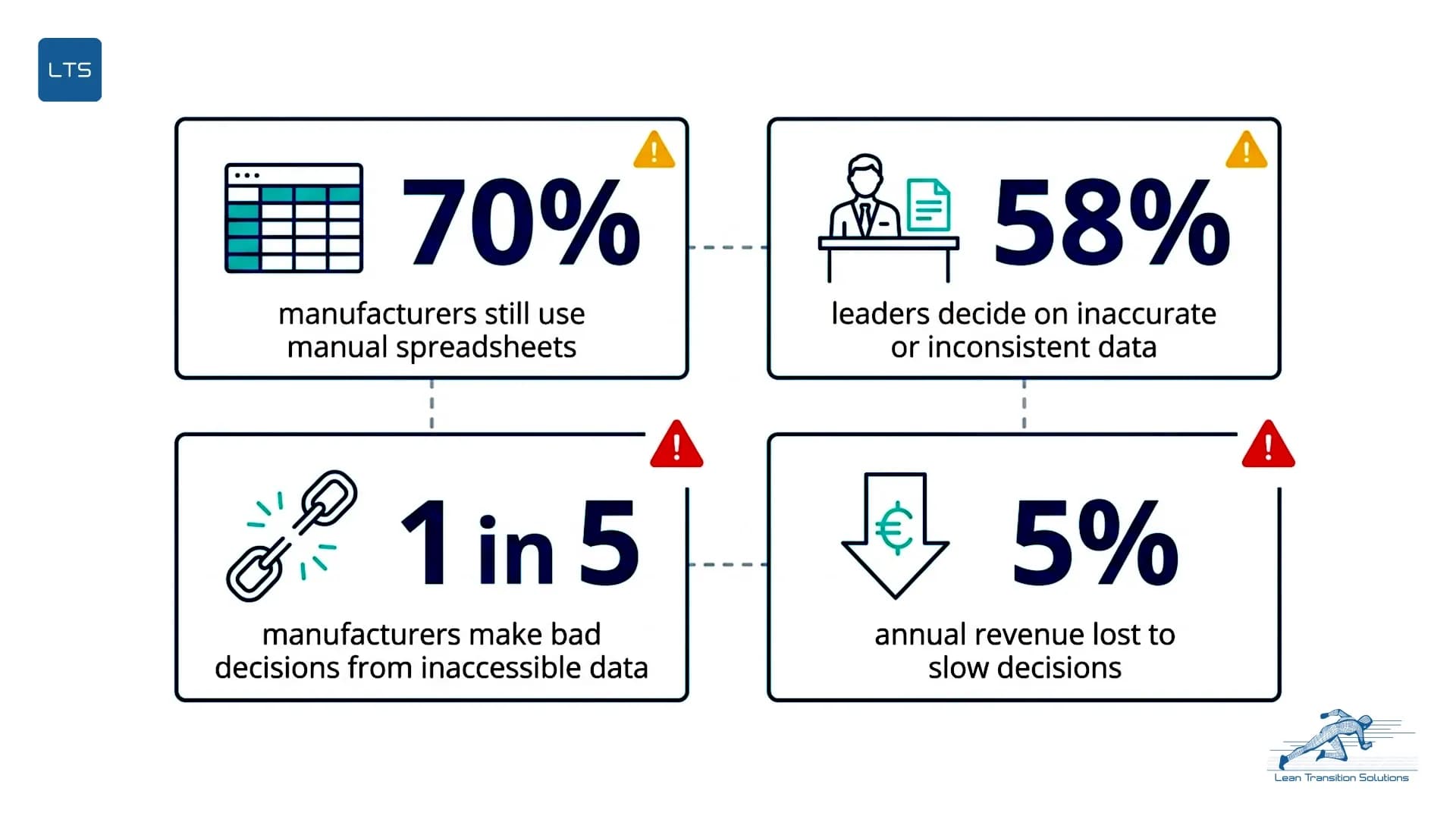
The decision-making problem in most manufacturing operations is not a lack of data – it is the unavailability of the right data, at the right time, in the right hands. The gap is structural.
- 70% of manufacturers still enter and analyse data manually through spreadsheets – even as data volumes double
- 58% of business leaders admit most major decisions are made on inaccurate or inconsistent data
- 1 in 5 manufacturers report making bad decisions regularly because of data they could not access or trust
- Slow decisions cost organisations up to 5% of annual revenue in missed opportunities and stalled execution
Let's look at a real-world example:
An operations director at a food manufacturing industry reviews weekly summary every Monday. When the shift-level quality deviations were spotted, it was four days too late to prevent any sort of non-conformance. The batch was already shipped.
Here, it was not the absence of data that created problems, but the unavailability of data at the right time, in the right place. The cost compounds fast.
This is where data-driven decision-making stops being a strategy and starts being a necessity.
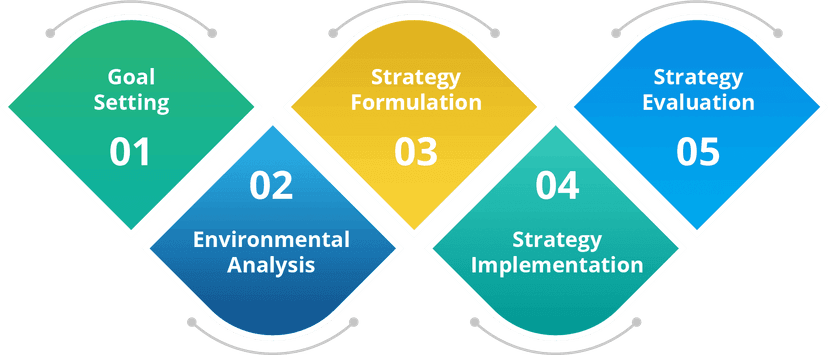
The frameworks that structure strategic leadership decision-making process
Frameworks do not make decisions for leaders – they make sure leaders are asking the right questions at the right time.
Frameworks give leaders a repeatable structure, so they are not starting from scratch every time a problem surface. Without one, every decision relies entirely on whoever is in the room and what they remember.
That is a fragile system.
Some of the main strategy frameworks include:
- Balanced scorecard – Structures decisions across four perspectives – Financial, Customer, Internal processes, and Learning and growth – so no single dimension dominates. A cost decision gets weighed against customer impact, internal process health, long-term capability, not just the finance line.
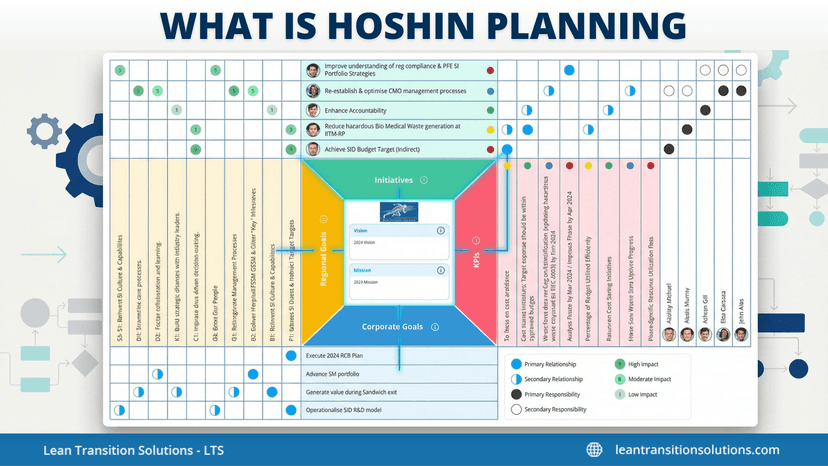
- Hoshin Kanri X-Matrix – Takes the leadership decision and deploys it through the organisation via structured X-Matrix planning, so the shopfloor team is working to the same priority the plant director set in the boardroom.
- Other strategy frameworks – Give leaders a repeatable process for asking the right questions before committing. The 80% who struggle with decision quality are often those without any structured process at all.
Consider a general manager at an automotive components plant who uses the Balanced Scorecard in monthly strategic reviews. When a cost overrun appears on the finance line, it connects immediately to a delivery KPI trend that had been visible three weeks earlier. The framework surfaced the link. Without it, the review would have addressed the cost and missed the delivery root cause entirely.
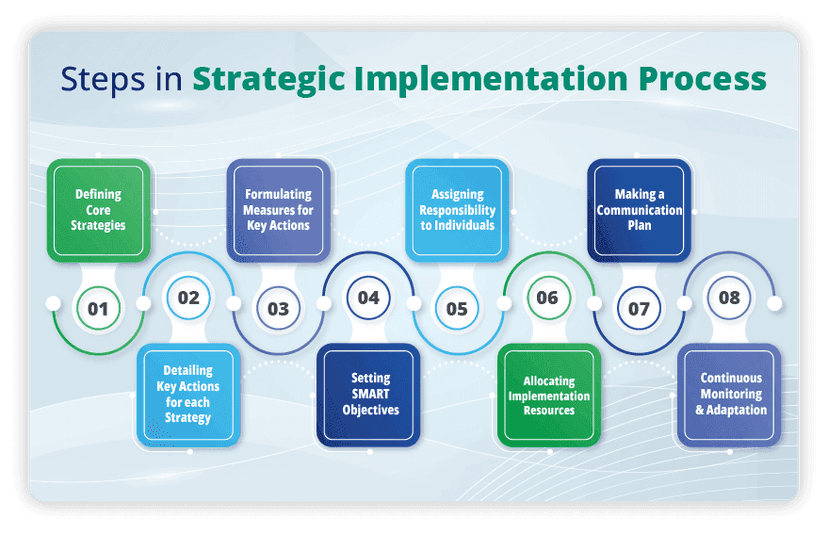
Simply implementing the right strategy framework won’t immediately result in strategic decision-making. A framework only gives structure to the decisions. The decision delivers results when the whole organisation moves in the same direction. This is often where the line between strategic and tactical work gets lost. A leader makes a strategic call, but without a system to carry it downward, it never becomes the tactical action teams actually execute on the floor."
Why Decisions Stay at the Top and Never Reach the Floor
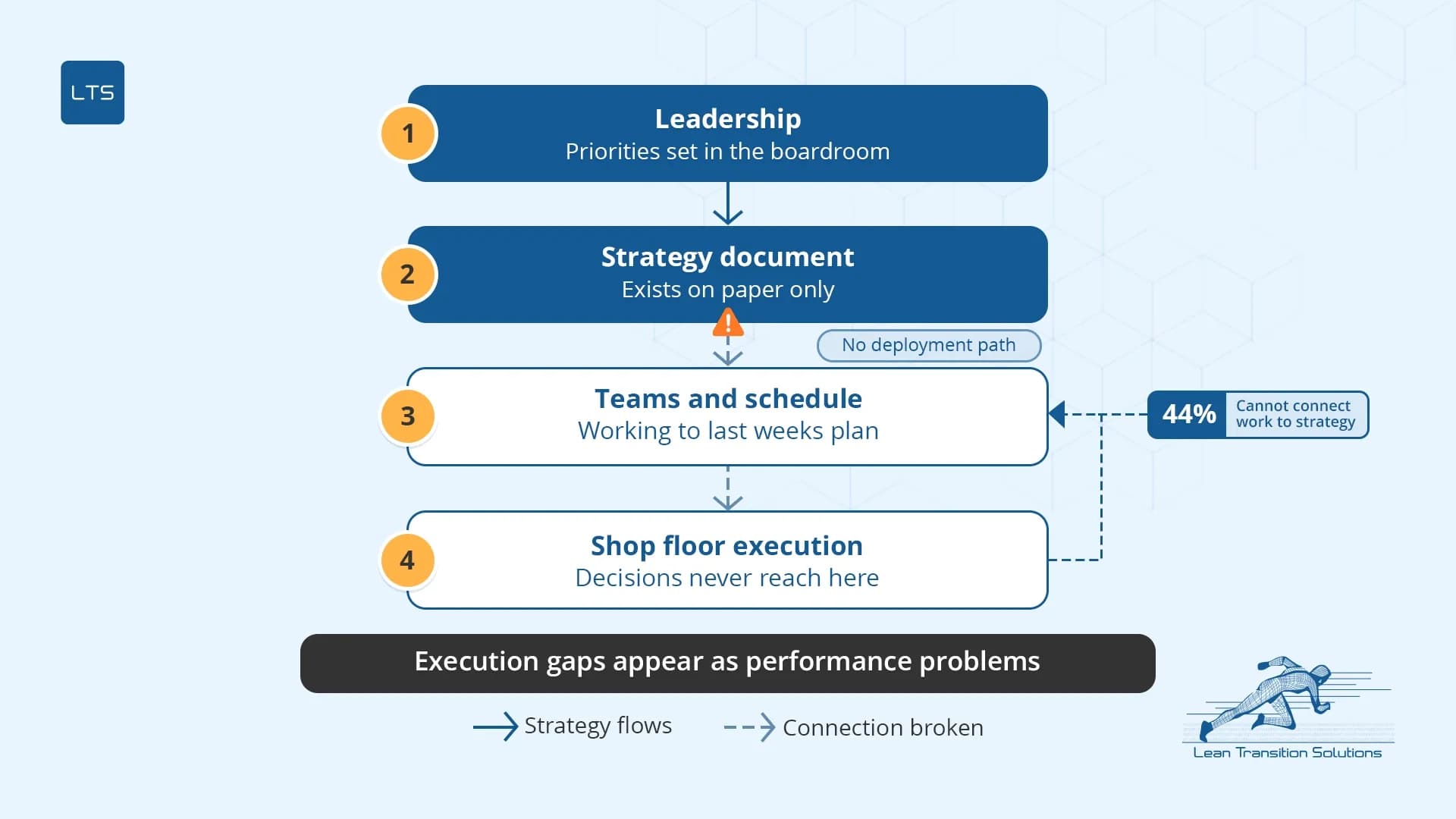
A good decision made in isolation is just an opinion. It only becomes strategy when the whole organisation can see it and act on it.
If it were that simple, every organisation would’ve mastered it by now, right?
There are several factors that might seem harmless in the moment but could create severe damage if not solved. Some of the common alignment failures seen in most organisations include:
- Leadership priorities set in the boardroom remain in the boardroom. They never reach the shopfloor in a form teams can act on.
- Strategy exists on paper, but teams continue working to last week’s schedule. This is because there is no structured deployment path that they could follow.
- 44% of employees struggle to connect their daily work to their organisation’s strategic goals as per recent research.
- Without cascading strategy, decisions remain at the top and execution gaps appear as performance problems.
A site director at a pharmaceutical packaging plant decides to shift capacity priorities following a major customer order. The decision is communicated in a strategy meeting. Two weeks later the shopfloor team is still running the previous week’s schedule. The decision never made it past middle management in a form anyone could act on.
The problem was not the decision. It was the absence of a system to carry it downward.
It is evident from the example that strategic alignment does not happen through communication alone. It demands a system. One that makes leadership decisions visible, measurable, and traceable at every tier.
How LTS Data Point supports strategic leadership decision-making process
Most platforms tell leaders what went wrong. LTS Data Point tells them what to do about it. It structures what happens next – embedding the decision-making process into every tier of the operation.
LTS Data Point features that make strategic decision-making process easier for leadership:
- Real-time KPI dashboards with RAG status and trend arrows provide leaders with a live view of performance – not last week’s summary.
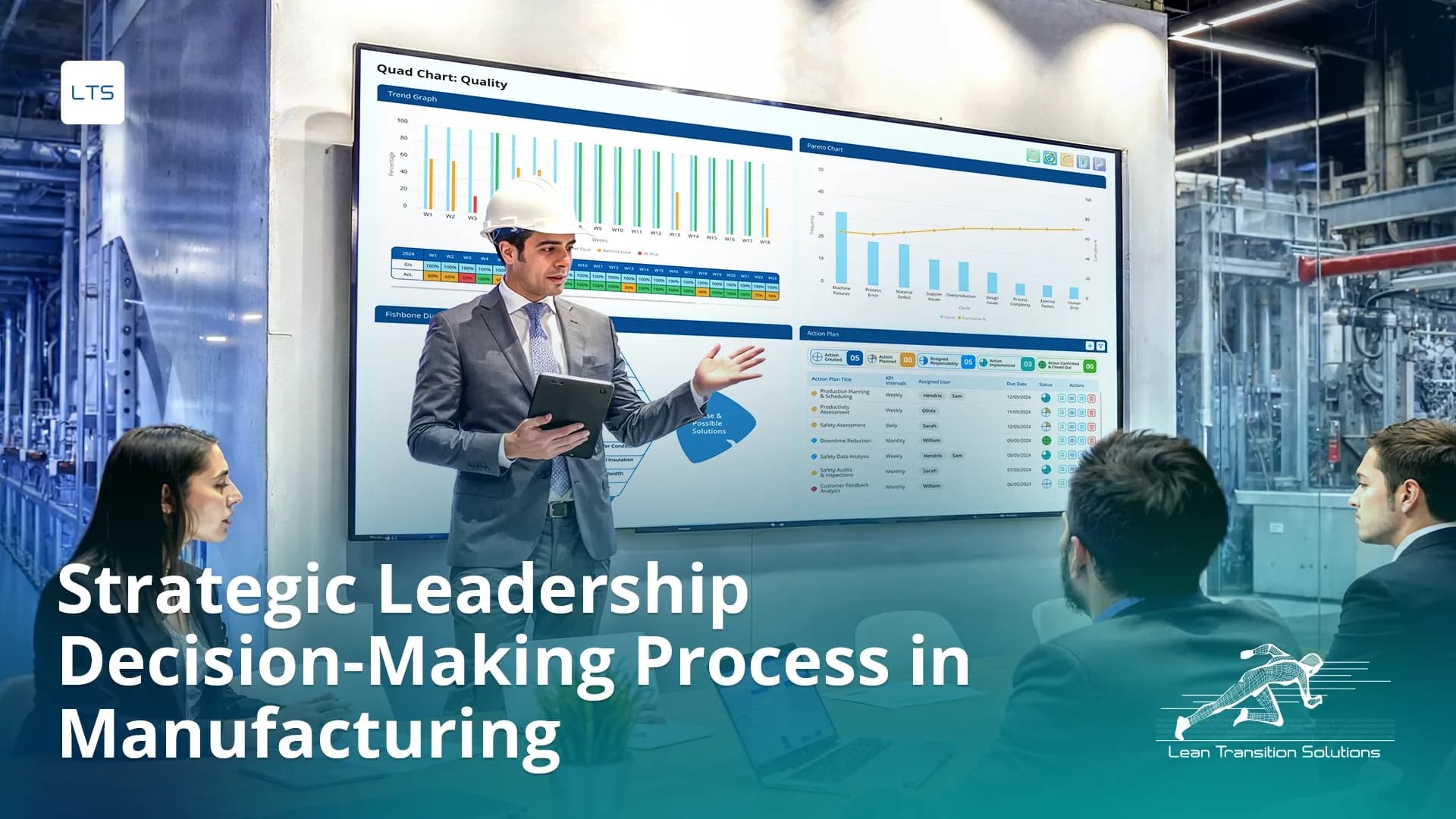
- Quad chart analysis links KPI variance directly to root causes and action plans. This helps leaders to close the gap between seeing a problem and deciding what to do about it.
- Tiered review structures (Tier 1, Tier 2, Tier 3) embed the decision-making process into daily, weekly, and monthly management rhythms. This makes sure that every decision made cascades downward by design.
- Hoshin Kanri X-Matrix aligns leadership-level strategic decisions to team-level goals across every tier of the organisation.
- CAPA management connects every decision to a corrective action with a named owner, deadline, and effectiveness review.
LTS Data Point does not just track KPIs. It structures the environment in which manufacturing leaders make decisions – making the process repeatable, visible, and accountable at every level.
Decisive leadership is never about instinct. It is always about having the right system behind every decision.
Framework gives structure to the thinking process. Data removes the guesswork. Alignment carries the decision downward.
When all three work together, strategy stops living on slides and starts showing up on the shopfloor.
Your decisions are only as good as the system behind them. Talk to an LTS Data Point expert and find out what yours is missing
FAQs
1. What is the difference between strategic and operational decision-making?
Strategic decisions shape long-term direction – where the company is going, what it prioritises, how resources are allocated. Operational decisions manage day-to-day execution within that direction – shift scheduling, output targets, quality responses. Both matter, but the mistake most leaders make is treating them the same way, with the same process and the same speed.
2. How do performance frameworks improve leadership decisions in manufacturing?
They give leaders a repeatable structure, so every decision is evaluated against the same set of perspectives, rather than relying on whoever is loudest in the room. Frameworks like the Balanced Scorecard and Hoshin Kanri make the decision logic consistent, auditable, and transferrable so the process does not collapse.
3. What role does real-time data play in the strategic decision-making process?
Real-time data closes the gap between what is actually happening on the shopfloor and what leaders believe is happening. Without it, decisions are built on summaries that are already days out of date by the time they reach the leadership table. The quality of the decision is only ever as good as the quality of the data behind it.
4. How does strategic alignment affect decision quality at the senior level?
Poor alignment means decisions made at the top never reach the teams responsible for executing them. When leaders operate in silos, the same problems recur because no one is working to the same priority. Alignment turns a leadership decision into a direction the whole organisation can follow – from the boardroom to the shopfloor.

Amer Jumah, Senior Lean Consultant
Amer is co-founder of Agile Solutions and a certified Six Sigma Black Belt, Lean Black Belt, and PMP, with over nine years of experience implementing Lean, Six Sigma, and Agile principles across diverse industries. He specialises in process optimisation, waste elimination, and delivering cost savings through organisational change.