The QRQC Process: A Practical Guide for Plant and Quality Managers
A Practical Guide to the QRQC Process: Understand the three-tier escalation system, adopt a Gemba-first approach to problem-solving, and discover why most QRQC implementations lose momentum after the first month.
Contents
- What Is QRQC?
- Why Quick Response Quality Control Exists; The Problem It Was Built to Solve
- How Does the QRQC Process Work; The Step-by-Step process
- How Do Most Teams Run QRQC Today?
- How the QRQC Process Can Be Done with One System
- QRQC vs 8D vs A3: What's the Difference?
- When Should You Not Use QRQC?
- QRQC Tools Inside LTS Data Point
- How to Roll Out QRQC on Your Shop Floor
Last updated on : September 30, 2026
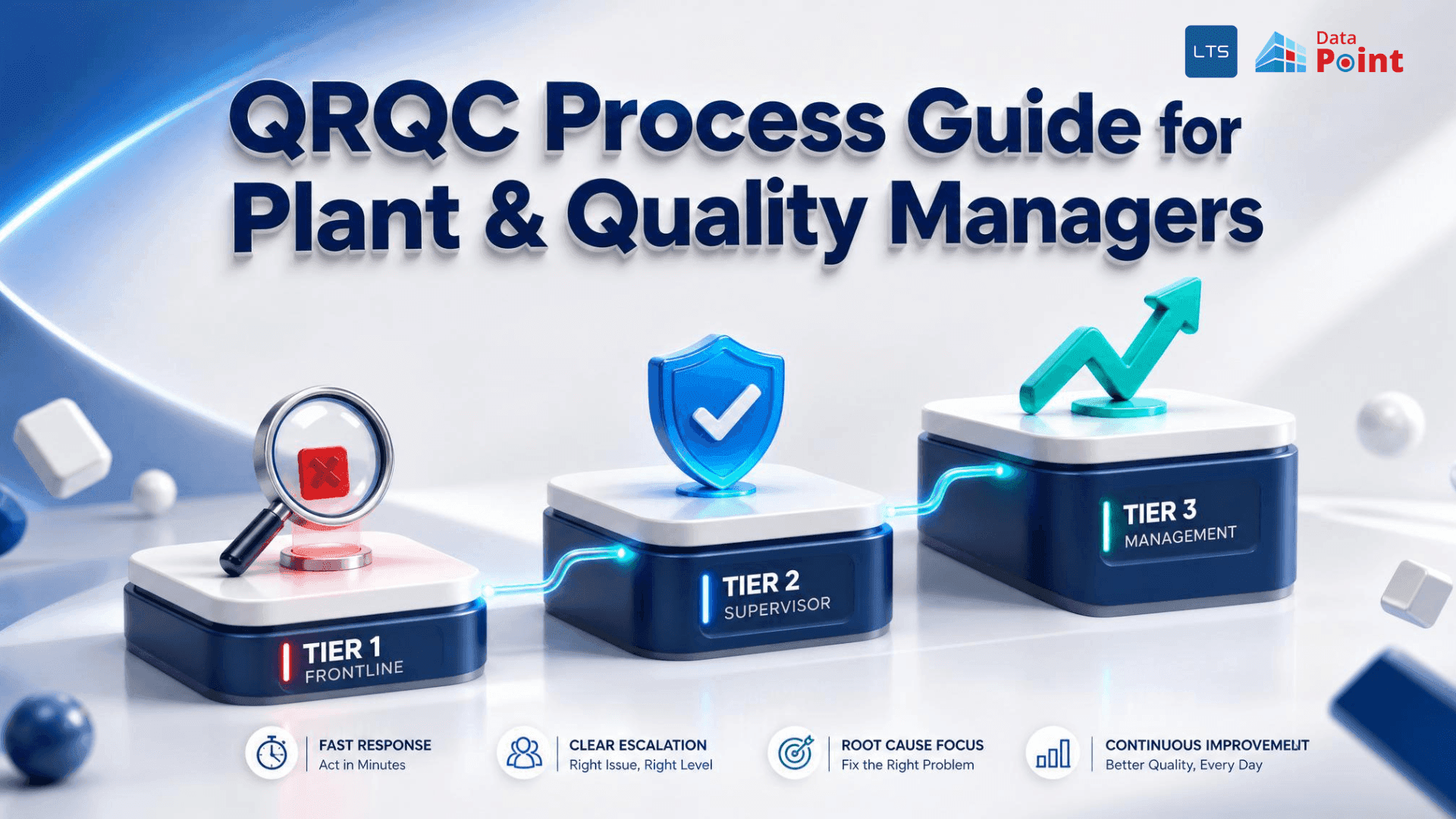
QRQC (Quick Response Quality Control) is a lean methodology that resolves quality defects at the point where they occur. Teams contain the defect, find its cause, fix it, and verify the fix, escalating through Tier 1, Tier 2, and Tier 3 meetings when needed. It prioritises speed and shop-floor ownership over delayed, office-based investigation.
What Is QRQC?
Every plant manager knows the scenario: a defect ships, the customer calls, someone opens a spreadsheet, and three weeks later a root cause report lands in an inbox nobody reads. QRQC was built to break that cycle. Even when QRQC works, the countermeasure that comes out of it still needs a home - typically a formal KPI action plan with an owner and a deadline, so it doesn't quietly become that same unread inbox report three weeks later.
- Developed by Nissan in the 1990s, drawing on Total Quality Management and Kaizen principles.
- Adopted and adapted by Valeo, Faurecia (as QRCI), and Groupe Safran across the automotive and aerospace supply chain.
- Built on the Three Actuals (San Gen Shugi): go to the real place, look at the real part, check the real fact, rather than debating it in a conference room.
In UK automotive plants, from Nissan Sunderland to Jaguar Land Rover's Midlands supply base, QRQC is often written into supplier quality agreements. In the US, Detroit's OEMs and their Tier 1 suppliers run near-identical versions under IATF 16949 pressure.
Why Quick Response Quality Control Exists; The Problem It Was Built to Solve
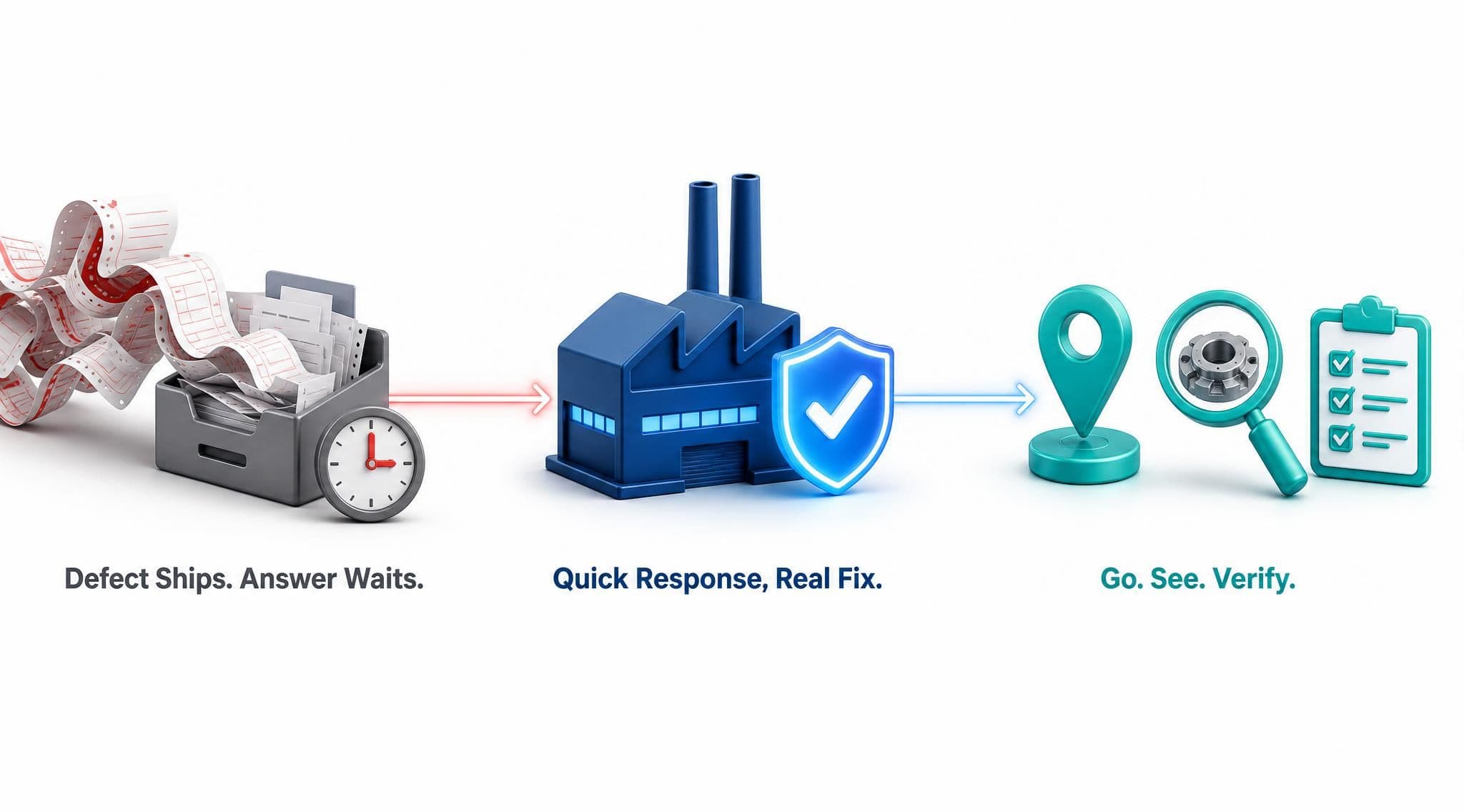
Traditional root cause analysis has a timing problem. By the time an 8D report is signed off, the line has run another shift, maybe another week, on the same fault. The defect gets contained: sorted, quarantined, blocked at final inspection. Then everyone moves on.
Containment isn't resolution. It's a pause button. QRQC's entire premise is that the person closest to the defect, the operator, the team leader, the shift quality technician, should own the first response. Not an engineer scheduling a meeting for next Thursday.
The real problem QRQC solves isn't “how do we analyse root cause.” It's “how do we stop the analysis arriving too late to matter.” When a deeper root-cause pass is needed within that loop, teams often reach for a fishbone diagram to map contributing factors before landing on a countermeasure. Once that countermeasure is identified, it still needs an owner and a deadline to actually close, which is where a formal CAPA process comes in, turning the countermeasure into a tracked action rather than a good intention.
How Does the QRQC Process Work; The Step-by-Step process
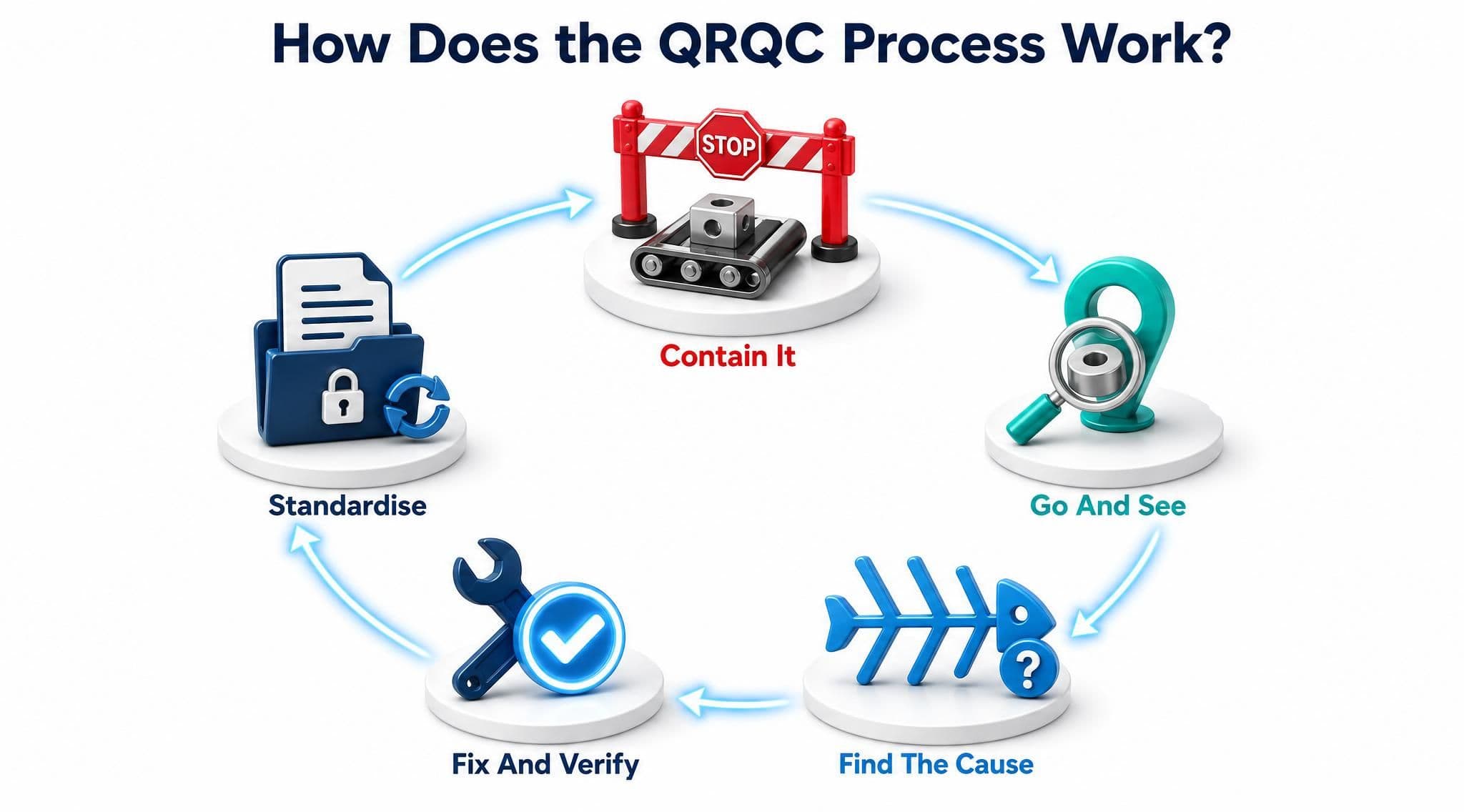
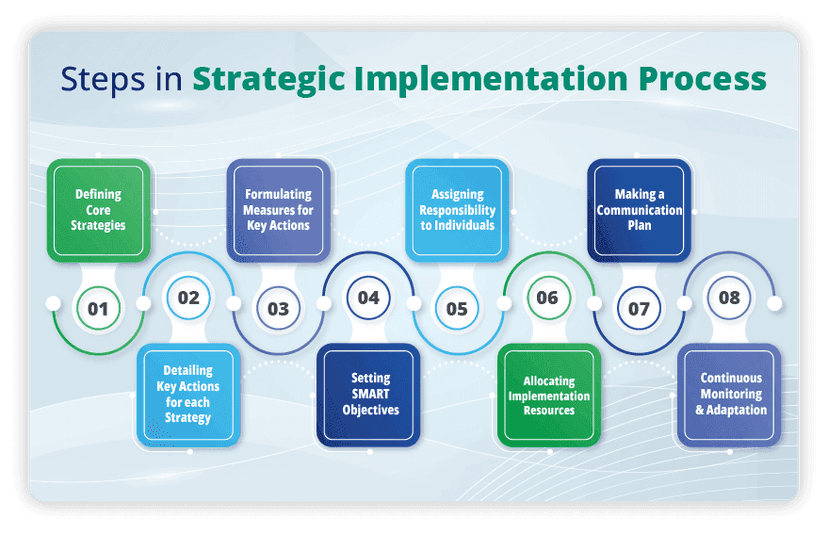
The QRQC process runs on a short, repeatable loop:
- Contain it.
Stop the defect moving downstream, immediately, at the point of occurrence.
- Go and see.
Apply the Three Actuals: real place, real part, real fact, before assuming a cause.
- Find the cause fast.
A 5 Whys or fishbone pass kept shallow enough to move quickly.
- Fix it and verify.
Apply the countermeasure, then confirm it worked on the line, not on paper.
- Standardise.
Fold the fix into work instructions so it doesn't resurface next quarter.
Some plants document this using a 3C or 4C chart, Concern, Cause, Countermeasure, Check, linked to a 4C problem-solving framework so the paperwork doesn't drift from the practice. It's a documentation format, not a different method.
QRQC Tier 1, Tier 2, and Tier 3 Meetings
- Tier 1: the problem stays at team level for 24 to 48 hours.
- Tier 2: unresolved issues escalate to plant leadership, tracked in the same Tier 1, Tier 2, and Tier 3 meetings cadence.
- Tier 3: corporate quality gets involved if the issue touches multiple sites or a customer relationship.
Escalation only works if the data travels with the problem. This is exactly where most teams find things fall apart.
How Do Most Teams Run QRQC Today?
Most QRQC systems still run on paper trackers, whiteboards, or a spreadsheet updated once a shift. That works, until a defect crosses a tier boundary.
- The Tier 1 board doesn't talk to the Tier 2 report. Someone retypes the concern into a new template.
- Half the detail, and most of the urgency, gets lost in translation between tiers.
- Daily meetings become a status readout, not a working session: "still open, still open, closed" instead of structured problem-solving. Teams walk into a Gemba walk with printouts instead of live data.
How the QRQC Process Can Be Done with One System
This is what modern manufacturers and lean leaders do: run detection, escalation, and countermeasure tracking on a single connected platform, instead of stitching together whiteboards, spreadsheets, and standalone meeting tools.
LTS Data Point: One System for the Full QRQC Loop
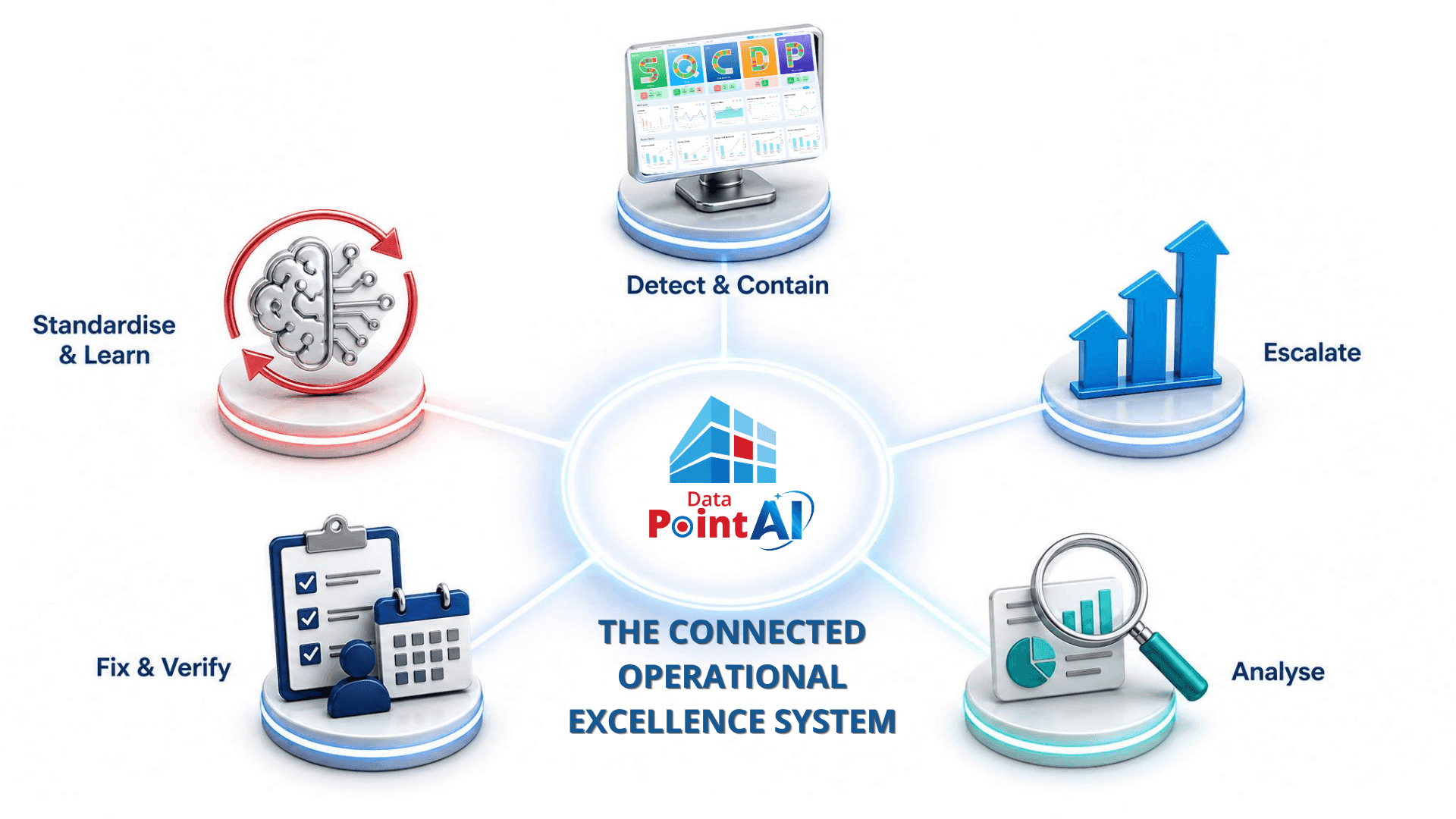
- Detect & Contain → concerns are logged in real time from the shop floor, not written up after the shift ends.
- Escalate → Tier 1, Tier 2, and Tier 3 meetings run on one connected system, so nothing is lost moving up the hierarchy.
- Analyse → Gemba walk data and SQCDP metrics sit in the same view as the open concern, no separate lookup required.
- Fix & Verify → CAPA and action plan tracking give every countermeasure an owner, a deadline, and a visible check step.
- Standardise & Learn → Data Point AI Intelligence, an AI that understands your full lean and operational context, not a generic assistant, flags the same defect resurfacing across shifts or sites before it becomes chronic.
The method doesn't change. What changes is whether it survives contact with a Monday morning shift change.
Book a demo and see the full QRQC loop running on one connected system.
QRQC vs 8D vs A3: What's the Difference?
QRQC, 8D, and A3 all aim at the same target: stop the defect, find the cause, prevent recurrence. They differ in speed and ownership, not rigour.
Root cause tools like the fishbone diagram and 5 Whys root cause analysis slot inside any of these three. 8D problem-solving and A3 problem-solving give you more room to think; QRQC just insists you move fast on the floor.
If your defect needs a formal customer response, reach for 8D. If it's a recurring shop-floor issue with an obvious owner, use QRQC. If it sits between the two, A3 gives you room to think without losing the day.
See how connected daily management keeps every QRQC loop live, not logged.
When Should You Not Use QRQC?
QRQC isn't built for chronic, systemic problems with no single point of occurrence:
- Variation across multiple plants with no common cause.
- A supplier quality issue spanning a dozen part numbers.
- A design flaw that surfaces months after launch.
Those need DMAIC or a formal Six Sigma project: more data, more time, a dedicated team. Ask QRQC to solve something deep and slow, and it generates more open tickets, not fewer.
QRQC Tools Inside LTS Data Point
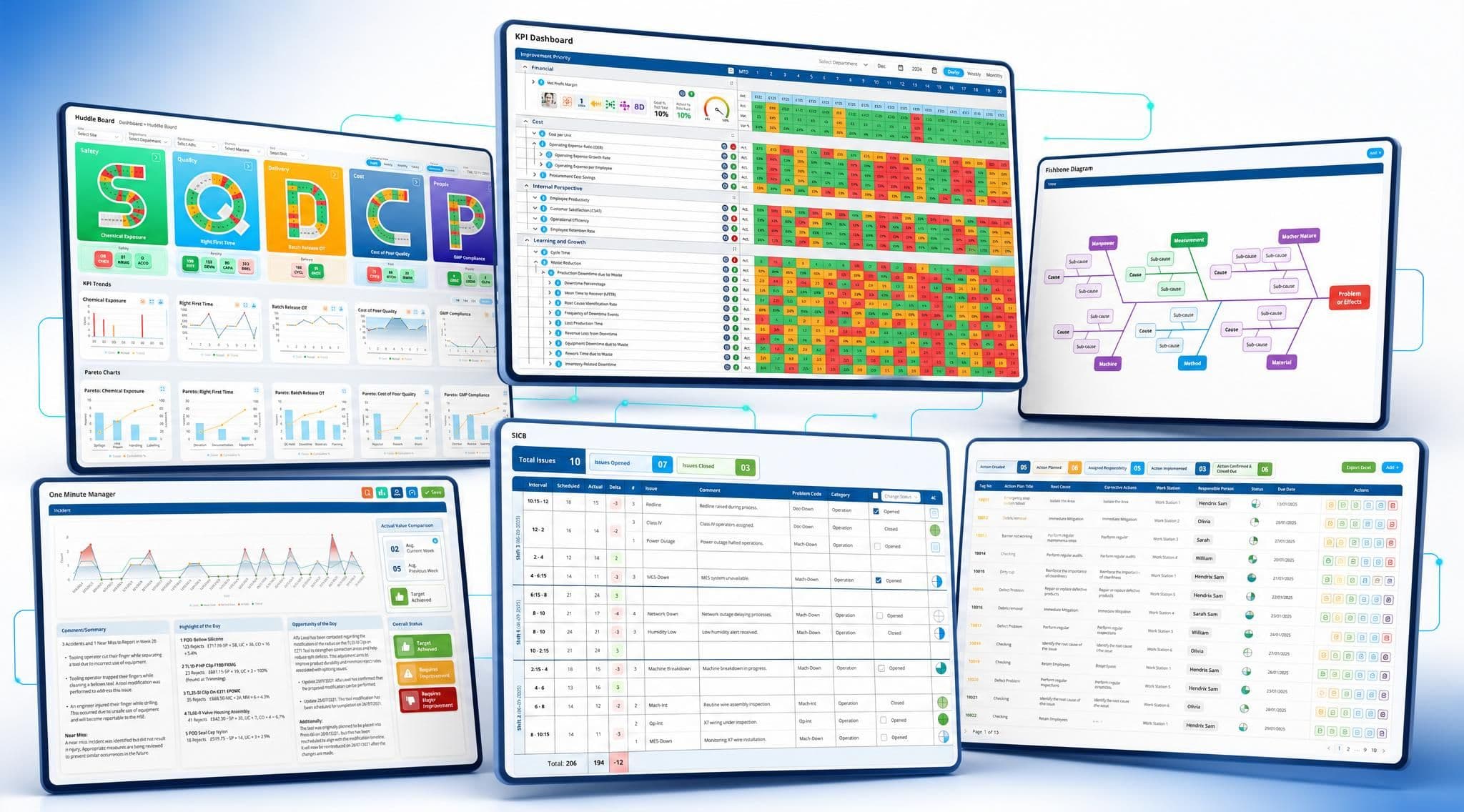
Everything above runs on the following Data Point capabilities, connected in one platform:
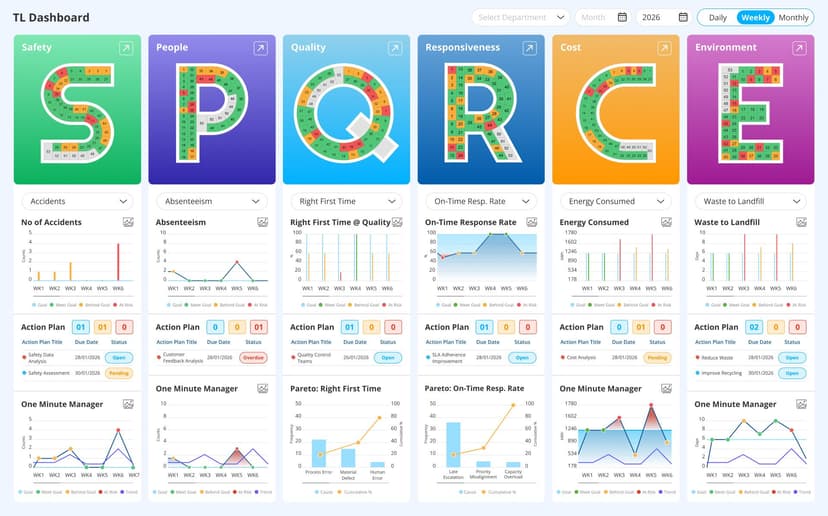
- SQCDP Board: daily, tier-based visual management for safety, quality, cost, delivery, and people.
- Tier 1, Tier 2, Tier 3 Meeting Management: structured escalation cadence with full history retained.
- Gemba Board or Digital Gemba tool: go-and-see data capture, built on the Three Actuals principle.
- 4C / 3C Problem-Solving Charts: Concern, Cause, Countermeasure, Check documentation, linked to live data.
- CAPA Tracking: corrective and preventive action tracking with owners and deadlines.
- Fishbone Diagram & 5 Whys Tools: built-in root cause analysis.
- Daily Capacity Management Board: ties QRQC activity into production planning.
- Data Point AI Intelligence: flags recurring defects across shifts and sites before they become chronic.
How to Roll Out QRQC on Your Shop Floor
- Start small
one line, one shift, one visible board. Train team leaders on the loop before software enters the picture.
- Build the escalation rule before the meeting cadence
what triggers a Tier 2 conversation, and who owns that decision.
- Tie QRQC into what's already running the floor
your daily capacity management board, your SQCDP metrics, your Gemba walk schedule.
- Expect resistance in month one
Most rollouts stall because the tracking can't keep pace with how fast the method is supposed to move, not because the method fails.
This discipline matters even more for cross-border operations. Mexican automotive suppliers feeding just-in-time lines into US assembly plants have far less buffer to absorb a slow response than a single-site operation does.

Geandra Queiroz, Operations Management Consultant
Geandra is an Operations Management Consultant at Lean Transition Solutions, specialising in Lean philosophy, Lean Six Sigma, and strategic planning across manufacturing and healthcare. She is currently completing her PhD in Industrial Engineering at the Federal University of São Carlos, researching the integration of Operations Strategy, Lean, and Green Manufacturing.