Corporate Governance Software for Strategic Oversight and Board-Level Control
LTS Data Point corporate governance software unifies corporate operations, risk management, compliance, and performance in one secure, cloud-based intelligent platform. Tailor your strategies to your specific leadership needs with real-time insights and strategic execution.
A Connected Framework for Boards and Enterprise Leadership
LTS Data Point corporate governance software unifies corporate operations, risk management, compliance, and performance in one secure, cloud-based intelligent platform. Tailor your strategies to your specific leadership needs with real-time insights and strategic execution.
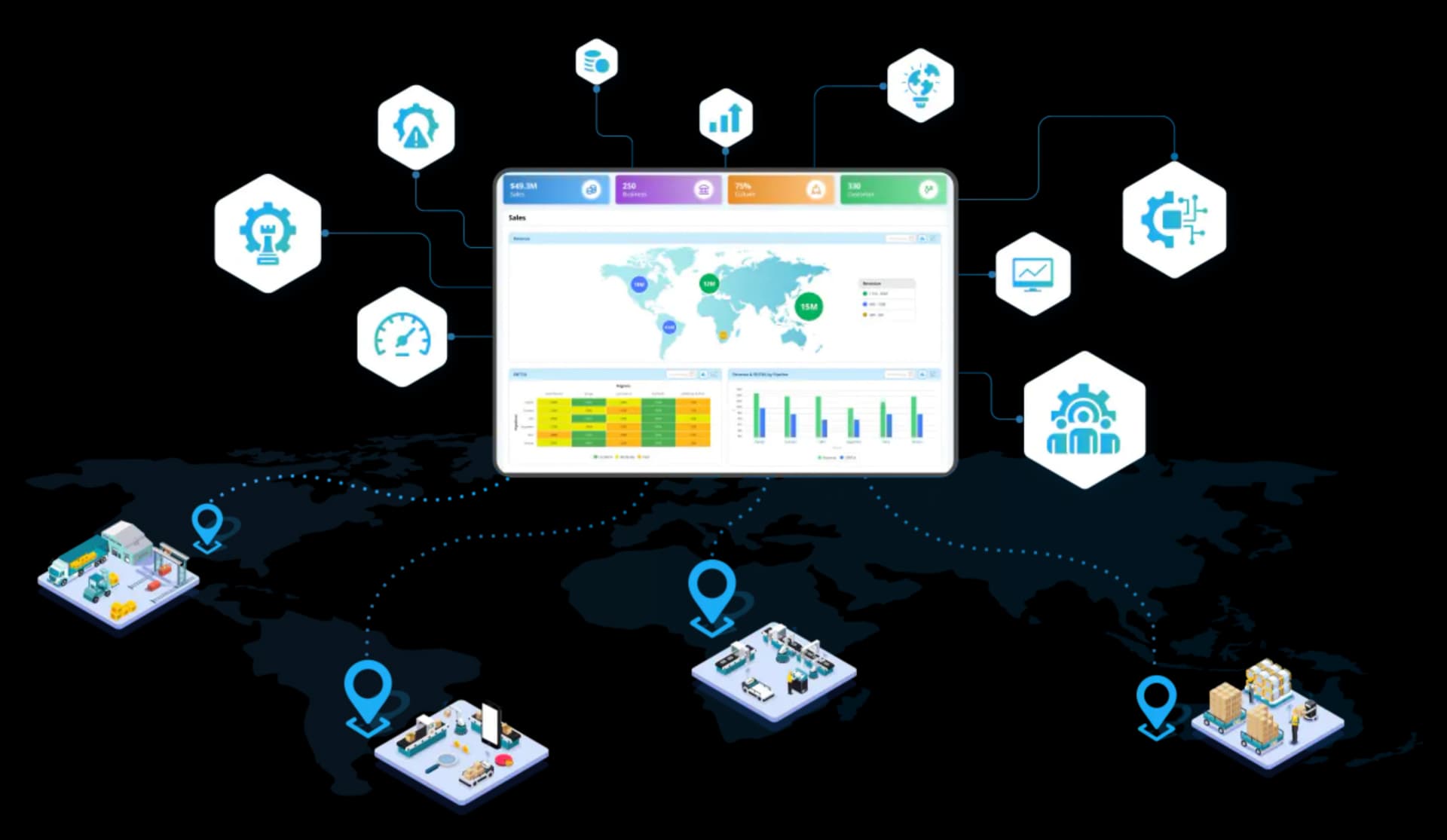
End-to-End Governance Management
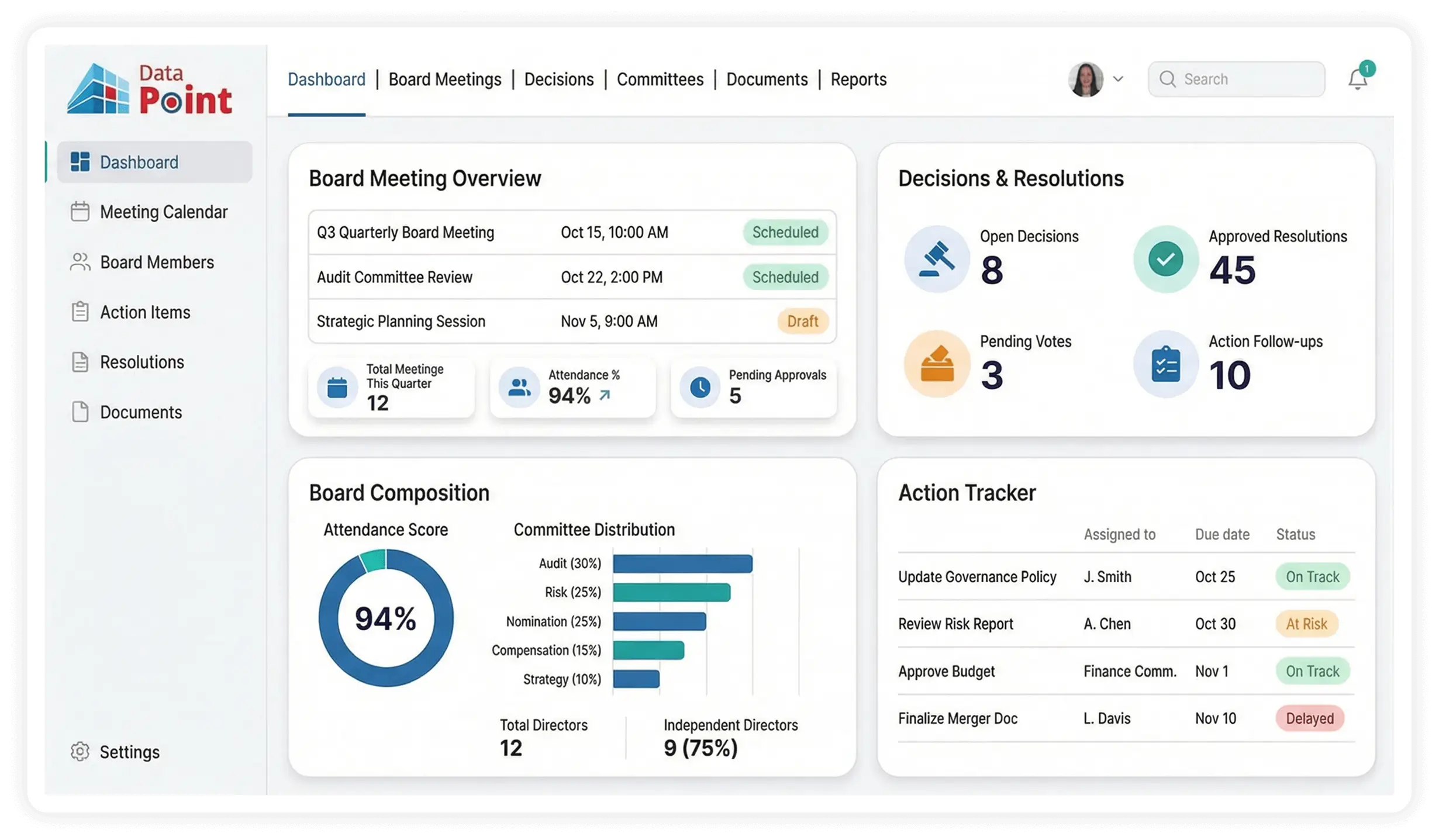
Board Management
Integrates board operations, organisational health reporting, and compliance oversight
Strategy Tracking
Real-time KPI tracking that keeps directors and executives informed.
Performance Management
Paperless board meetings, instant updates, and secure data handling.
Enterprise Alignment
Global access for seamless collaboration across time zones.
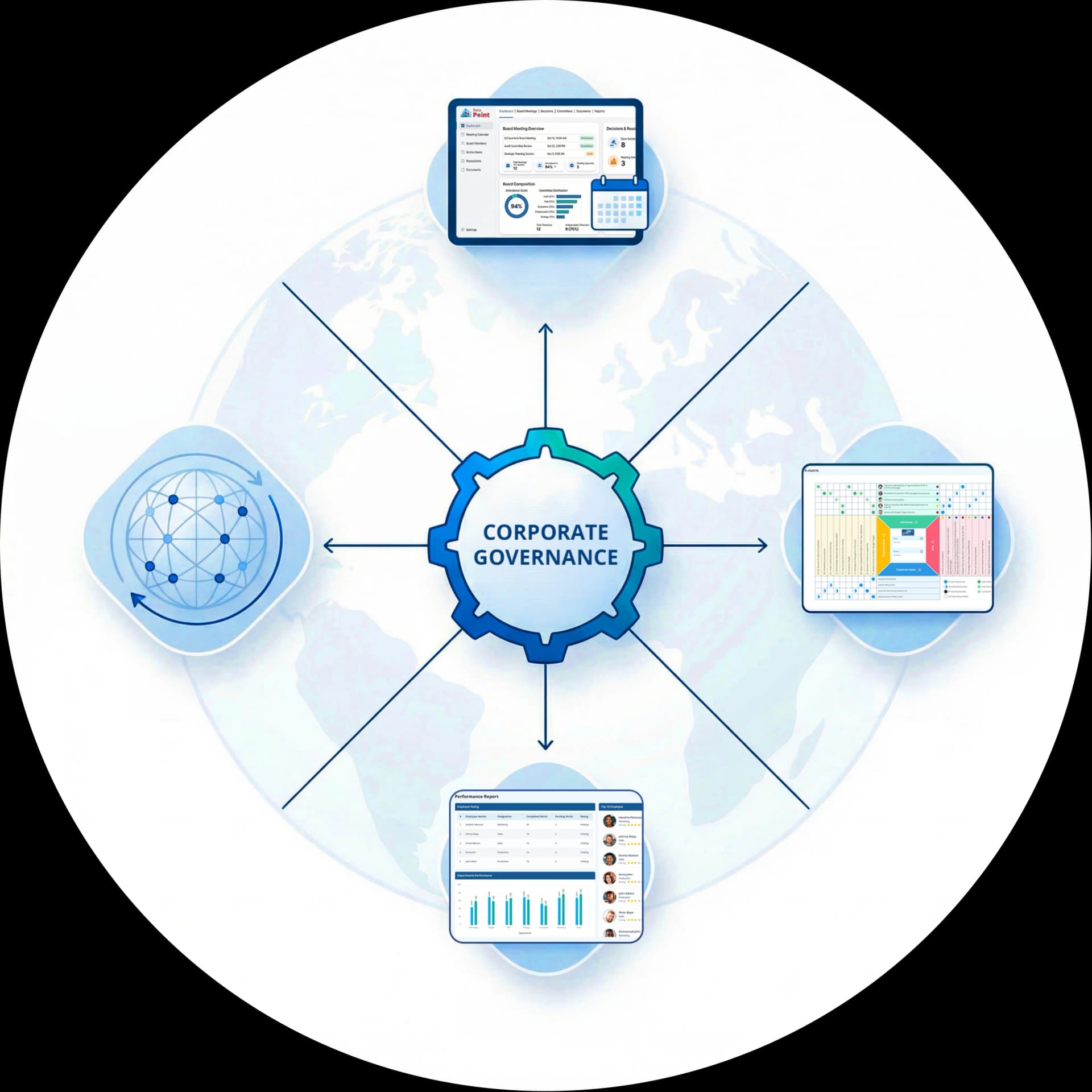
- Enterprise-wide health view across all locations
- Drill down from summary to site-level insights
- Identify and address strategic gaps instantly
- Eliminate silos and reduce manual reporting effort
Streamline your meetings and audits with one platform
Try Data Point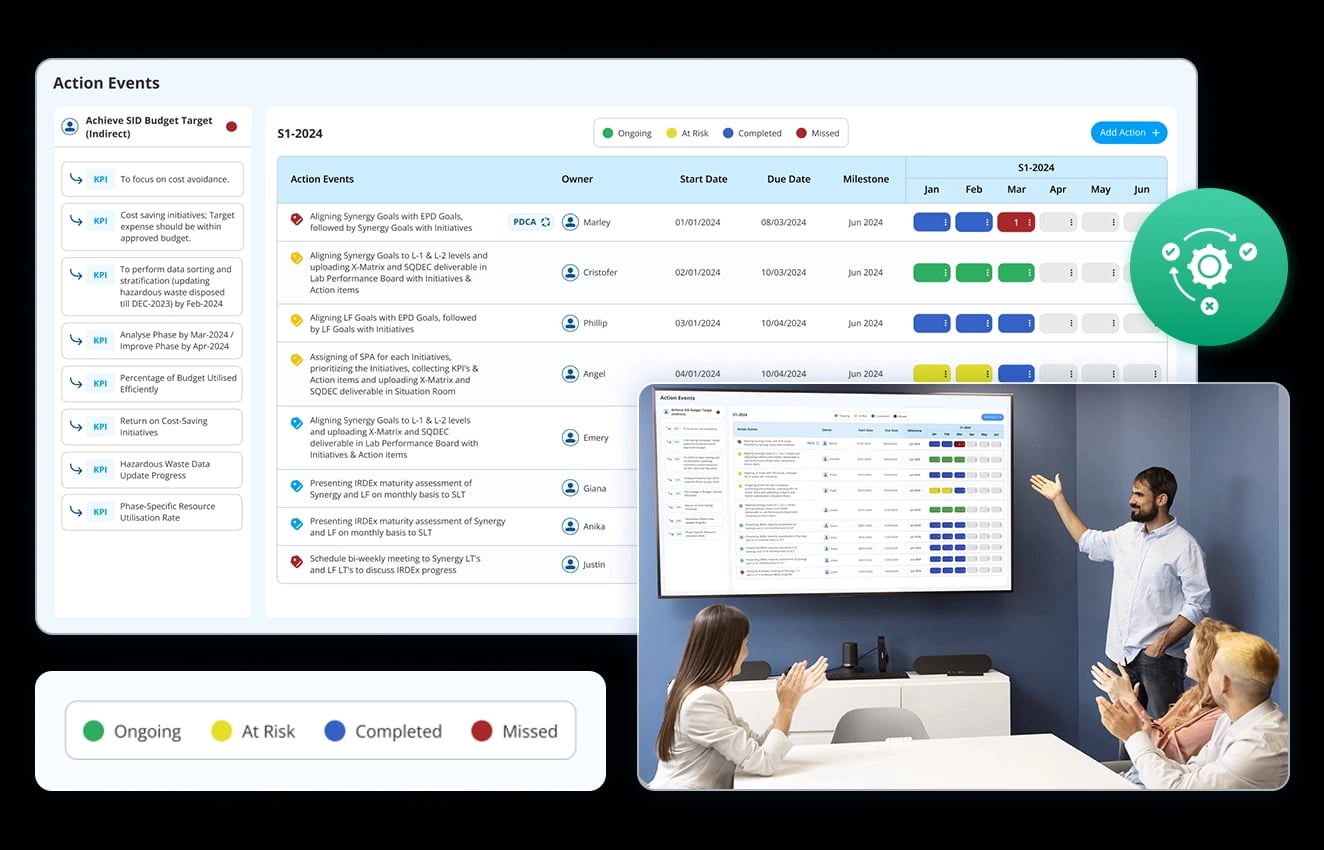
Built for Leadership That Demands Accountability
100+
System Integrations
Connect your entire tech stack - ERP, CRM, compliance tools, document management with corporate governance software. One platform, complete visibility, zero manual data transfer.
60%
Shorter Board Meetings
Real-time dashboards and automated reports of board management software makes less time on status updates, more time on strategic decisions. Directors arrive informed, not searching for context.
50+
Governance Frameworks Built-In
Balanced Scorecard, Hoshin Kanri, ESG reporting, compliance templates, risk matrices—proven methodologies within the corporate governance framework, ready to use from day one.
Key features and corporate governance software solutions

Board portal & Meeting management
Streamline meetings, materials, and communications in a secure digital workspace.
- Paperless board meeting management
- Automated minutes & e-signatures
- Role-based portals & secure messaging
Built for Leadership That Demands Accountability
"For the first time, our leadership, board, and management operate from the same strategic view. Decisions are tracked, performance is measurable, and corrective actions are structured. We moved from siloed reporting to connected governance."
Chief Executive Officer
Regional Conglomerate
"Risk monitoring and compliance tracking are used to sit in separate systems. Consolidating everything into LTS Data Point gave us structured oversight and reduced reporting preparation time significantly. Governance is now proactive, not reactive. "
Chief Risk & Compliance Officer
Financial Institution
"What impressed me most was the visibility. We can drill down from high-level strategy to operational performance without asking for multiple reports. It brings confidence to board-level decisions. "
Independent Non-Executive Director
Public Listed Company
Generic Board management platform vs Data Point Governance management software
Move from basic board portals to board of directors software grounded in corporate governance best practices. Discover the differences that position Data Point as a governance management system- not just a meeting solution.
| Feature | Generic Board Portals | Data Point corporate governance software |
|---|---|---|
| Data Sync | Manual entry | Real-time automation |
| Reporting | Monthly PDFs | On-demand live boards |
| Security | Email/Cloud storage | End-to-end encryption |
| Integration | Disconnected silos | 100+ API connectors |
| Action Plans | Manual follow-ups | Immediate action plan for failed KPIs |
| Strategic Control | Static status reports | Real-time oversight of all plans |
| Issue Response | Reactive | Proactive alerts + corrective workflows |
Seamless Implementation
Go live quickly with minimal disruption to your existing governance processes

Connect
Integrate your existing data sources and strategic plans. Our setup wizards guide you through secure configuration.

Configure
Customise dashboards, workflows, and governance scorecards to match your organisational structure.

Govern
Access real-time insights, automate reporting, and start board governance with unified governance intelligence.
Built for Enterprise Governance

Security & Compliance
- SOC 2 Type II Certified
- ISO 27001 Compliant
- GDPR Ready
- End-to-end encryption
- Role-based access controls (RBAC)
- Multi-factor authentication (MFA)
- Single sign-on (SSO) integration

Enterprise Features
- Full audit trail & version control
- Global accessibility, mobile-ready
- Multi-language support
- Dedicated customer success team
- 99.9% uptime SLA
- Unlimited user access
- Custom deployment options
Corporate Software for Every Corporate Structure
From 10-person boards to global enterprises with 100+ locations—Data Point scales to your governance complexity.

Public Listed Companies
Board compliance, regulatory reporting, shareholder transparency

Private Equity & Holding
Portfolio governance, consolidated reporting, entity oversight

Non-Profits & Foundations
Donor accountability, mission tracking, transparent stewardship

Healthcare & Medical Systems
Multi-site compliance, regulatory oversight, patient safety governance

Manufacturing & Industrial
Multi-plant operations, quality governance, safety compliance

Government & Public Sector
Policy execution tracking, public accountability, audit readiness
Smarter Governance Starts Here
Ready to replace outdated compnay governance practices with a secure, digital-first solution?
Transform Board Decisions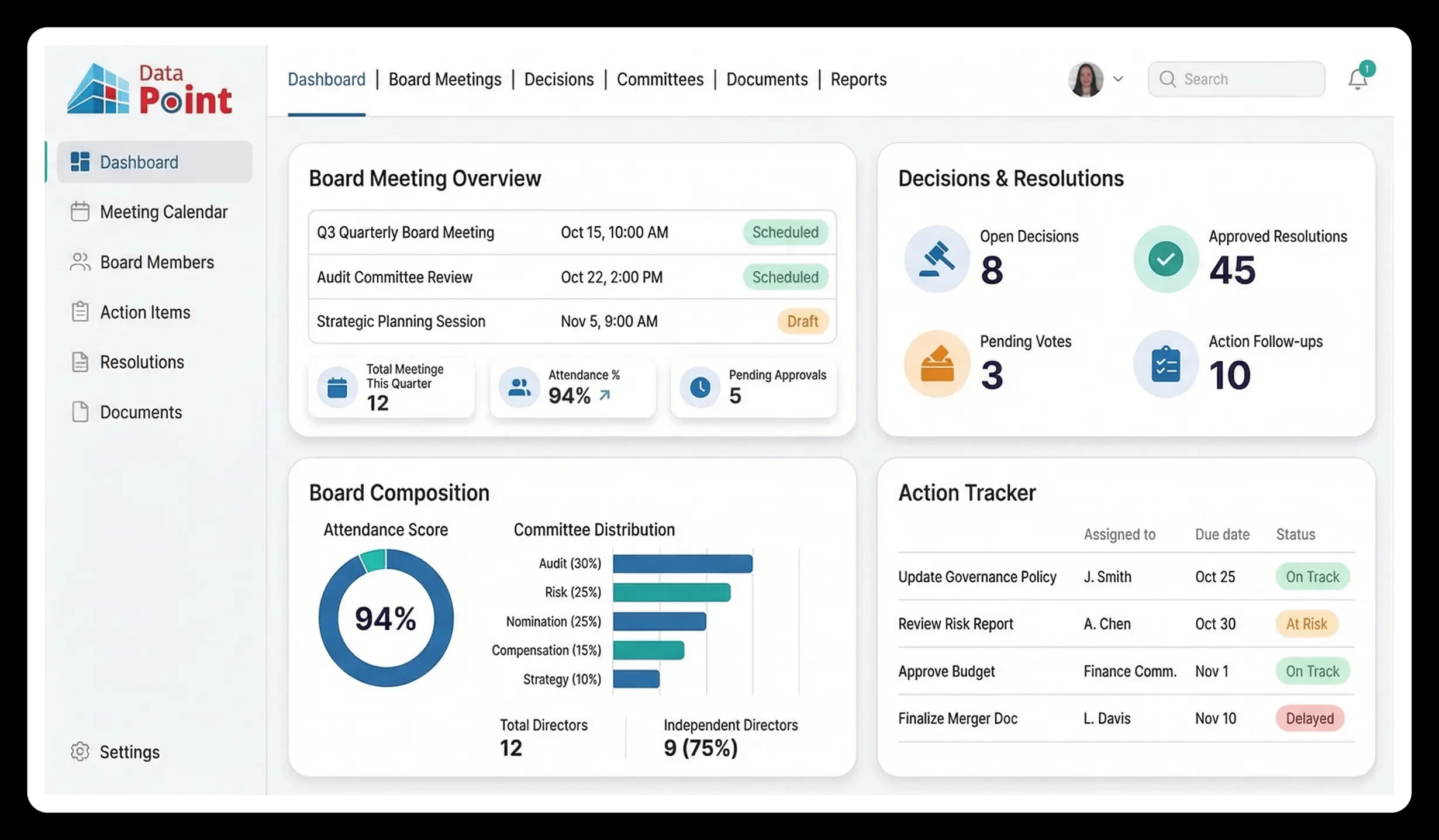
Shift Management Software: The Complete Guide to Workforce Scheduling, Shift Handover and Production Efficiency
Learn how Shift Management software helps automate scheduling, optimise productive time, streamline handovers, manage workforce allocation, improve operational visibility, and support efficient multi-site manufacturing operations.
How does corporate software differ from a standard board portal?
A board portal manages documents and meeting logistics. It gives directors a place to access board packs, submit votes, and store minutes. That is a filing and communication layer, not a governance layer.
Corporate governance software goes further. The distinction is in what it connects. A board portal sits alongside the organisation’s performance data without touching it. A governance platform brings board oversight, compliance monitoring, risk management, and real-time KPI performance into the same environment. Directors are not reviewing a prepared summary of how the business performed last month. They are working from live data that reflects current operational and strategic reality. The decision made in a board meeting is informed by the same performance information the management team is working from, not a filtered version produced for the occasion.
How does paperless board meeting management reduce preparation time and improve decision quality?
Board meeting preparation is one of the highest-overhead administrative processes in most organisations. Board packs are assembled, printed or distributed digitally, reviewed independently, and then discussed in a meeting where much of the time is spent establishing context rather than making decisions.
Paperless board meeting management with automated minutes and e-signatures removes the assembly and distribution overhead. The board pack is the live system. Directors arrive at the meeting with access to the same real-time dashboards they have been monitoring between meetings rather than a static document prepared for the occasion. The meeting time shifts from establishing what the data says to deciding what to do about it. Status updates that previously consumed the first half of every board meeting become redundant when every director has already seen the live performance picture before walking in the room.
How does ESG and sustainability reporting connect to broader governance oversight?
ESG reporting is increasingly a board-level accountability, not a separate function that produces an annual report and submits it. Regulators, investors, and stakeholders are expecting boards to demonstrate active oversight of environmental, social, and governance commitments rather than sign off on a document produced elsewhere.
Integrating ESG reporting within the same platform as strategy tracking and KPI performance means ESG metrics are visible alongside financial and operational performance in the same board view. A board reviewing quarterly performance is not switching to a separate system to assess sustainability commitments. The connection between ESG targets and operational decisions is visible in the same environment where those decisions are being made, which is what meaningful board-level ESG oversight actually requires.
How do 50+ built-in governance frameworks accelerate implementation without requiring custom configuration from scratch?
Building a governance framework from scratch requires agreement on methodology, configuration of the system to reflect it, and testing before any live data enters the platform. That process takes time and introduces the risk that the framework chosen does not reflect proven practice in the organisation’s sector.
Built-in frameworks including Balanced Scorecard, Hoshin Kanri, ESG reporting templates, compliance templates, and risk matrices mean the methodology is already embedded in the platform. An organisation can adopt a proven governance structure from day one rather than designing one during implementation. Configuration effort is directed at tailoring the framework to the organisation’s specific structure rather than building the framework itself. For boards moving from fragmented tools to a unified governance platform, this is the difference between a weeks-long implementation and a month-long one.
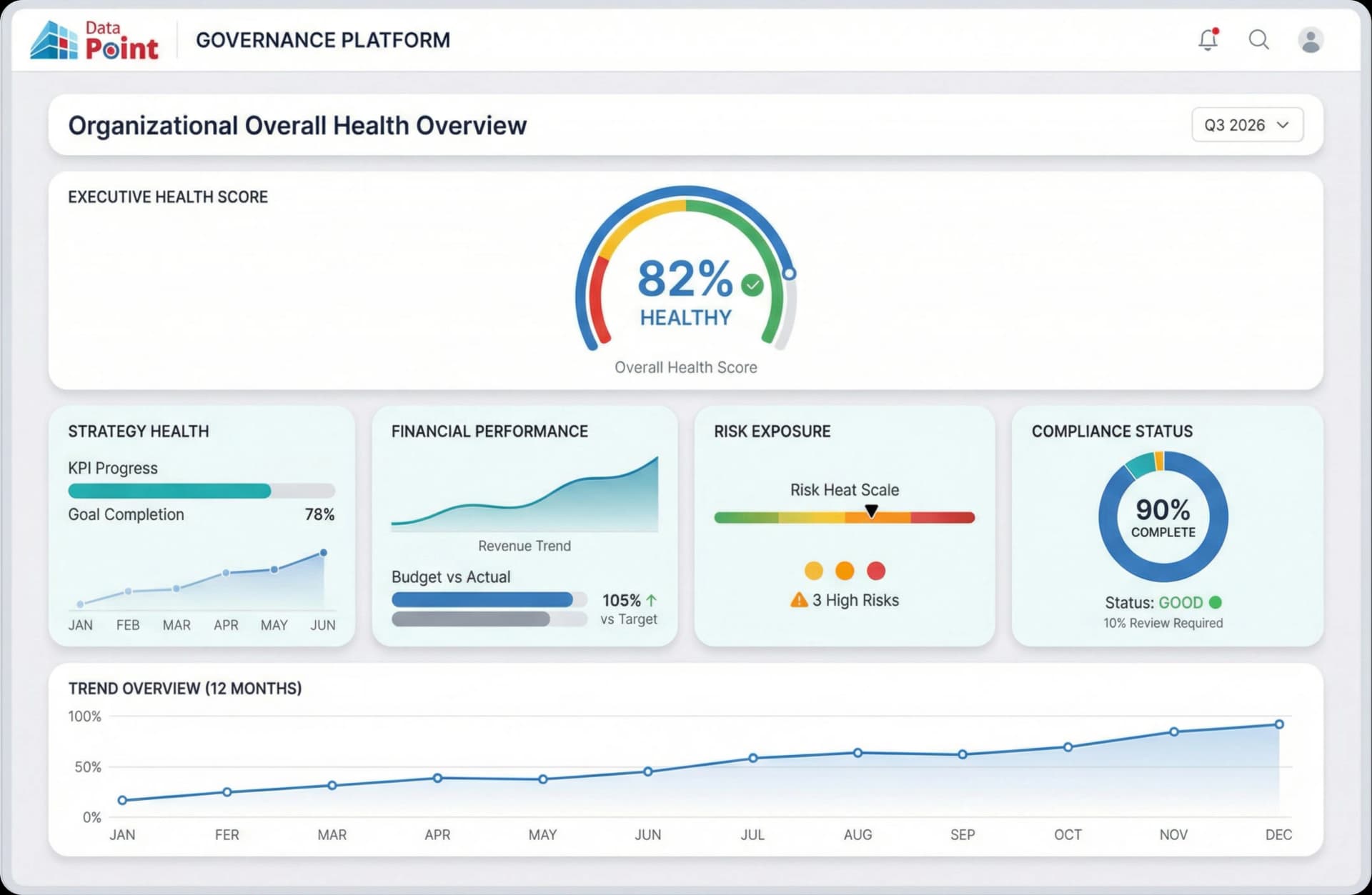
How does an enterprise health overview give board-level directors visibility without requiring multiple reports?
The traditional board reporting process starts weeks before the meeting. Data is requested from multiple sites or functions, compiled into a format suitable for board presentation, and reviewed by the time it arrives in the boardroom. By then it is historical. It describes a state that may no longer exist.
An enterprise-wide health view that drills down from summary to site level removes that lag. Directors see the current state of performance across all locations in a single view, with the ability to move from an aggregate picture to site-level detail without requesting a separate report. Strategic gaps surface immediately rather than being identified retrospectively. For organisations operating across multiple sites or regions, this also eliminates the manual consolidation effort that most corporate reporting processes still depend on.
How does role-based access control work at board level, and why does it matter for security and relevance?
A board of directors does not operate as a single undifferentiated group. An audit committee needs access to performance and people data. An independent non-executive director needs a different view from an executive director who is also managing an operational function.
Role-based portals ensure each director sees the date relevant to their responsibilities without being exposed to information outside their remit. This serves two purposes simultaneously. It reduces the cognitive load of navigating a system that contains far more information than any one role needs. It also enforces the access boundaries that regulated industries and listed companies require as a matter of governance principle. Secure messaging within the same role-based environment means board communications stay within the platform rather than moving through email channels that are outside the organisation’s security controls.
How does real-time KPI tracking at board level change the nature of strategic oversight?
Monthly board reporting creates a one-month blind spot between what the organisation is doing and what the board knows about it. Strategic decisions made in that window are made without the board’s informed involvement. By the time an issue appears in a board report, the operational response has already been determined at management level.
Real-time KPI tracking for directors and executives closes that blond spot. Performance against strategic objectives is visible between meetings, not only at them. When a KPI moves outside of tolerance, the board is informed through the same live system rather than waiting for the next reporting cycle. This changes the nature of strategic oversight from periodic review to continuous monitoring. For organisations tracking Hoshin Kanri breakthrough objectives, that visibility is what allows the board to assess whether the strategic plan is being executed rather than simply being told it is.
How does an audit trail and version control support regulatory compliance at board level?
Regulators and auditors require evidence that governance decisions were made, that the information they were based on was accurate at the time, and that any subsequent changes to strategic plans or compliance records were formally authorised. A governance platform without version control cannot provide that evidence. It can only show the current state, not the state at the time a decision was made.
A full audit trail with version control means every change to a strategy, a compliance record, or a board decision is logged with a timestamp and attributed to a specific user. The state of any document or dashboard at any prior point is retrievable without reconstruction. For public listed companies, financial institutions, and regulated industries, this is not an optional feature. It is the foundation of demonstrable governance. A board that can show regulators not only what its current position is but how it arrived there is in a fundamentally stronger compliance position than one that cannot.
Hear it from our customers

MARC ROBINSON
Director, Global Operational Excellence

“By providing a central location to input, analyse and share our KPIs, 'Data Point' enables site management to more easily focus on the entire business as a team. Its ability to allow automated data entry and trend analysis gives us more time for improvement rather than just reporting numbers. Combined with a disciplined approach within our SQDC meeting process, I believe 'Data Point' will help us continually focus on key issues and drive business excellence in all areas.”
Start your journey towards enhanced governance management
Achieve goals with LTS Data Point