LTS Data Point vs Tervene: Which Lean Daily Management Platform Fits Your Plant? (2027)
Last updated on : November 19, 2026
The quick verdict
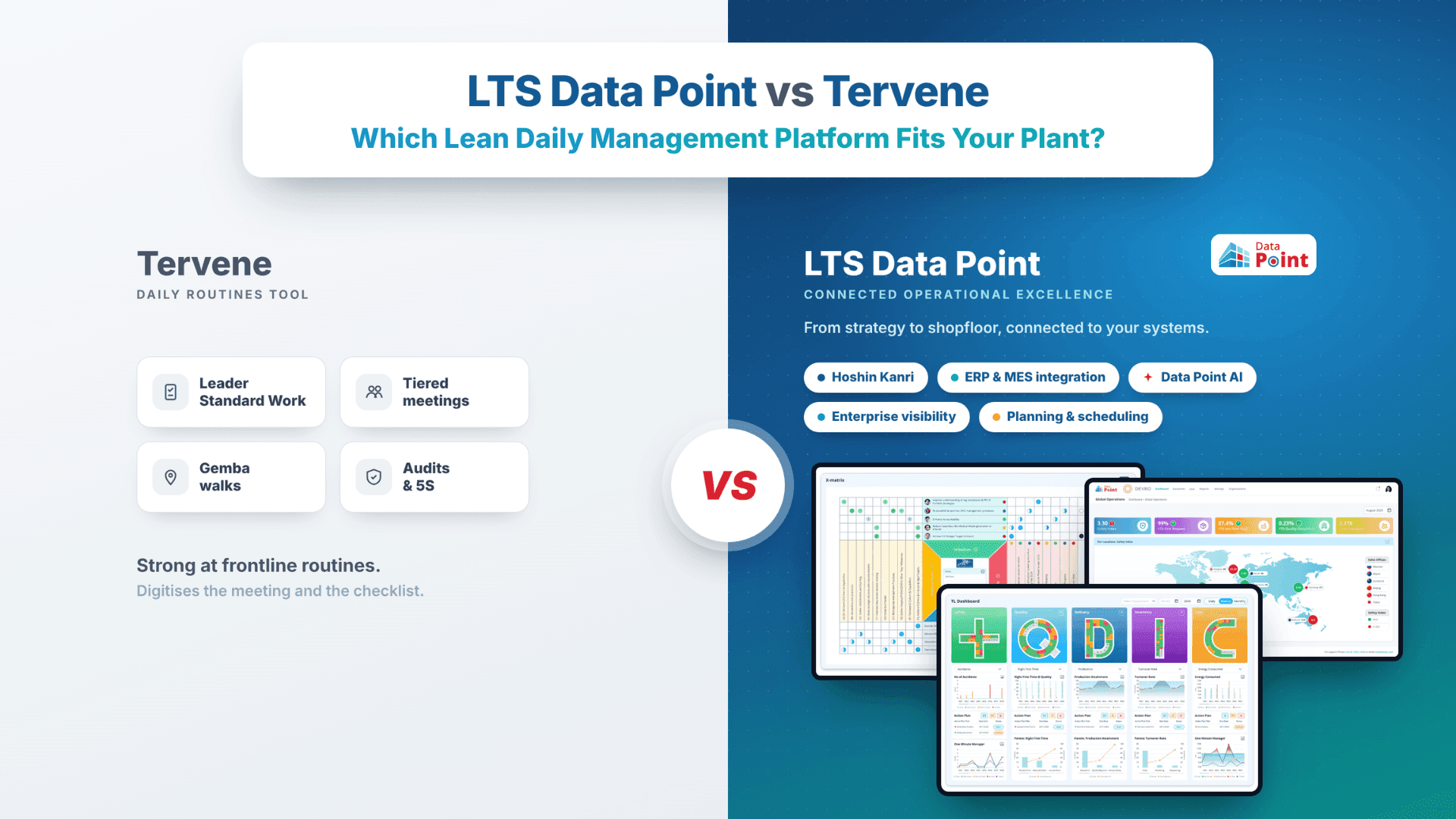
Choose Tervene if your main goal is to digitise Leader Standard Work, audits and tiered meetings across your sites, quickly.
Choose LTS Data Point if you want to start with one solution, such as digital SQCDP boards or Gemba walks, and grow from there. Data Point also connects those routines to KPIs, strategy deployment, ERP, MES and machine data, and AI. All in one operational excellence platform.
In short, Data Point vs Tervene is a question of how far beyond the daily huddle you need your software to go.
What is LTS Data Point?
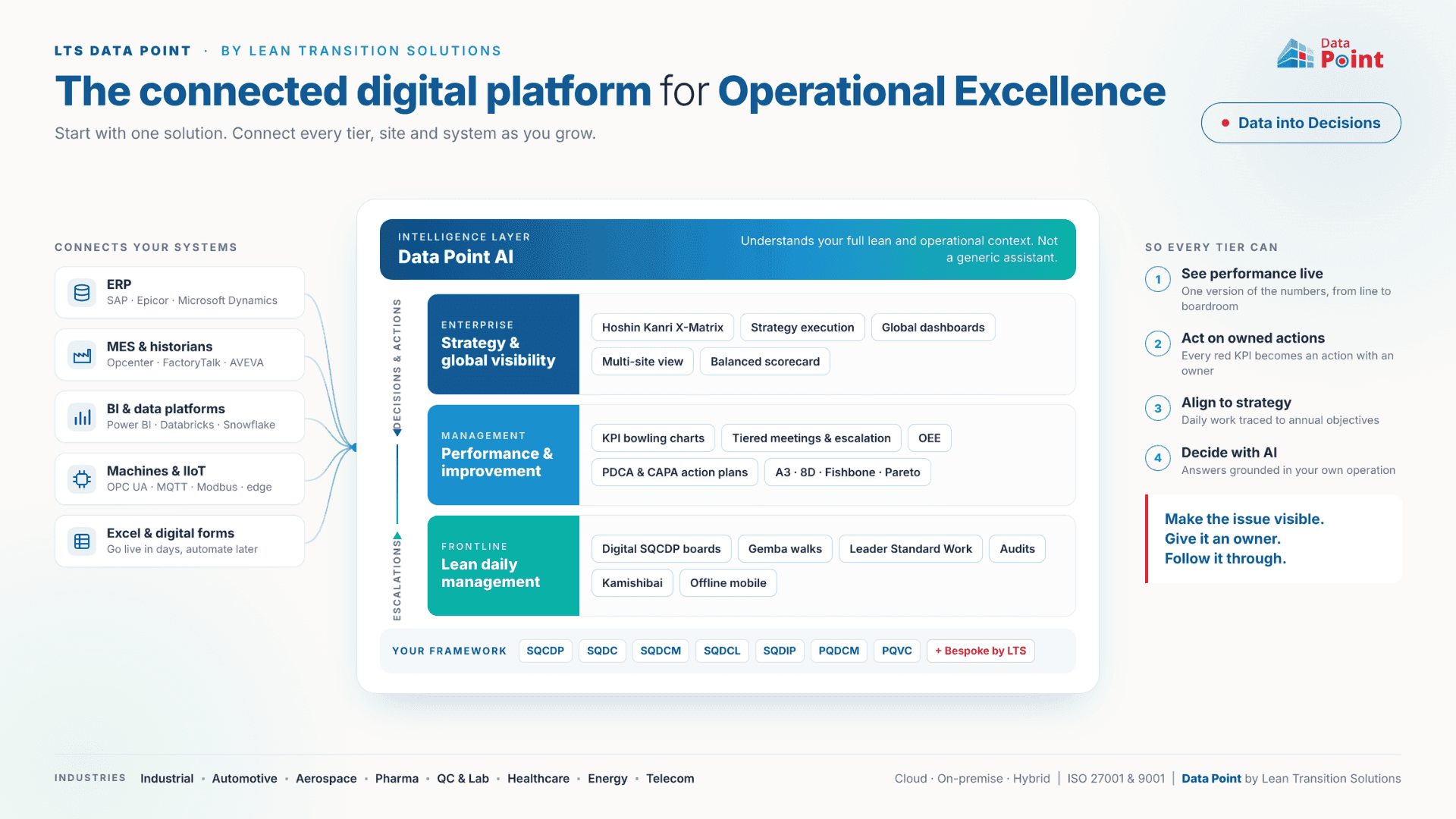
LTS Data Point is the connected digital platform for operational excellence, developed by Lean Transition Solutions based on UK. It brings lean daily management, KPI tracking, strategy deployment, problem solving and AI into one system. Manufacturers can see performance, assign actions and follow them through, from boardroom to shopfloor.
Data Point by Lean Transition Solutions is built for mid-to-large manufacturers. You can buy an individual solution for the need that matters most, such as lean daily management software for your huddles. Then you add and connect capabilities as your organisation is ready.
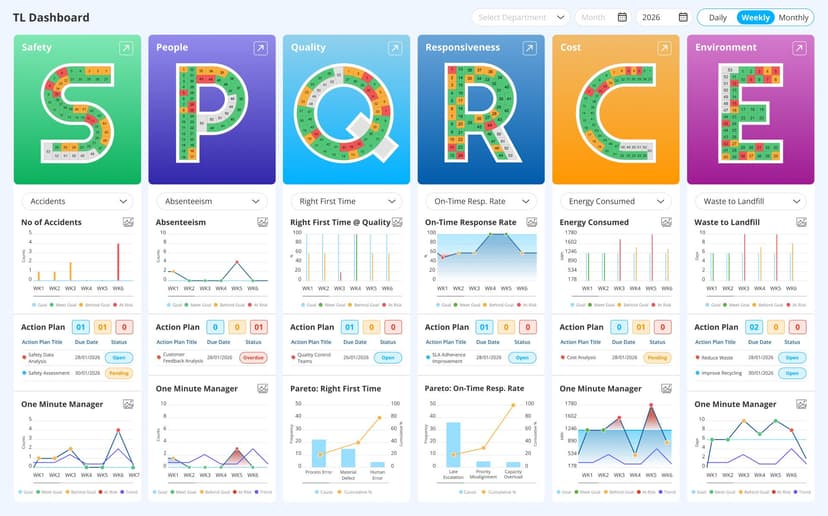
It is a complete visual management platform. Teams run the lean daily management framework they already use, including SQCDP, SQDC, SQDCM, SQDCL, SQDIP, PQDSM and PQVC boards. Every red KPI links to an action plan with an owner and a due date, so PDCA and CAPA cycles are tracked through to closure.
Where a standard module doesn't fit, LTS develops bespoke modules for the agreed requirement, for a site, a role or a process.
Data Point serves industrial manufacturing, automotive, aerospace, pharma, QC and laboratory, healthcare, energy and telecom. Its customers include Philips, Pfizer, Hitachi Astemo, Syngene, Spirit AeroSystems, Dynamatic Technologies and Alba (Aluminium Bahrain).
The company behind it matters too. LTS combines software development and configuration with lean and operational excellence expertise, training and implementation. LTS Data Point's view is simple: your operations shouldn't have to work around your software.
What Is Tervene?
Tervene is daily management software for lean manufacturing and industrial teams, founded in 2015 and based in Montreal, Canada. It helps organisations standardise Leader Standard Work, Gemba walks, audits and tiered meetings across sites, shifts and teams.
Tervene sells mainly to midsize and enterprise manufacturers, and also serves healthcare and distribution. Its website shows customers such as Siemens, Safran Cabin and Lactalis.
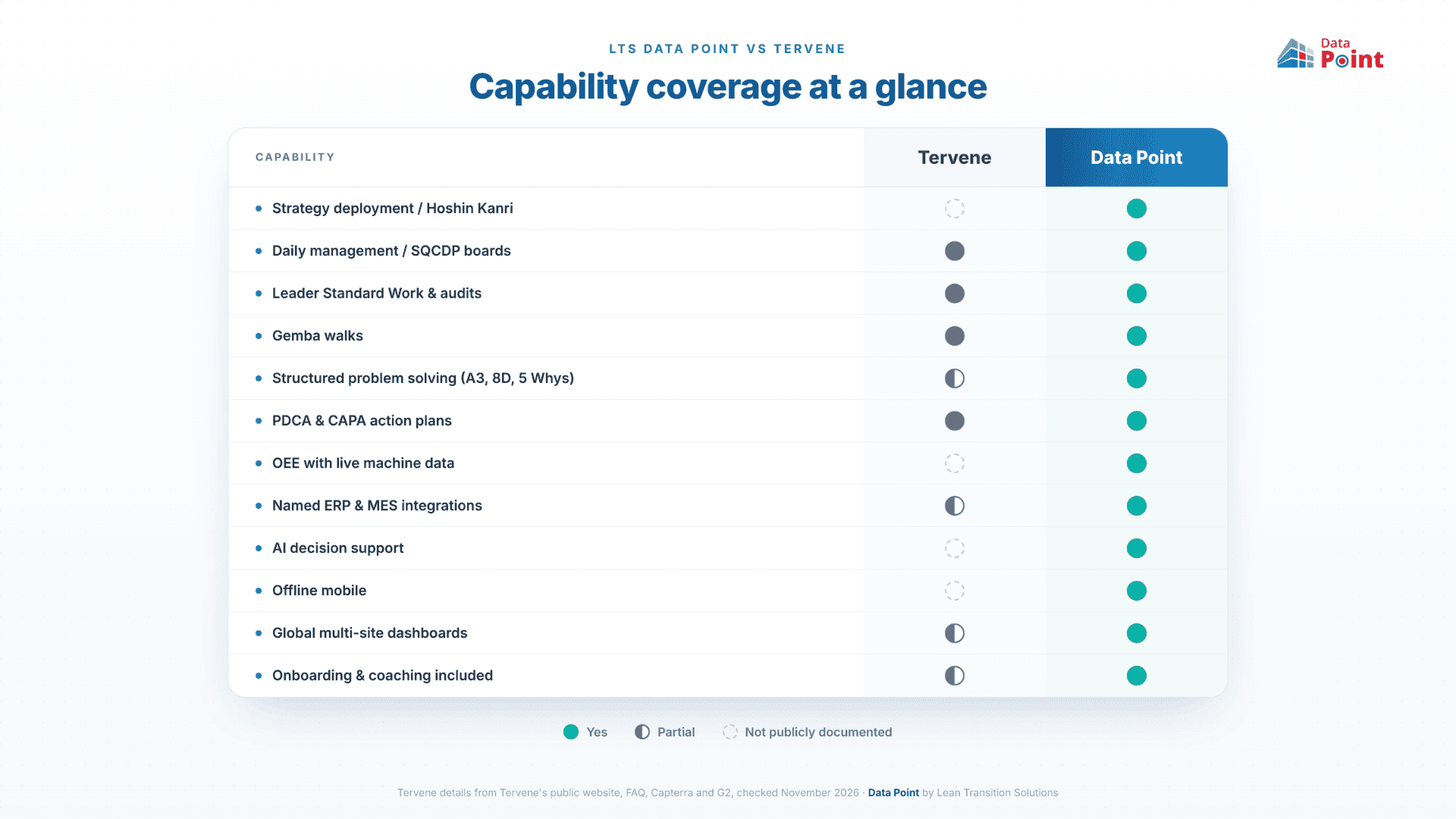
Data Point vs Tervene: How Do They Compare Across 12 Capabilities?
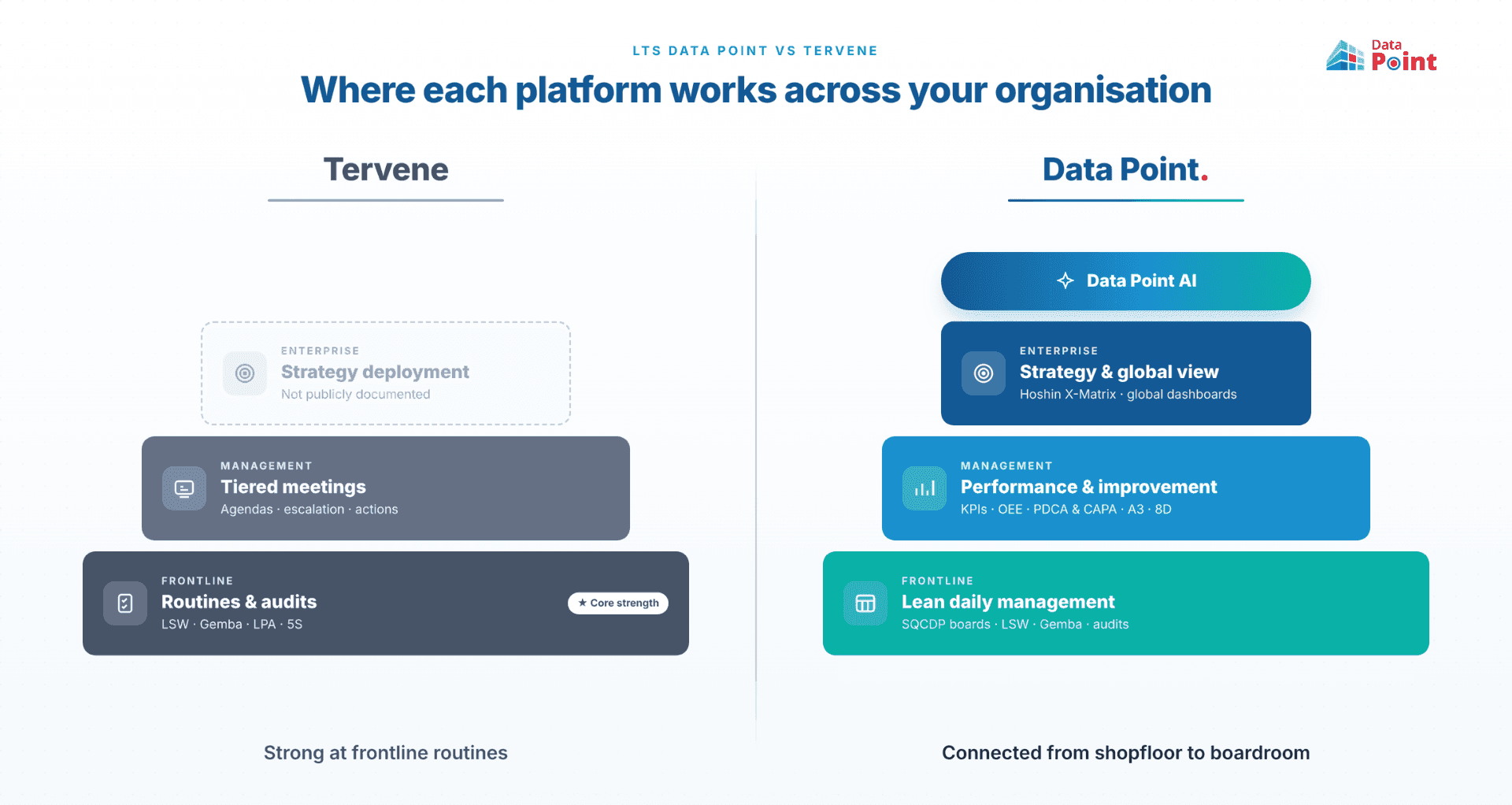
Both are lean daily management software and both digitise visual management. The difference shows up in strategy deployment, problem solving, integrations and AI, where Data Point covers ground Tervene does not publicly document. Here is the Data Point vs Tervene comparison, row by row.
Where Does Tervene Do Well?
Tervene is strong at the routines that sit closest to the frontline. Fair comparisons start there.
- Leader Standard Work software. Managers get daily, weekly and monthly routines with owners and automatic reminders.
- Audit depth. Layered process audits, 5S audits and Gemba checklists with photos are all built in.
- Scale of routines. One customer report more than 17,000 Gemba walks completed on the platform.
- Support. Tervene reviews on Capterra score customer support at 4.8 out of 5.
- Speed. Teams can start from day one, with a full rollout typically in 4 to 8 weeks.
If your only goal is to replace paper LSW sheets and audit forms across many sites, Tervene is a credible choice. Data Point supports Gemba walks, audits and Leader Standard Work too. The question is what you need those routines connected to.
Why Do Daily Routines Stall Without a Link to Strategy?
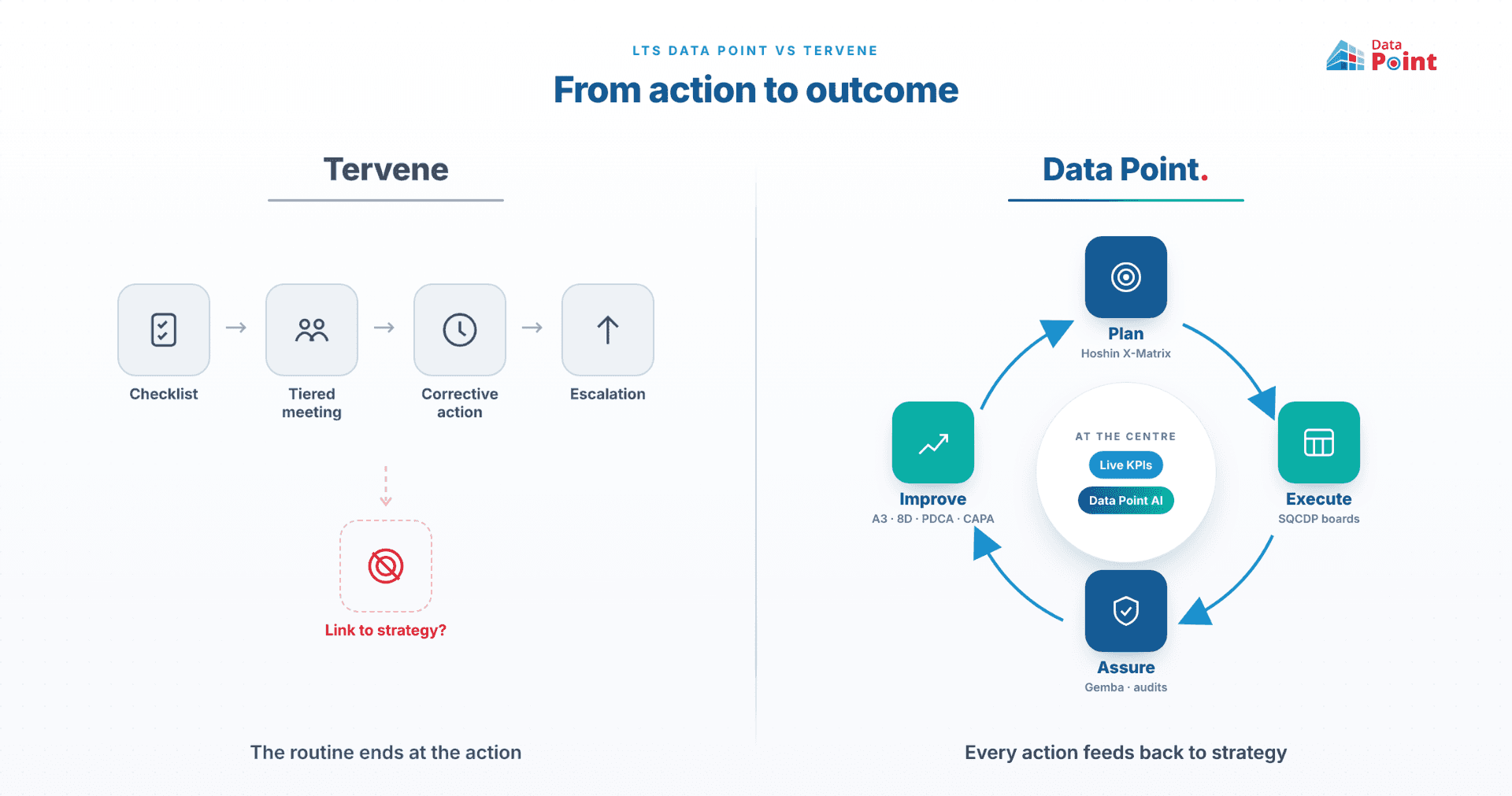
Picture a 7:30 Tier 1 huddle at a UK automotive supplier. The SQCDP board shows scrap in red for the third day running. The team logs another action. Nobody in the room can say how that action connects to the plant's annual target of cutting scrap by 15%.
That target lives in a spreadsheet at Tier 3. It gets reviewed monthly, in PowerPoint. The huddle is happening, the Gemba walks are happening, and still the needle barely moves.
This is the failure mode of routine-only tools. They digitise the meeting, but not the line of sight. Across US multi-site manufacturers, the pattern repeats at scale: six plants, six spreadsheets, and a VP of Operations stitching them together every Monday.
Where Data Point Is Different
Data Point vs Tervene comes down to five practical differences. Each one shows up in how your teams work every shift, not just in a feature list.
Strategy and Daily Management in One System
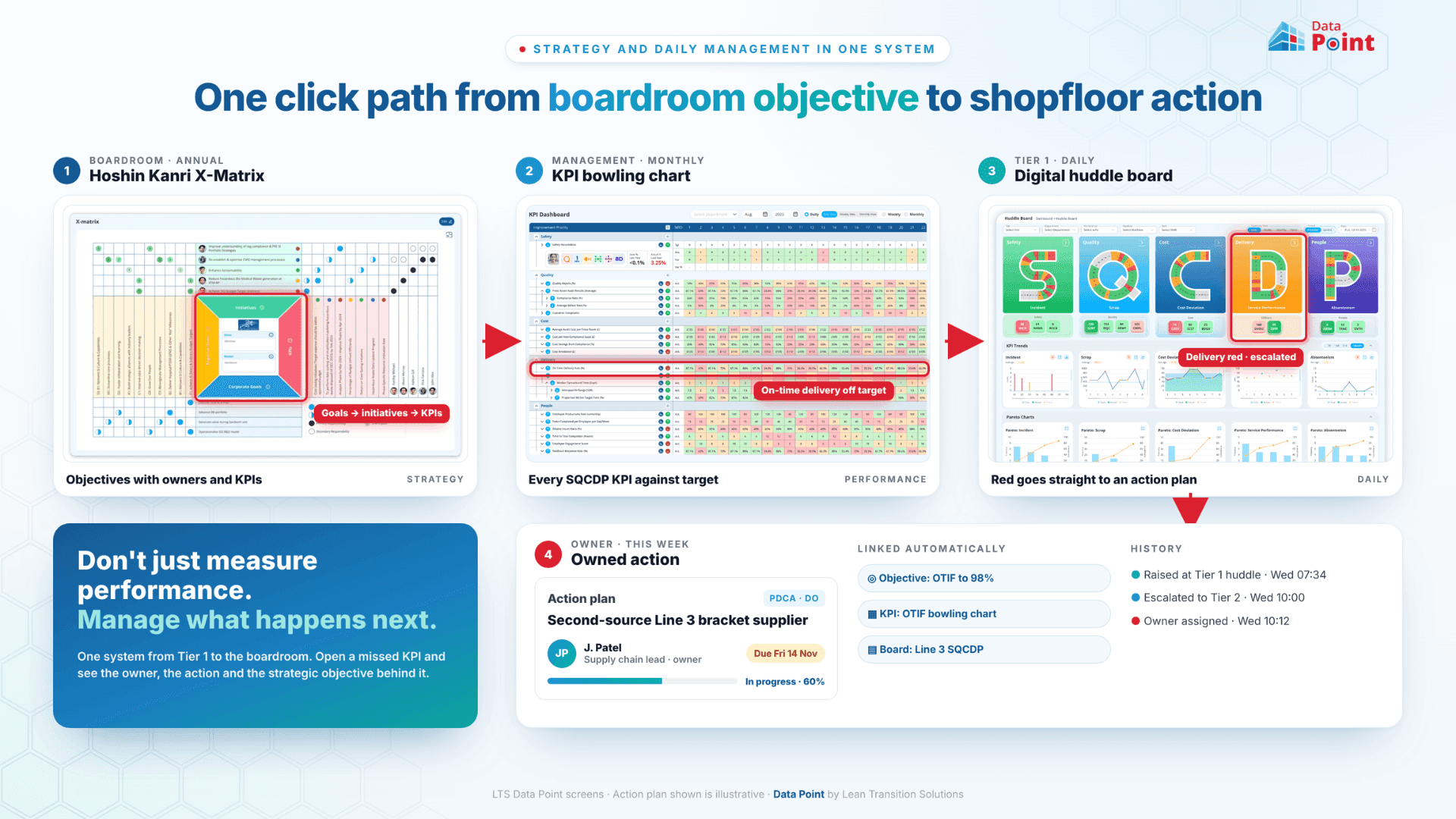
Data Point connects the Hoshin Kanri X-Matrix to KPI bowling charts, and those KPIs to digital huddle boards. One system covers Tier 1 to the boardroom.
So a Lean Leader can open a missed delivery KPI and see the owner, the action and the strategic objective behind it. Don't just measure performance. Manage what happens next.
Your ERP, MES, Power BI and Machines, Connected Without Waiting for IT
Tervene connects through an API and embedded dashboards, and its integration FAQ names no specific ERP or MES systems. Data Point connects to the systems manufacturers already run:
- ERP: SAP, Epicor, Microsoft Dynamics, Infor, Sage and Oracle products such as JD Edwards and NetSuite.
- MES and historians: Siemens Opcenter, Rockwell FactoryTalk, AVEVA and Ignition.
- BI and data: Power BI in both directions, plus Databricks, Snowflake and Microsoft Fabric.
- Machines: OPC UA, MQTT, Modbus and EtherNet/IP, with edge capture for legacy equipment that has no connectivity.
Where your plant needs something else, LTS builds custom connectors for the agreed requirement. Connections can be read-only, and Data Point runs in the cloud, on-premise or hybrid. That matters to IT teams in pharma and aerospace.
You also don't have to wait for every approval. Start on Excel or digital forms, go live in days, then automate one feed at a time. You don't have to transform everything at once.
You must read this: MES vs Data Point: What's the Real Difference for Manufacturers?
One View Across Every Tier and Every Site
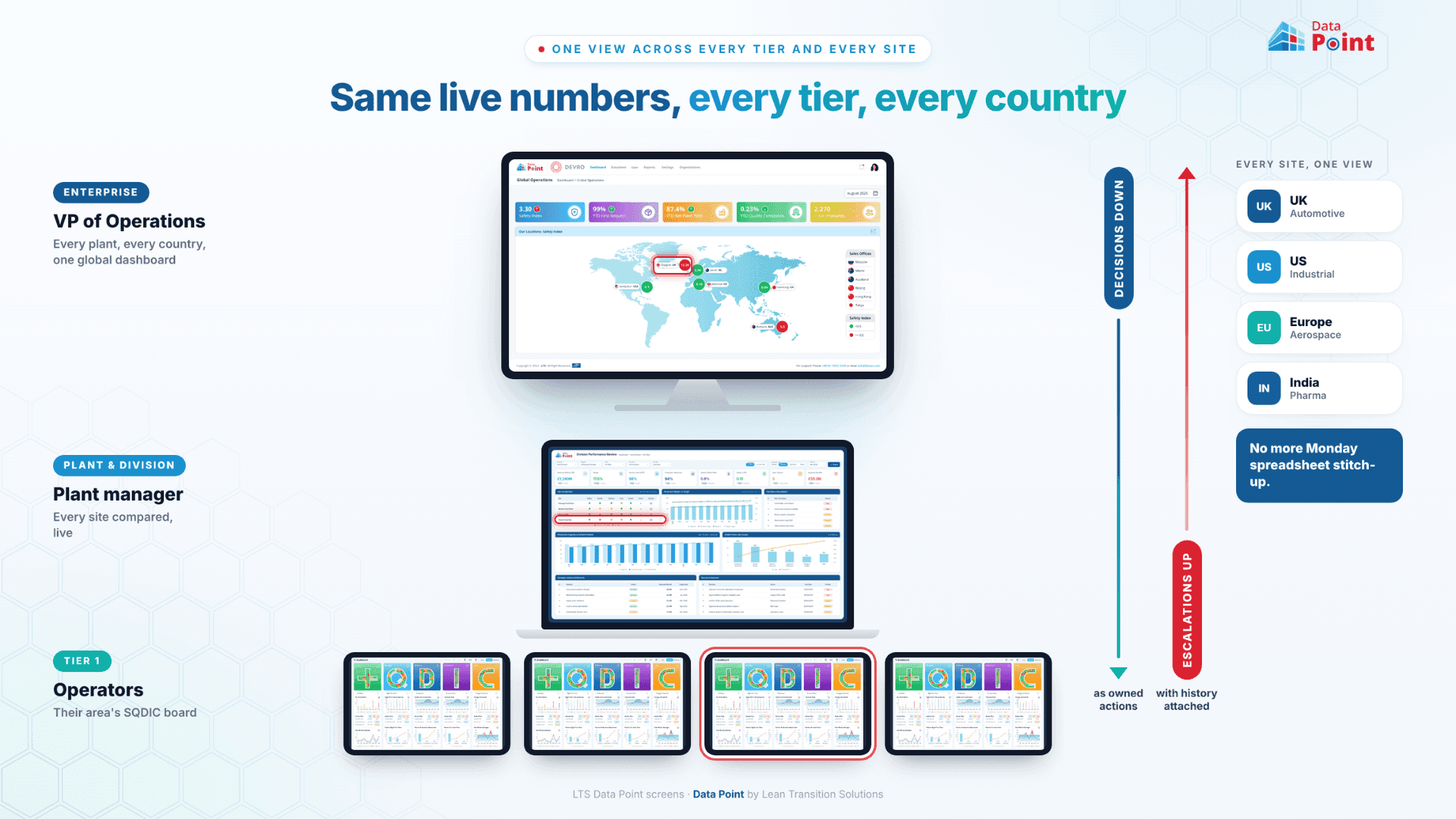
Tervene structures meetings by tier. Data Point goes further by connecting the data behind each tier. An operator sees their line's SQCDP board. A plant manager sees every line. A VP of Operations sees every plant, in every country, on one global dashboard.
Each tier decides with the same live numbers. Escalations move up with their history attached, and decisions move down as owned actions. For groups running plants across the UK, US, Europe and India, that removes the Monday spreadsheet stitch-up entirely.
AI That Understands Your Lean Context
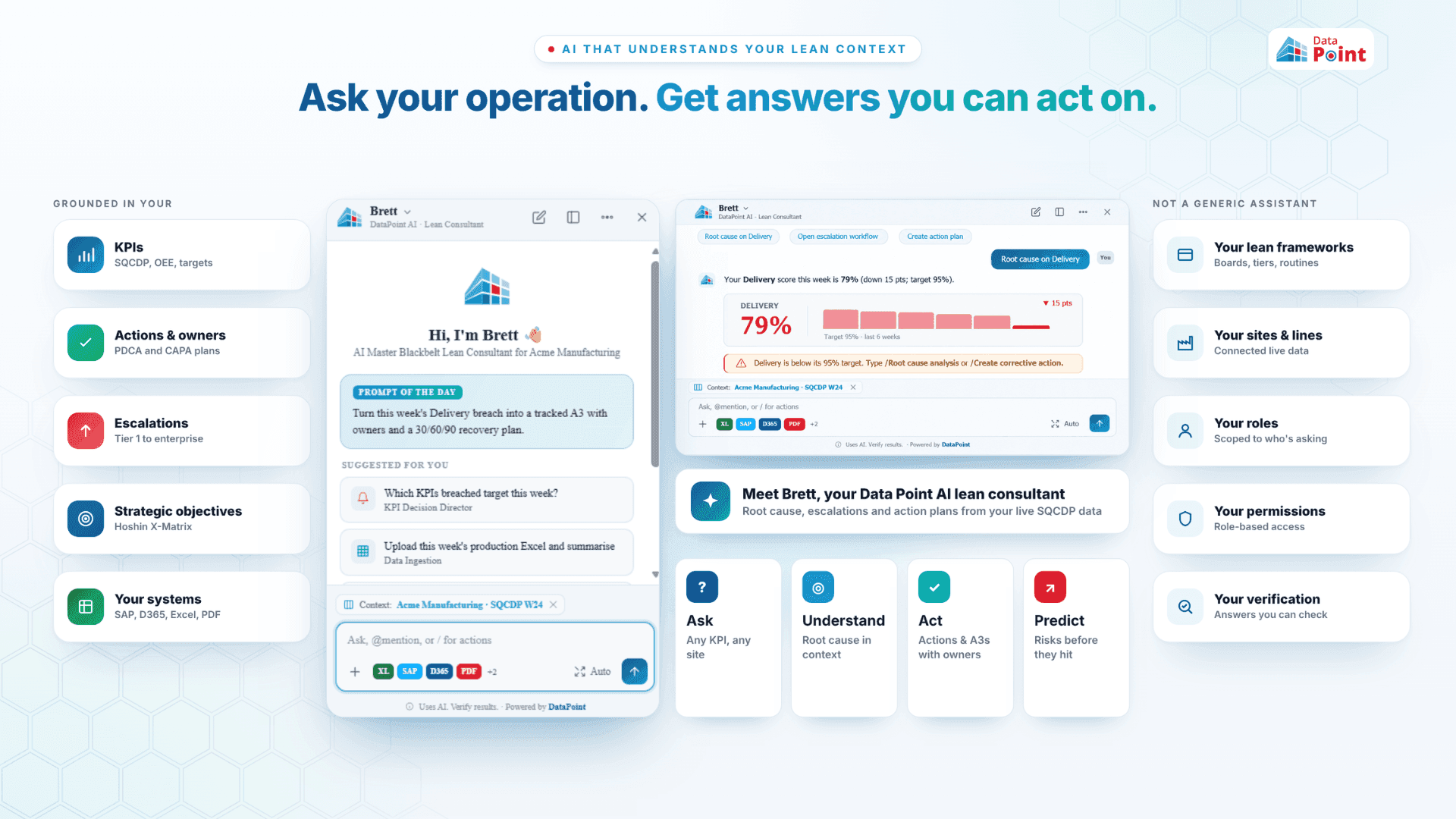
Tervene's public material does not mention AI. Data Point AI works inside your operational structure: your KPIs, actions, escalations and strategic objectives.
That makes it an AI that understands your full lean and operational context, not a generic assistant. A plant manager can ask which lines are off target this week and which actions are overdue, then act on the answer. LTS introduces each AI capability with clear guidance, so teams know what it does and where it helps.
Less Data Entry, Faster Root Cause
Some Tervene reviews on Capterra mention re-entering audit details into tasks by hand. Data entry is where digital routines quietly lose momentum.
At Kineco, Data Point replaced manual, interval-based reporting with live production visibility and an automated Takt time tracker. The results: 90% of data entry tasks eliminated, Takt adherence up 25%, and root cause analysis cut from days to minutes.
At PCI Pharma Services' Bridgend site, Data Point replaced paper and spreadsheets in daily stand-ups with digital SQDCP boards and a site-wide scorecard. In the words of Marc Robinson, Director of Global Operational Excellence, Data Point "is giving us more time to spend on improvement, rather than just reporting the numbers." Read the PCI Pharma case study.
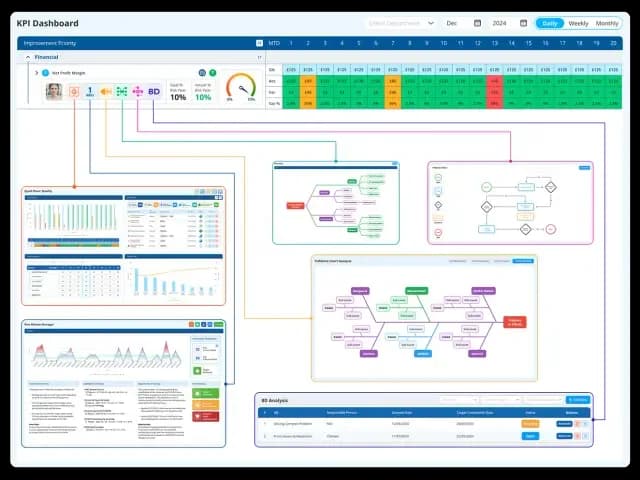
Structured problem solving is built in: A3, 8D, 5 Whys, fishbone, automated Pareto and RCCM. Every issue becomes a PDCA or CAPA action plan with an owner. Make the issue visible. Give it an owner. Follow it through.
See how strategy, daily management, integrations and AI work together on one connected operational excellence platform.
Tervene Pricing vs Data Point: What Do Pricing and Deployment Look Like?
Neither vendor publishes a price list. Tervene uses a per-user subscription with every feature in one plan. Implementation and coaching are quoted separately, and there is no free trial.
Data Point pricing is also quote-based, shaped around the solutions you start with. The demo is free. After the demo, you can request a trial configured with your own data, so you test the product on your real operation before you buy. Onboarding and coaching are included.
The bigger difference is who supports the rollout. LTS is a lean consultancy as well as a software developer. The people configuring your boards have run lean transformations, so the digital routine supports the way your teams already manage work.
Which Platform Should You Choose?
The right answer to Data Point vs Tervene depends on where your operation is today and where it needs to be in two years.
Still running tiered meetings that end without clear owners, while your KPIs sit in three different systems? Tell us what you're trying to improve.
Read More Comparisons
Comparing Tervene competitors? We use the same 12-capability table in every comparison, so you can line them up side by side.
- Data Point vs L2L: Which Connected Manufacturing Platform Actually Fits Your Operation?
- Data Point vs iObeya: An Honest Operational Excellence Software Comparison
- MES vs Data Point: What's the Real Difference for Manufacturers?
Frequently Asked Questions
1. Is LTS Data Point a good Tervene alternative?
Yes. Among Tervene alternatives, LTS Data Point suits teams that need more than daily routines. Data Point covers Leader Standard Work, Gemba walks and tiered meetings like Tervene. It also adds strategy deployment, OEE, structured problem solving, ERP and machine integrations, and AI in one operational excellence software platform.
2. What is the main difference between Data Point and Tervene?
Scope. Tervene focuses on digitising frontline routines such as Leader Standard Work, audits and tiered meetings. Data Point connects those routines to KPIs, Hoshin Kanri strategy deployment, your ERP, MES and machines, and AI, from the shopfloor to the boardroom.
3. How much does Tervene cost compared with Data Point?
Neither publishes prices. Tervene charges per user, with implementation and coaching quoted separately. Data Point is quote-based, shaped around the solutions you need, with a free demo, onboarding and coaching included. Ask both vendors for a full first-year cost including rollout support.
4. Can I trial Data Point before buying?
Yes. After a free demo, you can request a trial configured with your own data. That means you test Data Point on your real KPIs, boards and routines, not on sample data. Tervene does not offer a free trial, according to its G2 listing.
5. How long does it take to implement Data Point?
Teams typically go live in days on Excel or digital forms. File-based and scheduled data feeds take a few weeks. Full ERP, MES or machine integration depends mainly on your IT approval process. You can run boards and routines while integrations are added.
6. Does Data Point integrate with SAP and Power BI?
Yes. Data Point connects to SAP, Epicor, Microsoft Dynamics and other ERPs. It works with Power BI in both directions: it reads your datasets, shows Power BI visuals on its boards, and sends Data Point data back. Board users don't need a Power BI licence.
7. Does Data Point work offline on the shopfloor?
Yes. Data Point supports mobile, offline and remote access. Supervisors can complete Gemba walks, audits and checks in areas with poor connectivity, and data syncs when the connection returns. Tervene documents mobile access but does not mention offline use.
8. Is Data Point secure enough for enterprise IT teams?
Yes. Lean Transition Solutions is ISO 27001 and ISO 9001 certified. Data Point offers single sign-on, role-based access, read-only system connections and a choice of UK or US data location. It can also run on-premise or hybrid where IT policy requires it.
9. Does Data Point offer the same Leader Standard Work and tiered meeting software features as Tervene?
Yes. Data Point includes Leader Standard Work, Gemba walks, audits, Kamishibai and tiered huddle boards with escalation. The difference is that these routines connect to your KPIs, strategy and source systems, so actions reflect live performance rather than manually updated numbers.
10. Which industries use Data Point?
Data Point is used across industrial manufacturing, automotive, aerospace, pharma, QC and laboratory, healthcare, energy and telecom. Customers include Philips, Pfizer, Hitachi Astemo, Syngene, Spirit AeroSystems and Alba. Boards, KPIs and frameworks are configured to each industry, from GxP-regulated pharma sites to multi-plant automotive groups.

Abel Jiménez, Lean Consultant
Abel is a Lean Consultant with over 30 years of expertise in operational analysis, process improvement, and organisational change across Mexican industries. Currently serving as Director of Insurance Promotions at CESCEMEX, he helps organisations leverage technology and lean practices to improve efficiency and manage change with continuity.