Daily Direction Setting (DDS): How to Run It, Measure It - A Complete Guide
Daily Direction Setting (DDS) changes the way manufacturing teams begin each shift by creating alignment, improving communication, and focusing on priorities. Explore the framework, meeting structure, and practical tools that help teams achieve measurable results.
Contents
- What Is Daily Direction Setting (DDS) and Why Most Plants Get It Wrong
- The Difference Between a DDS Meeting and a Daily Direction Setting System
- Why "Setting Direction" Is Only Half the Job
- The 5 Core Components Every Effective DDS Must Have
- How to Run a Daily Direction Setting Meeting: Step by Step
- From DDS Meeting to Action: Closing the Accountability Gap
- DDS and the Tier Meeting Structure: How Direction Flows From the Shop Floor to the Boardroom
- Data Point AI Intelligence and Daily Direction Setting: Ask It Anything About Today's Performance
- Real Scenarios: What Happens When Your DDS Is Backed by Operational AI
- Running DDS Across Multiple Sites: What Changes When You Scale
- How to Measure Whether Your Daily Direction Setting Is Actually Working
- How Data Point Connects Your Entire Daily Direction Setting System
- From Digital SQCDP Boards to Strategic Dashboards: One Platform, Every Layer
- What Changes When Your DDS Is Live, Connected, and Accountable
Last updated on : September 17, 2026
What Is Daily Direction Setting (DDS) and Why Most Plants Get It Wrong
DDS is not a meeting. That is the most common, and costly, mistake manufacturers make.
Walk into most plants and you will find a daily standup at shift start. Someone runs through the numbers from yesterday. A few actions get raised. People nod and head to the floor. By 10am, nothing has moved.
That is not daily direction setting. That is a daily conversation.
Genuine DDS is a management system: a closed operational loop that runs every shift, every day, at every level of the organisation. It aligns what needs to happen today with what happened yesterday, what the KPIs are telling you right now, and what actions need to be owned, tracked, and closed.
The Difference Between a DDS Meeting and a Daily Direction Setting System
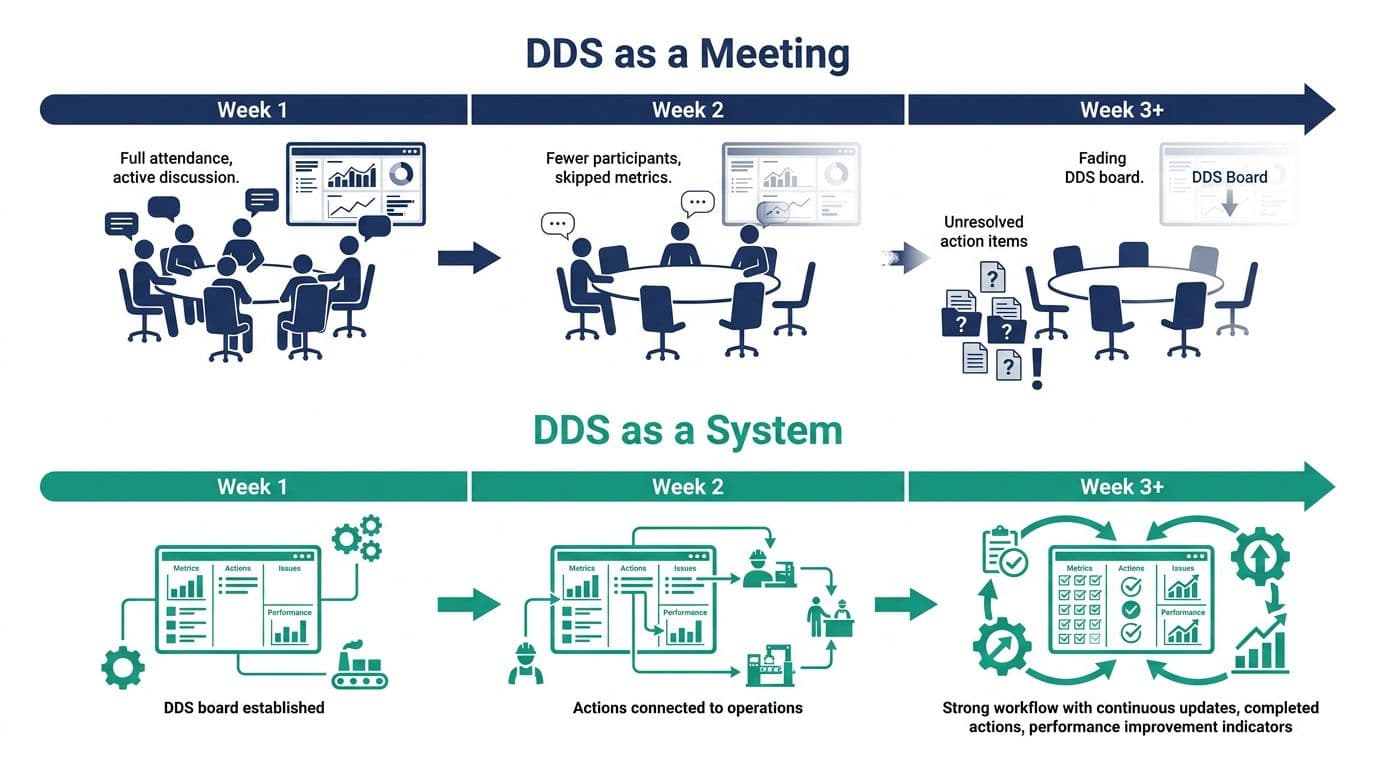
A meeting is an event. A system is a discipline. The difference shows up about three weeks in. Teams who treat DDS as a meeting run it well at the start, then it drifts. Attendance drops. Data gets skipped. Actions pile up unresolved. Eventually it becomes a ritual with no real output.
Teams who run DDS as a system build it into how the shift operates: not as an add-on, but as the starting structure that everything else flows from.
Why "Setting Direction" Is Only Half the Job
The name is misleading. "Direction setting" implies the purpose is to point people toward today's priorities. It is, but that is the beginning, not the end.
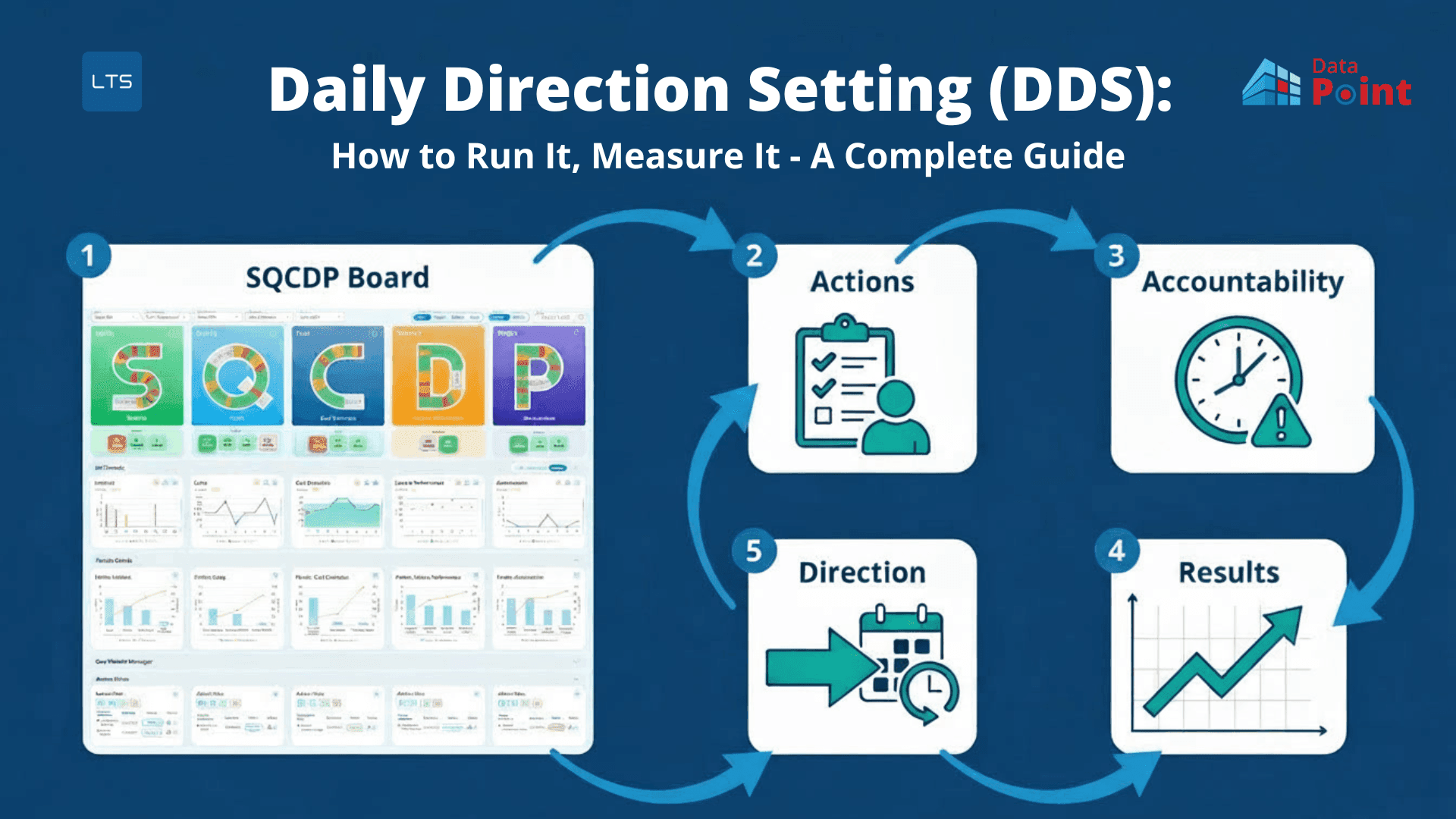
A complete DDS cycle does five things: it reviews yesterday's performance against targets, identifies what did not close, assigns today's actions with clear ownership, sets the direction for the shift, and verifies it tomorrow. Remove any of those and the system breaks. Most plants stop after the first step. They set direction. They do not track it, measure it, or prove it worked.
Kineco Aerospace improved Takt time adherence by 25% and eliminated 90% of data entry after digitalising their DDS with LTS Data Point. See what that looks like for your plant.
The 5 Core Components Every Effective DDS Must Have
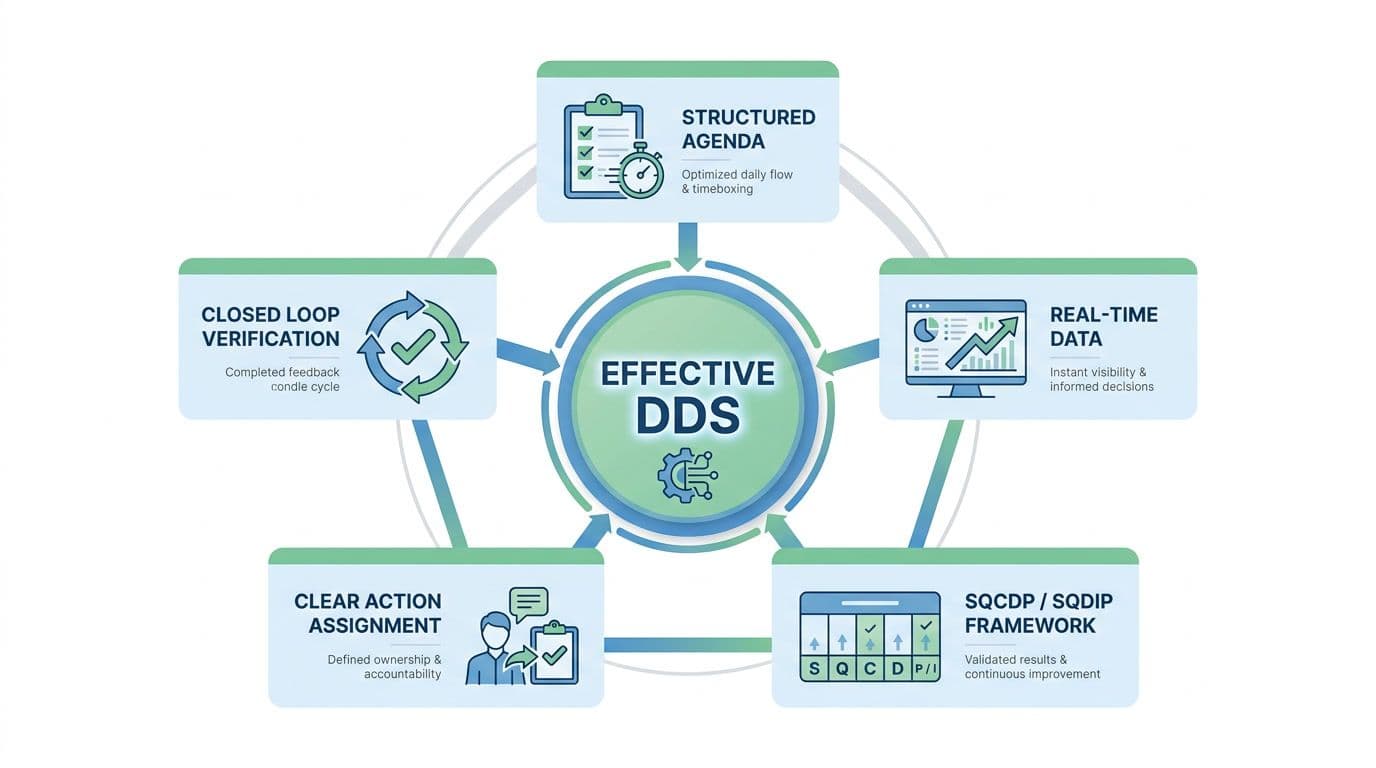
No two plants run DDS exactly the same way. But every effective DDS share five non-negotiable components.
1. A Structured Agenda That Actually Runs in 15 Minutes
If your DDS regularly runs over 20 minutes, it is not a DDS: it is a management meeting in disguise. The agenda should be tight, time-boxed, and consistent. Same structure, same sequence, every shift. Discipline here is what makes it sustainable.
2. Real-Time Data, Not Yesterday's Numbers on a Whiteboard
This is where most plants fall down. A DDS built on manually updated whiteboards or overnight reports is making today's decisions on stale ground. By the time the data reaches the board, the opportunity to act on it has already passed. Real daily direction setting demands live performance data: production output, quality metrics, safety flags, delivery status, all visible to everyone in the room as the shift starts. Some plants take this further with a short interval control board, running additional two-to-four-hour check-ins between DDS meetings to catch deviations before they compound.
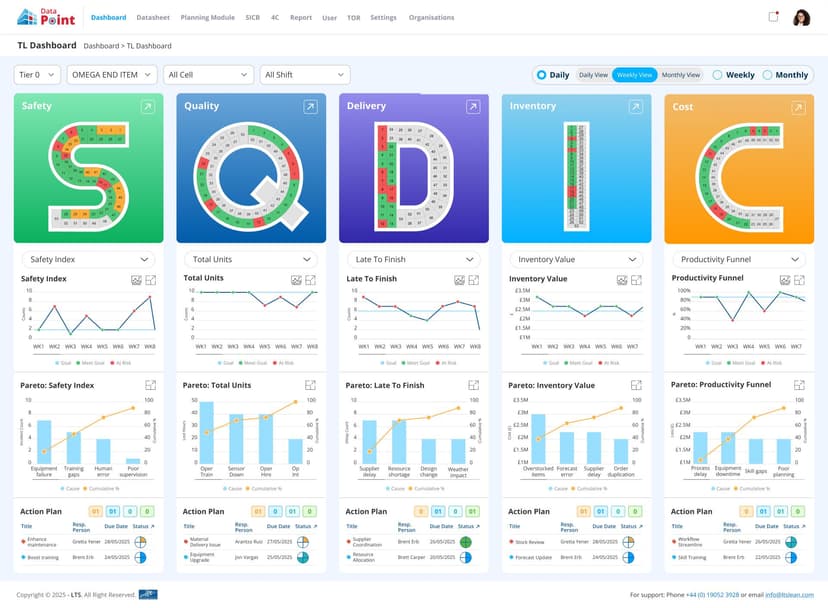
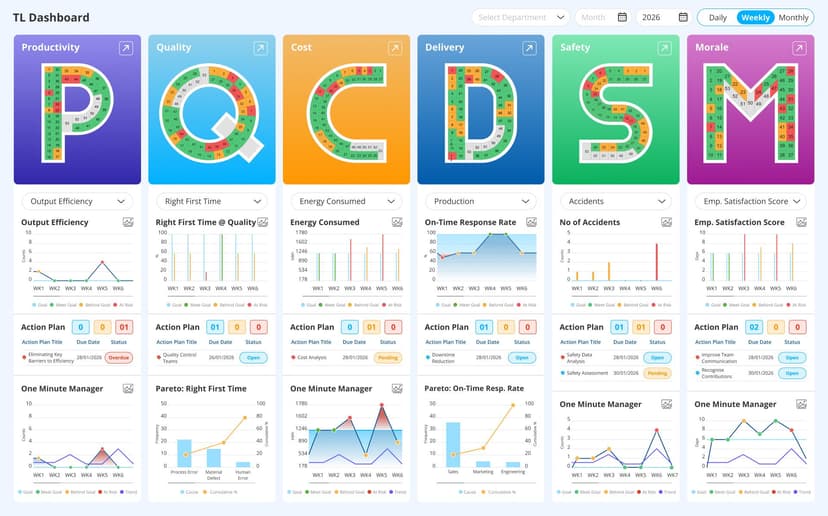
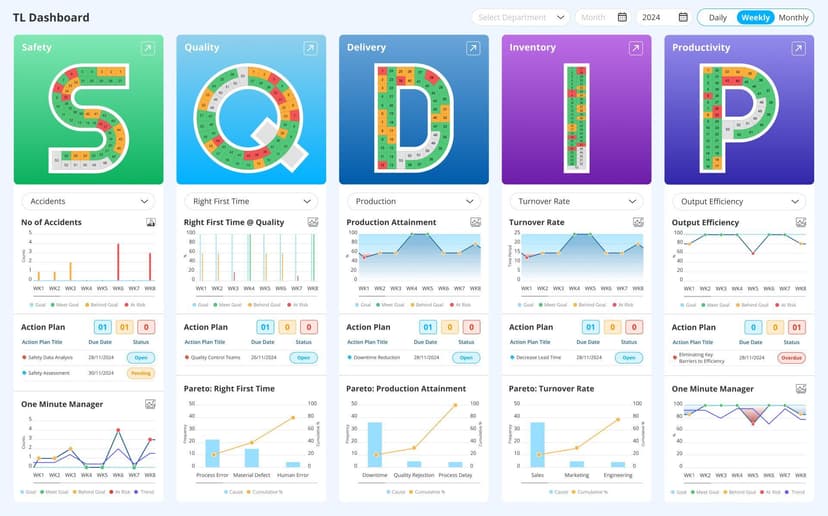
3. SQCDP / SQDIP: The Visual Framework Behind DDS
The SQCDP board, covering Safety, Quality, Cost, Delivery, and People, is the most widely used visual framework for DDS. It gives every meeting a consistent set of lenses to view performance through, and prevents discussions from being dominated by the loudest problem rather than the most important one.
SQDIP explained, a variation that adds Inventory to the mix, is common in high-volume manufacturing environments. The framework you use matters less than the discipline with which you use it.
4. Clear Action Assignment: Who Owns What, by When
Every issue raised in a DDS should leave the room with a name and a deadline attached. Not "the team will look at it." Not "maintenance to review." A named individual, a specific action, and a date. Without this, your DDS generates observations, not improvements.
5. The Close Loop: How You Verify Yesterday's Actions Before Setting Today's Direction
The first item on every DDS agenda should be: what did we say we would do yesterday, and did it happen? This is the close loop, and it is the component most plants skip. Without it, actions accumulate, accountability disappears, and the system drifts into theatre.
How to Run a Daily Direction Setting Meeting: Step by Step
Who Should Be in the Room (and Who Shouldn't)
A Tier 1 DDS is a team-level meeting. The team leader runs it. The team attends. That is it. The moment managers, supervisors, and support functions all attend the same DDS, it stops being a daily direction setting meeting and becomes a daily debrief. Understanding huddle vs meeting is the starting point for getting this right.
In UK automotive plants, a standard Tier 1 DDS runs with 8 to 12 people, lasts 12 to 15 minutes, and is held at the point of work, next to the daily production meeting board, not in a meeting room.
The 15-Minute DDS Agenda That High-Performing Plants Actually Use
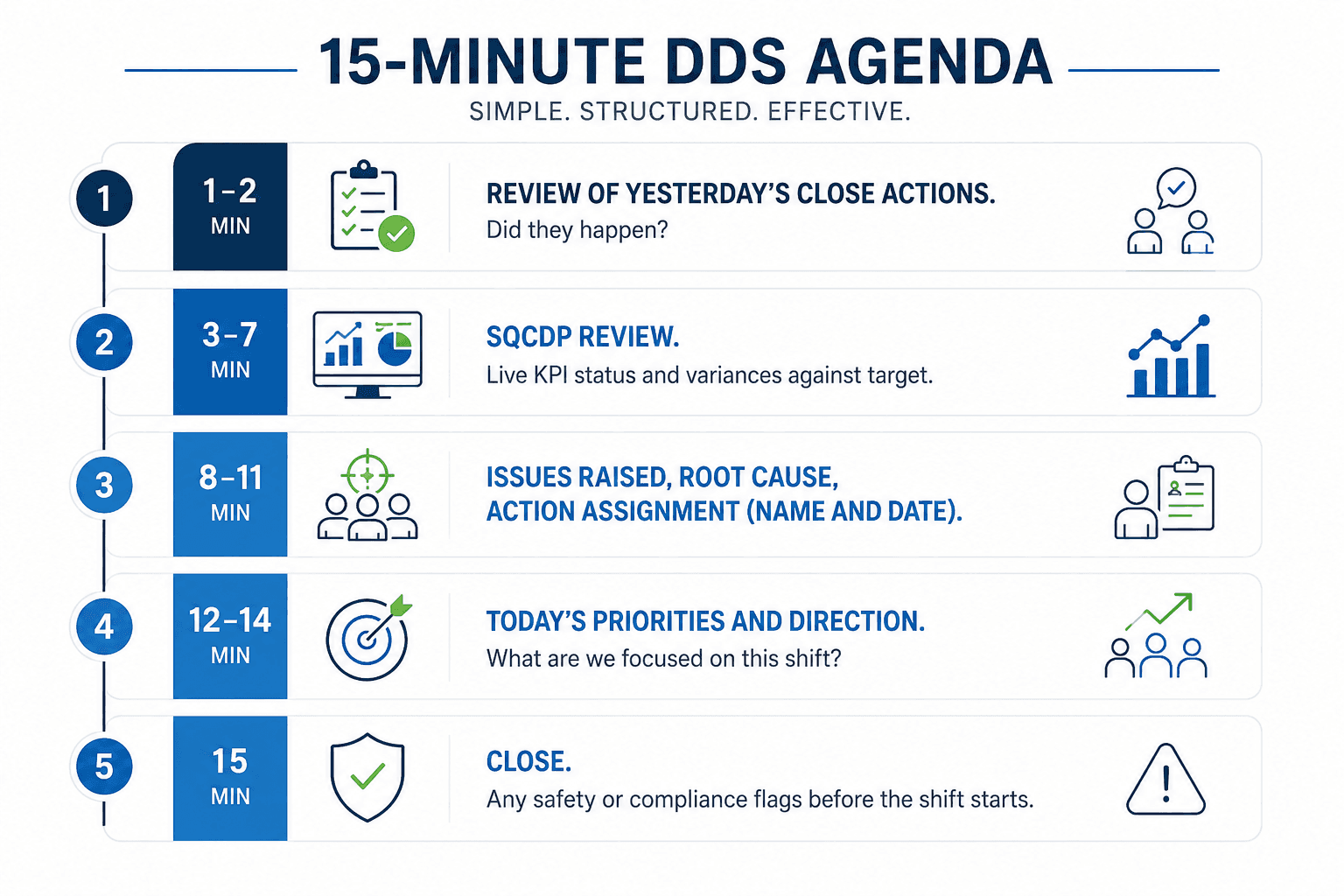
- Minutes 1-2: Review of yesterday's close actions. Did they happen?
- Minutes 3-7: SQCDP review. Live KPI status and variances against target.
- Minutes 8-11: Issues raised, root cause, action assignment (name and date).
- Minutes 12-14: Today's priorities and direction. What are we focused on this shift?
- Minute 15: Close. Any safety or compliance flags before the shift starts.
What to Do When the Data Isn't Ready
This happens more than it should, and how a team handles it reveals the maturity of their DDS. The answer is never to skip the meeting or estimate the numbers. The correct response is to flag the data gap as its own action, assign it, and run the DDS on the most recent available data while noting the gap explicitly. A Gemba Walk immediately after the DDS can surface real-time floor observations to fill the information gap until the data system catches up.
From DDS Meeting to Action: Closing the Accountability Gap
Why Most Action Items From DDS Never Get Done
Ask any plant manager what happens to the actions from yesterday's DDS. Most will pause. A few will check a whiteboard. Some will admit they do not know. That pause is the accountability gap: the space between what gets discussed in a DDS and what actually changes on the floor. It is not a people problem. It is a system problem. When actions are captured on paper, in notebooks, or on physical boards, there is no mechanism to track, chase, or escalate them. They disappear between shifts. Digital accountability boards solve this by making every action visible, timestamped, and owner-attributed, accessible to anyone in the organisation at any time.
Building a Digital DDS Accountability System That Tracks, Assigns, and Closes Every Action
A digital DDS accountability system does three things a whiteboard cannot. It persists across shifts: the incoming team sees every open action before the DDS starts. It escalates automatically: actions that pass their due date without closure surface to the next tier. And it creates a searchable history: so when the same problem recurs three weeks later, you can trace exactly what was tried before.
Connect daily direction to Data Point AI, live data, and strategy - drive measurable performance every day
DDS and the Tier Meeting Structure: How Direction Flows From the Shop Floor to the Boardroom
Tier 1 DDS: The Frontline Team Meeting (15 Minutes, Every Shift)
Tier 1 is where daily direction setting happens at the point of work. Team leaders run it. The focus is immediate: what is the shift target, what is the current status, what actions are open from yesterday. It is fast, visual, and operational.
Tier 2 and Tier 3: How Daily Direction Escalates Into Strategic Action
Tier 2 brings area managers together to review aggregated performance across Tier 1 teams. Escalated issues from Tier 1 DDS, problems that could not be resolved at team level, come to Tier 2 with context and a proposed solution. Tier 3 connects operational performance to business targets. Understanding how to run effective Tier 1, 2 and 3 meetings is what transforms DDS from a shop floor ritual into an enterprise management system.
Connecting DDS to Hoshin Kanri and the X-Matrix: Closing the Strategy-to-Execution Gap
This is the connection most manufacturers miss entirely. Your daily direction setting process should not exist in isolation from your annual strategy. Every shift-level action in DDS should be traceable, upward, to a plant objective, a divisional target, or a strategic priority on the X-Matrix. When that connection exists, the lean daily management system becomes the execution engine of the business strategy. Direction set at shift level is not random. It is deliberate. It moves the right needles.
Data Point AI Intelligence and Daily Direction Setting: Ask It Anything About Today's Performance
Why Generic AI Tools Don't Work on the Shop Floor
Ask a general-purpose AI tool "what happened on Line 3 last night?" and it will tell you it does not have access to your data. Ask it to help with your DDS agenda and it will produce a generic template with no connection to your actual performance, your KPIs, or your open actions. Generic AI is not built for the operational context of a manufacturing environment. It does not understand SQCDP. It does not know your shift patterns. It cannot tell you which actions are overdue or why your OEE dropped on Tuesday.
How Data Point AI Understands Your Full Operational Context, Not Just the Numbers
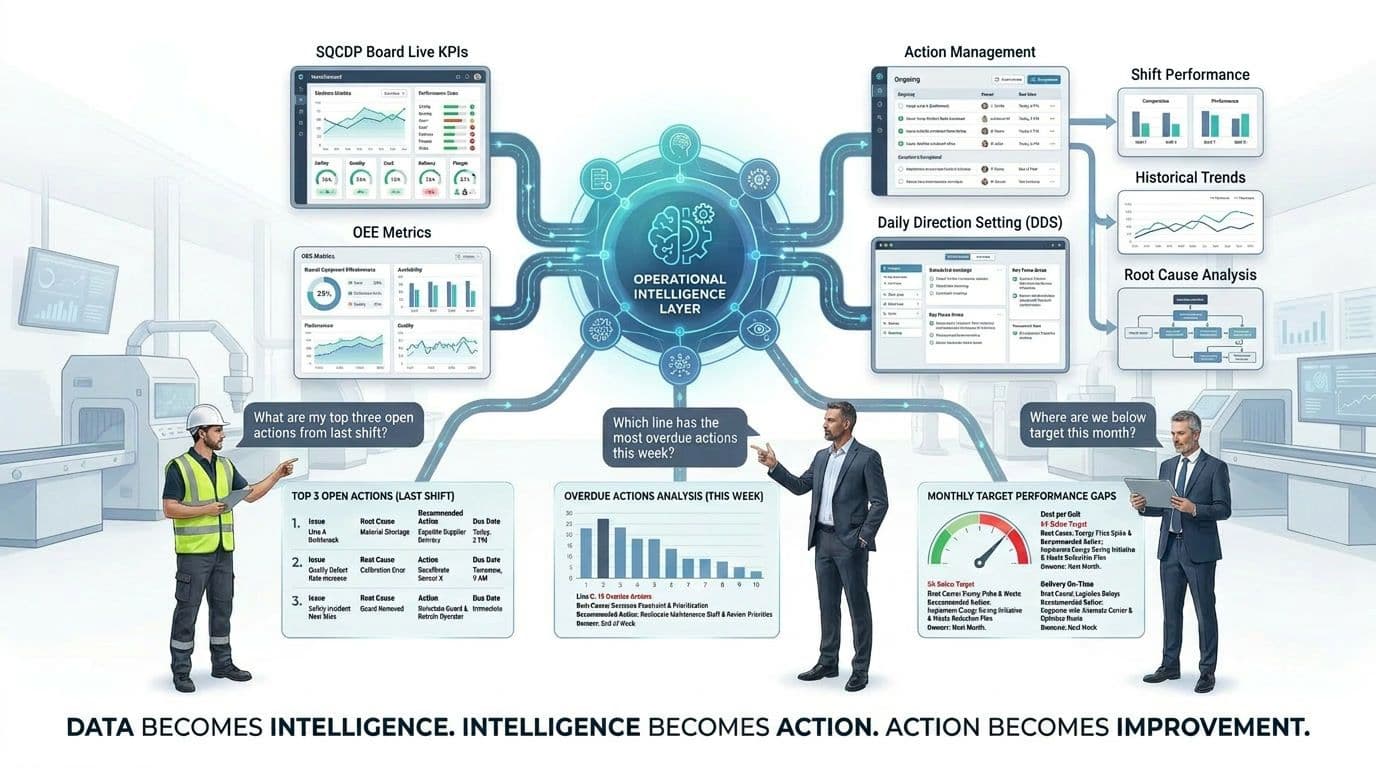
Data Point AI Intelligence is different. It is trained on lean manufacturing methodology and connected to your live operational data: your SQCDP boards, your KPI history, your action logs, your tier meeting outputs.
When a team leader asks "What are my top three open actions from last shift?", it answers. When a plant manager asks "Which line has the most overdue DDS actions this week?", it answers. When a VP asks "Where are we tracking below target across our Safety KPIs this month?", it answers with context, not just a number. It is an AI that understands the full lean and operational context of your business. Not a generic assistant; an operational intelligence layer built specifically for manufacturers.
Real Scenarios: What Happens When Your DDS Is Backed by Operational AI
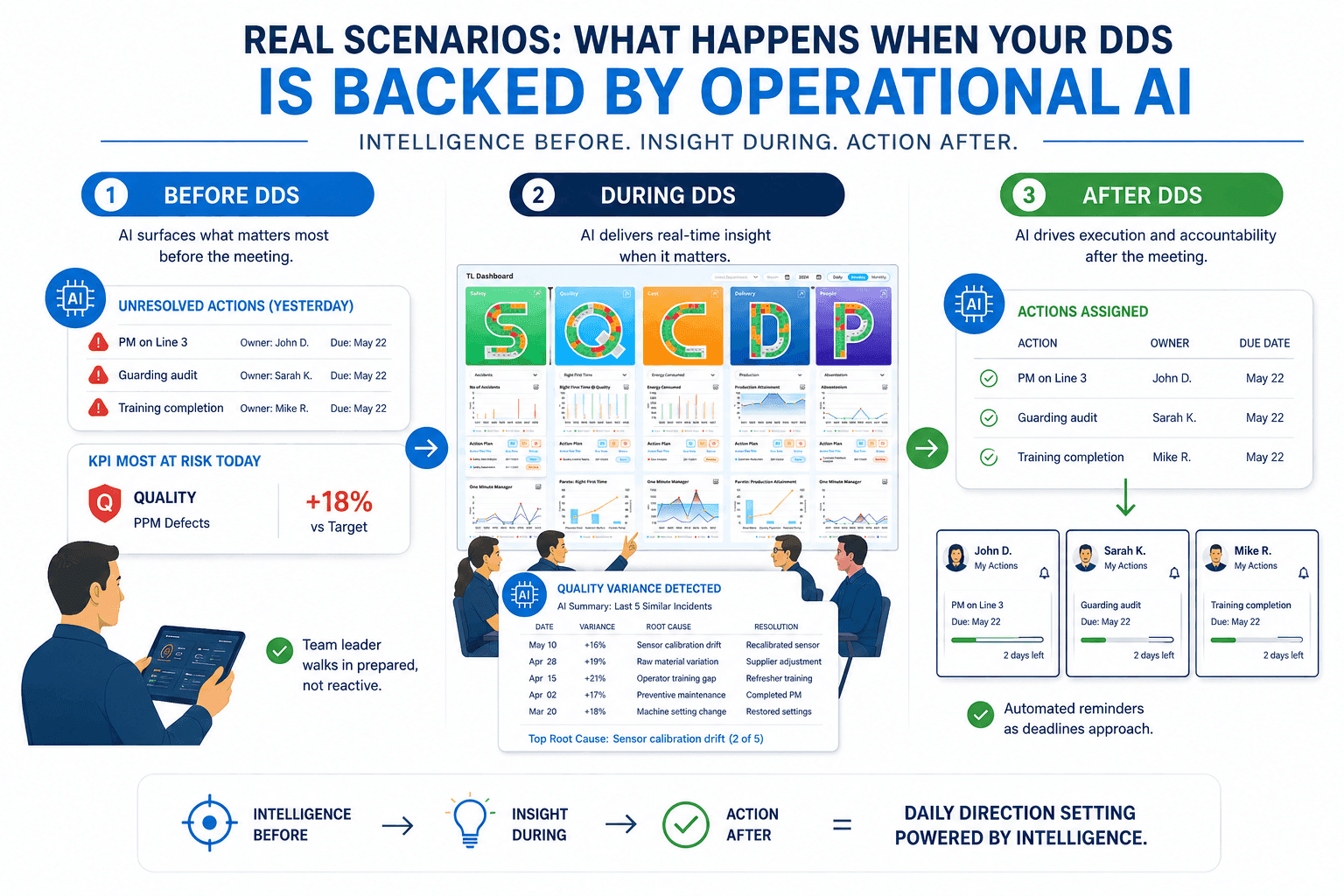
- Before DDS starts: the AI surfaces yesterday's three unresolved actions and the KPI most at risk, so the team leader walks in prepared, not reactive.
- During DDS: a live variance on the quality metric triggers an AI-generated summary of the last five similar incidents and their root causes.
- After DDS: the AI sends a summary of all assigned actions to each owner's dashboard, with automated reminders as deadlines approach.
This is what daily direction setting looks like when it is powered by intelligence, not paperwork.
Running DDS Across Multiple Sites: What Changes When You Scale
Why Single-Site DDS Thinking Breaks Down at Scale
A DDS system designed for one plant rarely survives contact with five. The problems are predictable: each site develops its own version of the SQCDP board, meeting times drift, action formats diverge. By the time you try to aggregate performance across sites, you are comparing inconsistent data captured in incompatible formats. Mid-to-large manufacturers, particularly those with plants across the UK, US, India, or Mexico, need a DDS architecture that is standardised at the framework level but flexible at the local level. Shift management across multiple time zones and shift patterns adds another layer of complexity that a physical-board DDS simply cannot handle.
How Global Manufacturers Standardise DDS Without Losing Local Visibility
The answer is not to impose identical DDS formats on every site. It is to standardise the framework: the SQCDP structure, the action format, the escalation logic, while allowing each site to configure KPIs, targets, and thresholds to their local operational reality. Lean daily management tools that are digital and cloud-based make this achievable. A plant manager in Worcester and a plant director in Detroit can look at the same performance dashboard, see their own site's data, and compare like-for-like against the group standard.
Multi-Shift DDS: Keeping Direction Consistent Across Days, Nights, and Weekends
Shift handovers are where DDS continuity breaks down. The night shift finishes, actions get handed over verbally, and by the time the morning team starts their DDS, critical context has been lost. A digital DDS platform ensures that every action, every open issue, and every KPI variance is visible to the incoming shift the moment they walk through the door: before the meeting starts, not after.
How to Measure Whether Your Daily Direction Setting Is Actually Working
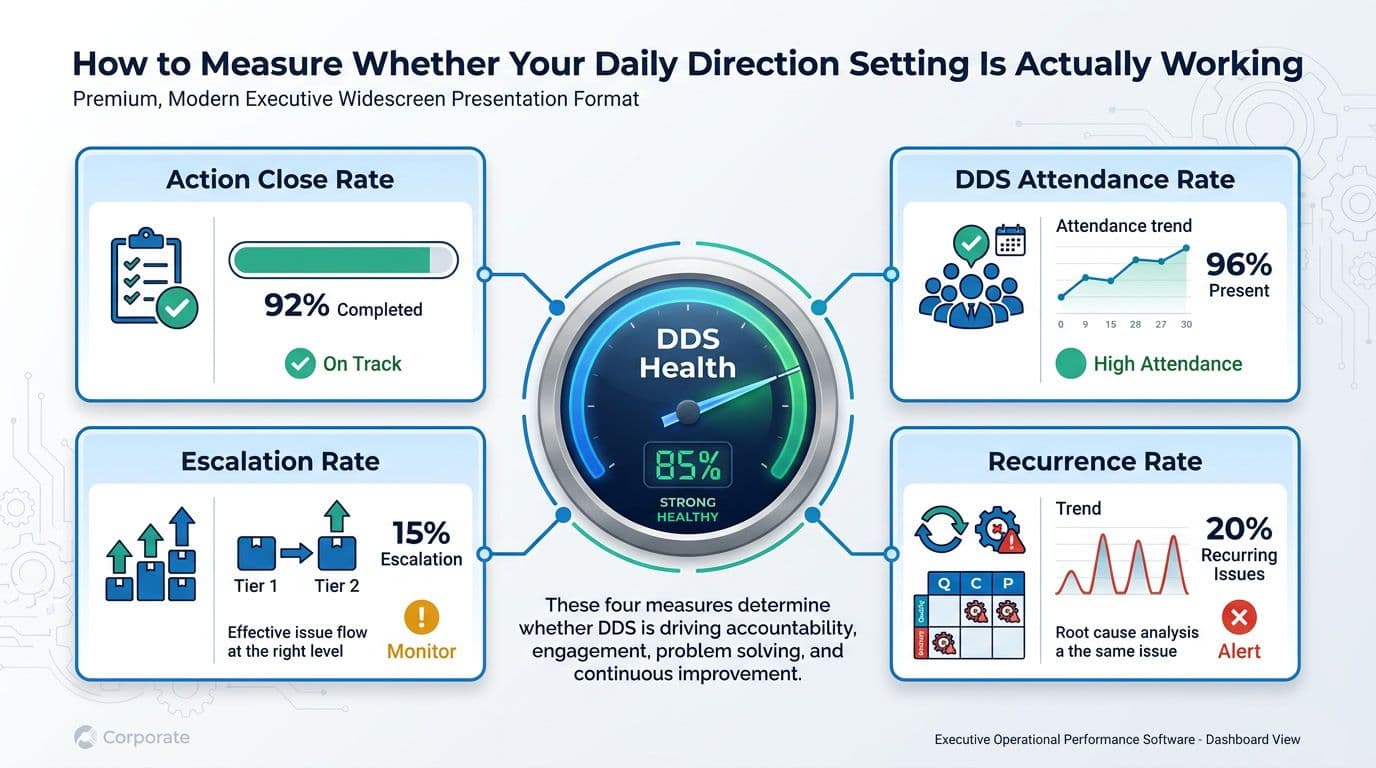
Most teams run DDS without ever asking whether it is working. They measure production output, quality, and delivery, but not the process that is supposed to manage all three.
The 4 Metrics That Tell You If Your DDS Process Is Healthy
- Action close rate: what percentage of actions raised in DDS are closed by the agreed deadline? Anything below 70% signals a broken accountability loop.
- DDS attendance rate: are the right people consistently present? Falling attendance is an early warning sign.
- Escalation rate: how many Tier 1 issues are escalating to Tier 2? Too many suggests the system is not empowering teams to solve problems at the right level.
- Recurrence rate: is the same problem appearing on the SQCDP board week after week? If yes, DDS is identifying issues but not driving root cause resolution.
Review your manufacturing KPI dashboards alongside these DDS health metrics. The KPIs tell you what is happening; the DDS metrics tell you whether your system is capable of fixing it.
Red Flags: 6 Signs Your DDS Has Become a Daily Ritual With No Real Impact
5. Actions are raised but never reviewed at the next meeting.
6. The same 2 to 3 people dominate every DDS while others disengage.
7. The SQCDP board is updated after the meeting, not before it.
8. Issues discussed in DDS never escalate to Tier 2, even when they should.
9. The Gemba board and DDS board are operating independently of each other.
10. No one can tell you the DDS action close rate for last month.
If three or more of these apply to your plant, your DDS has become a ritual, not a system.
From Compliance to Improvement: What Good DDS Looks Like at 90 Days
At 30 days, a well-implemented DDS is running consistently: people attend, the agenda is followed, actions are assigned. At 60 days, the close rate starts climbing. Recurring problems begin to disappear from the board because they are being genuinely resolved. At 90 days, DDS is generating measurable improvement in the KPIs it tracks, and the team no longer needs to be reminded to run it.
How Data Point Connects Your Entire Daily Direction Setting System
That outcome does not come from deploying a single tool. It comes from connecting every layer of the DDS system, and that is what Data Point is built to do. Read the full case study: Kineco Drives Operational Excellence via Shopfloor Performance Software.
From Digital SQCDP Boards to Strategic Dashboards: One Platform, Every Layer
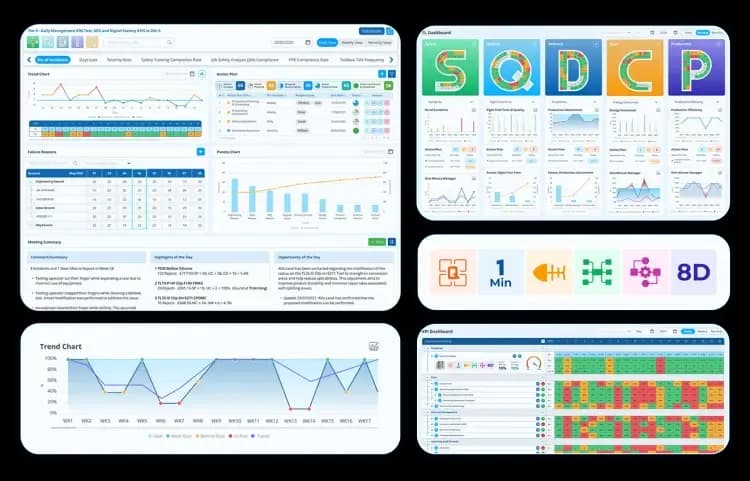
Data Point is a connected operational intelligence platform built for mid-to-large manufacturers. Its Lean Daily Management capability provides the digital SQCDP infrastructure your DDS runs on: live boards, action tracking, shift handover continuity, and Gemba Walk integration. Its Strategy and Governance layer connects that daily performance data upward to Hoshin Kanri, X-Matrix, and balanced scorecard, so your DDS does not operate in a silo; it feeds the strategy.
Its Enterprise Connectivity capability allows global manufacturers to standardise DDS across every site while maintaining local operational visibility. And Data Point AI Intelligence sits across all of it, understanding your full lean and operational context, surfacing insights on demand, and making every DDS participant better prepared before they walk into the room. Explore the full lean daily management platform to see how each capability connects.
What Changes When Your DDS Is Live, Connected, and Accountable
The meetings get shorter because the data is already there. Actions get closed because the system tracks and escalates them. Problems stop recurring because root cause analysis is built into the workflow. And for the first time, leadership can see, in real time, whether daily direction setting is actually moving the business forward. Not just a better meeting. A better system.

Geandra Queiroz, Operations Management Consultant
Geandra is an Operations Management Consultant at Lean Transition Solutions, specialising in Lean philosophy, Lean Six Sigma, and strategic planning across manufacturing and healthcare. She is currently completing her PhD in Industrial Engineering at the Federal University of São Carlos, researching the integration of Operations Strategy, Lean, and Green Manufacturing.