How modern manufacturing teams are transforming with lean daily management software
A practical guide to how modern manufacturing teams use LDM software to run lean daily management with real-time visibility, structured accountability, and connected performance tracking.

Digital Systems Are Changing Lean Daily Management
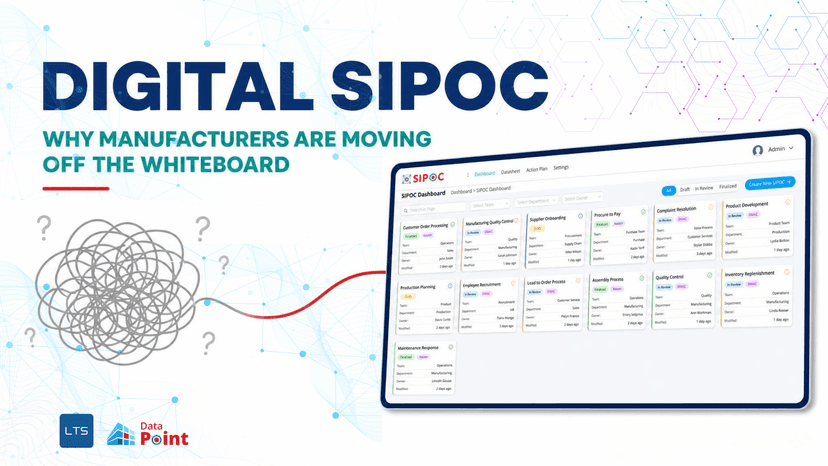
Lean daily management has traditionally relied on physical boards, spreadsheets, and manually prepared reports. While these tools provide visibility, they often create delays, version conflicts, and disconnected performance tracking.
Today, many manufacturing organisations are introducing Lean daily management software to strengthen how daily reviews operate which enable:
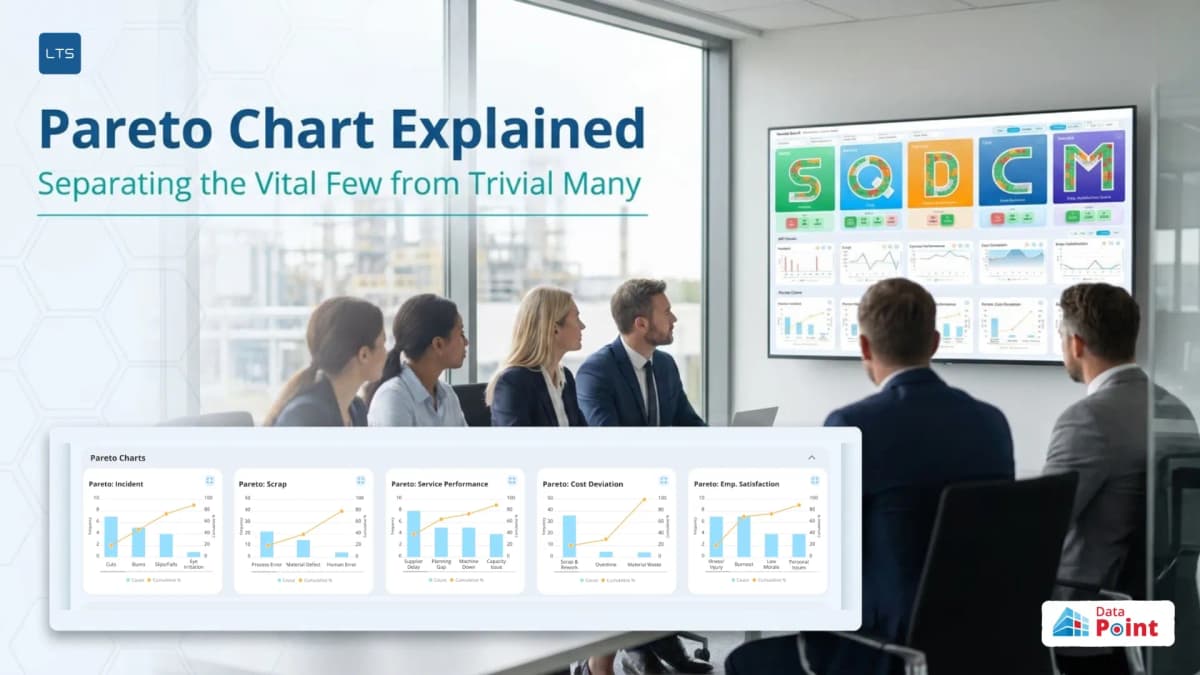
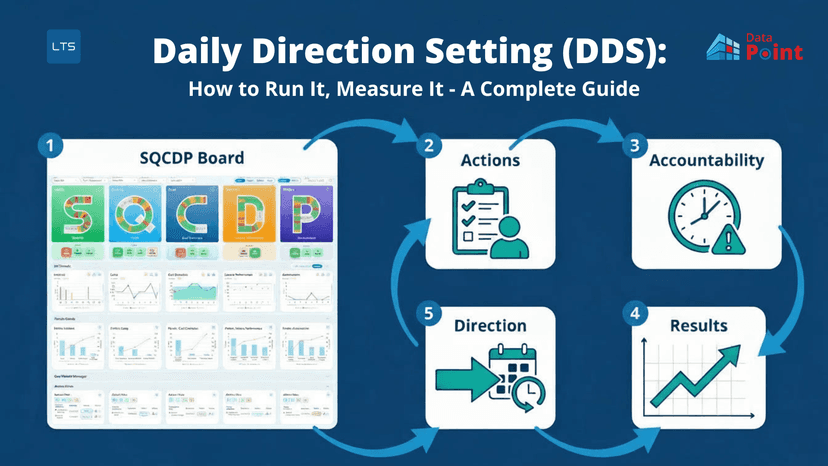
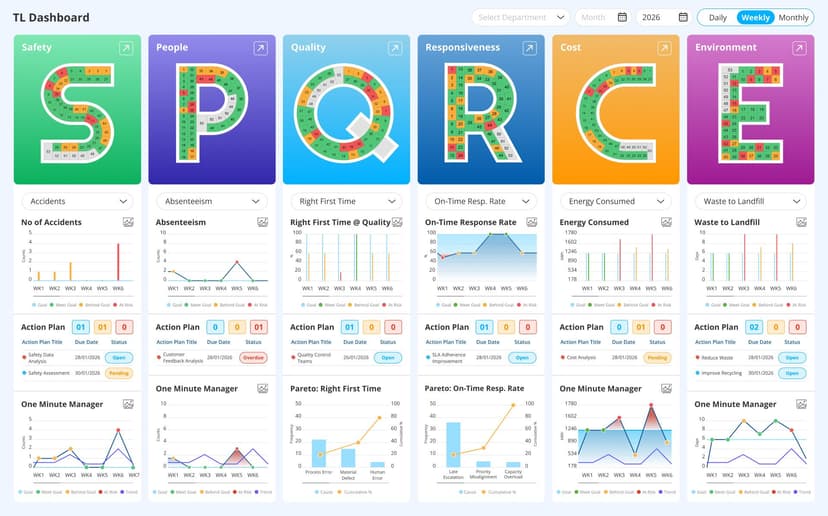
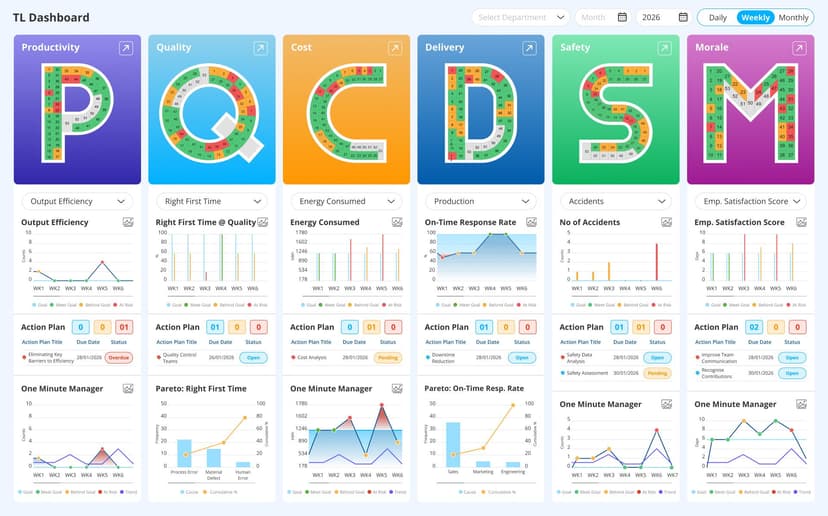
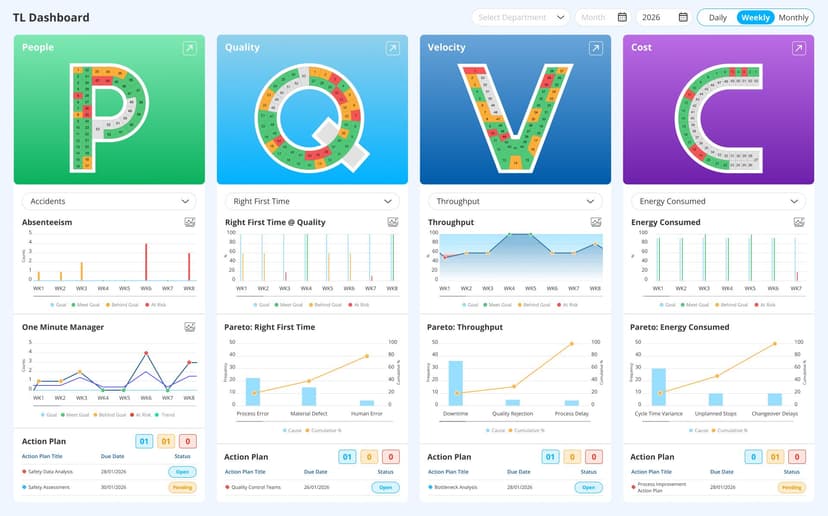
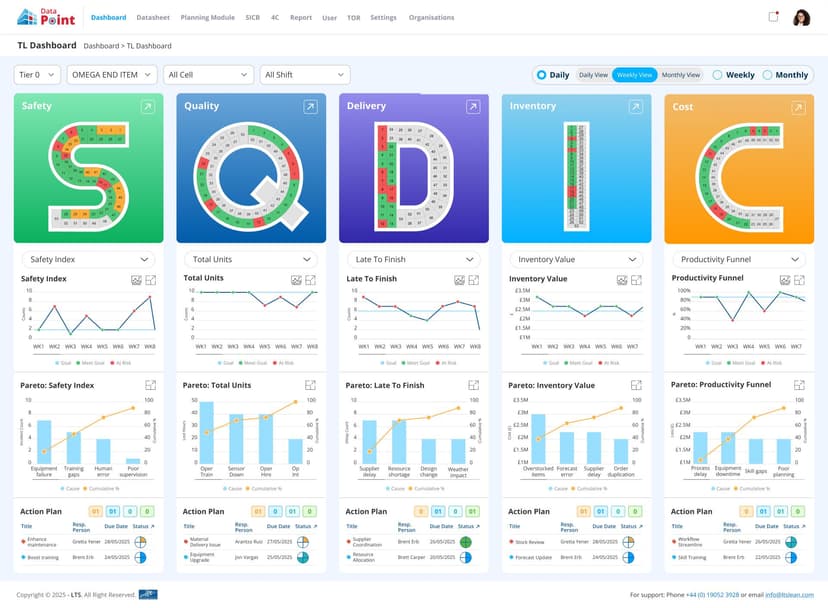
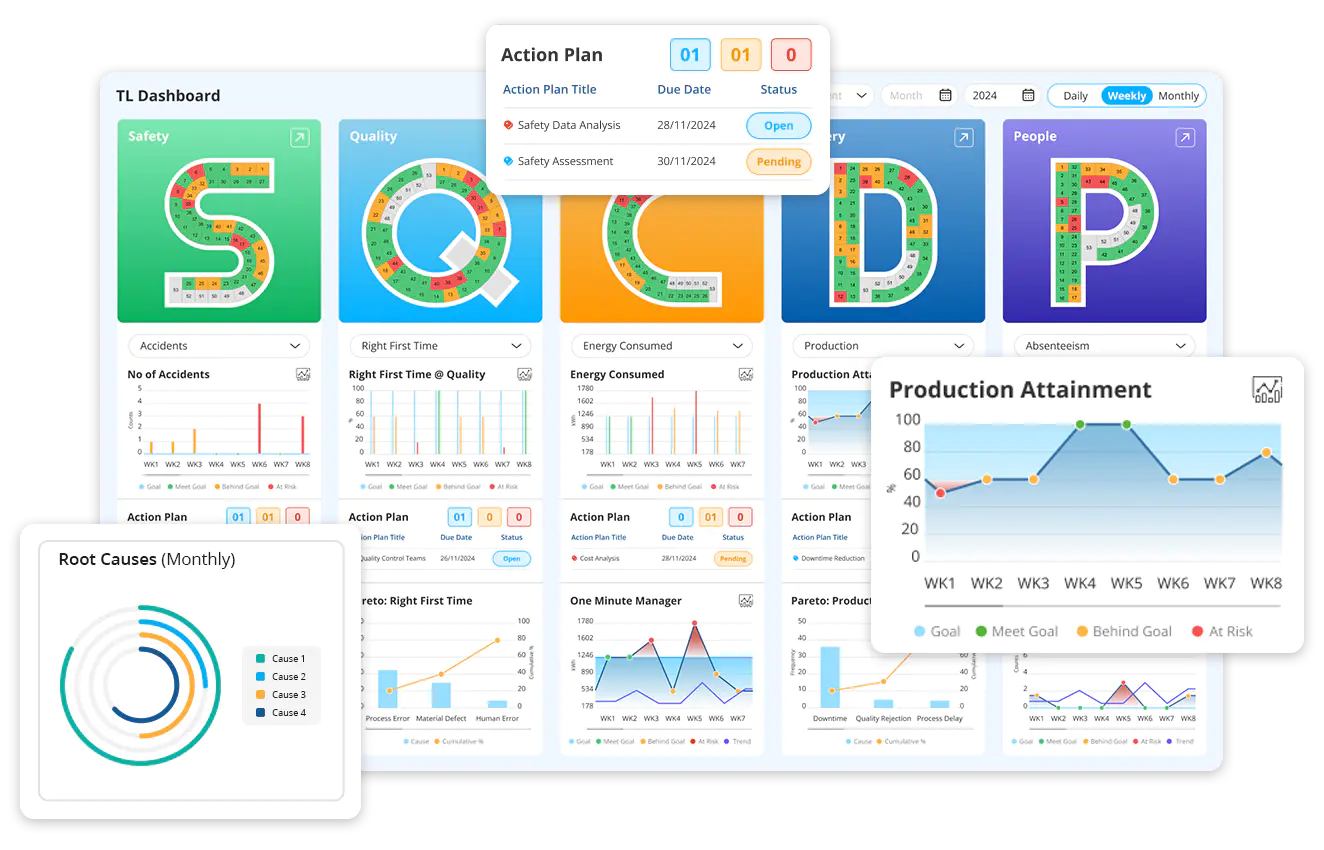
Unified SQCDP Performance Views
All Safety, Quality, Cost, Delivery, and People metrics visible in one live system.Connected KPI Ownership
Performance metrics linked directly to responsible teams and corrective actions.Live Operational Visibility
Daily reviews supported by continuously updated operational data.

Download the Lean Scaling Guide

What You'll Gain From This Guide
Why manual daily management systems struggle
Understand the limitations of whiteboards, spreadsheets, and manual KPI tracking.The operational risks of disconnected performance tracking
How fragmented tools weaken visibility, accountability, and escalation.The role of digital systems in lean daily management
How digital platforms support structured daily performance reviews.What modern digital daily management environments look like
The key capabilities that enable real-time performance visibility.How digital platforms support operational accountability
How connected systems help teams identify issues and track actions more effectively.
Who This Guide Is For..!
- Plant Managers scaling Lean across shifts
- Operations Directors managing multi-site performance
- Continuous Improvement leaders running tiered reviews
- Teams evaluating digital Lean management systems


The Digital System Built to Replace Spreadsheet-Driven Lean
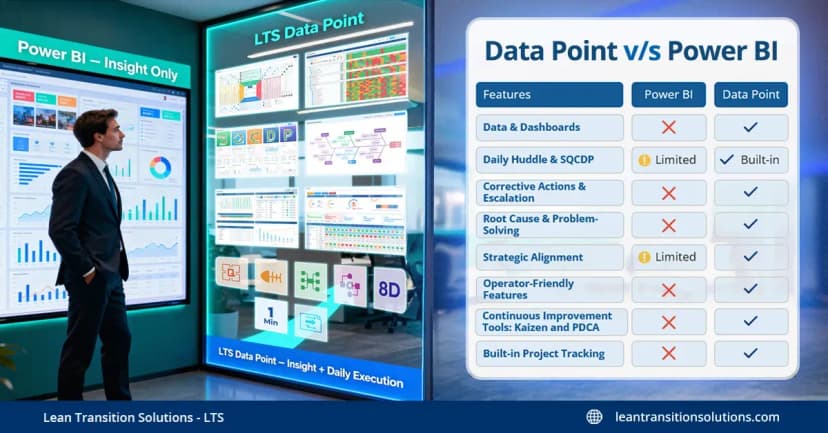
LTS Data Point is designed to overcome the structural limitations of Excel in Lean Daily Management.
It centralises KPI visibility, links performance directly to action, enforces ownership, and supports connected tiered management — all within one scalable digital platform.
Instead of managing Lean through files, teams operate through a real-time execution system.